Matthew Scott

Matthew Scott is a criminal barrister at Pump Court Chambers

Removing jury trials is a democratic outrage

From our UK edition

In June 2020 the impact of Covid led some to argue that trial by jury should be temporarily suspended. David Lammy, who was at the time the shadow justice secretary, strongly opposed the idea. He tweeted: ‘Jury trials are a fundamental part of our democratic settlement. Criminal trials without juries are a bad idea.’ It now appears that Lammy thinks the time has come, and that he is the man, to destroy this fundamental part of our democratic settlement. He intends the destruction to be permanent. A memo seen by the Times says he is preparing to end jury trials except for murder, rape or manslaughter cases. The sole justification for this vandalism appears to be efficiency savings.

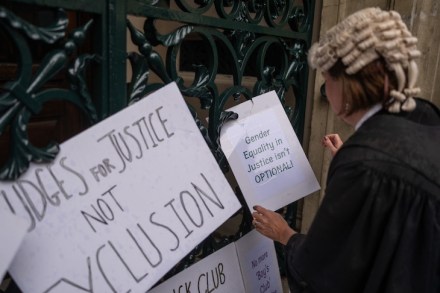
The sinister call to make barristers advance diversity and inclusion

From our UK edition

As a barrister my professional duty is to provide the best legal advice outside of court and to represent my client’s interests fearlessly in court. For good and obvious reasons there are all sorts of things we are not allowed to do: mislead the court, discriminate between clients, handle clients’ money, and so on. Rather more nebulously, but perfectly reasonably, we are not allowed to bring the profession into disrepute.  But the Bar Standards Board, the body that regulates – and disciplines – the profession wants to go much further and add a further positive duty to tackle ‘counter-inclusive misconduct.’ To this end it has proposed that individual barristers should have a duty to ‘act in a way that advances equality, diversity and inclusion.

The Tories don’t have a plan for the criminal justice system

From our UK edition

The Conservative party fought the 2019 general election with a manifesto commitment to establish a Royal Commission on Criminal Justice. The promise was welcomed by almost everyone involved in criminal justice. But despite repeated attempts over the last four years to hold the government to its word, notably by the former Prisons Inspector Lord Ramsbotham, the promise was simply broken. There has never been any government apology or explanation; just vague mutterings about the pandemic making things rather difficult.  On the bright side, the government did lend parliamentary time to a law that now makes it easier to prosecute, and if necessary imprison, those who feed other people’s cats Meanwhile the crisis has deepened since 2019.

The criminal justice system is crumbling

From our UK edition

Today’s report by the National Audit Office on the backlog of cases in the Crown Court is unlikely to feature much in the election campaign, but it examines an aspect of criminal justice policy which will need to be addressed very urgently by the next government.   In April last year the Ministry of Justice had a plan: to reduce the backlog from around 60,000 cases to about 53,000 by April 2025. The increasing number of cases waiting to be heard was not only demoralising witnesses, victims and defendants, it was also driving up the prison population as remand prisoners found themselves waiting ever longer to have their cases heard.    Astonishingly, less was spent annually on prisons in 2023 than in 2010.

No, prison sentences aren’t going soft

From our UK edition

In 1894 Maria Hermann, an Austrian-born prostitute stood trial at the Old Bailey for the murder of a client. The evidence seemed overwhelming and she faced a death sentence if convicted. But she had the remarkable good fortune to be defended by Edward Marshall Hall, the greatest criminal advocate of the day. He produced evidence of the wretched life which had led her into a life of poverty, prostitution and degradation. At the end of his closing speech Hall slowly turned and looked towards the dock. ‘Look at her, members of the jury. God never gave her a chance, won’t you?’ The jury cleared her of murder, and in convicting her of manslaughter added a recommendation for mercy; a recommendation acted on by the judge who imposed a remarkably lenient six-year sentence.

Valdo Calocane didn’t get away with murder

From our UK edition

On Monday, the HM Crown Prosecution Inspectorate (HMCPSI) released a report on the CPS’s actions in the case of Valdo Calocane. In June last year, Calocane killed students Grace O’Malley-Kumar, Barnaby Webber and school caretaker Ian Coates, and attempted to kill three other people, in a rampage of terrible violence in Nottingham. No reasonable jury could conceivably have convicted him of murder The report was commissioned by the Attorney General, Victoria Prentis, after the CPS was criticised for accepting Calocane’s guilty plea for manslaughter, on the basis of diminished responsibility. As a result of the plea, Calocane was sentenced to indefinite detention in a psychiatric hospital.

Should Lucy Letby have been allowed to miss her sentencing?

From our UK edition

Until a few years ago I had never heard of a single case of a murderer declining to go into the dock to hear their sentence. I doubt whether any of them even realised that they had the choice.  Yet in recent years, the word seems to have spread and something of a fashion has developed for them to stay in their cells and refuse to enter the court-room.  It hardly surprising that many bereaved relatives are astonished and disgusted that such a thing is possible.  Judges, including Mr Justice Goss at Lucy Letby’s sentencing hearing, have decided that they have no power to do anything but accept this state of affairs.

The police haven’t learned from the Carl Beech fiasco

From our UK edition

It has been announced that ‘Opertion Soteria’ is to be extended from five pilot areas to every police force in the country. Operation Soteria is the name given to a supposedly new method of investigating rape and other serious sexual allegations. A report into the results of the Soteria pilots, written by the academics who were largely responsible for devising Operation Soteria in the first place, concluded, perhaps unsurprisingly, that they had been a great success. The Soteria approach may indeed increase the rape conviction rate, but it will do so by convicting more innocent people In Hellenistic religions, a soteria was a ‘sacrifice or series of sacrifices performed in expectation of... deliverance from a crisis.

Eco-cultist lawyers are undermining the rule of law

From our UK edition

A group of 120 ‘top lawyers’ have signed a ‘declaration of conscience‘ stating they will not prosecute ‘peaceful climate change protestors’ and will ‘withhold [their] services in respect of supporting new fossil fuel projects.’ Predictably the tax specialist and founder of the ‘Good Law Project’ Jolyon Maugham KC is amongst the signatories, although the practical effect of his conscientious objection is limited. I’m pretty sure he has never prosecuted a criminal case in his entire career, and it would be remarkable if the CPS now decided to instruct him to prosecute a climate change protestor.

Why did a judge praise the ‘admirable aims’ of Just Stop Oil activists?

From our UK edition

When seven Just Stop Oil protesters were convicted of trespassing, the judge in the case had some warm words for those found guilty.  District Judge Graham Wilkinson at Wolverhampton Magistrates' Court praised the activists’ ‘admirable aims’ after they disrupted operations at an Esso fuel terminal in Birmingham last April. Wilkinson told the group during the end of the trial last week that he was moved by their ‘deeply emotive’ explanations. This was a strange thing to say to those whose crime was not entirely victimless: the cost to the Metropolitan Police alone of the Just Stop Oil Protests over the days of the protests exceeded £425,000, to say nothing of the disruption to people going about their ordinary business.

How will Mason Greenwood fare in the court of public opinion?

From our UK edition

Mason Greenwood's future at Manchester United remains uncertain, but one thing is clear: the footballer will not be available for selection for HMP Strangeways next season. Greenwood – by all accounts an absurdly talented young footballer – had faced charges of attempted rape, ABH and controlling and coercive behaviour. The Crown Prosecution Service (CPS) announced yesterday that they were discontinuing the prosecution: '… a combination of the withdrawal of key witnesses and new material that came to light meant there was no longer a realistic prospect of conviction. In these circumstances, we are under a duty to stop the case.' It is no criticism of the CPS to say that this hardly begins to explain its decision.

Why are suspected murderers being let out of jail?

From our UK edition

What should judges do with potentially dangerous prisoners waiting for their trial when the barristers' strike means their cases cannot be heard within a reasonable time? Since April criminal barristers have been involved in a dispute with the government over fees. In a nutshell their case – perhaps I should say ‘our’ case since I am one of them – is that the Ministry of Justice has failed to implement pay recommendations put forward last November. From the beginning of this month, defence barristers have stopped attending court in the vast majority of legally aided cases. Hardly any trials have been possible.

Why the Met’s partygate redaction makes legal sense

From our UK edition

Having said just days ago that they had no objection to Sue Gray’s report being published, the Met have now executed a screeching, tyre-burning U-turn and have asked that the parts of her report dealing with the most serious allegations – the only parts in which anyone has any interest – should not be published until they have completed their own investigation. No. 10 will be more than happy to comply. Nobody can be in any doubt about the staggering, bumbling ineptitude of its presentation, but the latest Met position does actually make some sense.

Raab’s law reforms are ridiculous

From our UK edition

What should we make of the Times story yesterday, which appeared under the headline ‘Boris Johnson Plans To Let Ministers Throw Out Legal Rulings’? The impression given is that ministers will somehow be handed powers by the Prime Minister simply to ignore court rulings that they do not like. That would lead to an extraordinary constitutional crisis, involving either the arrest and imprisonment of ministers for contempt of court, or the arrest and imprisonment of judges with the government exercising Erdogan-style despotism. Nobody can seriously believe that this is what is intended, and the rest of the Times story makes clear that it is not.

Cressida Dick and the ‘institutional corruption’ of the Met police

From our UK edition

The report by Sir Richard Henriques into Operation Midland argued that the Metropolitan police was institutionally incompetent, stupid and credulous. If the devastating report by the independent panel into the 1987 murder of Daniel Morgan is to be believed, the force is also institutionally corrupt. The institutional corruption consisted of dishonestly ‘concealing or denying failings, for the sake of the organisation’s public image.’ And the ‘failings’ which the Met tried to conceal or deny appear to have sometimes consisted of actual, old-fashioned corruption by individual police officers. The stench rises overpoweringly from every one of the report’s three volumes.

Starmer’s prosecution campaign is misguided

From our UK edition

On Monday evening Sir Keir Starmer tweeted an explanation for why Labour would not be supporting the Police, Crime Sentencing and Courts Bill. https://twitter.com/Keir_Starmer/status/1371547120080195585?ref_src=twsrc%5Etfw Coming from a former director of public prosecutions this was dire stuff. First, and perhaps least importantly, the word ‘statues’ does not appear in the Police, Crime and Sentencing Bill. Sir Keir knows this. What the Bill proposes is that where criminal damage is caused to a ‘memorial’ there should be no minimum financial limit before the case can be tried in the Crown Court, where the maximum sentence is ten years imprisonment.

The police haven’t learned from the Operation Midland disaster

From our UK edition

Sir Richard Henriques, the former High Court Judge who published a devastating report on Operation Midland – the Metropolitan Police’s investigation into a fictitious ‘VIP paedophile ring’ made up by Carl Beech and others – has called for a criminal investigation into the officers who botched the investigation. Amongst a catalogue of other failings, officers are accused of misleading the Senior District Judge for England and Wales into issuing search warrants, by describing Mr Beech as ‘a credible witness who is telling the truth.’ Sir Richard’s report was published over four years ago. The Met’s response has been characterised by delay, confusion and obfuscation.

The madness of Hancock’s quarantine prison threat

From our UK edition

Nobody has done much travelling this winter apart from Instagram influencers travelling to Dubai to pose with baby tigers. But the United Arab Emirates is now on the government’s red list. Should the influencers wish to return home they face a dilemma: spend £1,750 to be locked up for ten days in a Slough Premier Inn, or (and I fear this may come more naturally to some influencers) lie. Lying about where you have come from, though, is to be made exceedingly risky, with a maximum ten year prison sentence about to be introduced.

The legal profession’s troubling relationship with China

From our UK edition

There has been considerable agonising in legal circles over the propriety of David Perry QC, who had accepted a brief to prosecute pro-democracy protestors in Hong Kong. One of the defendants in the case is the 82-year-old barrister Martin Lee QC, the founder of a pro-democracy party in Hong Kong, who has been accused of taking part in an ‘illegal assembly’. It seems now that Perry, who has refused to make any public comment since the story broke, has now withdrawn from the case. If so he has made a wise decision. He is not the only lawyer who has had to wrestle with the ethical question of how close you should get to regimes that most of us would regard as disagreeable or even evil. It is certainly not only a question faced by criminal lawyers.