Gambling

Whoops, I’ve given my children a gambling problem

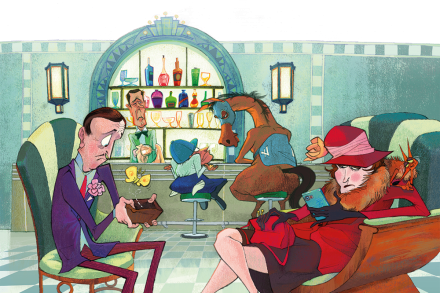
The problem with my gambling, Caroline has always maintained, is not the fact that I nearly always lose. I only ever bet on QPR, so that’s inevitable. No, the issue is that I might pass on the habit to my children, particularly the boys. My bets rarely exceed £25, but my sons might have less self control. What if they become addicts, she wants to know? It will ruin their lives. In her eyes, gambling in front of them is like snorting heroin off the kitchen table. Well, it pains me to say it, but she was right. My youngest recently celebrated his 18th birthday and the first thing he did, at one minute after midnight, was open a bet365 account. The fact that his becoming an adult coincided with the start of the World Cup didn’t help.

Labour is doing all it can to kill off horse racing

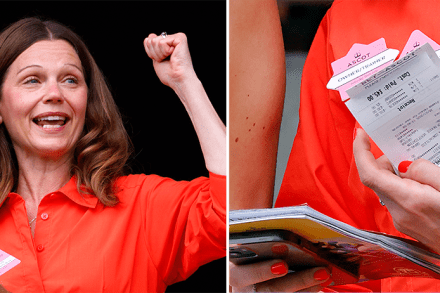
In July, Victoria, Lady Starmer was photographed at Royal Ascot, celebrating with friends after backing the winner of the Princess Margaret Stakes. Lady Starmer, whose grandmother lived near Doncaster racecourse, is a keen follower of flat racing, a passion she apparently shares with her husband. In 2024, the Prime Minister flew home from Washington D.C. to attend Doncaster’s St Leger meeting and told reporters: ‘There aren’t many better days out than the races in the sunshine.’ So it’s odd that Keir Starmer and his government appear to be doing all they can to kill off horse racing. Swingeing tax rises on the gambling industry, introduced in Rachel Reeves’s Budget, have left the sport, the second most attended in the UK, in a fight for its future.

Is bet365 punishing me for being a peer?

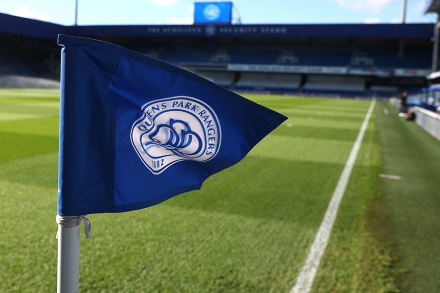
On my way to the QPR game against Hull last Saturday, I was astonished to discover that Ladbrokes had made QPR the favourites. Eh? Going into this game, the Rs were 18th in the table, whereas Hull were sixth. They’d won four of their last six, whereas we were winless in five. ‘It’s almost worth putting a bet on Hull,’ I joked to Charlie, my 17-year-old son. Then I thought: ‘Why not? At least that way, if QPR lose I’ll make some money.’ But if I was going to do it, I might as well get the most favourable odds, so I did a quick trawl of the online betting apps, all of which I’ve signed up to, and discovered that bet365 was offering 3/1 – by far the best. I transferred some money from my bank account and stuck £25 on the Tigers to win.

Very pretty and pretty gruesome: Ballad of a Small Player reviewed

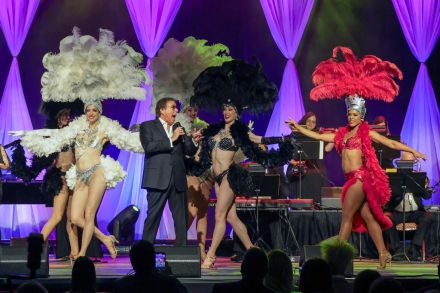
Ballad of a Small Player opens with Lord Doyle, played by Colin Farrell, hiding from security in his trashed casino suite in Macau. After they’re gone, he slips into the corridor and sees a trolley holding a bouquet of flowers and a knife. I kept my eyes on the knife, expecting the jittery, paranoid gambling addict to grab the weapon. Instead he places a white rose in his green velvet lapel. Director Edward Berger (All Quiet on the Western Front, Conclave) enjoys playing these games of misdirection. It feels appropriate. Casinos – with their chandeliers, gaudy frescoes and croupiers in black tie – are contradictory places. Opulence in these temples of luck is both a way of hiding the brutality of emptying bank accounts, and a show of deference to the gods of fortune.

Was I the victim of a sex crime?

Dante’s Beach, Ravenna I went up to her and got straight to the point: ‘What are you using for bait?’ I say ‘her’ but you never know round here. We live a mile inland from one of the last unspoiled stretches of Adriatic coast, part of which was stolen several decades ago by highly trained nudists. The nudists, who seem to be mostly men, attract several fringe groups, such as trans women (men who identify as women). One of the best-known was christened Cesare but is now a peroxide blonde called Cesarea. ‘She’ is taller than anyone else in the village apart from me and has enormous hands. Besides, it is not exactly every day you come across a real woman fishing, is it?

The ‘idiot Disneyland’ of Sin City

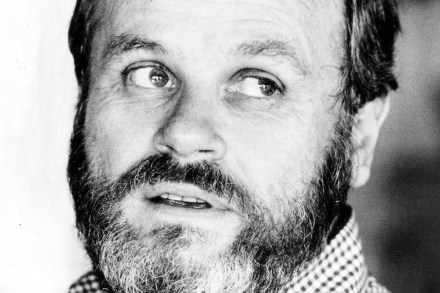
In italics at the very end of the preface to Slouching Towards Bethlehem (1968), Joan Didion spills the beans: ‘Writers are always selling somebody out.’ It’s hard to improve on that, but we can at least specify that she had journalists in mind, not poets or novelists, though probably she looked on all scribblers with a cold eye. Six years later, Didion’s husband John Gregory Dunne published Vegas: A Memoir of a Dark Season, which isn’t really a memoir, more a queasily auto-biographical novel. Or, as he puts it, ‘a fiction which recalls a time both real and imagined’. A time and also a place – Las Vegas, Nevada, in the early 1970s.

How Italy’s ‘new young’ party

Dante’s Beach, Ravenna The Feast of the Assumption began for me just after midnight with a WhatsApp message from my eldest son, Francesco Winston, 20, which said: ‘Papà don’t come, the police are everywhere.’ He and my eldest daughter, Caterina, 21, had invited me to a party on the beach organised by their group of friends to mark Ferragosto, the most important day of summer. There would be a bonfire and sausages, booze and guitars, and all the rest of it, until the blood-red sun emerged out of the sea at about 6 a.m. to bring it to an end. The huge, shimmering sun rose up out of the sea, a wondrous way to end a party I cannot remember the last time I went to a party. I avoid small talk if possible and am currently not drinking.

It was drug addiction that killed Elvis, not his greedy manager

Colonel Tom Parker (1909-97) was the man who ripped Elvis Presley off and worked him to death. That’s the received wisdom about the person who managed the King from 1955 until his premature death, aged 42, in 1977. Peter Guralnick’s book, written with full access to Parker’s unpublished, witty, clever letters, now owned by the Elvis Archives, gives a more nuanced, sympathetic picture. The author is no biased sensationalist. His Elvis biography, Last Train to Memphis (1995), is one of the most serious and reliable. So, yes, Parker was a serial liar, not least when it came to his identity. Born Andreas Cornelis van Kuijk in humble circumstances in Holland, he fled, aged 16, to America and was then kicked out. He returned three years later, changing his name to Tom Parker.

The insoluble link between government and crime

In the 18th century, the cash-strapped British crown imposed customs duties on tea imports that rose as high as 119 per cent. Unsurprisingly, such huge tariffs sparked a smuggling boom in coastal towns such as Deal, in Kent, where the cliffs were pockmarked with secret tunnels and half the inhabitants lived off profits from such illicit activities. When the government tried to crack down in 1781, it had to send in a 1,000-strong militia, headed by 100 men on horseback. Yet smuggling may have accounted for more than half of England’s trade at the time – and it often involved respected figures in communities who regularly bribed officials. This underlines how the imposition of taxes creates illegal markets that can eat into state revenues and corrupt society.

Racing is being regulated out of existence

As a parable that sums up the dysfunction of the modern state and the over-regulation of industry, this has it all: government by unaccountable quango, ministers whose actions are the opposite of their words, puritanical campaigners given the power to dictate how people spend their money, a refusal to recognise glaring trade-offs and the cost of regulation, and the complacency with which a great British success story might be killed off. The success story in question is horse racing. With five million fans a year visiting 59 courses, racing is Britain’s second most popular spectator sport after football. And we are good at it. We have the best horses, the best trainers, and four of the top ten races in the world. The industry contributes£4.

My brush with a rabid monkey

India A crowded bus station. A lady monkey with a baby clinging to its neck sidled past me, eyeing the banana I was eating. I barely noticed them. A moment later, claws dug into my back. A skeletal hand darted forward to grab my banana. The baby monkey was on my shoulder. I leapt up and shrugged vigorously but it climbed on to my head, so I twisted sharply this way and that to unseat the little nuisance. I felt a painful scratch on my neck. The furry bundle leapt off me and scampered away. I’d been bitten. A few bored locals gathered around to see if the kerfuffle was worth getting overexcited about. A samosa seller helpfully dabbed my neck with a rag soaked in oil from his smoking cauldron. I thanked him diplomatically for this pointless gesture. The crowd retreated.

Confessions of a political gambler 

What could be more exquisite than the life of the professional gambler? I began my career in 2016 with a modest punt of £1,000 on the London mayoral election. Bingo. Sadiq Khan won and I banked a profit of £100. Then Brexit. My guess was that the pollsters had overestimated support for Remain and that the country was keen to evict the conjoined twerps, David Cameron and George Osborne, from Downing Street. The referendum was our chance to vaporise both their careers simultaneously. One cross, two graves. That’s what happened. And I cleared another tidy sum. I cursed the day that I’d ever started gambling. I was a fool. A dunce. A clueless moron But I was haunted by a wager I’d laid in the winter of the same year while watching Fox News over a relaxing pint of Tesco claret.

Portrait of the week: gambling politicians, gender rows and a free Julian Assange 

Home The Conservative party withdrew its support from two parliamentary candidates, Craig Williams (who was parliamentary private secretary to the Prime Minister) and Laura Saunders, both of whom the Gambling Commission had been investigating after allegations that bets had been placed on the date of the election. Two Conservative party workers and six policemen were also alleged to have been involved, one of the policemen being under criminal investigation. Others remained under investigation. Labour suspended a parliamentary candidate of its own, Kevin Craig, after being told the Gambling Commission was investigating him betting on failing to win the seat, which he now might. The candidates’ names would still appear on ballots as standing for their parties.

Our nanny state holds back Britain’s young

Clever people often believe that their cleverness gives them the right to control other people. Nowhere is this more manifest than in nanny state Britain.  So fixated was Public Health England on shielding us from our own bad decisions that when an infectious disease arrived on our shores the quango was woefully unprepared. Junk food advertising bans were prioritised over protecting us against an epidemic.  And so determined are politicians to insulate us from hardship that they attempt to regulate anything that moves. Arguably the most troubling recent development concerns the tacit raising of the age of majority. Since 1969 it has been accepted that we are treated as adults by law from 18. The age had broadly trended down over the years.

We need the nanny state to stop gambling ruining men’s lives

My own relationship with the gambling industry is almost entirely framed by horse-racing. If I’m at a race, I’ll put a couple of quid each way on a horse I like the look of with a bookie. If I’m absent from the event, I’ll go for an Irish trainer and a name I like. My family had a weakness for betting on races; my grandmother spent happy hours studying form, and my grandfather had his own stool in the betting shop. As an activity, this does have the possibility you can lose your shirt – and lots of people did and do. But it’s a world – a whole world – away from contemporary joyless gambling on fixed-odds betting terminals, where the scope for human skill and insight is precisely zero. You can never, ever, beat the system.

In defence of having a flutter

It was the end of May 1983, half term week. I was meant to be revising for my O-levels, which were to begin the following Monday, but instead was mooching around town, a teenager ready to be led astray. And when I bumped into a couple of similarly unfocused classmates, that’s exactly what happened.  Instead of studying, they’d been seduced by gambling – specifically, betting on the horses. And now they were trying to seduce me. ‘You’ll love it,’ I was promised as they led me into a Ladbrokes, where the air was thick with fag smoke and booming with racetrack commentary.  They explained the procedure to me – the races were displayed by their start time, this was the list of runners on the board and those sets of two numbers were their odds.

Bookies turn on Boris

Betting markets are famously more reliable than pundit prognostications or political polls. Steerpike was intrigued, therefore, to note this morning that bookmakers are now saying that Boris will not be party leader by Tory conference next autumn. On the Betfair exchange overnight, the price has moved towards Boris Johnson being gone by autumn as the favourite outcome. At the same time, 2022 is now evens to be the year in which Boris is replaced in No. 10. The more interesting market, though, is who will replace Johnson as Conservative leader. On Betfair’s Sportsbook, the favourite is Chancellor Rishi Sunak at 2/1. He’s followed by Liz Truss at 7/2 and then the perennially ambitious Michael Gove is at 6/1.

Was Deliveroo the most embarrassing flop in City history?

The market emphatically endorsed my negative opinion of the Deliveroo share offer, which bombed from its offer price of 390p to close at 282p before Easter. The biggest London IPO since the commodity giant Glencore went public in 2011 now also stands as the most embarrassing flop in living City memory. Goldman Sachs and JP Morgan Cazenove, the deal’s bookrunners, must have known it was in jeopardy when they knocked more than a billion off their first indicative valuation after UK institutional investors lined up to say they wouldn’t touch it. But 70,000 Deliveroo app users, having failed to read that signal, bought into the ‘community offer’ — and have lost an average of £200 each.

The coup that nearly cost the bookies £10 million

Since coup conspirators nearly won £10 million from the bookies, the sport has divided into two camps. Some grinned and wished good luck to the schemers in their efforts to worst the Old Enemy; others insisted with sober faces that it was a scandal which besmirched racing and diddled honest punters who weren’t in the know. With most racing eyes firmly fixed on the Dublin Racing Festival on 7 February, bookmakers became aware overnight of potentially huge liabilities on three horses in obscure races, each saddled by a different trainer, who had been linked together at long prices in multiple trebles and doubles. Their panic grew as first Fire Away, trained by Laura Morgan, won the 1.25 Class 4 novice chase at Musselburgh by 19 lengths.

Letters: How to repair the Church of England

Save on bishops Sir: The Church of England is once again missing the point if its financial crisis will result in the closure of parish churches and redundancy of clergy (‘Holy relic’, 6 February). Radical action is required, but the focus should be elsewhere. A starting point would be to amalgamate the vast majority of dioceses. Why is East Anglia served by the C of E dioceses of Ely, Norwich, St Edmundsbury and part of Peterborough when the Roman Catholics manage more than adequately with a diocese for East Anglia? Time to unite and benefit from economies of scale. But it should go much further: halve the number of bishops, diocesan and suffragan, and axe some of the non-jobs with fancy names which seem to proliferate in and around the centre.