Food

Casa Bonita, the greatest restaurant in the world

From our US edition

Colfax Avenue is the longest commercial street in the United States. It’s over fifty-three miles long, from the foothills of the Colorado Rockies all the way through the capital of Denver and out to the Eastern plains. It is littered with single-story, seedy roadside motels, some with working neon signage and some without. Hemp shops and dispensaries have moved in now as well. East of Denver, it has gained a sort of urban-legend reputation for sex work, vagrancy, crime and as of late, migrant gang activity. However, West Colfax is legendary for another reason. Nestled in the corner of a semi-rundown strip mall in the suburb of Lakewood, next to a coin-op laundromat and a Dollar Store, sits the mythological pastel-pink stucco tower of Casa Bonita.

Casa Bonita

What does the City really think of the Chancellor?

Regular invitations to Mansion House banquets petered out after I asked a shifty-looking waiter for a glass of champagne and he told me he was a deputy governor of the Bank of England. So I can’t report firsthand whether last week’s speech by Chancellor Rachel Reeves was greeted by assembled financiers with napkins on their heads or cries of ‘By George, I think she’s got it!’. What I can say is that – her text having been largely leaked beforehand – she was well upstaged by Governor Andrew Bailey’s unexpected attempt to reopen the Brexit debate; and that she seems to ‘get’ the City a lot better than she understands business owners, start-up entrepreneurs, shivering pensioners, aspirational parents and angry farmers. A low bar, but be thankful for small mercies.

The Swedish model: Ikea’s restaurant puts others to shame

Ikea has opened its first high-street restaurant in the UK. There's not a flat-pack in sight – but a hotdog is 85p and a children’s pasta dish with tomato sauce (plus soft drink and piece of fruit) is 95p. A nine-piece full English will set you back £3.75, while a serving of their famous meatballs (with mash, peas, cream sauce and lingonberry jam) is £5.50. Vegetarians are amply catered for. It’s open 12 hours a day (and that may be extended further to enable dinner). There’s free wifi and somewhere to charge your phone. Even better, there is no music. It’s not pretending to be anything it isn’t.

A light in the darkness: Home Kitchen reviewed

Home Kitchen is in Primrose Hill, another piece of fantasy London, home to the late Martin Amis and Paddington Bear. It is a measure of the times that Elizabeth II had no literary chronicler – no Amis, no Proust for her – but was, almost against her will, given Paddington Bear instead. When I saw the small bear at her memorials, I thought: is that her genre? Infants’ fiction? Couldn’t she do better? The question that follows is, of course: would they have eaten together at Home Kitchen? The barley is doughty, fragrant and from the earth.

Mince, glorious mince

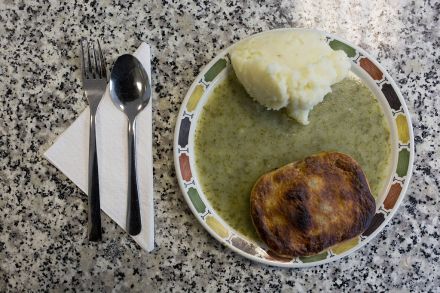
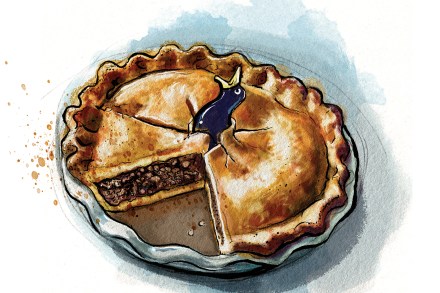
Sometimes, when it comes to culinary history, Britain is its own worst enemy. For a long time, British food has been seen as a joke among other nations, but also nearer to home. Even when the dishes are near indistinguishable, we’re still happy to poke fun at our own fare: we love panna cotta but laugh at blancmange; we cringe at stew but revere boeuf Bourguignon. They’re the same, but that doesn’t stop us. Where better to showcase the unsung hero braised beef mince than in a beautiful short-crust pie? Mince gets the worst of our inward-turned opprobrium, a leitmotif in our national food anthem. A pot of stewed mince speaks to all that is wrong with British food: staid, bland, brown, probably overcooked and definitely stuck in the 1950s.

All hail the microwave!

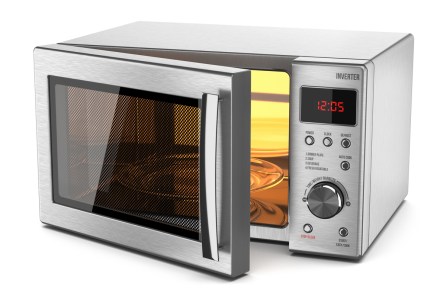
Marco Pierre White may have earned a reputation as the tousle-haired kitchen bad boy who once made Gordon Ramsay cry, but these days he spends his mornings rather more quietly, enjoying his kippers. Yet in his retirement, he can still cause controversy. He recently told a podcast how he cooks his kippers. ‘On a plate, paint it with butter, wrap in cling film, in the microwave, two to two and a half minutes.’ A microwave? Really, Marco?! Yes. As far as kippers go, his reasoning is spot on. ‘Most people put them under the grill, which intensifies the salt’. Meanwhile, boiling them – jugged kippers – washes away the flavour. In fact, there’s nothing wrong with a microwave. As Marco put it, the haters need to ‘take off the blinkers’.

Does ‘nestled’ offend you?

‘Shockin’!’ exclaimed my husband, almost biting a chunk out of his whisky glass. I had read to him an enquiry from Michael Howard KC, leader of the Admiralty Bar since 2000. ‘As your husband does not seem to have been enraged yet by the use of nestled as a (presumably) transitive verb in the passive voice (“nestled in the rolling Cotswold landscape” etc), perhaps I could persuade you to inveigh against this widespread abuse.’ I began by asking my husband why he found the usage so shocking. He said something about it resembling sat as in ‘sat in the corner, the child surveyed the room’. But nestled has long been established even as an attributive adjective: Elizabeth Barrett Browning wrote in 1856 of ‘little naked feet drawn up the way/ Of nestled birdlings’.

Spare me the truffle takeover

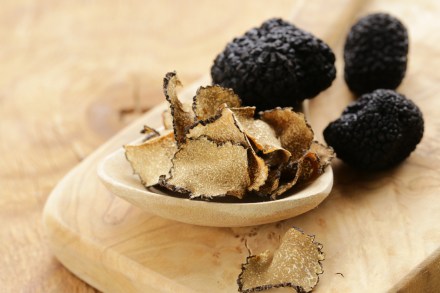
I remember, vividly, when working at Raymond Blanc’s Michelin-starred Le Manoir, the moment the truffles were delivered. A frisson went round the kitchen staff as the napkin covering the precious morsels was dramatically whipped off. Physically inspecting the gnarled, knobbly nuggets was a right reserved for head chef alone. As a lowly pot-washer, I was confined to the back, neck craned for a glimpse. So I am not blind to the excitement and sheer theatre of the treasured truffle. I even like them. But why on earth have they taken over every restaurant menu, as plentiful as lashings of ‘EV’ olive oil and flaky sea salt? 2018-19 was when the truffle takeover first got going on the London restaurant scene. Then the rot quickly set in.

You’re spoiling us: The Ambassadors Clubhouse reviewed

The Ambassadors Clubhouse is on Heddon Street, close to Savile Row and the fictional HQ of Kingsman, which was a kind of privatised MI6. I wonder if the Kingsmen eat here, being clubmen. Heddon Street needs fiction because its reality is one-dimensional. It is an alleyway behind Regent Street, and it used to be interesting. There was an avant-garde café under the Heddon Street Kitchen called The Cave of the Golden Calf. Ziggy Stardust was photographed for his album cover outside No. 23; from Heddon Street you could hear the Beatles play their final concert on the roof of 3 Savile Row in 1969. This is dense, fierce, very sophisticated food and it is all superb But that is over.

At Japan House humanity has arrived at the perfect future: food for ogling, not eating

There is a popular Japanese television show that features a segment called ‘Candy Or Not Candy?’. Contestants are presented with objects and must guess if they’re edible or not. Is that a dish sponge – or a steamed sponge cake? I might not consider afternoon tea to be art, but the confectionery artifice required to dupe contestants into mistaking the replica for reality is impressive – or at least entertaining. The lacquered steaks, fruits, vegetables and sliced bread feel wrong. They surely ought to be matte The inverse – using inedible materials to create replicas of food – is also a Japanese art form, and the subject of Looks Delicious! at Kensington’s Japan House.

Dining with the Chinese food pioneers of New York

From our US edition

For first-time restaurateur Bolun Yao, New York is a city to experiment in: “I feel like New York is the city that is always exploring new things. If you have a new idea, you put it here.” The Chinese-born entrepreneur — who has also spent significant time in New Zealand — came to NYU to complete a master’s degree in food studies. He quickly fell in love with the fine-dining Korean scene, including the two-Michelin-starred Atomix and COTE, America’s only Michelin-starred Korean steakhouse. Both merge contemporary and traditional techniques and ingredients. “Wow, that’s really, really smart and really creative,” the twenty-eight-year-old recalls thinking. “Why is there not a Chinese restaurant that does the same thing?

Chinese
Souls

Chicken soup for the souls: a feast for the dead

From our US edition

It’s indisputable. Food & Drink is The Spectator’s most important section. Ask yourself this: if you hadn’t eaten in days, would you have the slightest interest in perusing the deft political analysis, elevating cultural commentary and scintillating wit to be found the rest of the magazine? Without food, the only reading worth bothering with is Preparation for Death. As starvation sets in, only the two inevitables remain — Death and Taxes — and what need to worry about taxes? Tombstones have no mailboxes, shrouds no pockets. For over a millennium, November has been the month of the dead. The eleventh has been dedicated to fallen soldiers ever since World War One; but All Souls’ Day goes back much farther.

A teashop like no other: Sally Lunn’s Historic Eating House reviewed

Sally Lunn’s is a teashop in Bath. It sits in a lane by the abbey, and the Roman baths. Paganism and Christianity jostle here: Minerva battles Christ, who wins, for now. Sally Lunn’s calls itself ‘the oldest house in Bath’ (c. 1482). It is rough-hewn, with a vast teal window and pumpkins on display. The pumpkins might be plastic. I don’t know. Tourists queue in the hallway behind a large wooden cutout of a woman who might be Sally Lunn. She is a semi-mythical woman: the Huguenot refugee Solange Luyon, who came to Bath in the 1680s with brioche in her hands. No one knows if she really existed.

The secret to making great oysters Rockefeller

There’s nothing more intriguing than a closely guarded secret recipe. Coca-Cola and KFC are two famous examples, with the precise ingredients for the soda syrup and special coating kept in guarded vaults: the story is that those who hold the information aren’t allowed to travel on the same plane in case of disaster. Lea & Perrins, Angostura Bitters and Chartreuse all keep their products’ make-up secret. Making sure the butter is the brightest of greens is as important as any of the individual components Nobody knows the recipe for oysters Rockefeller – or at least nobody knows the original recipe. It was created in 1889 at Antoine’s restaurant in New Orleans, which still stands today, serving the same classically French food it did back in the 19th century.

An inedible catastrophe: Julie’s Restaurant reviewed

At Julie’s at the fag end of Saturday lunchtime, Notting Hill beauties are defiantly not eating, and the table is covered with crumbs. Restaurant Ozymandias, I think to myself. This is no longer a district for the perennially wracked, or unrich. The Black Cross – Martin Amis’s ideal pub in London Fields – is now a sushi joint. Of course it is. The omelette is bright yellow and tough, like a hi-viz croissant Julie’s, which is named for its first owner, the interior designer Julie Hodgess, mattered in the 1980s.

25 years on, no one compares to the Two Fat Ladies

They were loud, vivacious and gloriously un-PC.  Sometimes they seemed to be learning how to cook as they went, barely one step ahead of the viewer. It didn’t matter. If anything, it only made the BBC's Two Fat Ladies more watchable. And 25 years on – the last of the two dozen episodes pairing Jennifer Paterson and Clarissa Dickson Wright aired on 28 September 1999 – I miss terribly their jaunty style of cooking, glass in hand. I don’t think I’m alone. Spectacularly and unexpectedly successful in their lifetimes – 70 million worldwide watched their programme over its four-year run, including many in the US – the internet has allowed them to find fresh admirers since their death.

As good as Noble Rot: Cloth reviewed

Cloth is opposite St Bartholomew the Great on Cloth Fair. People call this place Farringdon, but it isn’t really: it belongs to the teaching hospital and the meat market and William Wallace who died a famous death here and has only a little plaque in turn. Smithfield embraces the dead. Sherlock Holmes met Dr Watson here and, for BBC1, jumped off the roof of the hospital. If Cloth calls itself a ‘neighbourhood wine bar’, which sounds less threatening than ‘restaurant’, its true customers are the dead, and that is no criticism. The chips are marvellous, and this matters. I always judge a restaurant on the chips I am early, so I sit in St Bartholomew the Less – this is how buildings fight!

In praise of Halloween food

From our US edition

If you’re hesitant to ask someone if they are American or Canadian — the latter are often offended to be mistaken for the former — ask them instead about their favorite holiday. It isn’t a foolproof method, but if they say Halloween then you know you’re talking to an American. No other nationality would choose it — because no one else gets it so right. The origins of All Hallows’ Eve belong to Ireland and Scotland. The Celtic festival Samhain was not only a huge feast to mark the start of winter: it was a day full of superstitious activity, which included bonfires to clear the air of ghosts and sacrifices to appease anything all-powerful that might curse food supplies during the dark months.

Halloween
cookbook

Culling cookbooks

From our US edition

How do you choose ten cookbooks out of more than a hundred collected over sixty years? With difficulty. After my beloved husband Richard died, I decided that the only place I would want to live without him was in Meursault, France. The most difficult part was having to leave behind my cookbook collection. For a food writer, it was a daunting challenge. Here is what made the cut. I obviously couldn’t get rid of my father Bob Jones’s The Outdoor Picture Cookbook, published in 1954 and launched to Americans over their morning coffee on NBC’s Today show. He demonstrated how to cook his famous grilled chuck steak as Arlene Francis and Dave Garroway looked on with a bevy of buckets at the ready in case of fire.

The anxiety-inducing world of wellness tech

I first came across the Zoe programme when a bright yellow package arrived on my parents’ doorstep last year. My mother, like many, had been wooed by the TV personality Davina McCall into ‘living her best life’ by ordering a Zoe gut-health testing kit (at an upfront cost of £299, or £599 for the Plus plan).  Zoe is the invention of Tim Spector, the professor-turned-health guru who ran the Covid symptom-tracker app throughout the pandemic. It’s a personalised nutrition programme that promises to make you ‘feel’ healthier and improve your gut health, energy levels and even flatulence.