Food

What would it take to make America healthy again?

From our US edition

The Executive Order establishing President Trump’s Make America Healthy Again Commission presented some big, fat, sobering truths. “Six in ten Americans have at least one chronic disease,” the order says, “and four in ten have two or more chronic diseases.” It also notes that our people don’t live, on average, as long as those in other developed nations: 78.8 years in the US compared to 82.6 years in our cousin countries. How did this happen? How did the world’s most powerful nation ever get to the point where 77 percent of its youth can’t qualify for military service and we need a commission to stop us from spiraling faster and faster down the Doritos Loco Tacos-Ozempic highway? Robert F. Kennedy Jr.

healthy
German

Why German-origin Americans keep quiet about their culinary contributions

From our US edition

Irish Americans are arguably the most ostentatious in their national celebrations. It is hard to imagine any other group getting a day off work and spending it turning the Chicago River green. I wrote of my own Irish pride in these pages last year. March 17 was the highlight of our social calendar. My grandfather inaugurated our city’s St. Patrick’s Day parade, which still runs in Great Falls, Montana, today. Montana — especially Butte — is famous for its Irish population, which makes up 15 percent of residents. But there is a significantly larger ethnic group in Montana, whose traces of national pride are almost imperceptible. According to a US Census Bureau survey in 2020, 24 percent of Montanans claim German ancestry.

A great-day-out cafe that’s good value: Kenwood House reviewed

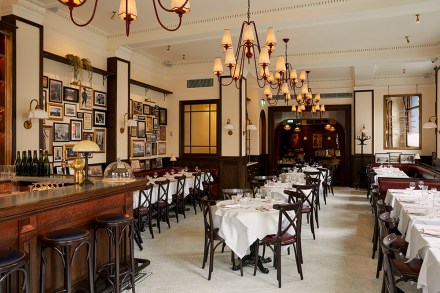
The immaculate bourgeois socialists of north London – that is not code for Jews – like to eat and drink in the former servants’ quarters of Kenwood House, because this is a mad country.  Kenwood is beautiful. It is Hampstead’s best house, standing at the top of the heath, near the head waters of the River Fleet, the river of the journalists. Further down the hill the immaculate bourgeois socialists gambol in the swimming ponds, which is apparently a fashionable thing to do. I prefer the lido, but I am not afraid of working-class teenagers. Hampstead Heath is an excitable woodland.

What music did our monarchs like?

Royal warrant The King revealed that among his favourite pieces of music were the 1980s hits ‘Upside Down’ by Diana Ross and ‘The Loco-motion’ by Kylie Minogue. What music did other monarchs like? – Elizabeth II was reported to have been partial to ‘Cheek to Cheek’ by Fred Astaire, ‘The White Cliffs of Dover’ by Vera Lynn and ‘Sing’ by Gary Barlow and Andrew Lloyd Webber, written to celebrate her Diamond Jubilee. – George V attended a command performance by Louis Armstrong in 1932, hinting at a fondness for jazz. – Edward VII knighted Sir Edward Elgar. Avocado blight Alan Titchmarsh implored people to eat cornflakes for breakfast rather than avocado on toast, on account of the ecological damage wrought.

The restaurant where time (and prices) have stood still

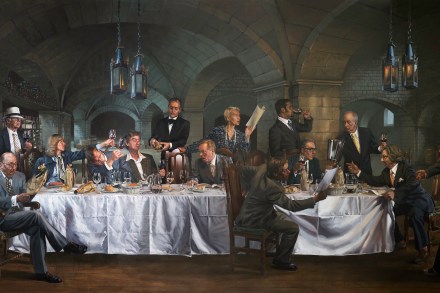
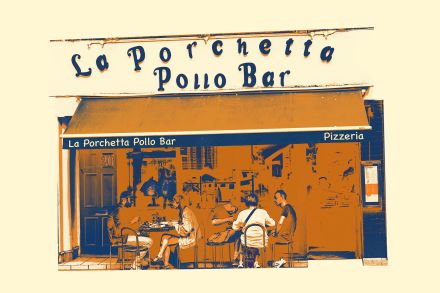
Walking into this crowded and clattering restaurant for the first time in more than 30 years, two things strike me almost immediately: 1) it seems to be largely unchanged and 2) the prices have scarcely risen. I can’t claim to have tried every wine list in Soho, but I can tell you with certainty that this is the first time in a very long time that I have seen a glass of wine for under £5 in the West End. But, incredibly, here it starts at £4.50 – with cocktails from £8.The restaurant is Pollo, as it’s still popularly known, or La Porchetta Pollo Bar as the sign outside calls it. It crams 100 covers on to two floors at the eastern end of Old Compton Street, just behind the Cambridge Theatre, in Soho.

In defence of red velvet cake

I will admit to having been dismissive of red velvet cake in the past, considering it to be bland in flavour and garish in colour. It tended to come in cupcake form with towering hats of super-sweet buttercream, which made it unpleasant and difficult to eat. The cult love for red velvet, inspiring scented candles and lip balms all smelling of synthetic vanilla, always struck me as a bit naff – the preserve of teenage girls queueing outside Instagram-bait bakeries. Why would you plump for a red velvet cupcake when you could have coffee and walnut or a lemon syrup-soaked sponge or a nobbly carrot cake? Red velvet was a cake for people who didn’t really like cake.

Stop scoffing food on trains!

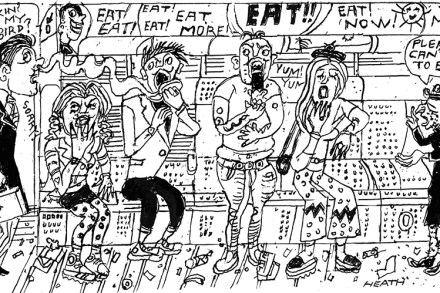
I’m on the 10.45 slow train to Ipswich. It’s not even lunchtime, yet everyone around me is already gorging on food. The corpulent man opposite is posting fistfuls of cheesy Doritos into his gaping maw, washing them down with cheap lager. A woman is noisily chomping her way through a limp burger that reeks of dirty vegetable oil. On my right, I’m greeted by the unmistakable whiff of Greggs meat pie, an unholy stench best described as ‘care-home carpet’. By the time we reach Colchester, the entire carriage sounds and smells like a student refectory, with competing crisp packets and loud slurping noises adding to my sense of despair at the awfulness of humankind. There is no longer much escape from the tyranny of ‘food-on-the-go’.

Something to relish: in praise of Patum Peperium

In a social media age, certain ingredients – long esteemed by those in the know – suddenly burst on to the scene. One morning we woke up to all the supermarkets stocking Mutti tinned tomatoes. Ortiz sardines and Perello Gordal olives are now in the limelight. I wonder – given the current zeitgeist for all things umami – whether Patum Peperium (Latin: ‘peppered paste’) could be next. Then again, the ‘Gentleman’s Relish’ – an anchovy paste made with butter and spices – isn’t for everyone. Much like Marmite, it has embraced this contentious reputation: ‘Dividing opinions since 1828’ it declares in its branding. After almost 200 years on the scene, it has started popping up in trendy spots, like a debonair rake sauntering into a party fashionably late.

The tiramisu is one of the loveliest things I’ve eaten anywhere: La Môme London reviewed

La Môme is the new ‘Mediterranean’ restaurant at the Berkeley, Knightsbridge’s monumental grand hotel. It has changed, as all London’s grand hotels have changed: it is Little Dubai in the cold and the chintz is on the bonfire. Fairy lights hang from the awning of the entrance, as if in an eternal Christmas. I barely recognise it, though I ate an impersonation of a mandarin in its overwrought Instagram-friendly bakery two years ago, and it was inferior to a real mandarin. I cling to that. Designers must keep busy: this means grand hotels are always getting renovated – it’s life of a kind. The lobby feels gold, though that may only be an impression.

The real benefit of wind power? Lobster for all!

In a world of bewildering uncertainty and breakneck change, where a pack of butter now costs about the same as a small family saloon in the 1950s, there is at last some good news to cheer the soul. It concerns the lobster, that culinarily appealing crustacean which has sustained us nutritionally since the Stone Age – albeit in recent times mainly for the wealthier sort. Suddenly, the lobster has got the wind in its sails. It’s thanks in no small part to Britain’s rather quixotic, headlong dash to become, seemingly, the only net-zero country in the world, and the enormous wind turbines that have been springing up off our shores to help this take place. Because – would you believe it?

The Caviar Kaspia experience

From our US edition

It’s been almost 100 years since Arcady Fixon, a refugee from the Russian Revolution, opened the doors of Caviar Kaspia on Place de la Madeleine in Paris, and began beguiling his fellow exiles and the crème of Paris society with the exotic flavors of his homeland: shiny black caviar, served with blinis or potatoes, and ice-cold vodka. After being passed down through family hands, Caviar Kaspia is now owned by the charismatic entrepreneur Ramon Mac-Crohon, who has ensured that the place has lost nothing of its prerevolutionary charm: Nicolas II’s seal sits alongside antique porcelain in a display cabinet, and Nicolas Swertschkoff’s Troika, depicting a Russian horse-drawn sledge moving through snow, still hangs in the dining room.

A pint, a punch and a scotch egg

My local gastropub, which is very popular, serves a hot, freshly made and runny-yolked scotch egg. It's billed as a ‘Cackleberry Farm Scotch Egg with Maldonado Salt’ because part of hospitality is marketing. If you just chalk up ‘scotch egg’ on a board, it doesn’t entice the appetite in quite the same way. But call it ‘œuf écossais enrobés de chair à saucisse’ and serve it on a cracked slate tile – you’ve got yourself a stampede. A couple who live in the village visited the pub and ordered two of them. Shortly after being served, the husband of the couple returned the plates to the bar and asked the staff to reheat their partially eaten scotch eggs. The landlord explained that he could not reheat them once they had been partially eaten.

In defence of lard

It’s somewhat risky to make the case for lard for a publication whose cookery columnist is the author of a book on butter. But so be it. Because lard has generally been at best overlooked and at worst openly maligned, and that is madness. The cost of cooking oils has rocketed in the past couple of years – sunflower oil has trebled in price, olive oil doubled. Butter is much dearer too. Yet inexplicably no one has suggested lard might step in to save the day. The cheapest pack of butter at Tesco will currently cost you £1.99. A block of lard is 50p. It has long been a slight object of ridicule. A ‘tub of lard’ is somehow crueller an insult than the Shakespearean ‘fat as butter’.

Spanish

Why did Spain leave behind such terrible food?

From our US edition

I can still remember it: probably the worst seafood dinner of my life. A slice of fish that was simultaneously cold, hot, dry, crumbly and rubbery, surrounded by overcooked vegetables and accompanied by a mysterious whiff of cigarette smoke. It was so repellent that even though I was famished, I summoned the waiter, returned the dish and retired to my room, there to endure a dinner of Pringles from the minibar. What made it worse was that I was in a celebrated fishing port. All I had to do was look out the window and I could see trawlers bringing in some of the world’s finest fish from some of the planet’s richest seas. It was dismaying, saddening, deflating and left me starving. What it was not, however, was surprising.

How to get a table at Audley Public House

The Audley Public House is on the corner of North Audley Street and Mount Street in Mayfair, opposite the Purdey gun shop where you can buy a gun and a cashmere cape, because the world has changed. The Audley is a vast pale-pink Victorian castle, and it meets Mayfair in grandeur and prettiness. If the Audley looks like it could puncture you with an ornamental pinnacle, it also seems frosted with sugar – but that is money. This is the tourist Mayfair of the affluent American imagination: the pharmacies and grocers have gone, replaced by fashion (Balmain, Simone Rocha) and the spirit of Paddington Bear. Woody Allen shot Match Point in the Audley, and that is the most normal thing about it now.

Why are we going nuts for pistachio?

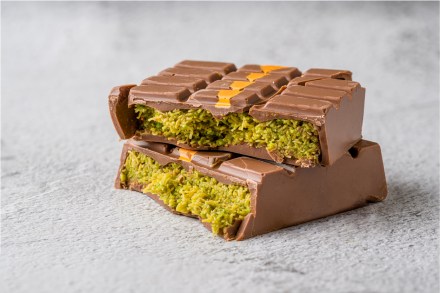
You could be forgiven for thinking you’d walked into Oz: in the past couple of years, the whole world has gone green. Pale green, to be precise. Suddenly, pistachio is everywhere: it's in our pastries, our chocolate, our coffees, our puddings, and even showing up in perfumes, paint charts, scented candles and on our fashion runways. Where has this sudden lust for pistachio come from? In one way, pistachios are old news: they’re an ancient crop that has grown in the Middle East and been used as an ingredient in Middle Eastern and Mediterranean cookery for as long as can be remembered.

Can you still afford to eat out?

Many of us will remember, misty-eyed, how things changed around the turn of the century. How Britain ceased to be a nation brutalised by rationing and rissoles and instead blossomed into a utopia of celebrity chefs, endless food TV and a population seemingly willing and able to eat out most nights of the week. We no longer regarded ourselves as poor cousins to European nations with ‘cuisines’ – hell, Michelin stars glittered from every orifice. We had the uncalibrated zealotry of converts. In the years following the pandemic, UK hospitality came blinking back into the light, adopted a collective fixed grin and the can-do attitude of small businesspeople, and did some amazing things while trying to get back to that prelapsarian state of glory.

Is a soul the only thing unavailable in Harrods?

The Harrods bookshop, which I browse for masochistic reasons, is mesmerising: an homage to the lure of ownership. The first book I find is called, simply, 150 Houses. Is that enough? Then I find Luxury Trains, the Porsche Book, the Lamborghini Book and the Jaguar Book. Then I find a book designed for a lifelong self-guided tour of the world of James Bond, who is a fictional British civil servant. Then I find books called Dior, Balmain, Prada and Gucci. I didn’t know they did words. I want to tell you that the Harrods bookshop is entirely advertorial for the life I can’t afford, but that would be unfair. Because I also find a copy of Mansfield Park in the same colours as a Minion: custard yellow and bright blue.

I can’t stand Stanley Tucci

From our US edition

I love Italian food, and I love food writing and TV shows, so you might think I’d love Stanley Tucci. And yet I find him creepy and his recipes are rubbish. I can’t be the only one. The actor, who I first saw in the brilliant film Big Night, about a Jersey Shore Italian-American restaurant, is probably best known for The Devil Wears Prada, a film I adore. His character in that film did wind me up, but it took a while before Tucci himself got on my nerves. I suppose it began with him coming over all chef, like he’s the new Anthony Bourdain. I kept being told to watch his TV series where he travels around Italy, but the sight of his smug face on my screen turned out to be more than I could bear.

Stanley Tucci