Food

Are you a hotel buffet bandit?

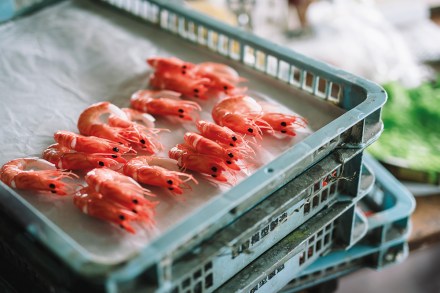
Last week, on a Swedish train somewhere between Linkoping and Mjolby, as I struggled to open a bag of cheesy doofers that was to serve as my lunch, my travel companions began unwrapping their own picnics. Some, like me, had made hasty and unappetising purchases at the station. Others had carefully curated lunches, assembled earlier in the day from our hotel’s lavish breakfast buffet. Well-filled rolls, pieces of fruit, pastries. In they tucked. Germans may be on the march at dawn, annexing sun loungers, but it’s the Brits who secrete breakfast goods I was suddenly aware of a frisson of stance-taking rippling through our group. There were those who regarded buffet plundering as theft and those who defended it as plain common sense.

Letters: Lucy Letby and the statistics myth

Pensioners at risk Sir: Douglas Murray wonders what would have happened if a Conservative chancellor had announced the removal of the winter fuel payment (‘Labour’s age of miracles’, 31 August) and speculates about the reaction. No such speculation is needed: the Conservative manifesto of 2017 stated that it would means test this benefit, as Labour is now doing. The Labour party’s reaction was to publish research stating that up to 4,000 pensioners’ lives would be at risk and add that ‘pensioners in our country will struggle to heat their homes’ (the then shadow chancellor John McDonnell, as widely quoted in the press). No journalist has yet put this to the government. Does the government agree with its party’s research then, and if not, how is it different now?

Is it time to pity restaurant critics?

An atom is made of protons, electrons and neutrons, and protons are made of quarks, and a quark is the size of the violin you’d play for a restaurant critic who complains about their job. It’s the best job in the world: go out for dinner on expenses with a friend or a lover, then bash out a thousand words. Why, then, might we feel some pity for our restaurant critics? One reason could be that the Grim Reaper is hovering. Last week, the Evening Standard’s restaurant critic Jimi Famurewa announced that his column was being scrapped, as the paper moves to a weekly edition. Another reason, perhaps, is the lifestyle of a restaurant critic. Earlier this year, the New York Times’s Pete Wells left his column for health reasons: ‘I can’t hack the week-to-week reviewing life any more.

Curiously understated: Porthminster Kitchen reviewed

Porthminster Kitchen sits above Warren’s Bakery on St Ives Harbour, like a paradigm of the British class system in food. This happens everywhere, but it is particularly pronounced in St Ives, which is unlucky enough to be a site of pilgrimage for Virginia Woolf addicts – her childhood holiday home sits above the town, her lighthouse is on the bay – and other feckless Londoners. But the balance is long lost. Since the Tate Gallery arrived in 1993, Cornish natives, who used to live alongside artists – Barbara Hepworth, Patrick Heron – have left the old town (‘downalong’).

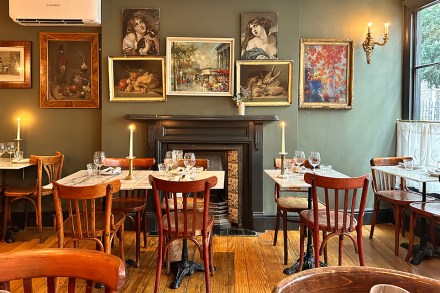
A slice of Paris in Crouch End: Bistro Aix reviewed

There is a wonderful cognitive dissonance to Bistro Aix. It thinks it is in Paris but it is really in Crouch End, the flatter twin to Muswell Hill, a district so charismatic it had its own serial killer in Dennis Nilsen. (He killed more people in Willesden, but Willesden doesn’t receive its due: here or anywhere.) We pick our way through the Versailles of north London, past Little Waitrose and the clock tower I have never thrived in Paris. My sister says I always go with the wrong men, which is unfair, because it was a school trip and I had no choice about the (very small) men. I prefer the Paris of my imagination, which is quite a lot like Bistro Aix in Crouch End.

Hotel hopping in Rome

From our US edition

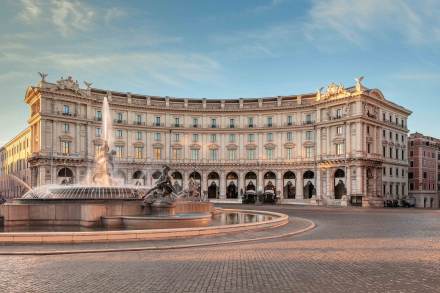
Summer in Rome. Expectation: breathe the soul of the classics, soak up the history, feel the romance. Reality: breathe in the AC, soak in a pool of sweat, feel ever so slightly unhinged. My plans to indulge in Italy’s time-honored tradition of la passeggiata — strolling around looking stylish, gelato in hand — were quickly nixed by the Cerberus heatwave. Dreams of meandering around perhaps the world’s most famous open-air museum gave way to lying recumbent with a handheld fan. Jumping from the relative cool of a sleeper-train carriage onto the platform at Termini station felt akin to opening an oven door and climbing in. Red alert warnings were issued as the mercury soared toward 119°F.

Rome
carbonara

Carbonara in the land of the free

From our US edition

In Texas the customers have opinions, and the opinions are always right, no matter how wrong. It was carbonara that taught me this crucial lesson. The diners at the restaurant where I worked brought the American talent for innovation to modifying what I had always considered a fairly simple, self-contained dish. Can you add fried chicken? Can you add grilled shrimp? Can you add meatballs? Can you add tomato sauce and meatballs? Can you do it without guanciale, without egg, without cheese? Can you do it like normal but put a fried egg on top? Can you replace the guanciale with a fillet of salmon? The answer is always yes. At the time, I was cooking at a neighborhood Italian place in a leafy part of Austin full of well-off old hippies, professional families and Texas politicos.

Baked Alaska

Baked Alaska has become more accessible than ever

From our US edition

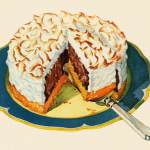
This doesn’t feel right. I am wrapping plastic around a freshly baked cake, preparatory to putting it in the freezer for thirty minutes. Then, I’m supposed to take it out and gingerly unmold a bowl of ice cream on top of it. Back into the freezer after that for another hour or so. The bowl of ice cream is lined with plastic wrap and filled with layers of raspberry sorbet, mango sorbet and chocolate ice cream. The ice cream was pressed flat to fill up all the gaps, and it went into the deep freeze two hours ago. Will it be firm enough to hold a beautiful dome shape as it unmolds onto the cake? Or will it slither and slide everywhere? I’m making Baked Alaska — or what seems to be a modern twist on it.

A French restaurant Glastonbury would be proud to host: Café Lapérouse reviewed

I am working my way around the restaurants of the Old War Office (OWO), now an acronym and Raffles hotel on Whitehall, because the swiftness with which the great institutions of the state have become leisure opportunities for the wrongfully rich is dark, mesmerising and, if you don’t mind too much anarchy, funny. I have reviewed the cold, painted Saison, and the lively Italian Paper Moon, which a kind reader wrote to say he loved and which I do not expect to survive. It is too joyful and well-priced for the wrongfully rich and their internal landscape of nude cashmere and paranoia. It squeaked through. The transience of the exterior is not mirrored within. The opposite is true Here, now, is Café Lapérouse in the courtyard.

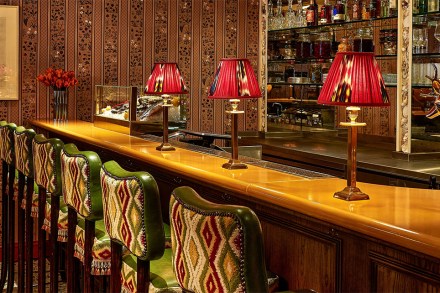
Jeremy King has done it again: The Park, reviewed

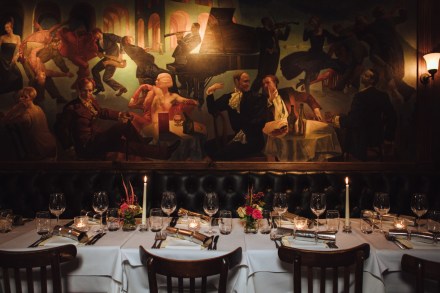
The Park is the new restaurant from Jeremy King, and it sits in a golden building to the north of Hyde Park, just off Queensway. This is an interesting district compared with Knightsbridge – it is still capable of reality – but isn’t every-where interesting compared with Knightsbridge? The Park is Art Deco of course: the presiding aesthetic of familiarity, snatched joy and inevitable doom. It looks like an exquisitely appointed cruise ship of the mid-20th century King is a specialist in grand cafés. He opened the Wolseley in Piccadilly and the Delaunay on the Aldwych, though he lost them to his feckless backers in 2022, and has begun again with Arlington by the Ritz, Simpson’s on the Strand, pending, and this. Queensway has a grand café now, and I am pleased for it.

Going ham in Andalusia

From our US edition

In Spain you can eat all day — and we did. Earlier in the summer, I spent two days in Andalusia, and most of the forty-eight hours were taken up by mealtimes. A breakfast of the sweet porridge poleá started the day, then ham-tasting for a mid-morning snack followed by a two-hour lunch. I didn’t think it was possible to eat all day, but when the food is this good and meticulously chosen, it is. Spanish chef José Pizarro led the way, taking us to his favorite restaurants and showing us where he sources the ham and caviar for his own.

ham
pavlova

Pavlova: a dessert inspired by the Dying Swan

From our US edition

Pastry chef Alistair Wise says never to make pavlova on a rainy day. “Just forget about it,” he advises. And that’s only the tip of the iceberg when it comes to perfect-pavlova advice. Run a cut lemon around the inside of your bowl before whipping the egg whites. Don’t use fresh egg whites, but also don’t use cold egg whites. Don’t use a plastic bowl, as it may harbor grease. The bowl you do use must be scrupulously cleaned and dried... Don’t whip the whites on a “high” setting, but whatever you do, definitely don’t whip them on low. Use clean sugar — cue the desperate self-analysis of one who has never second-guessed the cleanliness of bagged sugar! Use superfine sugar, or all will be a disaster.

Keep Michelin men out of our hotels!

It’s probably escaped most people’s attention, what with the football, the election, the Ukraine war, the horrors of Gaza, the assassination attempt and the revelation that the most powerful human on the planet has the intellectual sharpness of a daffodil. But in the past few weeks, the world of travel has been roiled by a surprising innovation: Michelin stars for hotels. Though the stars are stylised as ‘keys’. This may not seem like big pommes de terre, but it is quite important. Because, if the concept takes off and hotels start striving for Michelin accolades, then we can expect the best and most ambitious to go the same way as Michelin-mad restaurants. And that will be bad. You could argue it shouldn’t be a problem, as hotels already have star ratings.

48 hours of food in Andalusia

In Spain, you can eat all day – and we did. Earlier in the summer, I spent two days in Andalusia, and most of the 48 hours were taken up by mealtimes. A breakfast of the sweet porridge poleá started the day, then ham-tasting for a mid-morning snack, followed by a two-hour lunch. Spanish law requires that each Iberian pig gets 10,000 square metres to roam – a Cinco Jotas pig gets twice that Spanish chef José Pizarro led the way, taking us to his favourite restaurants and showing us where he sources his ham and caviar. I ate some of the best fish I’ve ever tasted – seafood croquettes on the beachfront at Chiringuito Tropicana in Málaga; creamy black squid ink rolls with flaky crust dipped in aioli at Eslava. Locals are mad for these restaurants.

‘An uneasy place’: Chez Roux at The Langham reviewed

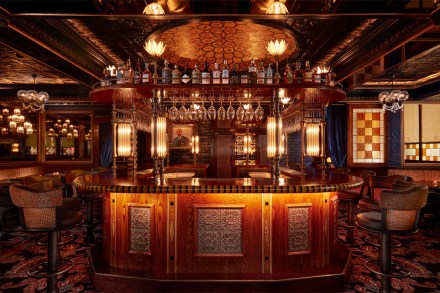
The Langham is a Victorian Gothic hotel opposite the BBC in Portland Place. It’s an odd place: haunted house near the wreckage of Newsnight. Perhaps I think this because the last time I came here I interviewed Jeremy Paxman about his ghosts: when he was anxious he banged the wall. The time before, my godmother collapsed at tea in this very room, now Chez Roux. It’s a vast, dimly lit silver space. The lights are long and slender, like giant earrings. Palms wobble. A palm court is a Victorian conceit; the Titanic also had one. I wonder if they were here for Napoleon III, Guy Burgess, or Sherlock Holmes. I wonder how they stay alive in darkness. Le Gavroche closed in January, and if it hasa successor, it is this It’s a hard thing to dress, a windowless room.

With Hadley Freeman

24 min listen

Hadley Freeman is a journalist and author. She writes for The Sunday Times, having previously written for The Guardian. Her books include House of Glass: The Story and Secrets of a Twentieth-Century Jewish Family and Good Girls: A Story and Study of Anorexia. Her new book, Blindness: October 7 and the Left, is out now.  On the podcast, she tells Lara about her difficult relationship with food growing up. They also discuss her sentimentality for crepe restaurants, and taco truck culture.

You know when you’ve been ‘Peru’d’

From our US edition

"Did you get Peru'd?" That's the question my boss, who once lived there, always asks people when they return. The idiom implies that something has gone terribly wrong, because, so my boss argues, that's inevitable during a visit to the land of the Inca. Lost luggage, food poisoning, petty theft: all of them, or worse, constitute being "Peru'd." During a recent happy hour, a colleague was describing how much she enjoyed her recent vacation to Lima and Cuzco. “Did you get Peru’d?” my boss queried. No, the woman asserted, she did not; it was a lovely trip. Another colleague piped in: “But didn’t you get Covid?” Well, yes, that’s true, she did get Covid. “You got Peru’d,” my boss decreed.

Peru

Iron clad: good cooking’s most essential metal

From our US edition

Miles Coverdale’s translation of Psalm 105 in the Book of Common Prayer elevated iron from metallurgical to literary significance. The story of Joseph being sold unjustly as a bondservant — “Whose feet they hurt in the stocks: the iron entered into his soul” — shames flaccid times like ours. And iron’s virtues excel not least of all in cooking, where it can enter literally into our bodies and, who knows, maybe our souls too. Joseph just got things started. Think of the first ironclads, Monitor and Merrimac, hammering away at each other at Hampton Roads in 1862, of the dreadnoughts that put paid to Nelson’s wooden walls, of Agatha Christie’s ironclad alibis, of the verse in Christina Rossetti’s great carol: “Earth stood hard as iron, water like a stone.

iron

Venezuela’s arepas are a godsend

From our US edition

Venezuela is a prideful nation. Prideful about what? Is it the inflation or the fact that close to 25 percent of the oil-rich country’s population has fled the place? I know, the pride sounds misplaced. The average American likely thinks about their own southern border, dog-eating and communism when Venezuela is mentioned. Yet Venezuela also has the world’s tallest waterfall (Angel Falls), the most wins in the big four international beauty pageants, stunning white-sand beaches, lots of oil and award-winning rum and cocoa. Still, if there’s anything that makes me want to sing the Venezuelan national anthem, as someone who spent part of his childhood in Caracas, it’s the taste of a chicken, avocado and Gouda-filled arepa.

arepas

How to make the perfect clafoutis

From our US edition

Clafoutis. Difficult to pronounce. But oh-so divine and easy to make. Originating in the Limousin region in south-central France, its name comes from the Provençal clafir, “to fill.” So popular was it “to fill” a dish with fruit and batter, that by the nineteenth century, the renown of clafoutis had spread from the Limousin to other regions of France and bordering countries. This classic and elegant summer dessert is usually made with cherries, among the first fruits to ripen, but also with other stone fruit as they appear — apricots, plums, berries and on into the fall with pears.

clafoutis