Exhibitions

Behind Wes Anderson’s infamous sensibility

From our US edition

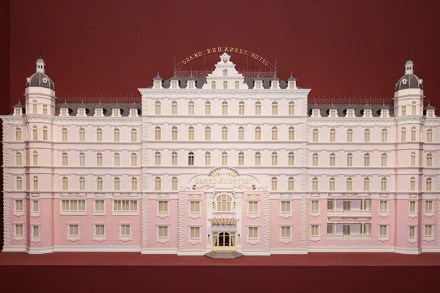
Woody Allen once sardonically described the fans of his films as being divided between those who liked the “early, funny ones” and the later, darker pictures. Much the same might be said of another famous WA: Wes Anderson, who has established himself as one of American cinema’s most significant auteurs despite no longer living in the country – he hops between England and France. Like most auteurs, his films are more succèss d’estime than they are succèss de box office, but he has the cream of Hollywood lining up to work with him and commands respect among actors young and old. Anderson is rightly celebrated – or castigated – as a visual stylist, but he has enormous flair as a screenwriter Anderson’s visual sensibility is infamous.

The depth of Edmund de Waal

From our US edition

“I’m very, very proud of making pots,” says Edmund de Waal. “I don’t call myself a conceptual artist.” He is putting the finishing touches to an exhibition of ceramic sculptures at Gagosian’s Beverly Hills gallery. Around the walls are sleek, tiered vitrines filled with porcelain vessels, along with a sequence of smaller gold-painted boxes – “reliquaries,” as de Waal calls them, inspired by the early Renaissance master Duccio. “I hate the word minimalism. I find it completely useless as a term.” In the last 20 years, de Waal has risen from the status of a humble ceramicist to become one of Britain and America’s leading contemporary artists, best known for his multipart installations of pots.

Dazzling: Hawaii, at the British Museum, reviewed

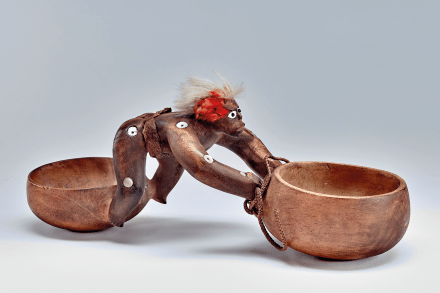
Climb the Reading Room steps to reach the British Museum’s dazzling Hawaii exhibition, and you perform an obeisance. At the top is a representation of Ku, a larger-than-human god of war and chiefly power, carved in stylish fury from the trunk of a breadfruit tree. He once commanded a flight of stairs at the Museum of Mankind in Burlington Gardens. In Hawaii he would have looked down with royal authority from a stone temple mound. We pass below him into the show, it feels, only with his consent. This is a landmark event that tells of moving encounters with stunning exhibits For that we should offer thanks. At an important time for the museum (on which more below), this is a landmark event that tells of moving encounters with stunning exhibits.

My Name is Orson Welles was illuminating

From our US edition

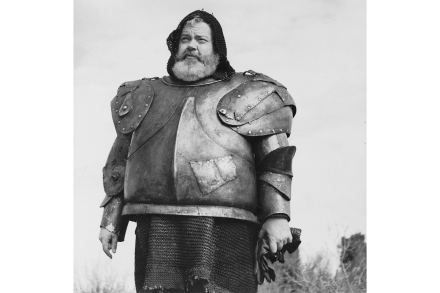
Orson Welles (1915-85) considered the notion of posterity vulgar, but he knew that he’d be loved once he was dead. That death came suddenly, just over 40 years ago, on October 10, 1985. There was a poignancy to the way death took him – sitting at his typewriter after appearing on Merv Griffin’s talk show. By then, the co-writer, director and star of the greatest film ever made, Citizen Kane (1941), hadn’t finished a film since 1973’s ignored but now quietly loved F for Fake. At the end of his life, he may have been better known as the guy in Paul Masson wine commercials than as a cinematic genius. To commemorate the 40th anniversary of his passing, Paris’s Cinémathèque Française last fall arranged the illuminating exhibition My Name is Orson Welles.

orson welles

Cadavers will always captivate. Museums need to chill out

Is it right to put human remains on show? It’s a question that museum curators and the public have been asking themselves ever since European institutions began displaying bodies of the dead – notably Egyptian mummies – in the early 19th century. It’s the same question that continues to be posed today in Canterbury. Here, an exhibition at the Beaney House of Art & Knowledge chronicles and collates the significant archaeological discoveries in and around the city over recent decades. Finds that have unearthed skeletons of the city’s previous occupants – mostly Anglo-Saxon nobility and Roman soldiers and civilians from the 2nd and 3rd century AD. The question remains the same: what to do with these remains?

Constable changed the course of painting, not Turner

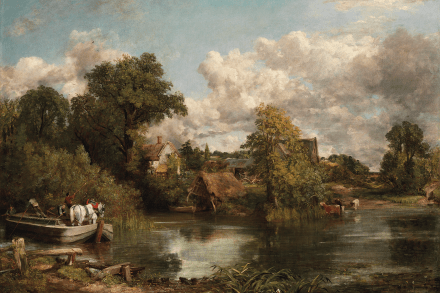
Flanders and Swann; Tom and Jerry. Some things come in pairs. Like Turner and Constable, even though our two most famous painters were more like chalk and cheese than cheese and pickle. They were close contemporaries: Turner was born in 1775, Constable a year later. Both painted landscapes. But that’s almost all they had in common. In every other way that matters, personal and artistic, they could hardly have been more different. Turner was a prodigy, a student at the Royal Academy Schools from the age of 14 and an associate (ARA) at 24. That same year, Constable had only just enrolled in the Schools, and was not elected ARA until he was 33. Constable did not become a full RA until the age of 52, while Turner had been one since he was 27.

The thrill of Stanley Spencer

‘Places in Cookham seem to me possessed by a sacred presence of which the inhabitants are unaware,’ wrote Stanley Spencer. Mystically devoted to the Berkshire village near the Thames where he grew up, Spencer was synonymous with Cookham as early as 1912, when he was at the Slade; ‘Cookham’ was his nickname. His greatest work is probably ‘The Resurrection, Cookham’ (1924-7), and he lived out his life there. He became known for pushing an old pram full of paints around town. The former Wesleyan Chapel, where he worshipped as a boy, is now the Stanley Spencer Gallery. So it was intriguing to come across this new show connecting him with Suffolk.

This exhibition made my companion gasp

Numerous research academics have contributed to this highly cogent show celebrating the craftspeople of Ancient Egypt. My pre-teen companion, though a big fan of Egypt, was still slightly hesitant about whether this would be the most interesting angle. It began with a 4,000-year-old stele, or tombstone, on loan from the Louvre, praising the sculptural and painterly skills of an artisan called Irtysen, about whom, of course, nothing more is known. The perennial problem. General information, however, came thick and fast. We learned that a cooperative of skilled workers was a hemut, and a singular skilled worker a hemu.

The Two Roberts drank, danced, fought – but how good was their art?

The Two Roberts, Robert MacBryde (1913-66) and Robert Colquhoun (1914-62), are figures of a lost British bohemia. Both born in Ayrshire, they met on their first day at the Glasgow School of Art, becoming lifelong partners and painters. Well-connected in louche literary London, their conversational barbs were recorded by Julian Maclaren-Ross, their jig-dancing antics noted by Joan Wyndham, their drunken fights observed by Anthony Cronin – so that one sometimes forgets what sort of art they made. This show, staged in a former municipal building in Lewes, is a reminder. The work is haunted, unbeautiful British neo-romanticism, second cousin to Piper and Sutherland. They established this angsty, angular modernist style in the 1940s.

Lice combs, vaginal syringes and cesspits: at home in 17th century Holland

The room is dark, the lighting deliberately low. At its centre stands a solitary object: a yellow and green earthenware vessel decorated with biblical symbolism. It’s a fireguard – or ‘curfew’ – used to keep households safe as peat fire embers smouldered through the night. Around it is a mocked-up fireplace, conjuring up that liminal moment when everyone is still asleep and the day has yet to stir. Ths scene is set, the world outside silenced. This is how Amsterdam’s Rijksmuseum has chosen to answer one of its most frequently asked questions: what was daily life really like?

The melancholy genius of Joseph Wright of Derby

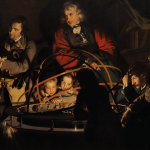
If you lived in the 1760s and were affluent enough – and curious enough – science could be a family affair. The instrument maker Benjamin Martin actually marketed scientific equipment for amateurs, complete with an instruction manual listing simple, edifying experiments for home enjoyment. And so in 1768, in ‘An Experiment on a Bird in the Air Pump’, Joseph Wright (1734-97) painted a group of family and friends attempting Experiment 42 in Martin’s manual. You’re sure to have seen it: a darkened room with a white bird wilting in a glass bulb while the faces of the participants – a magus-like scientist, a fashionable couple, a frightened little girl burying her face in her dad’s coat – are half-illumined in a pure, almost supernatural light.

There is little sadder than the death of a language

The last Yana-speaker in the world died in 1916. When Ishi was born, the Yana were still a small but healthy collection of tribes ranging the Sierra Nevada mountains of California, where they lived off what they could hunt and the salmon they caught in the rivers. But gold had been discovered in California and every year tens of thousands of settlers were arriving to stake out a claim. When Ishi was four years old, there was a massacre of Yana people near what’s now Mill Creek; Ishi’s father was one of the people killed. The last few survivors disappeared into the hills. The white settlers never encountered them again; as far as they knew the Yana had been wiped out.

Unesco are idiots

Of all the moronic decisions made by cultural organisations over the past 50 years, probably the most insulting and retrograde is the decision, in 2021, by Unesco to strip Liverpool of its world heritage status. Unesco said the development of the docks amounted to an ‘irreversible loss’. The regeneration of the waterfront, including the building of Everton’s new £500 million stadium, was blamed for destroying Liverpool’s ‘outstanding universal value’.  I walked up Liverpool’s Regent Road for half an hour to see for myself. Doing so took me through one of the most derelict wards in the country, the old docklands. I didn’t pass another human being for a good 20 minutes, only cars screaming. There was some majesty in the buildings. The Tobacco Warehouse is beautiful.

Adam McEwen’s small masterpieces of the uncanny

From our US edition

We meet at Adam McEwen’s apartment on the Upper East Side, a few hours before he makes a lightning trip back to London, where he was once a journalist working for the Daily Telegraph. After studying art, McEwen worked for a while writing obituaries, and his eureka moment came in 2000 with the decision to turn his day job into art. He began to write fake obituaries for living subjects, adopting the detached prose and visual design of a broadsheet newspaper. Each text was presented as a black-and-white C-print, and subjects included Jeff Koons, Marilyn Chambers, Macaulay Culkin and Nicole Kidman. McEwen’s fictitious obituaries are small masterpieces of the uncanny. In the instant of reading one, the hypothesized death seems real.

McEwen

A remarkable insight into Le Carré’s working methods

When Richard Ovenden of the Bodleian Library wrote to John le Carré asking if the writer would leave it his papers, he got more than he could ever have bargained for. Le Carré not only responded with enthusiasm, explaining that ‘Oxford was Smiley’s spiritual home, as it is mine’, but also sent along 85 boxes of neatly arranged papers and memorabilia. After le Carré’s death in 2020 came a second larger tranche; the total archive consisted of more than 1,200 boxes. This was a writer who threw nothing out. Selected fruits of this vast haul can be seen in a new and impressive exhibition in the Bodleian’s Weston Library (formerly the New Bodleian).

The dying art of costume design

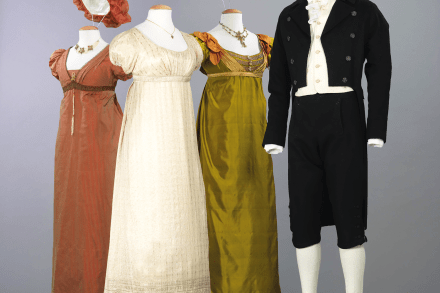
At the receptionist’s desk in Cosprop’s studio and costume warehouse, a former Kwik Fit garage, the sloping bleakness of Holloway Road is held at bay by a small chandelier, brassy lighting and a bound guest book. It’s a bit stagey, like a filmset for a cheap foreign hotel or an expensive shrink’s office, quite out of place in the real north London high street. But as the entrance to a costume house that builds worlds and people out of bits of fabric, feathers and jewels, it’s appropriate. Suspend all disbelief, ye who enter here. Cosprop was founded by the costume designer John Bright in 1965.

Loud luxury in London

From our US edition

If you count among the Anglophiles emerging from Downton Abbey: The Grand Finale misty-eyed, you might be interested to hear that London's cultural calendar is having a maximalist moment. Harking back to eras of pomp, excess and pouffy outfits, two exhibitions showcase icons who made extravagance an art form: David Bowie and Marie Antoinette. In South Kensington, the Victoria and Albert Museum is hosting Marie Antoinette Style, dedicated to the most fashionable teen queen in history. Across town, the David Bowie Centre in the brand-new V&A East Storehouse space (bigger than 30 basketball courts) reveals over 90,000 items from the singer’s archive.

london luxury

The art of dining

Ivan Day pulls out an old Habsburg cookbook from his library. The 300-year-old volume is so thick it’s almost a perfect cube, and by some miracle the spine remains intact as he opens it. ‘It’s like a big Harry Potter spellbook,’ he jokes while flicking through drawings of pastry baked in the shapes of dolphins, tortoises, pelicans and griffins. I recognise one design from the half-eaten pie in his kitchen: a cross between a soup tureen and an embroidered throw pillow. Ivan is a curator, self-trained cook and Britain’s premier historian of food.

The best Turner Prize in years

So, the Turner Prize: where do we start? It’s Britain’s most prestigious art award, one that used to mean something and now attracts little more than indifference. Taking place every year, it grants £25,000 to a winner chosen from four shortlisted artists, all of whom are obliged to display work together either at Tate Britain, or at a regional gallery. The latest iteration, at Bradford’s Cartwright Hall, is the best in a while – but before we get to that, some context. The Turner was established in 1984, but only really grabbed anyone’s attention when Channel 4 began televising the prize-giving ceremony in the 1990s.