Exhibitions

Tracey Emin at her most operatic

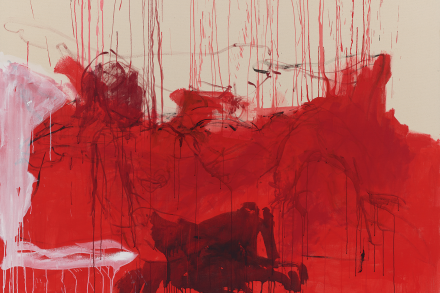
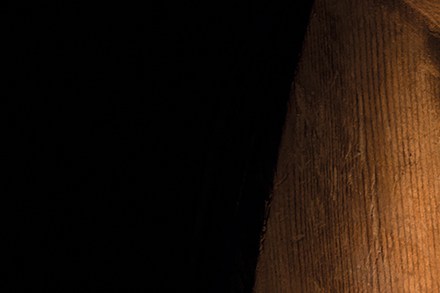
I feared this summing-up of Tracey Emin’s career might be self-congratulatory – biennale here, damehood there. But it’s Emin at her most operatic, facing mortality after surviving extensive surgery for bladder cancer in 2021. Blood and suffering are its subjects: the broken body, and the ascension of the spirit. The Young British Artists are getting on for 60, and Emin embraces it. Arranged in the centre of the exhibition is a ‘corridor to the afterlife’, inspired by an Egyptian tomb, dark and narrow. Along one side are sexy Polaroids she took of herself 26 years ago, along the other, gruesome hospital selfies. You might not want to look too closely

A Tate show with dreamy, elusive power

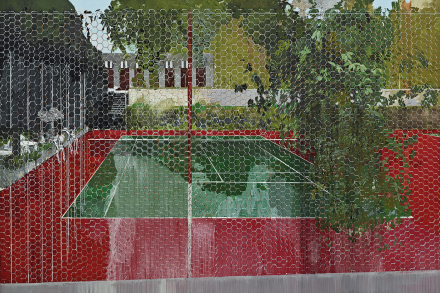
One of the miracles of art history is how painting, so often written off, keeps on coming back. Right now we are in the middle of just such a resurgence, and one sign of the current vitality of the medium is the emergence of painters such as Hurvin Anderson. Admittedly, Anderson – who was born in 1965 – has been emerging for a long time now. But, with the opening of a big retrospective at Tate Britain, his status as a major figure in modern British art is clear. Anderson is completely individual yet visibly connected to the tradition – indeed, to several traditions – and capable of creating huge,

The truth about artists’ optical aids

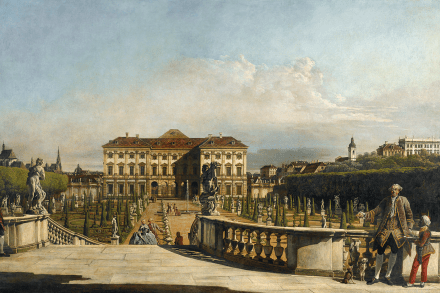
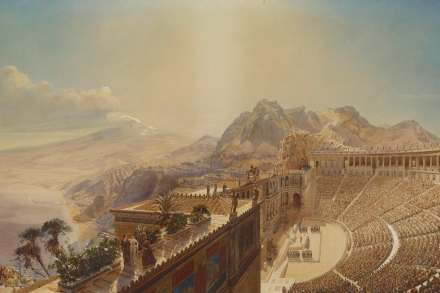
The first thing you see on entering this major new Viennese exhibition is not one of Canaletto and his nephew Bernardo Bellotto’s majestic paintings of London, Venice or Vienna, but a camera obscura. The magical art of both artists depended upon this simple but effective device, which exploits pin-hole projection – an optical phenomenon that had been known since antiquity.  The decision to open the show at the Kunsthistorisches Museum with a deceptively boring little wooden box amounts to a curatorial throwing down of the gauntlet. Because – although I find it hard to fathom – there are still art historians and critics out there who refuse to countenance the

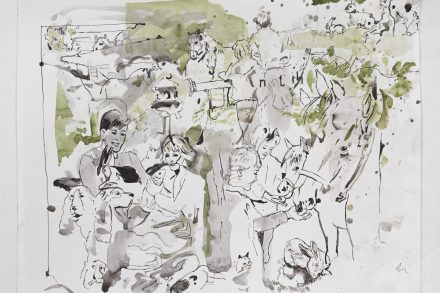
Sex, Bacon and bad haircuts: Cecily Brown is back

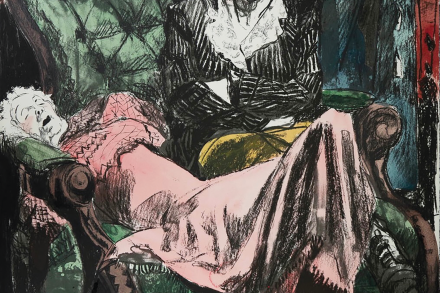
Cecily Brown, like pop art, moved from Britain to America and found an audience. Picture Making, her new show at Serpentine South Gallery, is a return to the country of her birth – her first solo exhibition here since 2005. Brown has steered clear of art movements. But she has a reverential attitude toward art history that keeps her work from identifying with recent genres of painting that have tried to escape either subject or materiality, or that have tried to collapse the space between painting and life. The subjects she recycles from art history are, as a rule, more interesting than what she drags up when she mines her personal

The man who rescued the Notre-Dame

The Notre-Dame de Paris has had several close shaves down the years – even before the 2019 fire that nearly obliterated it. The revolutionaries temporarily turned it into a ‘Temple of Reason’, then a grain warehouse; some of it was even sold for scrap. It only became the recognisable Gothic fantasy and French national icon that we know today largely down to the efforts of architect Eugène-Emmanuel Viollet-le-Duc, who headed its definitive restoration from 1844 to 1864. Following the cathedral’s 2024 rebirth, Bard Graduate Center is now hosting the most comprehensive exhibition in the Anglosphere of the architect’s work. Viollet-le-Duc kept superhuman working hours: 6 a.m. to midnight. And this

How sure are we that all the Michaelina Wautiers at the RA are by her?

Roll up, there’s a new old master in town. Or a new old mistress, if you prefer. Michaelina Wautier (1614-89) is revealed here as a painter who excelled within the genres of her time: flower painting, portraiture, emblematic tronies, and, if the scholars are right, classical epic, too. The new Royal Academy show cracks open the received idea of what a Flemish woman operating in the decades immediately after Rubens and Van Dyck could achieve. Her c.1650 self-portrait at the easel is a confident statement. She is enthroned under a mantel of lusciously painted black velvet, which looks restrictive, but emerging from it comes her agile, three-dimensional painting hand. Her

This Hockney show is disorientatingly enjoyable

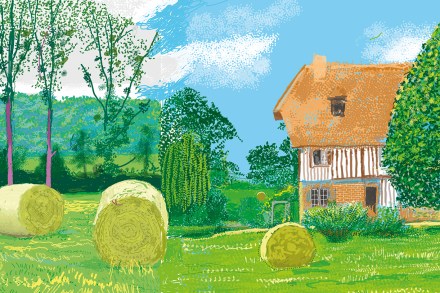
When so much contemporary art is riven with obscurity and angst, it is disorientating, at first, to encounter something as straightforwardly enjoyable as Hockney’s latest exhibition. Aged 88, the artist went out into his garden in Normandy with his iPad to make a visual diary of the year 2020. A hundred or so of the iPad sketches he made have been put together here, blended into a frieze, a walk-through panorama of the seasons rendered with Vivaldi-like virtuosity. As we move along the curve of this frieze, we see nature through Hockney’s bright yellow spectacles As we move along the curve of this 90-metre frieze, we see nature through Hockney’s

A Ramses show that has little to do with Ramses

Ramses and the Pharaohs’ Gold is, let’s not shy away from it, a profit-seeking exhibition mounted by an entertainment business. Neon opened its high-tech space at Battersea Power Station last year with dinosaurs, and has partnerships with the likes of Harry Potter and Marvel. The gold mask fronting Ramses’s publicity has nothing to with Ramses. Neither does the other gold and jewellery on display: his tomb was looted long ago, and all that remains is his recycled cedar box, sarcophagus and the king himself. A notable offer in the expansive retail zone is the chance to have your name drawn on papyrus by a robot. But go forewarned, and you

I miss post-internet art

I got my first paid writing gig back in the early 2010s, for an online magazine fixated on the then-current phenomenon we were already calling ‘post-internet art’. The journal was all but unreadable, its house style both po-mo and po-faced to the extent that contributors were obliged to adopt pseudonymous bylines. I went with ‘Screamin’ Jay Jopling’, which counted for a rare laugh. Yet the tone was very much in tune with the art we covered. Whether it was video, sculpture, photography or pretty much any other medium, it was chiefly concerned with the intrusion of digital technology into – the style guide’s punctuation, not mine – ‘real’ life. Regardless

The art of ageing

More than 30 contemporary artists have contributed to the Wellcome Collection’s latest exhibition, which asks what it’s like to age at a time of unparalleled longevity. But as so often happens at the Wellcome’s exhibitions, it’s the ephemera that draws the eye first.  ‘These 2 men are the same age,’ says a leaflet advertising Kellogg’s All-Bran breakfast cereal. ‘One has driving power – energy – the will to succeed. The other is listless – tired all the time – it is an effort for him to plod through each day’s work.’  The point being that ageing is, to a not inconsiderable degree, something we do to ourselves, and something we

Marvellous but repetitious: Gwen John – Strange Beauties reviewed

A pilgrimage to Cardiff Central, sorry, Caerdydd Canolog (according to the signage in the station, which also had my return train’s destination ‘Lundain Padd’ton’) to see the new Gwen John show. She is being lauded as Wales’s greatest artist, but she left Tenby at 18 in 1895, and never went back. After studying at the Slade she moved to Paris, fell in love with Rodin, and adopted the Catholic faith. She ended her days in Meudon in 1939, leaving a cache of work that her nephew Edwin John thankfully rescued before the Nazi invasion, and that the National Museum of Wales (now National Museum Cardiff) had the foresight to acquire

Dazzling: Hawaii, at the British Museum, reviewed

Climb the Reading Room steps to reach the British Museum’s dazzling Hawaii exhibition, and you perform an obeisance. At the top is a representation of Ku, a larger-than-human god of war and chiefly power, carved in stylish fury from the trunk of a breadfruit tree. He once commanded a flight of stairs at the Museum of Mankind in Burlington Gardens. In Hawaii he would have looked down with royal authority from a stone temple mound. We pass below him into the show, it feels, only with his consent. This is a landmark event that tells of moving encounters with stunning exhibits For that we should offer thanks. At an important

Cadavers will always captivate. Museums need to chill out

Is it right to put human remains on show? It’s a question that museum curators and the public have been asking themselves ever since European institutions began displaying bodies of the dead – notably Egyptian mummies – in the early 19th century. It’s the same question that continues to be posed today in Canterbury. Here, an exhibition at the Beaney House of Art & Knowledge chronicles and collates the significant archaeological discoveries in and around the city over recent decades. Finds that have unearthed skeletons of the city’s previous occupants – mostly Anglo-Saxon nobility and Roman soldiers and civilians from the 2nd and 3rd century AD. The question remains the

Constable changed the course of painting, not Turner

Flanders and Swann; Tom and Jerry. Some things come in pairs. Like Turner and Constable, even though our two most famous painters were more like chalk and cheese than cheese and pickle. They were close contemporaries: Turner was born in 1775, Constable a year later. Both painted landscapes. But that’s almost all they had in common. In every other way that matters, personal and artistic, they could hardly have been more different. Turner was a prodigy, a student at the Royal Academy Schools from the age of 14 and an associate (ARA) at 24. That same year, Constable had only just enrolled in the Schools, and was not elected ARA

The thrill of Stanley Spencer

‘Places in Cookham seem to me possessed by a sacred presence of which the inhabitants are unaware,’ wrote Stanley Spencer. Mystically devoted to the Berkshire village near the Thames where he grew up, Spencer was synonymous with Cookham as early as 1912, when he was at the Slade; ‘Cookham’ was his nickname. His greatest work is probably ‘The Resurrection, Cookham’ (1924-7), and he lived out his life there. He became known for pushing an old pram full of paints around town. The former Wesleyan Chapel, where he worshipped as a boy, is now the Stanley Spencer Gallery. So it was intriguing to come across this new show connecting him with

A Spectator poll: What is the greatest artwork of the century so far?

Slavoj Zizek        Hegel thought that, in the movement of history, the world spirit passes from one country to another, from the East to the West. Something similar happened at the beginning of the 21st century: the world spirit passed from cinema, the art of the 20th century, to the TV series. At the top of my list are three sci-fi dystopias: Charlie Brooker’s Black Mirror, which takes place in a world just a little ahead of ours where tendencies we clearly discern today have become reality; Patrick Somerville’s Station Eleven, a uniquely optimistic utopia depicting how performing art can save the human spirit after a global apocalypse; and Three-Body, a

This exhibition made my companion gasp

Numerous research academics have contributed to this highly cogent show celebrating the craftspeople of Ancient Egypt. My pre-teen companion, though a big fan of Egypt, was still slightly hesitant about whether this would be the most interesting angle. It began with a 4,000-year-old stele, or tombstone, on loan from the Louvre, praising the sculptural and painterly skills of an artisan called Irtysen, about whom, of course, nothing more is known. The perennial problem. General information, however, came thick and fast. We learned that a cooperative of skilled workers was a hemut, and a singular skilled worker a hemu. We came face-to-face with a cubit (a measuring stick six palms in

The Two Roberts drank, danced, fought – but how good was their art?

The Two Roberts, Robert MacBryde (1913-66) and Robert Colquhoun (1914-62), are figures of a lost British bohemia. Both born in Ayrshire, they met on their first day at the Glasgow School of Art, becoming lifelong partners and painters. Well-connected in louche literary London, their conversational barbs were recorded by Julian Maclaren-Ross, their jig-dancing antics noted by Joan Wyndham, their drunken fights observed by Anthony Cronin – so that one sometimes forgets what sort of art they made. This show, staged in a former municipal building in Lewes, is a reminder. The work is haunted, unbeautiful British neo-romanticism, second cousin to Piper and Sutherland. They established this angsty, angular modernist style

Lice combs, vaginal syringes and cesspits: at home in 17th century Holland

The room is dark, the lighting deliberately low. At its centre stands a solitary object: a yellow and green earthenware vessel decorated with biblical symbolism. It’s a fireguard – or ‘curfew’ – used to keep households safe as peat fire embers smouldered through the night. Around it is a mocked-up fireplace, conjuring up that liminal moment when everyone is still asleep and the day has yet to stir. Ths scene is set, the world outside silenced. This is how Amsterdam’s Rijksmuseum has chosen to answer one of its most frequently asked questions: what was daily life really like? Rather than mounting the usual parade of paintings and fine furniture, curators

The melancholy genius of Joseph Wright of Derby

If you lived in the 1760s and were affluent enough – and curious enough – science could be a family affair. The instrument maker Benjamin Martin actually marketed scientific equipment for amateurs, complete with an instruction manual listing simple, edifying experiments for home enjoyment. And so in 1768, in ‘An Experiment on a Bird in the Air Pump’, Joseph Wright (1734-97) painted a group of family and friends attempting Experiment 42 in Martin’s manual. You’re sure to have seen it: a darkened room with a white bird wilting in a glass bulb while the faces of the participants – a magus-like scientist, a fashionable couple, a frightened little girl burying