Education

As children go back to school it’s parents who need lessons

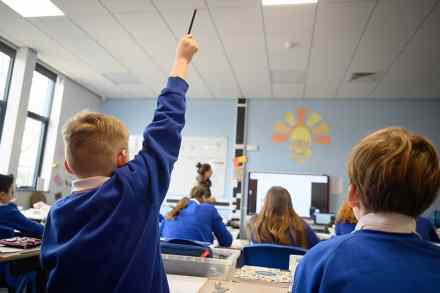
Britain’s children go back to school this week. But after months of chatter about grade inflation and the harmful effects of lockdown on learning, is it parenting, rather than schooling, that actually needs attention? New polling reveals that one in ten younger parents think it’s down to someone else to teach their pre-school children to speak. Dig a little deeper and this number doubles to almost a fifth for the very poorest parents. Getting the basics right is seen as someone else’s job. Too many children fall behind before they have even started school. Many never catch up. By the time they leave school, children from the poorest backgrounds are on average almost three years behind those from the most affluent homes in reading and writing.

The Roman roots of Tony Blair’s approach to education

Sir Tony Blair’s Tone-deaf suggestion that Stem subjects should dominate the curriculum of all schools would paradoxically take education back to the ancient world, when education was designed to benefit only the few. Take Rome. Wealth in the ancient world lay in land, which the rich exploited for all it was worth. Needing to protect their investment, Romans used their power to ensure that it was they who governed the state. The education system was designed to train them in winning arguments in the Senate and to protect themselves and their money in the courts. That left the remaining 90 per cent to fend for themselves, most trying to survive on a small land-holding, providing enough of a surplus to sell at market and buy what they could not themselves produce.

Why I left public education for a Christian school

From our US edition

Another school year has begun. It's another year that I’m grateful to have left public education. From the outside, it doesn’t make much sense for me to have left. I had a good reputation in my district among staff, students, and administration. The pay at public schools is markedly better. And being a private school teacher makes you something of an outcast among teacher colleagues — never quite “one of us.” I did not leave because of the standard accusation — that I couldn’t “handle it.” In many ways, my private school jobs have been far more difficult than my public school one.

The faulty towers of higher education

From our US edition

One of the few issues about which the American left and right agree is that higher education is, as Orwell would say, in a bad way. But even in that source of agreement lurk countless points of dispute, regarding the sources of dysfunction (corporate greed, grade inflation, libezoomers?) and possible solutions (ending tenure, forgiving debt, creating safe spaces?). In After the Ivory Tower Falls: How College Broke the American Dream and Blew Up Our Politics — and How to Fix It, Will Bunch, a columnist for the Philadelphia Inquirer, argues that the cause of the higher-education crisis is conceptual: we see higher education as a personal privilege rather than a public good, something to be earned rather than a right that is owed.

bunch

The liberal arts are worth defending against ‘multiculturalists’

From our US edition

It’s the end of August — which means the kids are heading back to school. Time, then, to think about the quality and content of the education most young Americans are receiving. What to ponder? Well, we award more bachelor’s degrees in “parks, recreation, leisure, and fitness studies” than in English. And what students learn in their liberal arts courses is less the intellectual and civilizational inheritance of the West than a cruel mimicry that preferences “multiculturalism” and “critical thinking.

parental rights

One worldview has taken over the historical profession

Professor James H. Sweet is a temperate man. He seeks to avoid extremes. But he also seeks to be bold in his temperance. You can do that by emphatically stating an opinion that seems above reproach. But Professor Sweet miscalculated. His emphatic bromide blew up, and he was left offering emphatic apologies. For those who have not followed this little academic circus, Professor Sweet, who teaches history at the University of Wisconsin at Madison, is also the president of the American Historical Association (AHA). That’s an important post. The AHA has more than 11,500 members. It publishes the American Historical Review, ‘the journal of record for the historical profession in the United States’. And AHA holds a huge conference each January.

How to run a school

Taking a short break from persecuting Roman Catholic faith schools for ideological reasons, Ofsted has stuck the boot into the Abbey School in Kent. This school, in Faversham, has been given the lowest possible ranking of ‘inadequate’. The report bemoans the fact that pupils are expected to do as they are told, be polite and behave themselves, and describes the atmosphere within the school as ‘oppressive’. By a winning coincidence, Ofsted’s report was published in the very week that the Abbey School reported by far its best ever A-level results. What, Ofsted sees as ‘oppression’, then, is more commonly known as ‘running a school properly’.

What’s on Ukraine’s new school syllabus

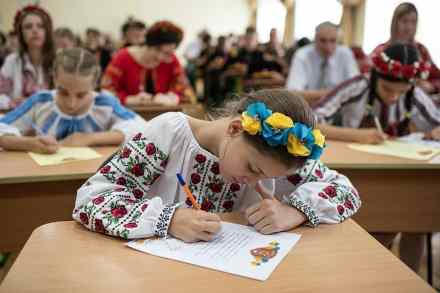
For the first time since Russia’s invasion, schools in Ukraine are starting to re-open. For many parents, including my own, this presents a dilemma. Is it safe for pupils to return? My brother is seven and has spent the past year doing ‘remote learning’, which is hard enough in countries at peace, let alone those fighting an invasion. A return to school would be good for his education, but then again, might there be the danger of Russian air strikes? Parents at my brother’s school have been asked to vote on whether they would prefer pupils to continue with online learning, or return, with all the risks involved. It’s estimated that at least 3,000 of Ukraine’s 12,800 schools will reopen their doors.

Universal school choice would transform real estate

From our US edition

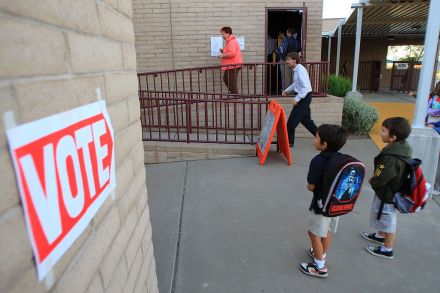
A new Arizona law which funds all the state’s K-12th grade children to attend a school of their family’s choosing, public or private, has been widely hailed as a landmark education reform, although evidence suggests the benefits will go far beyond academics. Studies by the Manhattan Institute, New Jersey’s E3, and Connecticut’s Yankee Institute all show that subsidizing students to use alternative placements would save any state millions each year. But perhaps the most unexpected promise of universal school choice is the impact it would have on area real estate markets, simultaneously lowering the cost of what families must pay for a desirable home, improving the value of distressed areas, and equalizing the quality of life between rich and poor communities.

A-level results: has government reversed grade inflation?

As A-level results come out today, we will find out if the government has made any progress in stemming exam grade inflation. As always, some candidates will celebrate while others will be disappointed. This year, though, the latter group is expected to be more numerous because exam boards are supposed to be clamping down on the implausibly high grades awarded during the two years when school exams were suspended due to lockdowns. Anyone looking solely at exam grades without other information to hand might wonder: what was it about Covid that appeared to boost the educational attainment of so many 18-year-olds? In 2019, the last normal year, 76 per cent of A-level entries were awarded grades A* to C.

Our long, vulnerable childhoods may be the key to our success

The central question in Brenna Hassett’s book, put simply, is: why are our children so very useless for so very long? Or: ‘What is the possible adaptive value of teenagers?’ If we consider maturity, or adulthood, to be the point at which an animal can play its own role in the evolutionary process – i.e. have its own babies – why is it that we have evolved to mature so slowly; and, even when mature, to delay having children until many years after we’re first physically capable of doing so? The framework in which Hassett sets out to answer this is one to do with investment and return on investment. An animal invests energy in growing its young.

Why I joined the college exodus

From our US edition

In the spring of 2020, the pandemic catalyzed a startling personal revelation. As a begrudging student of Zoom University, I came to the realization that a college degree might not be worth it. Pre-pandemic Rikki was a dutiful, head-down student at New York University with a 4.0 GPA and her eyes set on law school. But when the world locked down in the middle of my sophomore year and my university still demanded full tuition for virtual classes, I began questioning everything. Although they certainly made a valiant effort at remote teaching, most of my professors proved too technologically inept to coerce twenty-five despondent teens to attend 8 a.m. Zoom lectures about medieval feudalism.

The school choice moment is now

From our US edition

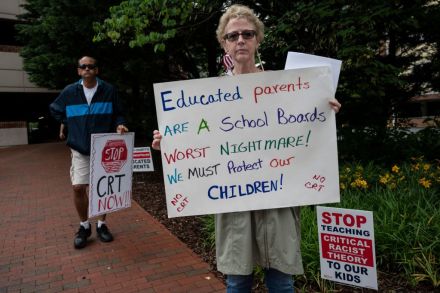
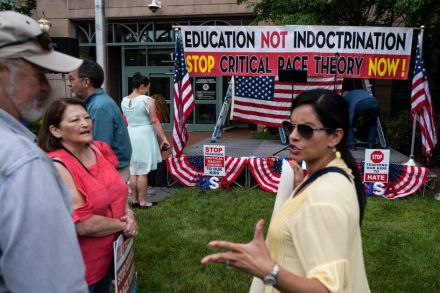
There’s been a lot of professed outrage lately over woke school boards. According to Republican candidates for office, they're infiltrating children’s curricula with critical race theory, recruiting drag queens to read at story hour for pre-schoolers, and engaging in other forms of — shall we say — “incompetence.” But the real heroes pushing back against left-wing ideologies in government schools are the parents, when it ought to be lawmakers. Outspoken parents in New Jersey made headlines when they protested their school district removing holiday names from the school calendar. Voters in San Francisco — yes! — recalled school board members who thought renaming schools “with a connection to colonialism” was more important than educating kids.

The toxic cult of the superhero

‘We don’t need another hero,’ sang Tina Turner back in the sexy-greedy 1980s. How times have changed. These days we have Superheroes Are Everywhere, a children’s book written by the Vice-President of the USA, Kamala Harris. Puffs tell us that ‘the book teaches that superheroes can be found everywhere in real life, from family members, to friends, to teachers at school and college’ and that it is an ‘encouraging, uplifting book [which] inspires kids to recognise the super-heroes all around them and promise to be, like them, brave, kind, helpful, and more’.

Boris, Sherwood and the politics of the past

It feels like the end, but we’ve been here before. The past months of Boris Johnson’s teetering administration have felt like the final act of a Shakespearean tragedy and yet the curtain just won’t fall. This week saw one of those rare electric nights of drama when a prime minister looks set to be toppled. At least, they used to be rare. In the first 25 years of my life I had only three prime ministers. The past chaotic decade looks to be about to produce its fourth. The axe hovered in the air for Johnson, but was prevented from falling – at least at the time of writing – by Nadhim Zahawi, the MP for Shakespeare’s Stratford-upon-Avon, denying us the climax. The question many have is – why?

Will my kitchen be designated a ‘safe space’?

As the father of four children who will be entering higher education in the next few years, I’m worried that my home will shortly start to resemble a university campus. In other words, I’ll be forced to declare my preferred gender pronouns, the kitchen will be designated a ‘safe space’ and the collected works of J.K. Rowling will be burnt on the garden lawn. You may think I’m joking, but a new poll from the Higher Education Policy Institute lays bare just how thin-skinned today’s students are.

Oregon’s nasty woman

From our US edition

Tina Kotek could be well on her way to being the thirty-ninth governor of Oregon. The Democrat, who previously served as speaker of the state’s House of Representatives, won her party’s primary this Tuesday. And with a Democratic supermajority in the legislature and a governor’s mansion that hasn’t housed a Republican since 1979, that’s likely a one-way ticket to victory in November. Kotek is, in many ways, a creature of the state Democratic establishment. Yet in Oregon — and in blue states like it — “establishment Democrat” means something very different than it once did.

The courage of Katharine Birbalsingh

Five years ago, I put my friend Nell Butler in touch with Katharine Birbalsingh, Britain’s most outspoken headmistress. I was hoping Nell, who runs a TV production company, would persuade Katharine to let ITV make a documentary about Michaela, the free school she opened in 2014 and which she’s led ever since. I was director of the New Schools Network at the time, a free schools charity, and was convinced there could be no better advertisement for the controversial educational policy. At the time, Michaela had yet to be inspected by Ofsted and didn’t have any exam results, but knowing Katharine as I do, and having visited the school a few times, I had no doubt it would succeed.

Wandsworth shows politics is now all about education

Wandsworth, London I’m writing this in Labour-controlled Wandsworth, my leafy bit of south London. More precisely, I’m writing it sitting outside the sort of coffee shop where the drinks come in jam jars and everyone has a beard. I’d also bet that every one of the 30-odd people here – staff and customers – has at least one university degree. In the 20 or so years I’ve lived in London, Wandsworth has gone from being a slightly drab place to the sort of area where bright young (and middle-aged) things with high incomes come to live and play. The two (bearded) twenty-something men on the table next to me are a case in point.

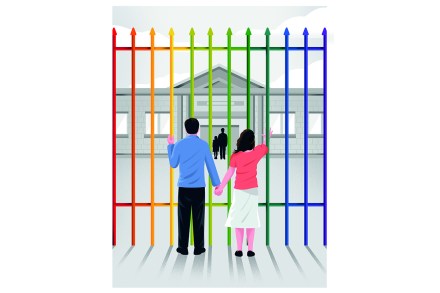
Children’s lives depend on parents’ rights

From our US edition

Yaeli Galdamez was a “girly girl,” her mother Abigail Martinez said in a recent interview. As a child growing up in El Salvador and California, she dressed in princess costumes and later had crushes on boys. But after she was bullied for her appearance in middle school, Yaeli began developing symptoms of depression. In eighth grade, she attempted suicide by overdosing on pills. Her mother was desperate to get her the help she needed. So as a sophomore Yaeli began regularly seeing the psychologist at her local high school. But the family says that her counseling for depression was accompanied by a focus Abigail knew nothing about: the school psychologist spent two years encouraging Yaeli in a male identity, Andy (sometimes Andrew).

parental rights