Casey Chalk

Panama celebrates a quarter-century’s ownership of its greatest asset

New Year’s marked the twenty-fifth anniversary of the collective freakout known as Y2K, when overwrought tech aficionados joined forces with Luddites to warn the world of the pending apocalypse of computer infrastructure that could run the global economy but was evidently incapable of resetting to “00” in date codes. Those chiliastic projections obviously did not come to pass, which is why we can spend 2025 reflecting on the twenty-fifth anniversary of the day’s other Chicken Little situation — consternation over the transition that would, some skeptical parties feared, have catastrophic consequences for infrastructure central to the daily functioning of global markets, the final turnover of the Panama Canal.


Panama

You know when you’ve been ‘Peru’d’

"Did you get Peru'd?" That's the question my boss, who once lived there, always asks people when they return. The idiom implies that something has gone terribly wrong, because, so my boss argues, that's inevitable during a visit to the land of the Inca. Lost luggage, food poisoning, petty theft: all of them, or worse, constitute being "Peru'd." During a recent happy hour, a colleague was describing how much she enjoyed her recent vacation to Lima and Cuzco. “Did you get Peru’d?” my boss queried. No, the woman asserted, she did not; it was a lovely trip. Another colleague piped in: “But didn’t you get Covid?” Well, yes, that’s true, she did get Covid. “You got Peru’d,” my boss decreed.

Peru

Where is today’s equivalent of the Free Tibet movement?

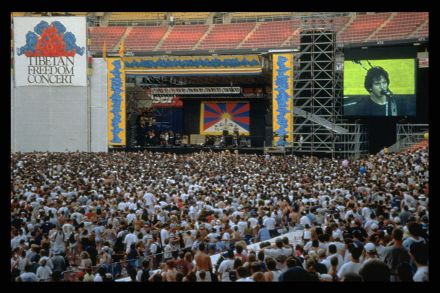
Remember “Free Tibet?” The Tibetan Freedom Concert, a series of music festivals that began in 1996, featured such impressive acts as the Beastie Boys, Red Hot Chili Peppers, Smashing Pumpkins, Rage Against the Machine, U2 and A Tribe Called Quest. An entire generation of young Americans — enchanted with “the other” of Tibetan Buddhism — had no qualms condemning what they believed to be an authoritarian Chinese regime. And why not? The People’s Republic of China, however much they fumed over international denunciations of the Tibetans, seemed weak, and incapable of silencing the Western entertainment industry’s indignation. These days, not so much. The NBA apologizes for players or coaches who criticize Beijing’s actions in Hong Kong.

free tibet

Why I’m afraid of transphobia

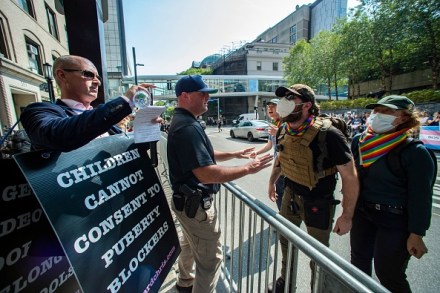
J.K. Rowling’s Twitter feed “creates trans phobias,” writes Washington Post gender columnist Monica Hesse. Listening to Rowling, says Hesse, is exhausting. “It’s exhausting because it requires constant vigilance.” And the constant vigilance, says Hesse, is necessary in order to determine when Rowling’s words stray into “transphobia.” I confess my own “exhaustion” reading opinions like Hesse’s. I understand that “transphobia” has a very extensive Wikipedia page citing supposed medical experts who give the concept a veneer of legitimacy.

The liberal rednecks of Northern California

"San Francisco is the only city I can think of that can survive all the things you people are doing to it and still look beautiful,” said Frank Lloyd Wright. You might say the same thing about Marin, the county you enter upon crossing the Golden Gate Bridge from out of the City of Fog, where my mother moved several years ago to be with my stepdad. Arresting in its natural beauty, gratifying in its varied and delicious cuisine, shocking in its exorbitant property values, Marin ranks in the top ten nationally for median household income. My mother’s town, like many around it, has not a little character. There's the old colonial Spanish influence, evidenced in the mission churches and the names of some of the communities: San Rafael, Corte Madera, San Anselmo, San Geronimo.

A tale of a Cracker Jack box and the old America

If it wasn’t for Chevalier Quixote Jackson, I wouldn’t be here today. Whether or not the Pittsburgh-born laryngologist and "father of endoscopy” knew it, 100 years ago his bronchoscope saved my grandfather’s life. The story, relayed to me by my grandfather and appearing in at least three New York City newspapers, is not only a fascinating one, but a window into an America that seems both distantly foreign and warmly home. My mother’s father was of English and Irish extraction. His Irish ancestors — from whom he inherited the surname Fitzpatrick — had arrived in New York City during the Famine. The English side had also been in New York for generations, and apparently had some wealth.

Ron DeSantis is right to reject the new AP racial grievance course

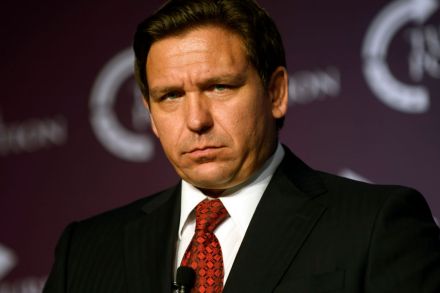
Check the liberal reaction to Florida Governor Ron DeSantis’s January decision to block a new Advanced Placement course on African-American studies in the state’s high schools and you would think the Sunshine State was reinstituting Jim Crow. The Washington Post’s Karen Attiah — always one to jump at the chance to spew rhetorical fireworks when it comes to all things race — accused DeSantis of normalizing “anti-blackness” and “making institutional anti-blackness lawful again.” CNN’s John Blake asserted that DeSantis's move “echoes similar decisions made by fascist dictators,” including Vladimir Putin.

Ford Madox Ford and the decline of the American WASP

“I don’t know how many times in nearly forty years I have come back to this novel,” Graham Greene said of Ford Madox Ford’s The Good Soldier, published shortly after the outbreak of the First World War. The fiction of both English authors — both converts to Catholicism — share a deep cynicism towards modernity and a depiction of the English establishment as decadent and in decline. The Good Soldier, whose original title The Saddest Story was canned by the publisher because it would render the book “unsaleable” during World War I, tells the tale of two married couples, one British (British Army Captain Edward Ashburnham and his wife Leonora) and the other American (John and Florence Dowell). Both pairs are, on the face of it, young, prosperous, and happy.

The DEI industrial complex

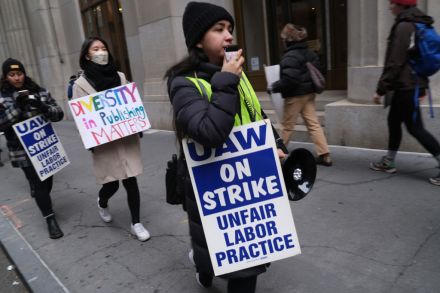
In the wake of the Black Lives Matter protests in 2020, chief diversity officer hires tripled among the largest publicly traded companies. American companies paid an estimated $3.4 billion to firms for diversity, equity and inclusion, or DEI, programs, according to Princeton professor Betsy Levy Paluck in an op-ed at the Washington Post. And yet, moans Paluck, there is practically no research evaluating the results of these DEI initiatives.

dei

Why are wives still taking their husbands’ last names?

“Why don’t more men take their wives’ last names?” asked the Washington Post in a recent piece about a Maine husband who took his wife’s name. And why is it less common for a woman to keep her existing last name, which accounted for only about 20 percent of marrying women in 2015? Amazingly, even in our progressive era, women are still choosing to assume the names of their husbands. It’s obvious what side WaPo comes down on. Their article quotes an author who labels women taking their husbands' last names “bizarre and anachronistic.” It quotes the mother of another husband who took his wife's name, praising her son’s decision for “subvert[ing] the dominant paradigm.

Debunking the grievance industry in our schools

City Journal last month released a survey that asked eighteen-to-twenty-year-olds whether they had been taught six concepts related to critical race theory. These included: “America is a systemically racist country,” “White people have white privilege,” “White people have unconscious biases that negatively affect non-white people," “America is built on stolen land,” “America is a patriarchal society,” and “Gender is an identity choice.” Each of these was answered in the affirmative by a majority of participants, of whom more than 80 percent attended public schools. That’s curious given that public educators and their defenders in corporate media have been claiming for years that CRT is not taught in schools.

The punishing and nostalgic life of a Washington NFL fan

The hapless Washington Commanders can’t do anything right. And I do mean anything. In September, a first-time Washington Commanders season ticket holder won more than $14,000 in a charitable raffle. After about six weeks of pestering the franchise, he finally received the check. It bounced. Of course, Washington’s football team — whose new name I can hardly muster the energy to speak, let alone write — is having yet another lackluster year on the gridiron. The team enjoys a miserable, if predictable, losing record. Coach Ron Rivera, who all things being equal is better than many of his predecessors, earlier this month seemed to throw shade at underperforming (and now injured) quarterback Carson Wentz.

In Ottawa, where junkies and technocrats collide

I got out of the taxi in front of my hotel in lower town Ottawa and was immediately accosted by a homeless junkie looking for a donation to the cause. It was a Sunday evening, well after sunset, and not quite the greeting I had hoped for upon arrival in Canada’s leafy capital. The smell of pot was in the air, a lot of it — there was a cannabis store across the street, and another around the corner. After checking in and dropping off my bags, I went in search of a late dinner. A two-block journey to a trendy tap house with a wide selection of craft beers witnessed another half-dozen, very animated homeless people. One, eyes closed, was dancing in the middle of the sidewalk, his arms flailing in the air, oblivious to everyone and everything around him (mind the lamppost!).

Exposing the logical fallacies of Critical Race Theory

In a late September article for the Washington Post magazine, staff writer DeNeen L. Brown declared that she has “decided to eventually leave America.” Though when or where she will go she “can’t say for sure,” she is “finally ready.” “I want to engage in intellectual debates without having to explain the history of this country’s racism,” she writes. "I want to live in a country where racism is not a constant threat.” There are other things about America that frustrate Brown. It's a country that “seem[s] to be increasingly dangerous for Black people” — an observation that is, in fact, true, though, as data indisputably demonstrates, this stems far more from black-on-black crime than it does from a supposedly “white supremacist” regime.

How Catholics became the new WASPs

Close to a century ago, in 1928, Alfred E. Smith, the governor of New York, became the first Catholic nominee of a major political party. A predominantly Protestant America was suspicious of Smith, who, among other things, opposed Prohibition. New York lawyer and Episcopalian Charles C. Marshall published a letter questioning Smith’s fitness for office. Among other criticisms, Marshall quoted papal encyclicals that denied the legitimacy of religious freedom as popularly understood by most Americans. “What the hell is an encyclical?” Smith is reported to have responded. Concerns about the irreconcilability of American republican government and Catholicism were nothing new.

The liberal arts are worth defending against ‘multiculturalists’

It’s the end of August — which means the kids are heading back to school. Time, then, to think about the quality and content of the education most young Americans are receiving. What to ponder? Well, we award more bachelor’s degrees in “parks, recreation, leisure, and fitness studies” than in English. And what students learn in their liberal arts courses is less the intellectual and civilizational inheritance of the West than a cruel mimicry that preferences “multiculturalism” and “critical thinking.

parental rights

Demi Lovato’s pronoun-based self-deception

Recently, Demi Lovato has been feeling more feminine. The singer and actress a few days ago told “Spout Podcast” host Tamara Dhiaan that when it comes to pronouns, she’s “adopted she/her again.” Lovato, who came out as nonbinary in 2021, explained her decision: “I’m such a fluid person.” “Fluid” would be one word to describe Lovato, whose Instagram profile since April has read “They/them/she/her.” Cue the confusion from even woke media, though podcaster Dhiaan followed up the interview with this very helpful clarifying tweet: “For the record: Demi Lovato did NOT say she is abandoning they/them as her pronouns, she simply said she is adding she/her.” The Washington Post also chimed in to help make sense of this very important celebrity announcement.

Why can’t a woman be a man?

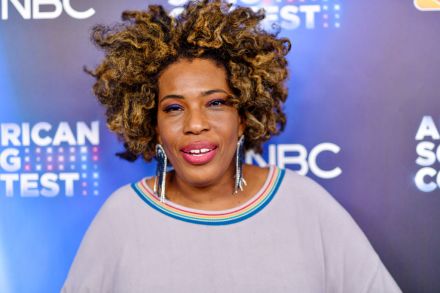
Sex and gender were supposed to be allies in the identitarian march of the feminist left. But gender, it appears, keeps butting up against the reality of sex. "I will say this and everyone's gonna hate me,” singer Macy Gray recently told Piers Morgan, “but as a woman, just because you go change your (body) parts, doesn't make you a woman, sorry.” (She subsequently apologized for her comments.) Bette Midler also elicited censure for her recent tweet: "WOMEN OF THE WORLD! We are being stripped of our rights over our bodies, our lives and even of our name!" (She later qualified that her comments were not intended to be “transphobic.”) Women, generations of feminists have been telling us, are supposed to be powerful. They’re supposed to be capable.

Where does the pro-life movement go from here?

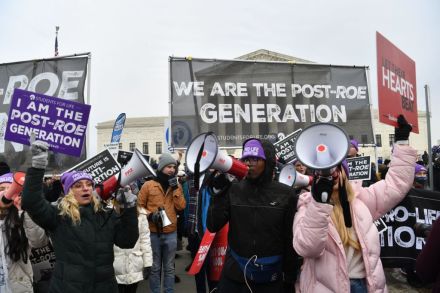
Few releases have been better timed. “By the time this book is in your hands,” write authors Ryan T. Anderson and Alexandra DeSanctis, “we will all know how the Court has ruled.” And they were right, just barely: I began reading Tearing Us Apart: How Abortion Harms Everything and Solves Nothing the day after the Supreme Court overturned Roe v. Wade in the Dobbs v. Jackson Women's Health Organization decision. Perhaps some might counter that now that the abortion movement has suffered such a blow, Tearing Us Apart is actually poorly timed. We won, didn’t we? Why rehash all the arguments against abortion in light of victory? Yet such thinking fails to understand how terribly toxic fifty years of an American abortion regime has really been.

Michael Gerson’s descent into liberalism

Not all pro-lifers are happy with the Supreme Court’s overturning of Roe v. Wade. In a column at the Washington Post, former George W. Bush speechwriter Michael Gerson acknowledges that Roe was “poorly argued,” but says he is “more comfortable with the gradualism” recommended by Chief Justice John Roberts. Gerson ends even more soberly: “The abortion debate — with all its tragic complexities — has been returned to the realm of democracy. And there is little evidence our democracy is prepared for it.” Why? Because the “GOP has become captive to an ideology of power.” Anyone who has been following Gerson over the years will not be surprised by these comments.