Education

Banning Critical Race Theory in schools isn’t enough

From our US edition

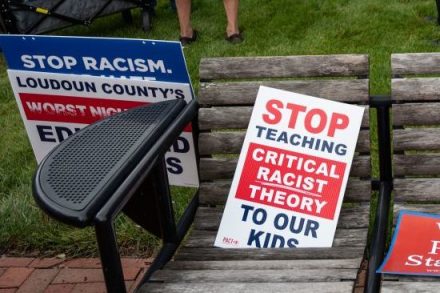
While pundits bicker about whether bills targeting critical race theory in schools are ethical or constitutional, an equally important question is whether they’re effective. While such legislation is a workable stopgap to loathsome practices like affinity groups, it can only work as a temporary measure. CRT is manifested not primarily as a set of explicit ideas to be taught like the freezing point of water or the causes of World War Two. Rather, it’s a philosophy that informs the instruction, curriculum, and policies of various districts. We cannot outright ban CRT from our schools anymore than we can ban the influence of philosopher John Dewey. When the culprit is a belief system, bans are the wrong tool.
critical race theory

How China meddles in American academia

From our US edition

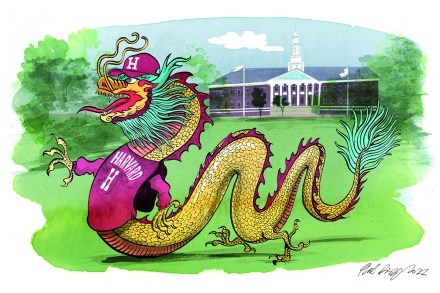
"Congress has dropped language from a must-pass bill governing US defense policy that would have effectively prevented US scientists from participating in Chinese programs aimed at attracting foreign scientific talent,” reported Science, the journal of the American Association for the Advancement of Science (AAAS) in December. The journal cautions, however, that the provision may reappear in another bill. The AAAS is the most authoritative voice for American scientists. It has generally opposed any restrictions on relations between US academics and China, and favored the US government’s stepping back from investigating and prosecuting scientists for lying about their service to China.

china ccp
manna

Downloading God in the App Store

From our US edition

Education at my Jewish private school was chock-full of religious instruction. Precisely half of our lessons were dedicated to Jewish studies. We had Bible classes (Chumash, we called it) every single day. As a child, I wasn’t particularly excited about most of the miracles. Sure, the staff turning into a snake was cool, but it felt like a parlor trick. The sea splitting felt too huge to even contemplate. The one miracle that seemed to get everyone in class thoroughly enamored with God’s power was the concept of manna from Heaven. The idea that you could just dream up what you wanted to eat — and for eight-year-old me that was infinite donuts, pizza and Dunkaroos — and it would just fall from the sky? Well, that was truly miraculous.

We must never abandon children during lockdown again

Schools are far more than mere exam factories. Across the UK, teachers in 32,000 schools and colleges care for children on over half the days in any given year. Or we did until the lockdown in March 2020. Since then, children have missed the best part of two full terms. And while they were out of our sight, some were at risk. Six year-old Arthur Labinjo-Hughes, for example, may have been rescued from the terrible abuse he suffered had his teachers been able to see him every day. But while most children have returned to class now that Covid restrictions are ending, some are still absent. News of anecdotal cases circulate within the profession. A colleague tells me that two sisters in her school never returned.

The evidence is in: remote learning doesn’t work

From our US edition

As the omicron wave crests and public schools face teacher sickouts, strikes, and a rash of student absences, it is worth reviewing some basic facts about the pandemic and public education. The results of last year's experiment in remote learning have confirmed what any minimally competent teacher could have told you from the outset: instructing students online yields disastrous consequences. Indeed, the results are so bad that defenders of a maximally cautious approach can only argue about terminology (please don’t say “learning loss!”) while proposing that we shouldn’t actually measure how far students fell behind under lockdown. Meanwhile, the psychological costs of the pandemic era continue to mount.

zoom

Why we should study literature, not science

Gstaad Who was it who said good manners had gone the way of black and white TV? Actually it was yours truly after watching the slobs parading up and down Gstaad’s main street. That was last year, but the bad news is that this year slobovia has come to stay again. Mind you, Alexandra and I had planned to have 50 friends for a party to celebrate 50 years of my enslavement, but Mister Omicron arrived and put a damper on our plans. The tent on the lawn and the oompah band were cancelled, and the New Year’s Eve blast turned into a smallish affair. The good news is that there are still a few people who don’t adhere to the online culture of today, that of anger, incivility and non-stop use of the F-word.

The mind virus killing academia

We lost a giant last month with E.O. Wilson’s passing. A man who stood on Darwin’s shoulders, Wilson had that rare distinction of inspiring a whole discipline in the form of evolutionary psychology. The great sense of loss did not seem to be shared by Scientific American, however, which soon afterwards put out a piece reflecting on the ‘complicated legacies of scientists whose works are built on racist ideas’. Among the ‘problematic’ aspects of Wilson’s work, the author argued, was the ‘descriptions and importance of ant societies existing as colonies’. This was ‘a component of Wilson’s work that should have been critiqued’ because ‘context matters’.

Remote learning has failed our kids

From our US edition

With omicron cases rising, many school districts are returning to remote learning for the first few weeks of January. That, of course, could be extended, as we have seen happen so many times during the pandemic. As a school social worker, I can attest that remote learning has been an absolute disaster. Far from the “abundance of caution” approach, school closures have devastated our youth, with many still struggling to function. It boggles my mind that many large cities are repeating this mistake. While nearly all students suffer amid virtual schooling, our most vulnerable suffer the most. The following three hypothetical students exist in every school, as I have witnessed over the past 15 years working with New York City teenagers.

Masks in schools: how convincing is the government’s evidence?

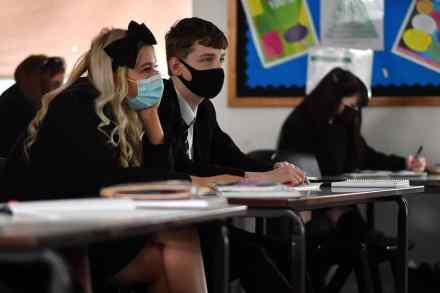
Why has the government changed its mind and asked children to wear masks in school? When Plan B was announced last month, there was no requirement. But that has changed. Nadhim Zahawi, the Education Secretary, was asked why on Monday. He replied that ‘we conducted a small observational study with 123 schools who had followed mask-wearing in classrooms before and saw that they made a difference'. He suggested it was quite a significant study. 'If you just think it through, with a respiratory disease that is aerosol-transmitted, if you are asymptomatic but wearing a mask, you're much, much less likely to infect other people.' The government has now published an ‘Evidence Summary' for the use of face coverings in education settings.

Ms. Work-to-Rule and our fading school standards

From our US edition

Ms. Work-to-Rule, chair of the local teacher’s union, smiles icily at the bezel. The weekly Zoom conference with the district superintendent and his many assistants is not going in the direction she would like. As schools across the country prepare to resume in-person classes, Covid purists insist on strict testing, vaccine proofs and other protections. If draconian demands are not met, a few big-city locals threaten teacher strikes. Some states require masks for students and teachers regardless of vaccination status. Others prohibit districts from requiring students to wear masks at all. School board meetings might be battlegrounds. The mild but highly contagious variant, Omicron, puts everyone — administrators, teachers, parents, and students — on edge.

An inside account of how Glenn Youngkin won

From our US edition

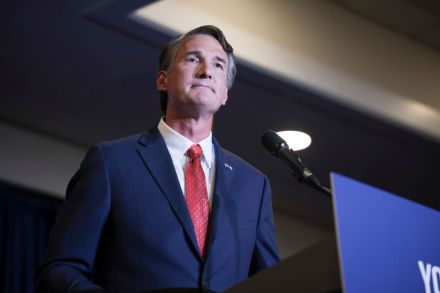
In January, just a few days after Glenn Youngkin had launched his first ever campaign, and as parents were struggling with the possibility that their children might not be able to return to school full-time, one father stood up and told the Loudoun County School Board to do their jobs and “figure it out.” Within 24 hours, Brandon Michon’s earnest cry was heard around the country, and Youngkin was asking for Brandon’s phone number. He called Brandon and let him know that if he was elected Virginia governor, there would be someone fighting for him, and for parents across Virginia. In a moment when some would have let a simple tweet suffice, Youngkin took action. I witnessed much of this first-hand.

youngkin

The nationwide school revolt is on

From our US edition

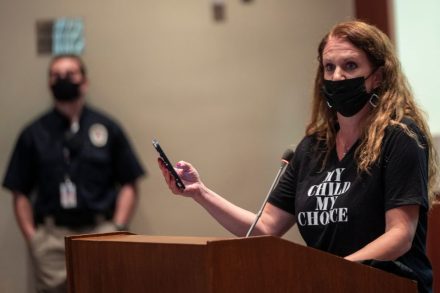
Most Americans want schools to promote knowledge and champion principles of human decency. They want schools to be safe. They do not want children race-shamed, or exposed to the anomic and depraved. A fourteen-year-old boy wandering around campus — any campus — wearing a floor-length dress doesn’t sound wholesome to them. What’s going on in “our” schools, some ask, and not in a sunny way. Too many know from experience, at least in metro and blue-liberal districts, that any parent who avows the Ten Commandments or praises the Boy Scout Law might get the fish-eye from the principal. If dad objects to critical race theory or transgender bathrooms, heads explode. A frosty diversity lecture might not suffice. Should we call security or 911?

loudoun

I’m a racist, you’re a racist, we are racists all

From our US edition

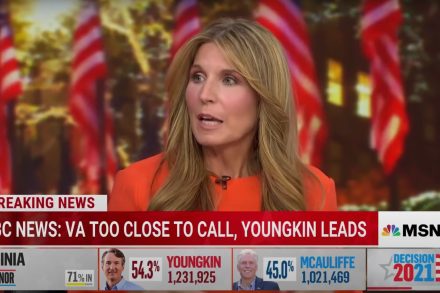
What news network did you watch on election night? Thankfully we all had plenty of options. There was CNN, where John King's magic wall grows ever more granular: "we're moving the Kelleher household into the leans-Republican column, Wolf, though their dog remains undecided. Now next door to the Smiths..." There was Fox News, where loud people shout at each other until Bret Baier and Martha MacCallum finally pull over the car and tell everyone to knock it off. And then there was MSNBC. Oh, Lord, was there MSNBC. There did we find Nicolle Wallace, one of the network's fastidiously objective anchors, declaring that Virginia governor-elect Glenn Youngkin "worshipped at the altar of Donald Trump.

racist

Why is Ofqual trying to dumb down English exams?

If you wanted a good working example of the concept of dumbing down in practice, look no further than Ofqual, the exams regulatory board, the one that covered itself in ignominy when it oversaw the exam algorithm fiasco during lockdown. Its latest idea is to get exam boards for English to replace ‘complex’ language elements, such as idiom, sarcasm and metaphor, with simpler alternatives in some assessments to make the tests more accessible for pupils. The temptation at this point to respond with sarcasm, irony, idiom and metaphor – not at all nice ones either – is almost irresistible, but let’s not go there.

mcauliffe

The McAuliffe clown car crashes

From our US edition

Of all the clowns to come prancing out of the Terry McAuliffe campaign car in recent weeks, it was the Muppets that finally got me. McAuliffe recently ran a get-out-the-vote commercial that featured several Sesame Street-style puppets singing about how much they love the people in their neighborhood. "Except for Larry who doesn't vote," they finish, upon which some poor schlub comes bumbling in and they all stare at him judgmentally. Next up: Snuffleupagus on why he's passionately in favor of rolling back voter ID laws. Or something. The ad technically wasn't cooked up by Team McAuliffe; it appears to have been created in 2018 by the left-leaning PAC Priorities USA. But the fact that they decided to dust it off despite it being so creepy and coercive speaks volumes.

Katharine Birbalsingh is right: children do have original sin

When my son was about six he heard something at school about slavery but was not quite clear what it was all about. So I spelled it out. I told him that a slave was someone that someone else owned and ordered around and probably mistreated. I waited for the proper response of moral horror to show on his innocent features. Instead he said, ‘Cool, I want one!’ I offer this recollection in support of Katharine Birbalsingh’s supposedly controversial opinion that children are not naturally full of the right moral impulses. ‘Britain’s strictest head teacher’ has bolstered her reputation by saying that children are born with ‘original sin’ and must be ‘habituated into choosing good over evil.

Will education be the big Budget loser?

Which departments will fare the worst from this week's Budget? It won't be the Department for Health and Social Care. Over the past few days, new funding announcements have appeared in the papers meaning the NHS will be handed another £5.9 billion. That's in addition to the £12 billion a year investment it will receive as a result of the health and social care levy. Meanwhile, Whitehall sources suggest that Michael Gove has had some luck in his push for more funds for the levelling up agenda. Where the mood music is less positive is education.

Virtue signalling is really status signalling

A £19,000-a-year London day school was in the news this week because it has started instructing its pupils about ‘white privilege’ and ‘microaggressions’. Apparently, St Dunstan’s in south London, which boasts Chuka Umunna among its alumni, teaches its well-heeled students that the royal family bolsters expectations of ‘inherited white privilege’, asks them to ‘explore’ why Meghan Markle faced ‘additional challenges’ compared with Kate Middleton when she married a prince, and tells them why it’s important for the National Trust to examine the colonial past of its country houses and links to the slave trade. I was surprised this story attracted so much press interest.

America’s campus culture wars come for St Andrews

The University of St Andrews has been keen on American imports for some time. Americans make up 16 per cent of undergraduates, by far a larger proportion than any other British higher education institution. The university, hungry for foreign money (international students pay £25,100 a year, compared to £9,250 a year for English, Welsh and Northern Irish students) sends recruiters to high schools in the States to woo potential students. When I was at St Andrews a decade ago, I knew more Americans than Scots. Mostly, the university’s connections with the US have been good. Yet there is one American import St Andrews could do without: campus culture wars.

Modern English

From our US edition

The English language as written today is often nearly incomprehensible on first reading, and as spoken almost unintelligible and unpleasant to the point where the civilized listener disengages himself in frustration and disgust from the speaker and his speech. The problem in the first instance is the readiness of people who know better to embrace demotic usage in semi-formal literary venues, such as respectable journalism; the second, the bizarre combination of pretension and illiteracy and its results, the jargon and barbarisms ubiquitous in the 21st century.

English