Brussels

Trump, Europe and the power of delusions

German Chancellor Friedrich Merz suggests to a classroom full of youngsters that Donald Trump has been “humiliated” by his war in Iran – and the President cancels deployment of the long-range missile systems around which Germany had planned its defense strategy for the coming decades. Spanish Prime Minister Pedro Sánchez observes a strict neutrality on Iran, declaring his country’s bases out of bounds – and Trump urges Spain be kicked out of NATO. British Prime Minister Keir Starmer hesitates to sacrifice his country’s navy in a war on which he wasn’t consulted – and Trump mocks him in public for a week.
europe

America’s free-speech war on the EU

From our US edition

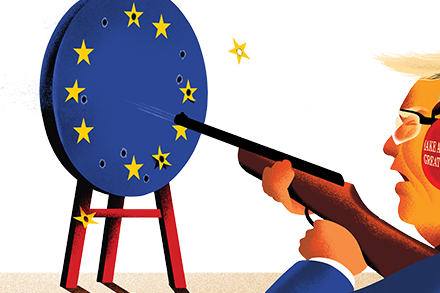
If I were a bookie, I would be making odds now about when the European Union will finally unravel and die. Unless there is an imminent and drastic course correction, the blessed event cannot be far off.  I might need a Doomsday Clock akin to the one publicized by the Bulletin of the Atomic Scientists. Their clock hovers near midnight, which signifies nuclear Armageddon, the minute hand pushed closer or farther away from the blast depending on minatory world events. My clock would measure the EU’s proximity to implosion. Its recent decision to fine Elon Musk and his company X €120 million for “non-compliance with transparency obligations” has me nudging the minute hand closer to midnight. “Non-compliance with transparency obligations.” What do you reckon that means?

Marco Rubio treads a fine line at NATO

From our US edition

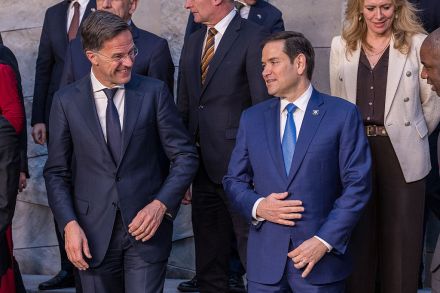
Secretary of State Marco Rubio’s trip to NATO headquarters in Brussels couldn’t have been easy for either Rubio or the Europeans.  The normally copacetic relationship between the United States and Europe isn’t in shambles as the more overly sensitive lawmakers and pundits would have you believe. But it’s not exactly rosy either. European policy elites for the most part like to downplay their differences with Trump’s Washington and emphasize the positive, but it’s hard to be a European politician these days and not be terrified of the future.

nato

Fight or flight?: 33 Place Brugmann, by Alice Austen, reviewed

In May 1940, as the Nazis invade Belgium, the residents of a sedate apartment block in Place Brugmann, Brussels, wake to find that their longtime neighbours, the Raphaëls, have disappeared. Alice Austen uses this moment as the starting point for her subtle debut novel about how a diverse group of Belgians react to the Nazi occupation. She tells her story in snapshots, writing in the multiple first-person voices of those who remain at 33 Place Brugmann and those who flee. Charlotte is a young artist who may not see colours, but has ‘vision’. Miss Hobert is a gossip with ‘a rabid imagination’. The courageous and pragmatic Colonel Warlemont resists the occupation with the assistance of his dog Zipper.

If only Britain knew how it was viewed abroad

A London-based foreign correspondent is probably not the target audience of Michael Peel’s latest book. Indeed, what Peel (himself a former Financial Times correspondent in Lagos, Abu Dhabi, Bangkok and Brussels) discusses in eight lively, well-researched chapters won’t come as a surprise to any of his UK-based foreign colleagues: how Britain is perceived abroad; and how little it seems to permeate the national consciousness. This blindness – or the British inability to realise how they appear to others, as opposed to the image they have of themselves – often has foreign correspondents pulling their hair in disbelief. If only Britain knew how it was seen! One senses that Peel’s return to London from Tokyo after 13 years of foreign postings must have felt like a crash landing.

London to Amsterdam via Brussels: taking the long way

From our US edition

Brexit, the gift that keeps on giving: from June 14, 2024 to January 2025, a reduced Eurostar service will run between London and Amsterdam. Why? Part-closure of Amsterdam Centraal leaves no space for the extra bureaucracy now necessary. Passengers returning to London will change at Brussels to go through security and passport checks, adding up to almost two hours of extra journey time. Global travel booking platforms such as OMIO have reported a surge in train travel in recent years. Cheaper prices (compared to flying) and environmental concerns are cited as the main drivers. But Eurostar’s capped passenger numbers and indirect routes will surely increase air travel in 2024, literally flying in the face of Dutch sustainability policies.

brussels

Brussel or Bruxelles? Even the locals can’t agree

From our US edition

Brussels is the source of all evil to many of those who supported Brexit, and even for Americans. “What’s a good Christian boy like you doing in Satan’s den?” was the question of an Austin friend when I told him work had brought me to the capital city of the European Union. To its critics, Brussels is the bastion of the worst sort of Big Government, with the European Commission and Parliament issuing diktats to more than 500 million people across twenty-seven nations. But while the city is “full of nets” with which to trap you, as described by another friend who worked here on human rights legislation, it’s also a city of “hope.” Brussels has a rich comic book culture. There are the intrepid reporter Tintin and his sidekick Snowy.

brussels

In defence of Brussels, Europe’s most underrated city break

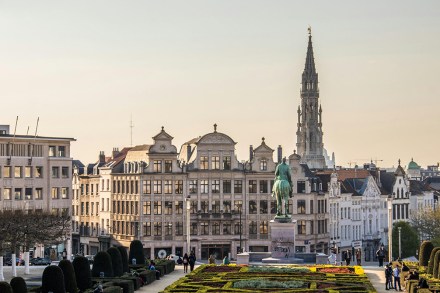
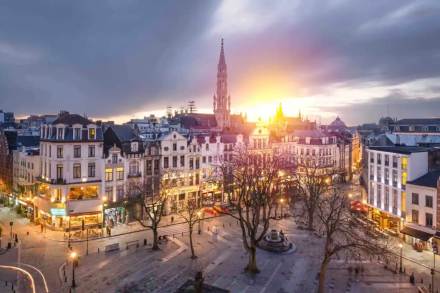
Strolling around the Belgian Comic Strip Center, admiring the elegant artwork of Hergé (creator of Tintin), I wonder for the umpteenth time why so many of my British friends are so disparaging about Brussels. It's one of my favourite cities, but most Britons I know wouldn’t dream of planning a break here. They don’t know what they’re missing. I’ve been here countless times, yet on each visit I discover something new. It’s full of quirky shops and exquisite restaurants, and there are some excellent museums too. If your idea of fun (like mine) is nosing around art galleries and antique shops, with plenty of pitstops en route, you’ll have a terrific time. I’ve never eaten better than in Brussels – and the beer (and the coffee) is superb.

Qatargate and the dubious moral authority of NGOs 

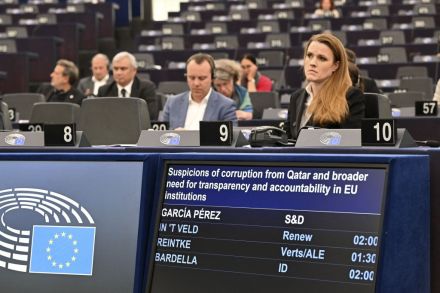
The Qatargate scandal haunting the European Union is not merely about corrupt politicians and officials. The deplorable role of a non-governmental organisation is at the heart of the scandal, which highlights the interlocking of NGOs and EU parliamentarians and decision makers. The most interesting feature of the corruption scandal surrounding the detention of the EU parliament’s vice-president Eva Kaili and politicians and EU apparatchiks is their connection to a supposedly squeaky-clean NGO called Fight Impunity. The current president of the organisation is Pier Antonio Panzeri, 67, a former Italian leftist MEP. He was arrested after €600,000 in bank notes was found in his house in Brussels.

How to eat frites the Belgian way

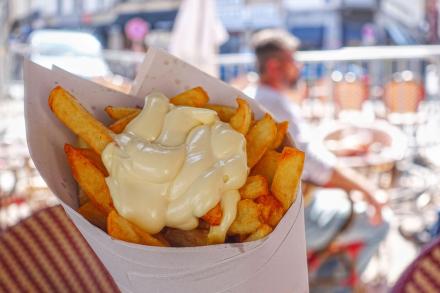
Many things about Belgium are impenetrably mysterious to the incoming foreigner: the commune system, which language to use, how to politely eat moules. But few are as cryptic as the menu of sauces that accompany Belgian frites. Ketchup, tartare, barbecue and mayonnaise seem fine. But what is Samourai? Andalouse? Mega?  Unlike many great Belgian things that have successfully been exported (Trappist beer, chocolate, Tintin, speculoos biscuits, Audrey Hepburn), frites can only be experienced on home turf. And my, aren’t they so Belgian. First, the friteries or fritkots in Dutch – chip shop kiosks found wedged on to street corners and in city squares – are totally egalitarian and the service is totally grumpy.

Iran and Russia: the new Axis of Evil?

From our US edition

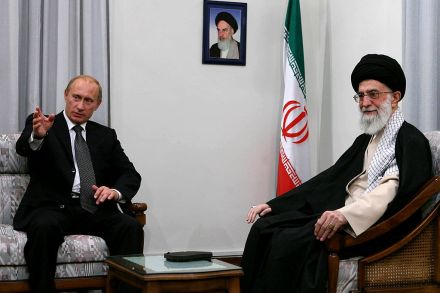
Russian President Vladimir Putin’s visit to Tehran last week brought attention to a growing partnership between Russia and Iran. The Russian shook hands with Iranian Supreme Leader Ali Khamenei, a rare gesture since both men are notorious coronaphobes. The old cleric expressed support for the Russian invasion of Ukraine, while the old KGB man offered Iran supplies of grain. US intelligence even claims Iran will open its drone arsenals to Russia. This strange friendship has its limits, but its growth could spell trouble. History does not suggest this is a natural partnership. The list of grievances between Iran and Russia is long. Great powers are often rough with middle-power neighbors.

Imperial measures are culture war bait

The idea of reintroducing imperial measures in honour of the Queen’s Jubilee has one quality that will have commended it to No. 10’s wizard wheezes department. It seems to have driven remoaning liberal elite types pleasingly bananas. It’s the perfect culture war bait, because it plays into the stereotype: if you are unshakeably complacent in your conviction that Brexit, and the government which advanced it as a project, are pandering to empty symbols of trad patriotism and little Englander nostalgia, you’ll shriek with a sort of delighted horror at the news. Here is confirmation of everything you imagined.

Hungary’s Orbán remains a thorn in everyone’s side

From our US edition

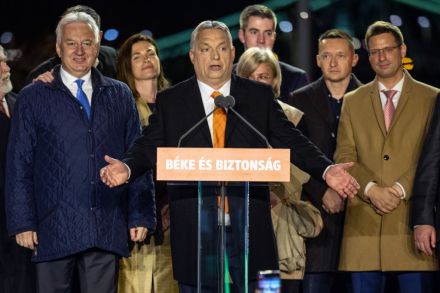
Viktor Orbán has just won another election. The Hungarian prime minister has secured a hefty majority in his country’s legislative elections, and in his victory speech, Orbán revealed once again that he is a thorn: in the side of Europe most obviously but, if need be, in the side of all. I’ll leave for others the discussion of Hungarian democracy — whether Orbán has so manipulated national life that his continued electoral successes are unimpressive, even fraudulent. But Orbán, in his own mind, thought an “overwhelming force” ranged against him. “We never had so many opponents,” Orbán said.

David Frost’s solution to cool UK-EU relations

Since David Frost quit the government in December over its political direction, he has not said that much about the future of UK-EU affairs. But in the Churchill lecture at the University of Zurich tonight, he sets out a potential new basis for relations. His tone is warm and marks a deliberate attempt to move on from the scratchy relations of the last few years: he argues that there is a ‘need to recognise that the EU is a natural ally of the United Kingdom, and that we should seek – as sovereign equals – ways to cooperate and work together more.

Ukraine won’t join the European Union any time soon 

From our US edition

In the wake of Russia’s aggression in Ukraine, President Volodymyr Zelensky has renewed his country’s wish to join the European Union. This week, the European Parliament approved Ukraine’s application to join the EU with an overwhelming majority. But Ukraine will not join the European Union this year, and possibly not even in the next five years to come. The reasons for that lie within the structure of the EU. The closening ties between Brussels and Kyiv had been the reason for Ukraine’s revolution back in 2014. Then Ukrainian president Viktor Yanukovych had rejected the EU-Ukraine association agreement, which tied both partners closer together, politically and economically.

european union

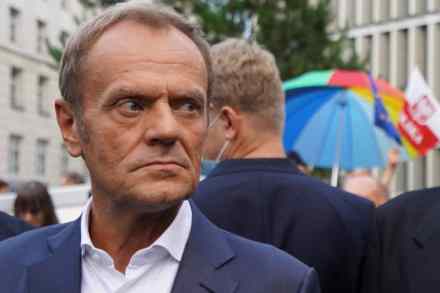
Donald Tusk is playing a dangerous game in dismissing Polexit

'The British showed that the dictatorship of the Brussels bureaucracy did not suit them and turned around and left.' That's the verdict of the parliamentary head of Poland’s ruling Law and Justice (PiS) party, Ryszard Terlecki, who has once again brought discussions of 'Polexit' to the foreground of Polish politics. Donald Tusk, Poland’s new leader of the opposition, has responded by suggesting this is party politics at work. But he is making a dangerous mistake to dismiss the prospect of a Polish exit from the EU. 'If things go the way they are likely to go, we will have to search for drastic solutions,' said Terlecki on Friday, citing Brexit as an example of a country breaking the mould of EU authority.

Hungary, Poland and the EU’s ‘diversity’ problem

It is quite something when the self-proclaimed ‘illiberal’ prime minister of Hungary, Viktor Orbán, reminds Brussels of its liberal principles. As part of the ongoing row over a Hungarian law which bans the ‘depiction or promotion’ of homosexuality and gender reassignment, Orbán has argued that: ‘If we want to keep the European Union together, liberals must respect the rights of non-liberals. Unity in diversity.’ ‘Unity in diversity’ has been the official motto of the European Union for over 20 years. The idea that the continent can unite in a common political and economic framework without losing the diversity of its constituent nations underpins the very idea of a democratic union of states.

The EU will regret its legal onslaught against Poland

When European governments openly disobey courts, ears prick up. When two courts simultaneously contradict each other on the same day and descend into an unseemly shouting-match, all bets are off. Welcome to the mad world of Poland’s legal relations with the EU. The ruling Law and Justice Party in Poland, PiS, is cordially detested in Brussels. Its policies, which are quite popular locally, are anathema to the liberal and cosmopolitan Euro-nomenklatura. Back in 2017, PiS introduced technical changes to the terms of appointment of the Polish higher judiciary, including a disciplinary chamber with political connections armed with powers in certain cases to sanction judges.  The measures were aimed at halting corruption.

The EU’s Brexit bill doesn’t add up

A dozen hospitals. A hundred million doses of the Pfizer vaccine, and a lot more of the Oxford one. Or even a few trips in one of Jeff Bezos’s new space rockets. Even with inflation, there is still plenty you can buy with an extra three to four billion pounds.  In recent days, it has emerged there is a big gulf between what the European Union insists we owe under the terms of our departure agreement, and what the UK believes is due.  In the EU’s accounts, it put the sum at £40.5 billion. The UK now says it will be £37.3 billion, or £3.2 billion less than the EU reckons. Despite this discrepancy, the EU continues to insist the UK should pay that full sum of money.

Why has the EU let German car manufacturers off the hook?

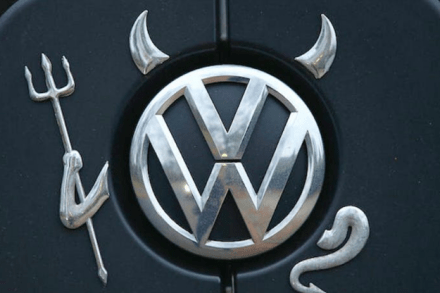
Two billion? Five billion? Perhaps ten billion to make it a nice round number? For colluding on diesel emissions you might think the European Union would hand out a pretty stiff fine to the big German auto-manufacturers. After all, it has hit American tech giants with huge penalties for far lesser transgressions.  Yet in the end, its response was predictable: the EU has largely let them off the hook. The reason? It turns out that protecting German auto manufacturers is what the Commission really cares about – and nothing else matters.