Alice Jolly

From housemaid to monster: The Mare, by Angharad Hampshire, reviewed

From our UK edition

In 1957, Russell Ryan, an American is holidaying alone in Austria. There he meets a young woman called Hermine Braunsteiner. They fall in love and Russell takes Hermine back to America where they marry and set up home in the suburbs. All goes well until 1964, when a New York Times journalist knocks on the door and tells Russell that Hermine is a former concentration camp guard. In writing this novel, Angharad Hampshire is drawing on the couple’s real-life story, and the reader is captivated from the outset. What exactly did Hermine do? How will Russell react to the accusations against her, and can he ever forgive her? Hampshire writes in short chapters, weaving together scenes from past and present, moving fluently between Austria, Germany and the US.
Fractured loyalties: The Tribe, by Michael Arditti, reviewed

From our UK edition

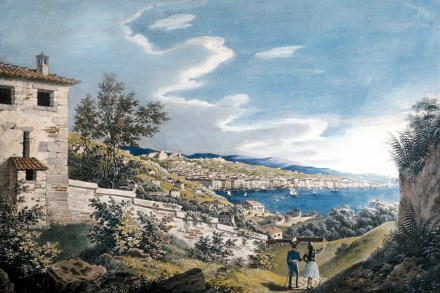
Michael Arditti’s impressive and immersive family saga begins in Salonica (now Thessaloniki) in 1911 and follows the fortunes of the wealthy, powerful Carrache family who are part of the Sephardic Jewish community. They have lived in the city for two centuries and employ more than 1,000 people. The father of the family, Jacob, is ‘a well-known liberal’ who ‘would never compel his children to do anything against their will’; but he is outraged by his daughter Esther’s flirtations with socialism. So what will happen when he discovers his son Leon’s relationship with a nightclub singer? He also worries about his other three children: Ruben is reckless, Bella is artistic and Irène is overlooked.

Fight or flight?: 33 Place Brugmann, by Alice Austen, reviewed

From our UK edition

In May 1940, as the Nazis invade Belgium, the residents of a sedate apartment block in Place Brugmann, Brussels, wake to find that their longtime neighbours, the Raphaëls, have disappeared. Alice Austen uses this moment as the starting point for her subtle debut novel about how a diverse group of Belgians react to the Nazi occupation. She tells her story in snapshots, writing in the multiple first-person voices of those who remain at 33 Place Brugmann and those who flee. Charlotte is a young artist who may not see colours, but has ‘vision’. Miss Hobert is a gossip with ‘a rabid imagination’. The courageous and pragmatic Colonel Warlemont resists the occupation with the assistance of his dog Zipper.