Brussels

Viktor Orbán goes to war on the European parliament

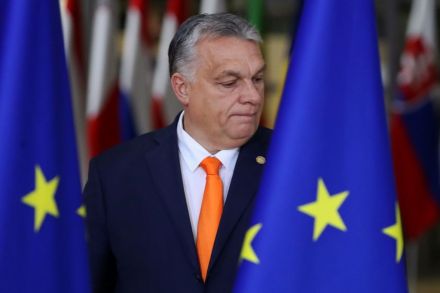
‘Times have changed, and whereas thirty years ago we believed Europe was our future, today we understand that we are Europe’s future’. Hungarian prime minister Viktor Orbán has never been one to shy away from controversy when it comes to the European Union. But on Hungarian Independence Day on Monday, he went a step further by presenting an alternative vision for the bloc.  Orbán's plan involves a major restructuring of the European parliament, which he described as a ‘dead-end’ for democracy. He wants to fix the EU’s democratic deficit by building a ‘democracy of democracies based on European nations’.
Prepare for the EU’s ‘Hamilton moment’

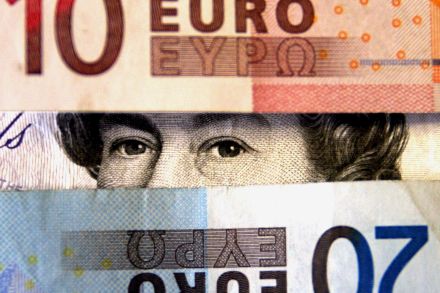
The EU may boast a common currency like any other state (even if nearly a third of its 27 members do not use it). It may also have, through its regulatory jurisdiction over banks and financial services, a vast say in the running of the financial system throughout the bloc: powers at least comparable to those of a federal government such as that in Canada or Australia. But there is one thing the EU has not yet managed to get: a unified tax system.  Any attempt seriously to impinge on national tax laws still requires unanimity among member states. This irks Euro-federalists.  One reason is that it draws the centre into unseemly squabbles.

The president of platitudes

From our US edition

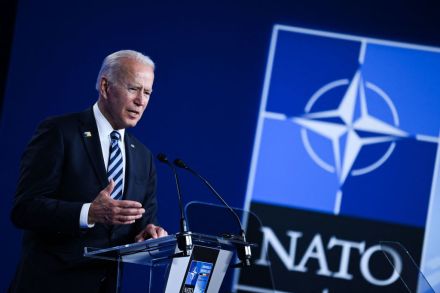
President Joe Biden turned up almost three hours late to his Nato press conference tonight. He offered no apology, because, well, why should he? He then gave a short speech. It was adequate enough, albeit predictable and rigid — read as it was almost entirely from a teleprompter. It wouldn’t be Biden if he didn't open with a gaffe, though. He managed to stumble early by saying ‘we’re still averaging in the last seven days the loss of 300 deaths per day.’ In answer to a press question about Putin, he said ‘I’ll be happy to discuss with you when it’s over, not before, about what the discussion will entail’. That didn’t make much sense. He successfully quoted Benjamin Disraeli and said ‘the proof will be in the pudding’ without jumbling the words.

platitudes

The manhunt dividing Belgium

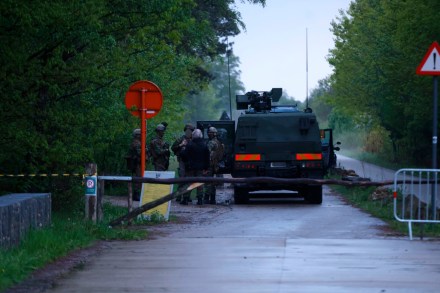
Belgium's leading virologist is in hiding, holed up with his family in a government safe house. The reason? A right-wing Flemish soldier. Jürgen Conings disappeared from his home on 17 May, leaving behind a booby-trapped car and a series of letters laying out his grievances against 'the regime'. In a goodbye letter to his partner, Conings wrote: The so-called political elite, joined now by the virologists, are deciding how you and I should live... I don't care whether I die or not, but I will live my last days the way I want. The muscular 5ft 9in former corporal is now officially a grade-4 terror risk. But that hasn't stopped the emergence of pro-Conings groups in Flanders, the richer, Dutch-speaking part of Belgium.

Brussels embraces vaccine nationalism

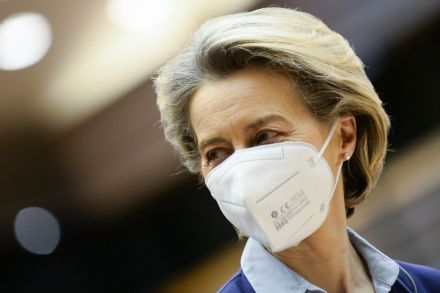
Just what on earth is happening in Brussels? The latest saga in the European Commission's botched vaccine roll out is president Ursula von der Leyen's threat today to block vaccine shipments to the UK from Europe. Speaking at a press conference this afternoon, the under-fire Eurocrat singled out Britain and suggested she could block imports of Pfizer unless UK-manufactured AstraZeneca jabs are shipped to the Continent. https://twitter.com/SkyNews/status/1372169441690185728?ref_src=twsrc%5Etfw She said: 'All options are on the table.

Can the EU be trusted to introduce vaccine passports?

The contracts were badly drafted. The orders were late. Too few resources were made available for the scale of the task, and the regulators dithered and delayed. Even the most fanatical federalists such as Guy Verhofstadt have admitted the EU’s vaccine programme was little short of a catastrophe. But hey, what does that matter? Ursula von der Leyen has decided this is the moment to double down on the EU’s Covid-19 strategy, and launch a centralised vaccine passport. What could possibly go wrong? Well, er, as the EU’s vaccine fiasco has taught us, lots actually. Von der Leyen has today tried to bounce back from her difficulties with the vaccine programme with a plan for EU-wide Covid passports.

The EU is stepping up its raid on the City of London

It is not usual for the Governor of the Bank of England to ask permission to make a statement about a completely unrelated issue when giving evidence on inflation to the Treasury Select Committee. So we knew it was serious when Andrew Bailey yesterday told us his concerns about Brussels trying to force banks to relocate their euro clearing from London to the EU.  It is not a surprise that the EU wants to do this – France has been pushing for this for years before Brexit, leading to it losing a case to the UK at the European Court of Justice – but what is concerning is the desperate extremes the EU seems prepared to go. It was, Mr Bailey said, bordering on the illegal.

Biden’s rift with Brussels is only set to grow

It was meant to be a special relationship. After the tumultuous Trump years, President Biden was planning to reset relations with the European Union, Inherently liberal, rules-based, and engaged with climate change, it would be a natural ally, and far more so than a UK still tainted by Brexit. The Biden team were no doubt looking forward to working closely with officials in Brussels, Paris, and Berlin to repair the damage of the last four years and put the world on a more rational course.  But hold on. It is not going according to plan. There are already reports that the White House is growing increasingly frustrated with the EU. And in truth, that rift is only going to get wider and wider in the months to come.

This is just the start of the Brussels-Britain bust-ups

This is a crucial year for the UK’s two most important relationships, I say in the magazine this week. If the Johnson/Biden diplomatic relationship has got off to a better start than expected, the same cannot be said of the post-Brexit UK/EU one. The alignment between Johnson and Biden on climate change, Russia and China is helping the alliance. This relationship should become closer still given the two side’s agreement on China, the most important geo-political issue of the decade. The EU will attempt, often in not particularly edifying ways, to assert itself as the bigger partner.

Isn’t it time Michel Barnier retired?

He took the European Union to the edge of a no-deal Brexit, creating logistical chaos on both sides of the Channel. His high-handedness and patronising manner hardened positions on both sides. And his brinkmanship clearly failed, leading to a far more distant relationship with the UK than might otherwise have been possible. It would be hard to conclude from the wreckage of the last four years that Michel Barnier had been a great success as the man in charge of negotiating Britain’s departure from the EU. But heck, this is Brussels we are talking about, and you can’t let a little thing like success or failure derail the careers of its chief functionaries (after all, if you started down that track, you might want to start asking where the vaccines are).

Why the ECJ still has a role to play in Britain’s lawmaking

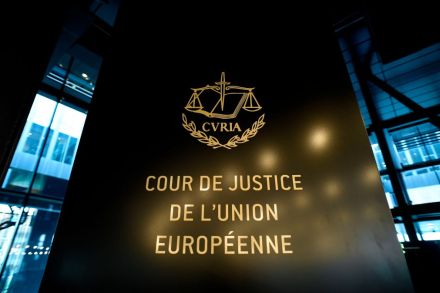
Now that Britain has left the EU, we are no longer bound by the European Court of Justice. Some may view that as something to celebrate. Yet there may also be downsides. The ECJ is the final court of the EU. It hears lots of cases about EU member states who break EU law. It then reaches conclusions which form case law. All 27 members of the EU are bound by this, but Britain, outside the EU, is not. But here’s the catch: some of those decisions might actually be good ones. The solution is that we should borrow these good ones for ourselves. English law is a magpie. We pick up shiny bits of ‘good law’ that other places have and we make them ours. It is what lots of sensible sovereign states do, and there is nothing wrong with this. There is no copyright in law.

The EU’s vaccine shambles is turning into a re-run of the euro crisis

Rewind a few months, and it was all meant to be very different. With Covid-19 rampant across the world, the European Union would take charge of sourcing vaccines from the major drugs companies. Its massive buying and regulatory power, coupled with its finely-tuned administrative machine, would make sure its 440 million people were protected from the virus before anyone else. It would be a magnificent demonstration of the whole point of the organisation. The trouble is, not only has the project already started to come off the rails, it is getting worse with every day that passes. Europe’s vaccine alliance is crumbling with potentially far-reaching consequences. Europe’s vaccine alliance is crumbling with potentially far-reaching consequences.

How Poland is reinventing Euroscepticism after Brexit

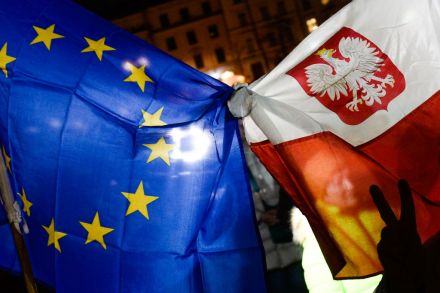
With Britain leaving the EU, Brussels is adopting a new assertiveness – but Poland and Hungary are fighting back. The two countries are plotting a strategy of vetoing the EU's latest budget because of a mechanism attached to it allowing the bloc to withhold money if a country falls short of its standards. Poland and Hungary fear that this measure could leave them vulnerable if Brussels doesn't like their domestic legislation. But this drama is about more than just money – it also shows the direction Euroscepticism is heading in after Brexit. Without Britain's influence, Euroscepticism is now beginning to take on a new form – more cultural, and less economic.

The curious case of the Brussels ‘orgy’

Belgium has had some of the toughest coronavirus restrictions in Europe during the second wave of the pandemic, with hospitality venues closed and socialising severely restricted. So Mr Steerpike was surprised to note this interesting story in the Belgian press today, which suggested that some may not be following the rules as closely as expected. According to La Dernière Heure, 25 men were arrested this weekend after their lockdown festivities were interrupted by the police. The paper writes: ‘Twenty-five men in their birthday suits were interrupted in the middle of a gang bang on Friday evening in Brussels, close to the central police station of the capital’.

Coronavirus is straining an already fractured EU

When EU finance ministers ended their crisis meeting this morning, they had spent 16 hours trying to establish what collective help, if any, they wish to offer to the countries most affected by the epidemic: Spain and Italy. They agreed on not a thing. Instead, the meeting broke up acrimoniously with Italy, Spain and France demanding that the European Central Bank issue ‘coronabonds’ to help finance economic recovery – while Germany, the Netherlands and others resisted. So we see the EU split along the same lines as did the 2008/09 crisis, and indeed along the same fault lines that have been growing ever wider over the past three decades.