Britain

The slumber of the Anglosphere

From our US edition

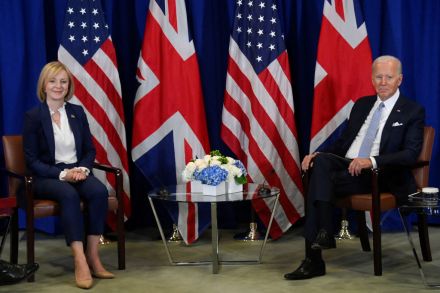
The countries we call Anglo-Saxon (Great Britain, the Commonwealth and the United States) have been known for centuries for their ability to govern themselves democratically, peacefully and efficiently. In the twenty-first century they have been doing less well. Britain and America are both in dreadful straits politically, economically and socially. The implosion of Boris Johnson and the search for a satisfactory successor have revealed the leadership of the Tory Party as a hapless and embarrassing collection of mediocrities devoid of coherent ideas. Across the Atlantic, one of the two major parties is a gerontocracy at the top and a gang of urban guerrillas with Molotov cocktails at its base.
anglosphere

Europe is more bark than bite on Ukraine

From our US edition

Last Friday, President Biden signed a spending bill that will keep the government’s lights on until December 16, when lawmakers will have to cobble together a funding resolution to avert a shutdown. Tucked into that law was another tranche of security and economic assistance to Ukraine, to the tune of $12.3 billion. The signing came two days after the Defense Department announced the release of an additional $1.1 billion military package for Kyiv, which will include 18 more HIMARS systems, 150 armored vehicles, and ammunition of various calibers. The Biden administration has provided the Ukrainians with over $16 billion in security assistance since Russia’s invasion in February. Washington’s hands have been cramping up from writing so many checks.

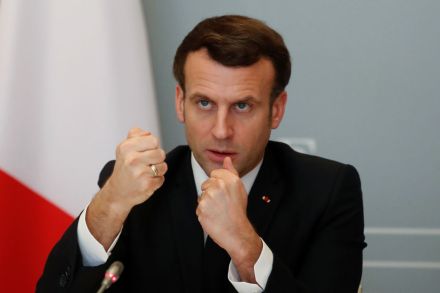
macron europe blame

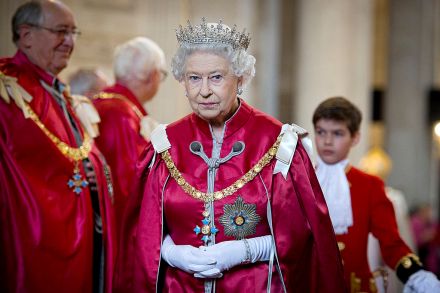
The ignorance of Queen Elizabeth’s ‘anti-colonialist’ critics

From our US edition

As Alexander Larman writes, the passage of the Queen is not a tragedy. No life lived so well, so dutifully, and with such faith in so many things now lost to us can be considered a tragedy. But it is nonetheless very sad, even for those of us in America — a nation she loved in so many ways. Her death seems like another blow to another important institution of the West, undermined in recent decades by boomer proclivities and millennial narcissism, and likely to break into a thousand pieces in the absence of the old-world values Elizabeth represented. What is more tragic, and more offensive, is the degree to which the Queen's passing has been met by historical ignorance from the anti-Western left and its attendant useful idiots on the decadence-obsessed right.

She lived her best life

From our US edition

CNN and Fox were fine, but you had to tune in to the British news channels to get the full weight of the Queen's death on Thursday. Every anchor, every reporter, spoke in a voice burdened by grief. So it was easy to forgive one Sky News commentator when she said, "At a time when it's all about having a brand, the Queen stood in defiance of that trend." In fact, it's hard to think of anyone who had a more cultivated brand than Elizabeth II. Her every public appearance, every utterance, every twitch was carefully calibrated toward the image of a stately monarch. Yet you can also understand what the Sky commentator meant.

James Bond and the Beatles herald a new Britain

The word ‘magisterial’ consistently attaches itself to the work of David Kynaston. His eye-wateringly exhaustive four-volume history of the Old Lady of Threadneedle Street established him as a historian with a confident command of a huge body of information, as bloodless and dry as the subject was. Embarking on Tales of a New Jerusalem, a history of Britain from 1945 to 1979, he has undertaken another marathon and earned magisterial rank. Yet, from the first, Kynaston has shown that he is prepared to leave the bench to sweep the Ealing and Islington Local History Centres, Wandsworth Library, the East Riding Archives and especially that extraordinary resource, the Mass Observation Archive, kept in The Keep at the University of Sussex.

‘Oxford or Cambridge?’: the vacation edition

From our US edition

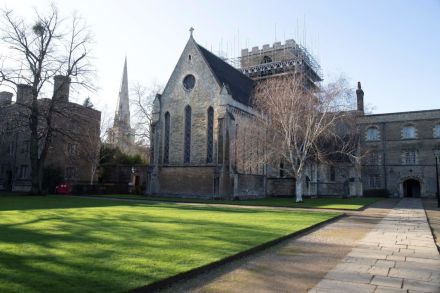
"Oxford or Cambridge?" No, it isn’t just shorthand for which of Britain’s most famous universities you attended — or were rejected from. It’s also a question about your taste in weekend vacation spots. Oxford is an urban, bustling city, full of multiculturalism, wide-eyed gangs of tourists and a literary heritage that’s long since tipped over into cliché. Think Alice in Wonderland, C.S. Lewis, J.R.R. Tolkien, even — God help us — Harry Potter, claimed for posterity because of its use of Christ Church as a filming location. But its Eastern cousin — decidedly not Cambridge, Massachusetts — is a very different proposition.

Finally, some justice for the infected blood scandal’s victims

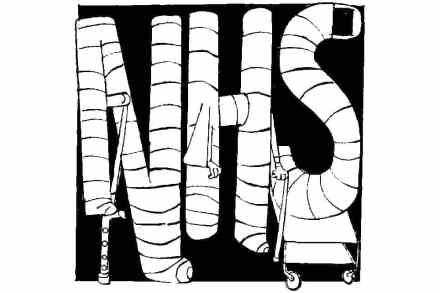
Why has the greatest patient scandal in the history of the NHS rumbled on for so long before its victims even start to see justice? It shouldn’t have taken 40 years for there to be an answer Today the government awarded £100,000 in interim compensation to around 4,000 survivors of the contaminated blood scandal, as recommended by Sir Robert Francis, who published a report on the matter earlier this year. They have been fighting for 40 years for justice that, as yet, does not cover the bereaved parents and children of those who were infected with HIV and Hepatitis C when they were given dirty blood products for their haemophilia or blood transfusions. For that, they will have to wait until the conclusion of the public inquiry led by Sir Brian Langstaff later this year.

Britain’s crippling lack of infrastructure

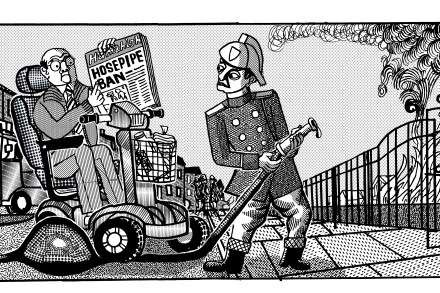
England is in the grip of its most widespread drought in 20 years. Water companies are implementing hosepipe bans. Half the country’s potato crop is expected to fail. Photographs of reservoirs show them drained, dry banks open to the sky. Another heatwave is here, bringing little prospect of imminent relief. Britain hasn’t built a reservoir since 1991. The population has grown. Hot weather has become more frequent. Water use has become more strained. The barriers to actually doing something about it remain in place. Take Layla Moran, Liberal Democrat MP for Oxford West. As late as March, she was doing the media rounds vigorously opposing the construction of a new reservoir in Abingdon; it would be unsightly, the population projections might be wrong, she said.

How Germany’s energy crisis could bite Britain

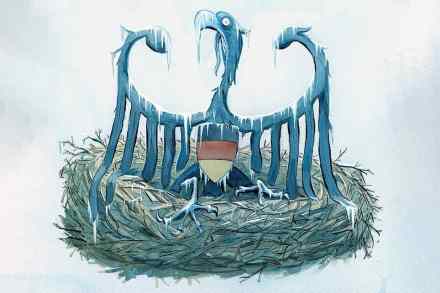
For now, Berlin can breathe a sigh of relief: after a ten-day shutdown for maintenance, the Nord Stream 1 pipeline is back online. Russia is once again heating German homes, fuelling German industry, and using German money to finance its war in Ukraine. But this happy exchange may not continue; the pipeline is still operating at just 40 per cent of its usual capacity, and Vladimir Putin is warning this could fall to 20 per cent next week.

Blair is wrong: the future of Britain shouldn’t involve Macron

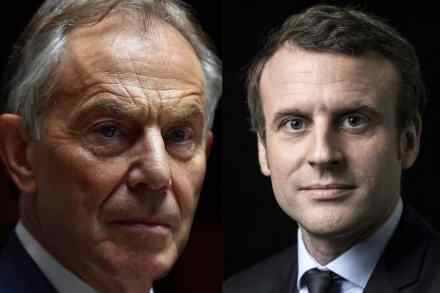
Tony Blair believes the way forward for Britain is to seek guidance from Emmanuel Macron. The former British prime minister has a reputation for outlandish claims but the suggestion that the United Kingdom can benefit from pearls of wisdom proffered by the most divisive president in the history of the Fifth Republic is baffling even by Blair’s standards. According to Politico, Blair will host a Future of Britain conference on June 30, which is a collaboration between his eponymous Institute and the Britain Project, a centrist think tank that was established in the wake of the 2019 general election and which is described by Politico as the ‘British version of Emmanuel Macron’s La République En Marche’.

This is how to save the Union

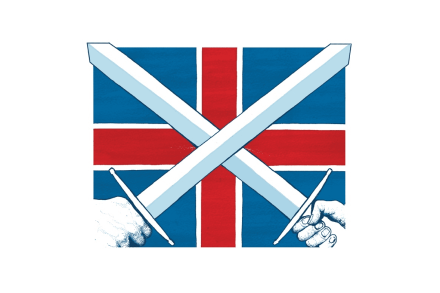
Devolution has failed in Scotland. Nothing that follows will be of use to you if you remain in denial of this fact.  Facing up to a quarter-century of needless, self-inflicted constitutional harm is the admission price to any credible conversation about how to go about fixing the problem. Devolution, sold with the assurance that ‘the Union will be strengthened and the threat of separatism removed’, has weakened the Union and armed the separatists. All historic errors have their guilty men and devolution has an unholy trinity. Labour loves legends, especially those felled on the cusp of greatness, and Donald Dewar — MP at 28, architect of devolution, inaugural First Minister, dead at 63 — ticks all the boxes.

China is right to laugh at the west

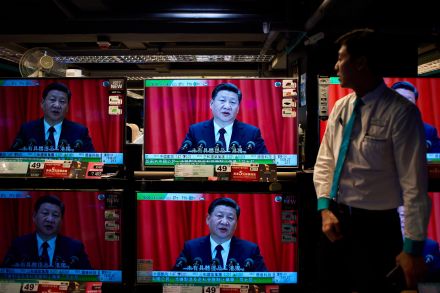
Signs of the enervating weakness of the west’s governing elites aren’t that hard to find but the case of the Winter Olympics may be the most demeaning. The UK and Canada have followed the US and Australia in announcing a diplomatic boycott of February’s games in Beijing over China’s human rights record. It’s a crushing blow to the communist dictatorship: Xi Jinping has been unable to sleep or dress himself since learning that the deputy head of the British mission will be skipping the mixed doubles luge final.

Britain’s relationship with France has taken a turn for the worse

How will Priti Patel’s tour of European capitals in a bid to solve the migrant crisis go? Well, any visit to Paris will be difficult. Relations between the UK and France have taken a turn for the worse overnight, with Emmanuel Macron making a series of comments both privately and publicly that have landed badly with the UK government. Discussing the Northern Ireland protocol, the French President said the EU must not ‘cave in’ to British demands on border checks. In comments viewed as incendiary by ministers, Macron described the issue of the border as a matter of ‘war and peace’. However, where Macron has allegedly been the most critical is in his critique of Boris Johnson.

Why Britain and France can’t have an amicable divorce

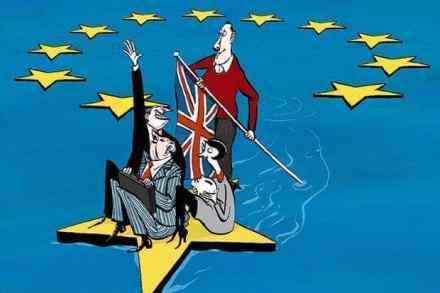
Former Chancellor Nigel Lawson famously said that the National Health Service is the nearest thing we British have to a state religion. You could say much the same thing about the European Union and the French. To our Gallic neighbours, the ‘construction of Europe’ is a sacred task that brooks no challenge. What goal can be higher than binding the once bellicose German nation into a new rules-based European order that has brought peace to a continent riven by war and revolution? What nobler cause for France than leveraging the outsized economic heft of its neighbour outre-Rhin in support of its mission to create an alternative beacon of enlightenment values to counter that tawdry Anglo-Saxon economic and cultural hegemony?

Joe Biden has treated Britain with disdain over Afghanistan

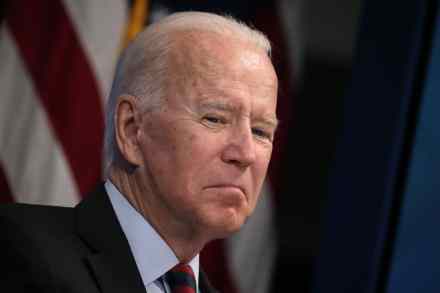
Congratulations, Joe. No US President has simultaneously alienated (and abandoned) so many of his compatriots or exacerbated threats to the West with such efficiency as Biden this past week. Biden defiantly sees ‘an extraordinary success’ in the chaotic and deadly withdrawal from Afghanistan, but disaster currently flows in the President’s wake. And one of the consequences is the mortal danger to America’s most important diplomatic and military alliance: the UK-US Special Relationship. Biden’s speech on Tuesday was a deranged, dramatic tragedy. He lashed out at critics of his calamity which saw the Taliban reinstalled in power and strengthened with new deadly capabilities.

Where is Britain’s anger about Afghanistan?

This is an age of anger. Social media amplifies rage and exaggerates polarisation. Twitter isn’t Britain, but too many people in politics and journalism spend too much time on the site and – consciously or not – start to mistake its shallow extremes for real public opinion. The result is a public discourse more often driven by fury than understanding. Just about any question or issue can unleash this lab cultured rage. Some people are angry about being asked to wear a mask to avoid spreading a disease that might kill someone else. Some people are angry about an alpaca. So where’s the anger about Afghanistan? A Suez moment is passing almost unremarked Afghanistan, where two decades of Western intervention is ending in bloody failure.

Whitehall’s Covid gloom could harm our economic recovery

As the government continues to put forward an extremely cautious narrative about re-opening, more evidence emerged today that the economy is surging ahead. The International Monetary Fund has once again upgraded its forecast for Britain's growth this year: its April prediction of 5.3 per cent growth in 2021 has now been revised upward to 7 per cent. If correct, the UK could boast one of the fastest growing economies amongst major countries, with a recovery looking to be on par with the United States. Today’s update from the IMF fits a trend. Just this weekend the EY Item Club forecast 7.6 per cent growth this year – the fastest rate of growth in Britain for 80 years.

The EU’s Brexit bill doesn’t add up

A dozen hospitals. A hundred million doses of the Pfizer vaccine, and a lot more of the Oxford one. Or even a few trips in one of Jeff Bezos’s new space rockets. Even with inflation, there is still plenty you can buy with an extra three to four billion pounds.  In recent days, it has emerged there is a big gulf between what the European Union insists we owe under the terms of our departure agreement, and what the UK believes is due.  In the EU’s accounts, it put the sum at £40.5 billion. The UK now says it will be £37.3 billion, or £3.2 billion less than the EU reckons. Despite this discrepancy, the EU continues to insist the UK should pay that full sum of money.

The real reason Putin targeted HMS Defender

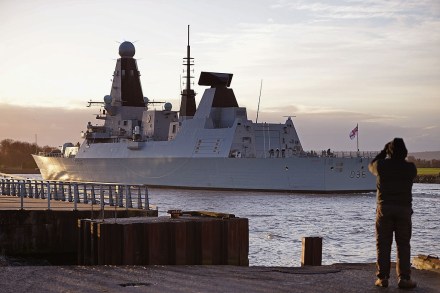
When military personnel talk of ‘theatres’ they mean a zone of conflict. Moscow seems to take the term increasingly literally, though, regarding spin as an essential tool of martial statecraft. This was especially visible in yesterday's claims that its Border Guard ships fired warning shots and Black Sea Fleet Su-24 bombers dropped OFAB-250 fragmentation bombs because the Royal Navy destroyer HMS Defender ‘intruded’ onto Russia’s ‘territorial waters.’ After which, Moscow smugly noted, Defender ‘left’ those waters. Except that very little of that seems to be true. First of all, the waters in question were off Cape Fiolent, at the southern tip of the Crimean peninsula.

The UK-Australia free trade agreement is a triumph

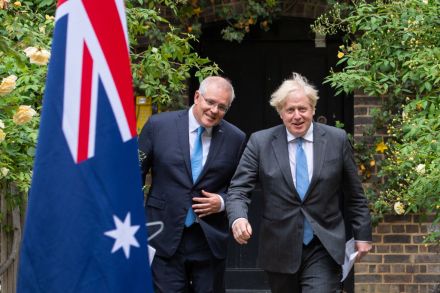
How significant is the UK-Australia trade deal announced this week during Prime Minister Scott Morrison’s visit to Britain? Well, Australia already has 17 genuine free trade agreements, including with the United States, Japan and China. But the free trade agreement with the UK is undoubtedly one of the highest quality agreements Australia has ever reached. In terms of the liberalisation of markets, it is only exceeded by the free trade agreement Australia has with New Zealand. This demonstrates something very important: that the UK, having left the European Union, is going to be a genuine champion of global trade liberalisation.