Alexander Downer

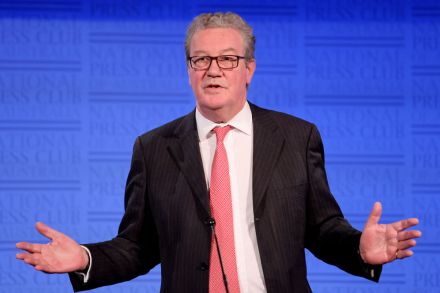
Alexander Downer is chairman of trustees at the Policy Exchange, former minister for foreign affairs and former Australian High Commissioner to the UK.

Britain’s foreign policy is increasingly feeble

From our UK edition

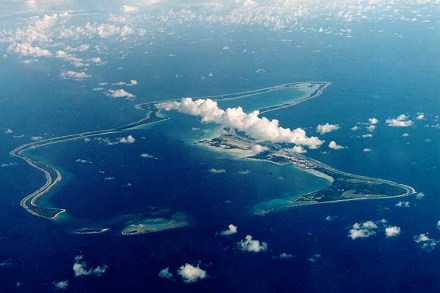
For those of us who grew up during the Cold War, it’s heartbreaking to watch the western countries fail to defend the interests of liberal democracy. The free world is being challenged on three fronts, by Russia, Iran and China, all of whom threaten the international order established so painstakingly after the second world war. The West should be standing up for its values, yet even Britain, the great bastion of democracy, the country that heroically held out alone in 1940-41, seems to have lost the will to fight. The fact that the government has transferred sovereignty of the Chagos Islands to Mauritius is symptomatic of a country that no longer has geopolitical perspective. Britain is obsessed with its own shame over its imperial history – and has been for quite some time.
Is the Quad finished?

From our UK edition

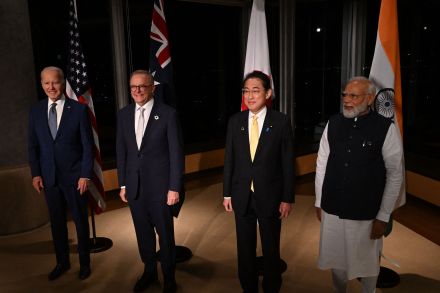
Since the late 1990s, Australian governments have been considering how to make their neighbourhood, the Indo-Pacific, a stable and peaceful region. Australia has articulated the need for a balance of power, between a rising China on the one hand and the liberal democracies of the region on the other.  Australia has been particularly concerned about the risk of the Indo-Pacific being dominated by China – it could impose a kind of Asian Monroe doctrine on the region. In this environment, China would not only be able to subjugate Hong Kong, assert its sovereignty over the whole of the South China Sea, and incorporate Taiwan into the People’s Republic of China.

Italy’s new wave: Europe’s escalating migrant crisis

From our UK edition

45 min listen

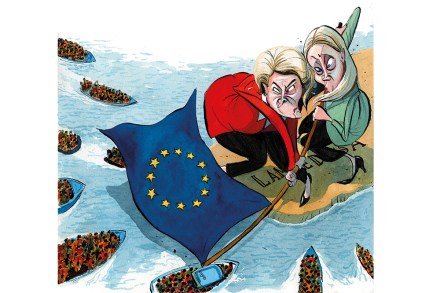
This week: Christopher Caldwell writes The Spectator's cover piece on Italy’s new wave of migrants. This is in light of the situation in Lampedusa which he argues could upend European politics. Chris joins the podcast alongside Amy Kazmin, Rome correspondent at the Financial Times, to debate Europe’s escalating migrant crisis. (01:23) Also this week: In his column, Matthew Parris writes about Australia’s Voice vote, a yes/no referendum being held on whether to establish a new body which will advise parliament on matters relating to Aboriginal and Torres Strait Islander peoples.

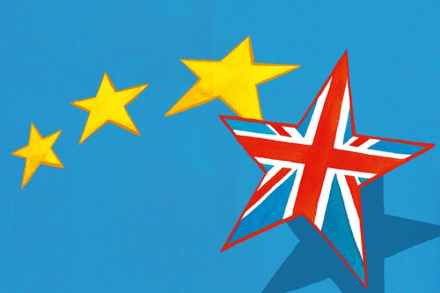
Does CPTPP make it harder to reverse Brexit?

From our UK edition

16 min listen

Britain has agreed to join the Comprehensive and Progressive Agreement for Trans-Pacific Partnership (CPTPP), a £9 trillion trade bloc with 11 members. James Heale, speaks to Katy Balls and a special guest, Alexander Downer about whether this is a win for the government. And what it could mean for those looking to reverse Brexit.

With Alexander Downer

From our UK edition

30 min listen

Alexander Downer is an Australian former politician and diplomat, whose roles have included Leader of the Liberal Party, Minister for Foreign Affairs and High Commissioner to the United Kingdom.  On the podcast he discusses his earliest memories growing up on a farm in Southern Australia, the role of food and wine in successful diplomacy, and why George W Bush is the perfect dinner party guest.

The threat to Britain’s undersea cables

From our UK edition

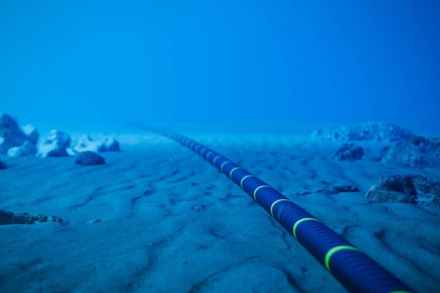
‘In the digital age of cloud computing, the idea that steel and plastic pipes are integral to our life seems anachronistic,’ wrote Rishi Sunak. ‘But our ability to transmit confidential information, to conduct financial transactions and to communicate internationally all depend upon a global network of physical cables lying under the sea.’ And what if those cables are cut? ‘The threat is nothing short of existential.’ Sunak wrote those words five years ago in a paper for the thinktank Policy Exchange. Last weekend, as he was running to become prime minister, he was proven right. The Shetland Islands lost phone and internet connections after the cable that links the islands to the mainland was severed.

New Aussie rules: Conservative values have fallen out of fashion

From our UK edition

The election campaign is under way in Australia, barbs are being exchanged, candidates denigrated and abused, and promises – many of which are just fantastic in the literal sense of the word – are being made. The Prime Minister, Scott Morrison, who is the leader of the Liberal party, is being challenged by the Labor leader, Anthony Albanese. Although Morrison has the edge over Albanese as preferred prime minister, neither is much loved. The leaders are unlikely to be a decisive issue in the election. What is the deeper mood of the country? That needs to be put into its historical context. Ever since the mid-1970s, Australians have expected political parties to be economically responsible.

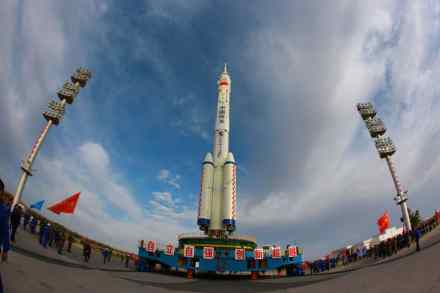
The West is falling behind China in the next space race

From our UK edition

It is the first duty of governments to keep their citizens safe, protecting them from harm. This means constantly being vigilant. We have to keep a close eye on our adversaries and competitors and their capabilities, whether they are states, organisations or individuals. But vigilance is not enough on its own – imagination is also vital. Twenty years ago, after the September 2001 terrorist attacks, the 9/11 Commission concluded that ‘the most important failure was one of imagination’. The security threat from jihadists was seen but not properly understood, even by leading experts. They had all the available facts. They just hadn’t used their imagination to join the dots and see the gravity of the threat.

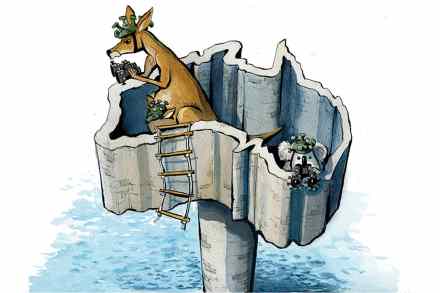
Prison island: when will Australia escape its zero Covid trap?

From our UK edition

39 min listen

On this week’s episode, we’ll be taking a look at the fortress that Australia has built around itself, and ask – when will its Zero Covid policy end (01:00)?Also on the podcast: is it racist to point out Britain’s changing demographics (14:35)? And is trivia just another way for men to compete (27:00)?With former Australian High Commissioner, Alexander Downer; chair of the All Party Parliamentary Group on Coronavirus, Layla Moran MP; Spectator columnist Lionel Shriver; York University's Dr Remi Adekoya; Spectator contributor Mark Mason; and QI elf Anna Ptaszynski.Presented by Lara Prendergast.Produced by Cindy Yu and Natasha Feroze.

Prison island: Australia’s Covid fortress has become a jail

From our UK edition

Australians have a reputation for rugged individualism, grit and competence. But when it comes to the pandemic, we have seen another side to my country: insecure, anxious and frozen by the fear of death from Covid. A recent global poll found that Australians more worried about the virus than any other western country. They have been scared witless by the hysteria of politicians, chief medical officers and the media. At first, Australia’s Covid strategy was hailed as a triumph: it had moved fast, minimised deaths and was on course to make enough AstraZeneca vaccine to double-jab the whole country. The route out seemed plausible: sit tight, vaccinate, then reopen.

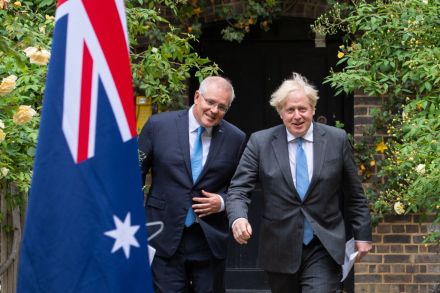
The UK-Australia free trade agreement is a triumph

From our UK edition

How significant is the UK-Australia trade deal announced this week during Prime Minister Scott Morrison’s visit to Britain? Well, Australia already has 17 genuine free trade agreements, including with the United States, Japan and China. But the free trade agreement with the UK is undoubtedly one of the highest quality agreements Australia has ever reached. In terms of the liberalisation of markets, it is only exceeded by the free trade agreement Australia has with New Zealand. This demonstrates something very important: that the UK, having left the European Union, is going to be a genuine champion of global trade liberalisation.

How to deal with an aggressive China: lessons from Australia

From our UK edition

What can the UK learn from Australia and its occasionally rocky relationship with China? The welcome decision to ban Huawei from Britain's 5G network has prompted concerns that China will find a way to hit back. This is hardly surprising, as the Chinese ambassador to London, Liu Xiaoming, has warned Britain that 'if you want to make China a hostile country, you will have to bear the consequences'. Australia is perhaps further down the same road. It has not gone out of its way to anger China but decisions the Australian government has taken over the last six or seven years have nonetheless had that effect. First, there was the decision to ban Huawei from the national broadband network. At that time, in 2012, the Chinese government barely reacted.

Britain’s post-Brexit trade plan could be a missed opportunity

From our UK edition

The economic argument for free trade is politically more important than ever. A drift towards the use of tariffs and other protectionist measures has increased in G20 countries since the global financial crisis and there are signs that the protectionist trend could accelerate in the wake of Covid-19. This at a time when a global economic recovery will urgently need the boost that trade offers. One of the great opportunities of Brexit is that the UK can lead the world, with countries like Australia, in championing free trade. The UK has made clear that signing free trade agreements is a top priority as it leaves the EU’s customs union. Negotiations with the United States are now under way, and Japan, Australia and New Zealand are earmarked as the next targets.

The free trade deal Britain must sign up to after Brexit

From our UK edition

Now the UK is leaving the EU, Boris Johnson's government can start planning a serious trade strategy for life after Brexit. So far the focus has been on a UK/US free trade agreement. But before that, the initial challenge for Britain will be to establish a rational set of priorities. First, the government must ask what resources is it prepared to commit to trade policy? Second, it needs to establish what trade agreements would be most beneficial to the UK economy. After all, there’s no point in giving priority to a laborious trade negotiation with, say, Burkina Faso, if the benefits of that agreement would be very limited. And third, how difficult would it be to conclude a free trade agreement with those priority countries?

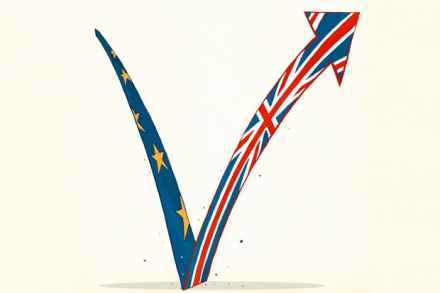
No deal need not be a disaster

From our UK edition

Spare a thought for us foreigners. We’re desperately trying to understand the meaning of the Brexit arguments being thrown around in the House of Commons. We all have our own countries too, so we view those arguments through the lens of our homelands. So here are a few reflections on how we react.  Theresa May's deal has the UK leaving the voting structures of the EU but remaining in the Customs Union until the EU gives the UK permission to leave. Australia and New Zealand have a free trade agreement and co-ordinate their regulatory regimes through a joint council. But they certainly don’t have a customs union otherwise neither country would be able to make its own trade policy.

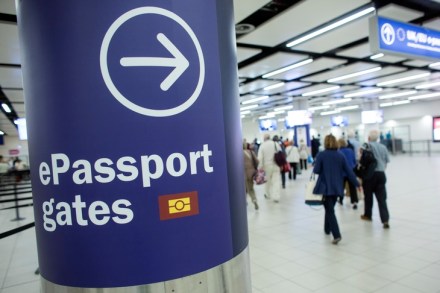
Opening the e-passport gates to Australians is a smart move

From our UK edition

The announcement in this week’s Budget that Australians (as well as those from the US, Canada, Japan and New Zealand) will have access to e-passport gates when entering the UK is a welcome sign that Britain is serious about going global. The million or so Australians who visit each year are sure to be delighted by this gesture.   There’s a backstory here: when I was the Australian high commissioner in London, I told everyone in government with ears to hear (including the then-home secretary Theresa May) that Australians were upset about being subjected to long queues at Heathrow while EU citizens went through a special fast-track process. Frankly, given our history of fighting alongside Britain and our shared head of state, it was downright insensitive.