Lee Cohen

Lee Cohen, a senior fellow of the Bow Group and the Bruges Group, was adviser on Great Britain to the US House of Representatives Foreign Affairs Committee and founded the Congressional United Kingdom Caucus.

The King’s speech: disagreement should not become divorce

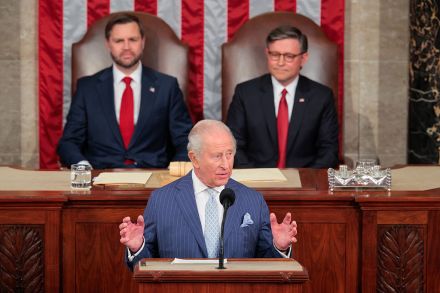
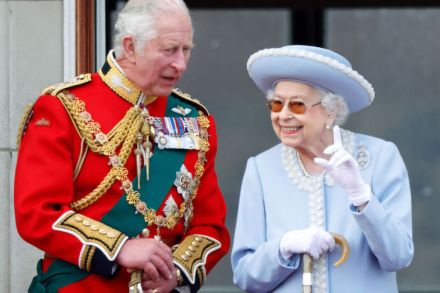
The King’s address to Congress was a rare and authoritative statement of national and international interest, delivered from a position no elected politician can claim. Before a joint session marking the 250th anniversary of American independence, the monarch spoke of an alliance forged in disagreement – yet repeatedly renewed by deeper common ground. He recalled the shared democratic, legal and social traditions that have pulled Britain and the United States back together after even the sharpest ruptures. He spoke of defense and intelligence ties measured not in years but in decades, invoked the Royal Navy service of his own past, and named the live tests now facing both nations: Ukraine, the Middle East, NATO and the AUKUS pact.

King Charles

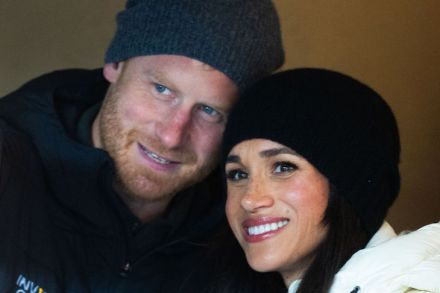
What Harry and Meghan don’t get about royal visits

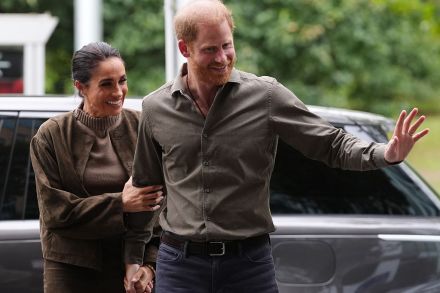
King Charles III’s state visit to Washington this week is the monarchy executing its core diplomatic function with precision and dignity. In Donald Trump’s Washington, an invitation to an event with the British monarch remains the most sought-after in the city. By stark contrast, the King’s son and daughter-in-law careen around the globe representing no one but themselves. They dress up as royals in a sustained exercise in self-promotion and profiteering that repels observers and belittles the very institution that gave them their platform. One upholds the Crown’s purpose, while the other commodifies it. The Sussexes’ grift cheapens the Crown’s reputation and insults the public’s intelligence The King and Queen travel as invited guests of the US government.

Starmer is destroying the ‘special relationship’

From our UK edition

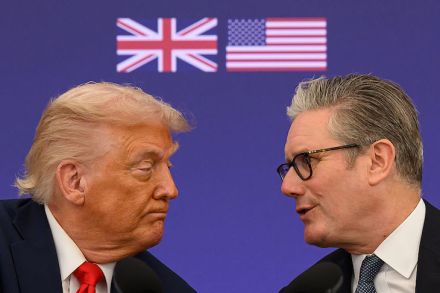
Britain's relationship with the United States is special. Our ties run deeper than governments, are stronger than personalities and are resilient against ideological fashion. But under Keir Starmer’s leadership, this once unshakeable bilateral partnership is in danger of being profoundly damaged. The truth is that Starmer governs in defiance of Britain’s core interests. From here in America, an alarming realisation is taking hold: that Starmer is the first Prime Minister in memory to treat Atlantic alignment as discretionary, rather than structural. Starmer has chosen to introduce hesitation where instinct once prevailed When Donald Trump moved to restore credible deterrence against Iran’s accelerating nuclear capability, he did so openly and deliberately.

Why shouldn’t Trump deport Prince Harry?

There are many things Americans admire about Britain – Shakespeare, Churchill and parliamentary democracy (on a good day). Above all, we admire the monarchy: that ancient, faintly miraculous institution which maintains its dignity even as the rest of the West dissolves into hashtag-fueled hysteria. What we do not admire, however, is being used as a backdrop for Prince Harry’s increasingly frantic attempts to remain relevant. No, I do not actually wish for President Trump to deport Harry to the Tower of London – although the image is, I confess, delicious, and might conceivably enjoy rare cross-party support on both sides of the Atlantic.

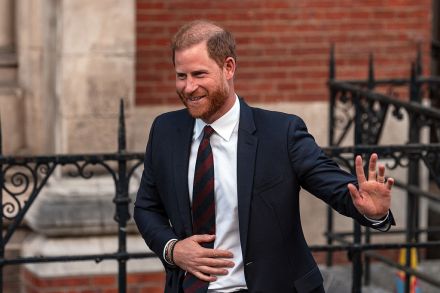
Prince Harry

Andrew Mountbatten-Windsor should ignore Congress

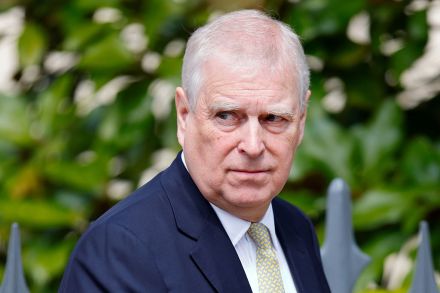
As an American who respects the constitutional role and historical continuity of the British Crown, I view the recent congressional request to interview Andrew Mountbatten-Windsor with disgust. In early November, several of the most progressive Democratic members of the US Congress sent a letter asking him to participate in a ‘transcribed interview’ regarding his past association with Jeffrey Epstein, with a response deadline of 20 November. No congressional body has the power to compel testimony from a British citizen living on British soil While Congress is free to seek information, the request carries no compulsory authority over a foreign national residing in the United Kingdom.

Harry and Meghan deserve the same fate as Andrew Windsor

From our UK edition

The King acted with decisive authority to strip his brother, Andrew, of his Royal title and evict him from his Windsor mansion. The former Duke of York is now known as Andrew Mountbatten Windsor, and he must vacate Royal Lodge for private accommodation at Sandringham. No formal Letters Patent were issued, nor was parliamentary legislation required; the King’s prerogative sufficed. The action, though severe, reflects a man whose associations – never proven criminal – had become untenable for an institution whose legitimacy rests on public trust. Andrew Windsor’s punishment was just and proportionate. The Sussexes’ case is more complex Yet another challenge persists: the conduct of the Duke and Duchess of Sussex.

How King Charles can restore the monarchy

From our UK edition

Britain once stood as the world’s unyielding shield – forged in Magna Carta’s fire, tempered by Elizabeth I’s resolve, and steeled by Churchill’s defiance. From across the Atlantic, where we enlightened Americans still trace our liberty to your common law and political traditions, we watch with unease as the Royal Family – once a byword for dignity and duty – slides toward unreality. These days, royal rogues have cast a reputational shadow so that Britain resembles less the Land of Hope and Glory, and more the Land of Oz. The monarchy depends on a respect that cannot coexist with double standards The misdeeds of the Yorks and Sussexes are not merely distractions.

Britain’s Jews must stay and fight

From our UK edition

Britain once prided itself on being different from France, Belgium and Germany, where Jewish blood was repeatedly spilled on European streets. Now the same contagion has arrived in your green-but-less-pleasant-land. Britain was never free of prejudice, but unlike Europe, its anti-Semitism never captured a major party or defined the state – until our times. The Manchester attack was not merely an assault on Jews. It was an assault on Britain’s soul I write as an American of Jewish heritage, and a lifelong champion of Britain – the nation that turned liberty into law, and faith into citizenship. I write to offer a warning to Britain’s Jewish community: Don’t flee your homeland, once the envy of the world. Stay and fight.

How worried are Americans about Britain?

From our UK edition

20 min listen

In Donald Trump and J.D. Vance, Britain has a double-edged sword: one of the most anglophile U.S. administrations of all time – but a greater awareness of UK domestic politics. From Lucy Connolly to the recent arrest of Graham Linehan at Heathrow airport, there is much chatter in America about free speech in Britain and whether it is under threat, especially from the American right. Author Ed West and Spectator World contributor Lee Cohen join Freddy Gray to discuss how much this is cutting through with Americans, what this means for UK-US relations and the new dynamic caused by Reform UK's success. Produced by Megan McElroy and Patrick Gibbons.

Americans like me are troubled by Britain’s free speech crackdown

From our UK edition

For much of my career, beginning as a foreign policy adviser to the United States Congress, I have proudly stood as one of America’s strongest advocates for Britain. I have defended her history, her institutions and her role as the original home of liberty. I have championed the UK in forums throughout the US and in publications across the globe, reminding audiences that our shared values of liberty and democracy, bequeathed by our mother, England, form the bedrock of transatlantic strength. Today, for the first time, I find Britain indefensible. The affection and historical respect remains. The confidence is gone. For those of us who have long defended Britain, it is heartbreaking Britain now prosecutes her own citizens, not for violence or treason, but for words.

President and prince differ over exorcism of Epstein’s ghost

Jeffrey Epstein’s ghost, a specter of elite scandal, continues to haunt both the American presidency and British monarchy. Donald Trump, embodying the presidency’s assertive role, and Prince Andrew, entangled by Epstein ties, face persistent scrutiny. Court documents from Virginia Roberts Giuffre’s 2015 lawsuit against Ghislaine Maxwell, unsealed in 2024, name both amongst Epstein’s associates, fuelling public demands for clarity. A 2025 poll shows 58 percent of Americans follow the saga, with bipartisan calls for document releases reflecting a quest for justice. Trump’s confrontational playbook and the monarchy’s reserved silence, though starkly different, are each tailored to their institutional contexts, proving appropriate despite Epstein’s lingering shadow.

Epstein

The right is splintering

From our UK edition

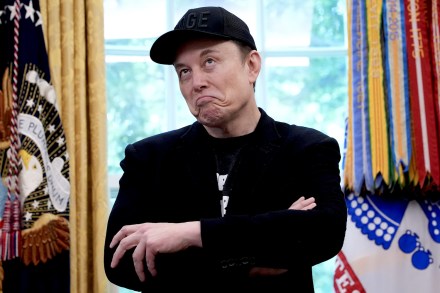
When Elon Musk tweeted his vision for an ‘America Party’, he ignited a firestorm of hope and scepticism. The idea was inspired by his anger for Donald Trump’s $5 trillion spending bill. In the UK, Ben Habib and Rupert Lowe, formerly figures in Reform, have splintered away from Britain’s populist party over splits with Nigel Farage. Musk, Habib and Lowe are all disruptors united by disdain for broken systems, and all face harsh electoral realities. In the US, a hypothetical Musk-led party could split the Republican vote, potentially handing Democrats victories. Habib and Lowe could dilute the populist vote in the UK, most of which is currently with Reform. Musk’s flirtation with a new political movement stems from his clash with Trump over fiscal policy.

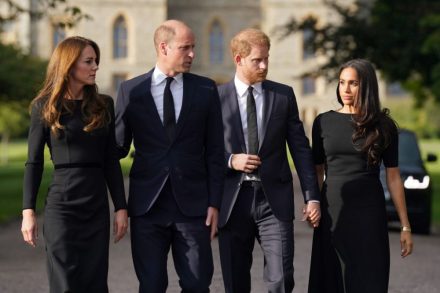
Americans cheer William and Kate over Harry and Meghan

America was born of revolution, a republic forged in defiance of monarchy. Yet despite our founding mythology of liberty and self-determination, we can’t seem to resist the allure of royalty – so long as it is authentic and dutiful. That is why, even in a land that rejected monarchy, public sentiment favours hands down the Prince and Princess of Wales over the rogue runaways who swapped Buckingham for Beverly Hills.A recent YouGov poll confirms what intuition already tells us. Prince William enjoys a 63 percent favorability rating among Americans, well ahead of Harry’s 56 percent and miles beyond Meghan’s dismal 41 percent (with 25 percent viewing her unfavorably). In the UK, the Sussexes fare even worse: Harry’s approval languishes at 27 percent, Meghan’s at just 20 percent.

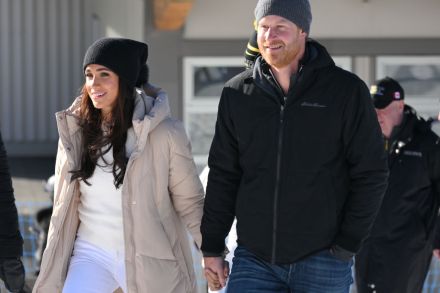
Meghan

King Charles has much to learn from the Queen’s Christianity

From our UK edition

Easter Monday would have been Queen Elizabeth II’s 99th birthday, a milestone that invites reflection on her extraordinary reign and the faith that defined it. An aspect of the late beloved Queen’s character that set her apart from so many other modern world leaders was her profound commitment to her faith. Her Christian belief was not just a duty but a deeply personal conviction. Her superb legacy as Defender of the Faith resonates powerfully, and it should stand as a clarion call to King Charles and his heirs to prioritise the Christian identity that so endeared his mother to her people – or risk losing the monarchy’s vital spiritual anchor. Elizabeth II’s faith was the heartbeat of her 70-year reign.

Security-consumed Prince Harry chooses war-torn Ukraine as latest backdrop

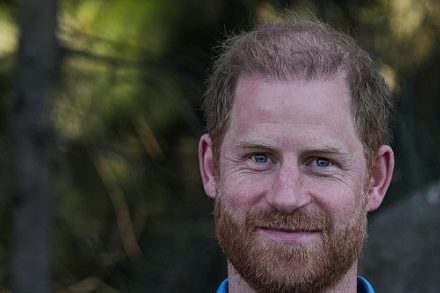
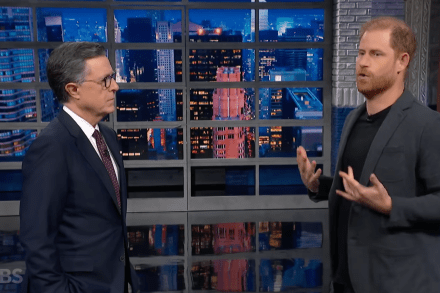
Prince Harry’s clandestine dash to Ukraine this week, trailing last year’s faux royal tours to Colombia and Nigeria, lays bare a brazen hypocrisy. He bangs on about the UK being too perilous for his family, waging legal crusades over security provisions, yet here he is, swanning into war zones and countries with travel warnings, trading on his fading royal luster to clutch at relevance – all while dodging the duties he willingly jettisoned. Bereft of official standing in America or Britain, his quest to play maverick royal smacks of pantomime, one that jeers at his claims of craving a secluded, secure existence. Take his Ukraine jaunt to Lviv’s Superhumans Center, where he mingled with wounded soldiers and civilians.

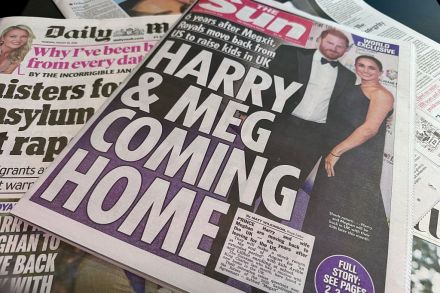
Why Harry and Meghan should leave America

Imagine Prince Harry and Meghan Markle perched in their Montecito mansion, glowering at Donald Trump’s brazen, rebooted America. They’re not fleeing yet, but as progressive celebrities ditch Hollywood’s hills – Rosie O’Donnell settling in Ireland, Ellen DeGeneres nesting in Britain – might the Sussexes trail behind? We Yanks would rejoice. The spotlight sharpened last week when Harry’s US visa records hit the headlines on March 18, courtesy of a laudable Heritage Foundation lawsuit. The group probed whether Harry glossed over the drug escapades he bragged about in his memoir Spare – cocaine, cannabis, psychedelics – to clinch his visa.

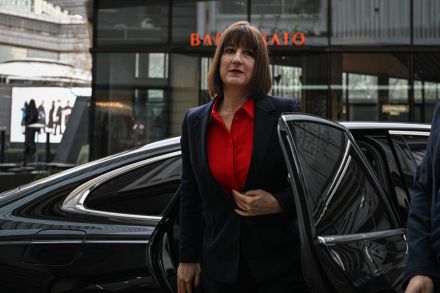
Trump’s team will show Rachel Reeves how it’s done

From our UK edition

As Trump Treasury Secretary nominee Scott Bessent rises, full of promise for his confirmation hearing in Washington next week, the UK is still reeling from a plunge in the value of the pound and a sharp rise in borrowing costs, directly tied to Rachel Reeves’s economic policies. The contrast in the approaches of these respective leaders could hardly be more stark. Bessent, a figure whose appointment has Wall Street buzzing with optimism, contrasts sharply with Rachel Reeves, whose policies, compounded by the net zero fanaticism of Ed Miliband, are proving to be the harbinger of economic catastrophe.

Mandelson is the wrong man, at the wrong time

From our UK edition

Donald Trump’s campaign manager Chris LaCivita hardly minced his words on hearing that Peter Mandelson had been appointed as the British ambassador to the United States. Mandelson is an ‘absolute moron’, he said. While one might have chosen an alternative rhetorical style, there is no denying that Mandelson’s appointment at this particular moment in history is deeply problematic – it is emblematic of an out-of-touch Labour party incapable of deviating from the ideological misfortunes that have made it unpopular in such short order. The Starmer government’s decision to send this Blair disciple to Washington is extraordinary, at a time when a Trump administration poised for lift off.

Trump, monarchy and the waning power of Hollywood

From our UK edition

Donald Trump has yet to comment on the Prince Andrew ‘Chinese spy’ story, and online sleuths are already trying to join the vague dots between Trump, Jeffrey Epstein, and the Duke of York. But the real story about Donald Trump and monarchy is the extent of his admiration for the British crown. At the big reopening of Notre Dame cathedral, other heads of state seemed desperate to make their impression on the President-elect. Yet for Trump, what really mattered was his encounter with the Prince of Wales.   'I had a great talk with the prince,' Trump told the New York Post. 'He’s a good-looking guy,' the President-elect went on. 'He looked really, very handsome last night. Some people look better in person. He looked great. He looked really nice, and I told him that.

Starmer needs the royal family to help him woo Trump

From our UK edition

Donald Trump’s historic re-election must be a particularly bitter pill for Keir Starmer to swallow. Leaders from Javier Milei to Giorgia Meloni are scrambling to curry favour, and Trump's pal Reform MP Nigel Farage is a regular on the post-election Mar-a-Lago scene. But that's not the style of Sir Keir and his merry band of net zero Never Trumpers: they could end up singing a different tune that would literally leave Britain out in the cold in the new 'Drill Baby Drill' Trump era. Yet an unexpected ally could prevent the bi-lateral relationship between Britain and the United States from unraveling further: the British Royal Family.