Andrew Garfield

Did the move to the free market unleash Russia’s demons?

From our UK edition

Back in 2009 on an unseasonably warm autumn evening in Moscow, I was walking to dinner with a banker friend, a former British army officer with whom I’d bonded over a shared interest in history. At the time, we were both advising a large Russian bank which had recently listed its stock in London, and were irritated beyond measure to see its share price tanking, despite a booming Russian economy and it having no exposure to the American sub-prime mortgage market. As we crossed Mayakovsky Square, I blurted out almost without thinking; ‘You know the last time we had a financial crisis like this one, it ended up in a war.’ Germany, we agreed, no longer posed a threat.
Why Britain and France can’t have an amicable divorce

From our UK edition

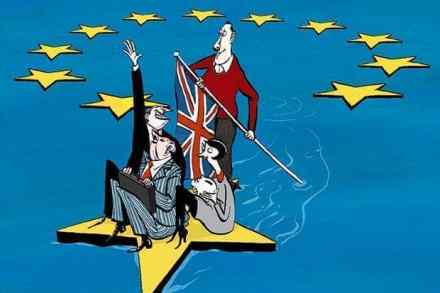
Former Chancellor Nigel Lawson famously said that the National Health Service is the nearest thing we British have to a state religion. You could say much the same thing about the European Union and the French. To our Gallic neighbours, the ‘construction of Europe’ is a sacred task that brooks no challenge. What goal can be higher than binding the once bellicose German nation into a new rules-based European order that has brought peace to a continent riven by war and revolution? What nobler cause for France than leveraging the outsized economic heft of its neighbour outre-Rhin in support of its mission to create an alternative beacon of enlightenment values to counter that tawdry Anglo-Saxon economic and cultural hegemony?

The case Brexiteers should make for Brexit

From our UK edition

Why are Brexiteers rubbish at making the economic case for Brexit? On a whole range of things from three pin plugs to driving on the left, the UK is so often the odd man out in Europe. So why shouldn’t Britain be better off making its own laws and regulations, instead of making do, as we have done for the last 50 years, with trying to fit our sprawling messy economic life into a one-size-fits-all framework cooked up in Brussels kitchens over too much midnight oil? We have heard a lot of talk recently about the Single Market being a British invention, a way of exporting the Thatcher revolution to our nearest neighbours. That much is true.

The economic policy Britain needs after Brexit

From our UK edition

So Mark Carney no longer believes that a no-deal Brexit will lop 8 per cent off our national wealth. Now he thinks the GDP hit will be a more modest 5.5 per cent. One can only guess what his prediction will be next month. He should have listened to movie mogul’s Sam Goldwyn’s advice: 'Never make predictions, especially about the future.' Cheap jibe? Maybe. But all this focus on whether we are going to run out of medicine or fresh lettuce in Sainsbury’s is a massive exercise in collective displacement activity. It is avoiding the real issue. Surely what matters isn’t what is going to happen in the next three to six months but what is going to happen in the five or ten years after Brexit.