Book review

Shakespeare with or without the waffle

30-Second Shakespeare: 50 key aspects of his works, life and legacy, each explained in half a minute sounds trivial, but it isn’t. The purpose of this short, beautifully presented and fully illustrated guide is not to feed vain show-offs with sound-bites to give them something clever to say at dinner parties but, as Ros Barber puts it in her 30-second introduction, ‘to make Shakespeare interesting and comprehensible by cutting out the waffle’.

O this white powder!

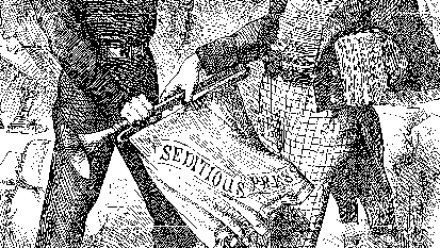
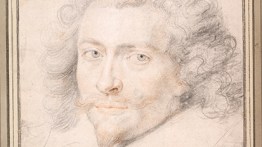
Beware hedonists bearing white powder. This, in part, was the message pressed in a short book about the excesses of the Jacobean court written by a Scottish Catholic physician and occasional counterfeiter, George Eglisham. The Forerunner of Revenge, published in Antwerp in 1626 in English and Latin, quickly gained notoriety across Europe for its particular depiction of the Stuart monarchy as a dynasty under siege.

A lonely ice maiden

‘Mystery comes through clarity’, is how Rupert Thomson recently described the effect he was trying to achieve in writing. It’s an apt phrase for his latest book, Katherine Carlyle. Thomson has previously published nine novels but has never achieved wide public recognition, partly because of their lack of uniformity. This, though, is what has attracted other writers, who admire his range, the visionary and haunting nature of his stories, the precision of his imagery, and his lack of agenda. For these, Jonathan Lethem has called him ‘a pure novelist’. Katherine Carlyle displays all of these qualities, and may well come to be thought of as his defining book, but it is also a work with limitations.

Richard III: a bad man — and even worse king

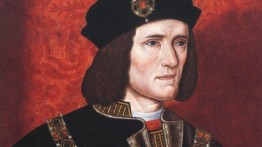
When archaeologists unearthed the battered mortal remains of King Richard III beneath a council car park in Leicester in 2012, they not only made the historical find of the century (so far) but unleashed a veritable frenzy of media attention on a ruler already the most notorious in English history. A stream of books, articles (both scholarly and popular), documentary films and newspaper opinion pieces poured forth, and Richard’s troubled life and times became front-page news until his bones were once more laid to rest earlier this year.

Hubris made the 20th century the bloodiest in history

Sir Alistair Horne, like that other great knight of military history, Sir Michael Howard, served in the Coldstream Guards during the second world war. According to Clausewitz (in Vom Kriege), his judgment will therefore be invested with insight denied to those who have never been shot over: As long as we have no personal knowledge of war, we cannot conceive where those difficulties lie of which so much is said, and what that genius and those extraordinary mental powers required in a general have really to do. . . But if we have seen war, all becomes intelligible. So it is disappointing to read the late Sir Martin Gilbert, quoted with apparent approval in the preliminaries: ‘I’m not a theoretical historian, seeking to guide the reader to a general conclusion.

A lofty, lusty Laureate

These Collected Poems, published halfway through Carol Ann Duffy’s time as poet laureate, make clear that she is a true Romantic poet in the tradition of Byron, Wordsworth, Elizabeth Barrett Browning, Anne Ridler and Elizabeth Bishop. In his introduction to Lyrical Ballads, Wordsworth defined Romantic poetry as ‘the spontaneous overflow of powerful feelings’. And these pages do indeed overflow. I have known Carol Ann Duffy since the late 1970s when her father, Frank Duffy, an AUEW shop steward, was the Labour parliamentary candidate in Stafford, the neighbouring constituency to mine, in Leek. Born in Glasgow in 1955, and educated in Stafford, Duffy left home in the 1970s to read philosophy at Liverpool University.

Multi-fanged

Nowadays a vampire is usually a Transylvanian in need of an orthodontist. But, as Nick Rennison demonstrates in this entertaining anthology, it was not always so. Bram Stoker’s Dracula was simply one of a crowd when it was published in 1897. Nor was the novel particularly successful at the time. It was only in the 20th century that Count Dracula became the world’s vampire of choice, and that was due to Hollywood rather than Stoker. Dracula’s contemporary colleagues are ripe, as it were, for exhumation. Vampires, particularly in their late Victorian and Edwardian prime, formed a staple of Gothic horror and assumed a variety of guises, some more subtle than others. Their literary ancestry stretched back to 18th-century Germany.

George and Martha Washington were an odd first First Couple

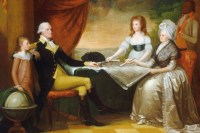
‘Would Washington have ever been commander of the revolutionary army, or President of the United States, if he had not married the rich widow of Mr Custis?’ asked John Adams. The answer, says Flora Fraser, is no. We like to see our ‘men of destiny’ as striding the world alone before stepping onto the customary plinth, so some might find it inconvenient to consider the role, in George Washington’s glorious career, of America’s first First Lady. But in her lifetime, no one put Martha in the corner. George and Martha Washington is a balanced and vivid account of a marriage which was both remarkable and strikingly down-to-earth.

Jack the Ripper unmasked again

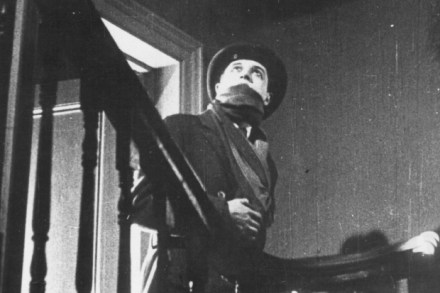
The Whitechapel Fiend is a psychic conduit for the vilest aspects of Victorian sex and class, and a creature mainly of the imagination. In 1888, the year of the murders, John Francis Brewer published The Curse Upon Mitre Square, and novels have followed from such writers as Edgar Lustgarten, Colin Wilson and Iain Sinclair. Many are Ripper mash-ups in the style of Robert Louis Stevenson or Arthur Conan Doyle, as in the Holmes capers of Ellery Queen and Michael Dibdin. Marie Belloc Lowndes’s The Lodger was made into a film by Alfred Hitchcock, A Story of the London Fog (1927), starring Ivor Novello as a sympathetic Ripper; and he features in many other films — in This is Spinal Tap (1984), for example, as the subject of Saucy Jack, a projected rock opera.

The best short story collections — from childish gabbling to jaded nihilism

Anyone who enjoyed Ali Smith’s novel How to be Both, with its charmingly loopy monologue of an Italian Renaissance painter prattling away to us through one of the book’s famously interchangeable halves, will be glad to see her new book of short stories, Public Library and Other Stories (Hamish Hamilton, £16.99). It looks reassuringly similar: white hardback; photograph of two contemporary studenty people on the jacket; large font-size; non-justified lines; no quotation marks for dialogue. Here we are again reading Smith’s deliberately childlike prose.

The best children’s authors of 2015 — after David Walliams

The easy way round buying books for children at Christmas is just to get them the latest David Walliams and have done with it. And indeed, Grandpa’s Great Escape (Harper Collins, £12.99), about the sympathetic friendship of a grandfather and grandson, is funny, productive of intergenerational goodwill and spikily illustrated by Tony Ross, though, as my son observed, it’s a pity so many nice people in Walliams’s books end up dead at the end. Or else you could get any of these: Jacqueline Wilson’s Katy (Puffin, £12.99), a take on What Katy Did, which my daughter liked because the heroine is a tomboy; the latest ‘Tom Gates’ from Liz Pichon (Scholastic, £10.

K2’s fatal attraction

Take one drug-addled occultist, one forlorn aristocrat, an assortment of urgent colonials and you have, no, not the western canon but the earliest expeditions to K2, the second-highest mountain in the world after Everest. First measured in 1856 by Lieutenant Thomas George Montgomerie, it stands at 28,251 feet, on the present-day border of Pakistan and China, amid the Karakoram range — hence its name, Karakoram 2, now abbreviated. K2 was first climbed in 1954 by the Italians Achille Compagnoni and Lino Lacedelli — a year after Edmund Hillary and Tenzing Norgay reached the summit of Everest.

Everything you always wanted to know about Sixties pop —and more

It might seem an odd choice, but after reading Jon Savage’s new book, I think if I had a time machine I’d now be tempted to set its controls for 13 January 1966 and the annual dinner of the New York Society for Clinical Psychiatry. Andy Warhol had been booked to give a speech, but instead he put on a gig by the Velvet Underground and Nico at full uncompromising blast, with a couple of Factory favourites dancing alongside them. One shrink described the evening as a ‘torture of cacophony’; another — no less disapprovingly — as an ‘eruption of the id’. A third left hurriedly, with the explanation that ‘I’m ready to vomit.

Erica Jong’s middle-aged dread

Who’d get old? Bits fall off, your loved ones start dropping like flies and, perhaps worst of all, the only afternoon delight you’re up to is a cup of tea and a soporific radio play. Wealthy New Yorker Vanessa Wonderman, Erica Jong’s 60-year-old narrator, isn’t there yet, but she can see it coming down Fifth Avenue with its headlights on. Her parents are slowly and painfully quitting the world; her husband Asher, 15 years her senior, is succumbing to illness and certainly not capable of elaborate bedroom antics; and her acting career has faltered in the predictable absence of decent parts for middle-aged women.

The four men who averted the Apocalypse

In March 1987, as Professor Robert Service records in his new account of the end of the Cold War, Margaret Thatcher visited Moscow. She had been reluctant to do so, largely out of fear that such a visit would only make it easier for a credulous Reagan — as she saw him — to offer Gorbachev even more concessions. She had also been worried that it would produce nothing for British interests. Her hesitation to travel to Russia, let alone, as her advisers had urged, solicit an invitation, was perhaps surprising. She and Gorbachev had got on famously — shoes off, in front of a blazing fire — when she had entertained him, then only the Politburo member responsible for agriculture, at Chequers just before Christmas 1984.

August in Arizona

Helen Simpson is not a prolific writer; six slim collections of short stories in 25 years, each timed quinquennially with what seems, at least retrospectively, like impeccable forward planning. In fact, time, we shall see, is what her career so far has been about. She has also heroically resisted the pressure —and there must have been a significant one, at least towards the beginning — to move on from the short form and deliver a novel, as if the short story were not an entirely different genre but just a warming-up exercise before the heavyweight training session of the novel. Cockfosters is a slender volume, all of 140 pages, each of its nine stories named after a place (‘Kentish Town’, ‘Kythera’, ‘Arizona’, ‘Moscow’ etc.

A stunning blend of simplicity and complexity

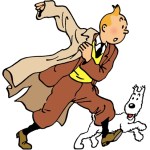
Reading Tintin when I was a child, in Britain in the 1970s, I always assumed Georges Remi’s creation was just a harmless bit of fun. However, when I went to Belgium I discovered, to my amazement, that over there they take him very seriously indeed (this year, a single Tintin picture sold for €2.5 million in Brussels). In Britain, the fearless reporter in the plus fours is a quaint juvenile amusement. In his native Belgium he’s seen as high art, and his creator Hergé (Georges Remi’s initials, backwards) is revered. The late Harry Thompson wrote a brilliant book about Tintin from the British perspective. It was informed and affectionate, but stopped short of adulation. Pierre Sterckx’s bulkier book belongs in the Continental camp.

Curiosities for Christmas

There is not, sadly, a dedicated Trivia Books section in your local Waterstones, although at this time of year there really should be. But what would we call it? Trivia sounds too trivial. Loo Books sounds too lavatorial. Books for the Man or Woman who Has Everything, Except this Book is probably closest, but might need editing. Whatever we decide to call them, there is an unusually fine crop this year, and several are historically inclined. Gimson’s Kings and Queens (Square Peg, £10.99) is subtitled Brief Lives of the Monarchs since 1066, and gives us exactly that, in Andrew Gimson’s characteristically elegant and entertaining prose. ‘There are many admirable biographies of individual monarchs.