Book review

Recent crime fiction | 7 April 2016

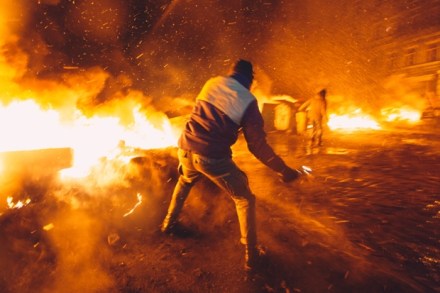
All it takes is a spark. In her compelling new thriller, Ten Days (Canongate, £14.99), Gillian Slovo tracks the progress of a riot as it spreads across a rundown London estate. When Ruben, a black man of fragile nature, is accidentally killed in a police action, his friends and neighbours gather to protest his needless death. This peaceful demonstration ignites into violence and looting. Resident Cathy Mason and her family are caught up in the dangers of that night and the ones that follow. Slovo takes the London riots of 2011 as her blueprint, but she moves beyond that, focusing not only on the local people but also on the new Commissioner of Police and the Home Secretary, both of whom are using the riots for their own political ends.
The holy sinner

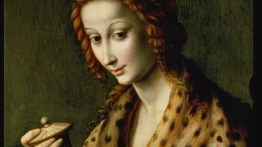
Many of the great faith narratives (the Holy Quran being a notable exception) are clumsy, rough-hewn things; makepiece amalgams of different texts from an abundance of sources that have been gradually hacked together over hundreds — sometimes even thousands — of years. Most have been found useful or resonant (spiritually and politically) at various stages in history, and some have been purposefully engineered (by individuals or institutions with agendas — their motives pure or otherwise). Eventually these fragments become embedded into a whole — a unity. A consensus is reached on what, fundamentally, works. This process is essentially pragmatic.

Onwards and downwards

This is a very upsetting book. The Harvard sociologist Matthew Desmond spent a year and a half living in low-income housing in Milwaukee — first in a trailer park on the mostly white South Side and later in a rooming house in the black inner city. Desmond himself plays no part in the body of the story, but he reports what he saw and heard, using a digital recorder and filling in the rest with double-sourced eyewitness accounts and official documents. And what he saw was upsetting, though not always, or not particularly, in a dramatic way. The things that happened to the people he lived among happened too often and routinely to seem extraordinary to them.

Gay tittle-tattle

The Comintern was the name given to the international communist network in the Soviet era, advancing the cause wherever it could. The ‘Homintern’, a wry play on that, was first coined at Oxford by Maurice Bowra and gladly passed on by Cyril Connolly, Auden and others, inferring an international homosexual network of mutual interest and support. Gregory Woods, in his very first sentence, defines it thus: ‘The Homintern is the international presence of lesbians and gay men in modern life.’ A few pages later he says: ‘There was no such thing as the “Homintern”.’ So which is it to be? And what does Woods mean by ‘modern life’?

Obscure object of desire

Garth Greenwell’s debut novel is as dreary and oppressive as the Soviet-era apartment buildings among which it takes place. But presumably this was intentional. Having grown up in a rural backwater where ‘disease was the only story anyone ever told about men like me’, the book’s American narrator, a teacher in Sofia, seeks to escape shame and tedium by having sex with random men in the toilets beneath the National Palace of Culture. ‘It wasn’t so much pleasure I sought as the exhilaration of setting aside restraint,’ he says: ‘a thrill so intense it was almost suicidal.

The iceberg cometh

Every second novel is fated to be measured against its predecessor; and that comparison is particularly hard when the debut in question was acclaimed (Jenni Fagan’s The Panopticon was shortlisted for the Desmond Elliott Prize) or held to exemplify some modish literary sub-genre. Fagan’s style was tagged as ‘gritty Scottish realism’, and ill-served by comparisons to Irvine Welsh, which made much of her use of profanity and dialect. But where Welsh’s style has long since descended into shtick, Fagan’s coarseness of language was never more than surface detail. It was clearly in the service of authenticity of voice, and Anais Hendricks, the disturbed but resilient protagonist of The Panopticon, is memorable for much more than her readiness with swear-words.

A breath of fresh air

His professional achievements aside, Quentin Blake’s life has been rather short on biographical event, so this book is not a biography. (That gets dispatched briefly in a six-page timeline.) Rather, it’s a grateful appreciation — partisan, certainly, but well argued — of all that this remarkable artist has given us. Through his books, his pictures on hospital walls and his support for a variety of campaigns, Blake has brought joy, laughter and solace. The pictures in this book will make you smile.

London’s burning

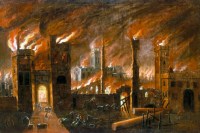
Spectator readers know Andrew Taylor from his reviews of crime fiction. Many will also know him as an admirable writer of the stuff. In a recent issue, however, he remarked that there are fewer murders now, and added that this made things difficult for crime novelists. Detection has been taken over by the scientists, DNA providing the solution more reliably than Hercule Poirot’s little grey cells. Find a suspect and DNA will tell you if he dunnit. This is boring. So it’s not surprising that for crime writers the future looks to be the past, where science is primitive and the police have no computer database — where indeed there may be no regular police force at all. London is burning. It’s 1666, not 1940; it’s the Great Fire, and St Paul’s is ablaze.

The greatest anti-war poem of all

The Iliad begins with a grudge and ends with a funeral. In between are passages, if not necessarily of boredom, to alter the war adage, of lists, pathos, sex, humour, fairytale strangeness (golden fembots, a talking horse) and lyric images, punctuated by moments of pure terror (eyes popped out of heads, a spear throbbing in a beating heart, a man cradling his intestines in his hands). With several new translations in the past year alone, as well as a film in 2004, and recent novels (David Malouf’s Ransom), dramatisations, and book-length poems (War Music by Christopher Logue and Memorial by Alice Oswald), we are clearly, in our era of seemingly perpetual war, in an age of Iliads.

An incurable Romantic

This biography of the craven Romantic and self-confessed ‘Pope of Opium’ concludes with the ominous words: ‘We are all De Quinceyan now.’ His life was shambolic but his legacy is strong. Many spores from his fevered mind have lodged in modern popular culture: his narcotic excursions inspired Baudelaire and Burroughs, his sensitivity to place influenced the psychogeographers Guy Debord and Iain Sinclair, his laconic, jaunty essay ‘On Murder Considered as One of the Fine Arts’ was deemed ‘delightful’ by Alfred Hitchcock, and his Escher-like imaginative double consciousness prompted Jorge Luis Borges to ask: ‘I wonder if I would have existed without De Quincey?’ And yet behold the man himself.

When pop gave way to rock

According to David Hepworth, the year he turned 21 was also the year when ‘a huge proportion of the most memorable albums ever made were released’. Having been a rock journalist for four decades, he does of course know the theory that everybody thinks music was at its best when they were young. But, as he puts it with untypical — if presumably ironic — machismo, the ‘important difference in the case of me and 1971’ is that ‘I’m right’. The strange thing is that he might well be.

Lost in translation | 31 March 2016

Trencherman was first published in Afrikaans in 2006 and translated into English for a South African readership shortly afterwards, but has only now found a UK publisher. Eben Venter — one of the notable voices in white South African writing post-Apartheid — has been ‘temporarily’ based in Australia for more than two decades, but returns to his home for stories. You can see why. After Disgrace, J.M. Coetzee emigrated to Australia — and hasn’t published a decent novel since. He evacuated his subject. For Africa-born whites, the one thing worse than staying is leaving. The left brain urges you to settle in a safe economy with prospects, where the right brain dies.

Graphic, bleak and misogynistic

If you could travel back in time, would you kill Hitler’s mother, seek out your old house and play ball with your former self, or locate your (eventual) wife during her unhappy adolescence and punch her violent boyfriends? These are the dilemmas facing Jack, the hero of Daniel Clowes’s latest graphic novel. The murderous attitude towards Hitler’s mother (rather than towards Hitler himself) fits right in with an underlying misogyny throughout. Indebted to Hollywood for most of its ideas and its deficiencies, Patience only squeaks by in the Bechdel test. It begins wittily enough with the tip of a penis, a semi-circle of cervix, and a big white splodge in between. Across this romantic conception scene the year 2012 is emblazoned.

Hostage to misfortune

Nordic noir is passé. Now we have Israeli noir. Waking Lions is a mordant thriller written by a clinical psychologist who knows how the mind is tortured by deception, infidelity, obfuscation, suspicion and sex. Eitan Green is a neurosurgeon who, exhilaratedly driving his SUV at speed on the desert tracks outside Beersheba, runs down an Eritrean refugee. As he looks at the body with its cracked skull, he thinks that since ‘he can’t save this man, at least he’d try to save himself’. From that point, Ayelet Gundar-Goshen’s omniscient narrator involves us in a web of lies, guilt, evasion, seduction and moral equivocation. The incident is registered officially as a hit-and-run case. Eitan’s wife, Liat, happens to be a senior police officer.

Courting Sultana Isabel

The idea for a mechanical cock was never going to work. In 1595 the English ambassador to Constantinople, Edward Barton, advised Queen Elizabeth I that the surest way for her to impress Sultan Mehmed III, the new leader of the formidable Ottoman empire, was to send him a ‘clock in the form of a cock’. Knowing that Mehmed had a growing reputation for psychopathy rather than ornithology — he had his 19 brothers circumcised and then strangled to death — Elizabeth demurred and eventually sent him an elaborate clockwork organ instead. The organ was accompanied by its maker, Thomas Dallam, who spent his first month in Constantinople fixing the damage it had suffered in transit before eventually playing it for the Sultan and his retinue at the Topkapi palace.

Following the followers

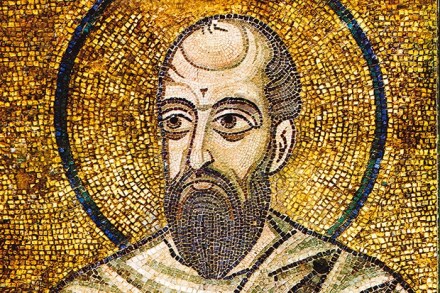
In his new book Apostle Tom Bissell has an advantage over writers who go looking for Jesus: he can start with human remains. His frame for this uneven combination of travel and Church history is a series of trips to the alleged tombs of the apostles. To flesh out 13 ghosts (the 12 disciples and Paul) Bissell mines the gospels, the work of Church historians both early and late, and the Apocrypha. ‘Without the Apocrypha,’ he admits, ‘the 12 apostles would seem even more irrevocably distant.’ The former disciples of Jesus are an elusive bunch. Destroyed or partial texts throw up discrepancies and cases of contested identity, equivocal traditions set in unspecified places and fanciful pasts invented by unreliable chroniclers.

Sins of omission | 23 March 2016

My last review for The Spectator was of Julian Barnes’s biographical novel about Shostakovitch. A Girl in Exile also depicts the life of an artist favoured by a brutally oppressive regime, this time written by one who was there. Ismail Kadare survived the rule of that isolationist tyrant Enver Hoxha. In some quarters, Kadare has been criticised for surviving. Like Shostokovitch, indeed, he has been accused of collaborating with the regime within which he worked, joining the party and accepting public appointments. It is not the business of a book review to enter into such arguments; but some of the criticisms, made by armchair freedom fighters insisting that others should stand up for uncompromising heroism, are obviously, cruelly and merely naive.

Neighbours and strangers

Margaret Forster, who died on 8 February, excelled at writing about complex relationships between women. Even old friends, she demonstrated, can experience jealousy, disapproval or dislike. Here, ‘Sarah’ has changed her name to live incognito on the west coast of Cumbria, in a town chosen at random. When she gets locked out of her house, a bond is formed between her and her elderly neighbour Nancy — whose deceased friend Amy once owned Sarah’s rental and left Nancy a key. Although Sarah is ostensibly the one with ‘a past’ (prison), it was Nancy whom I found most interesting.