Autobiography

Mourning becomes Siri Hustvedt

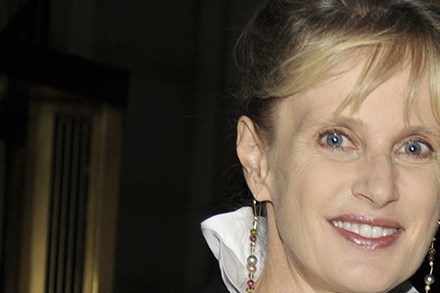
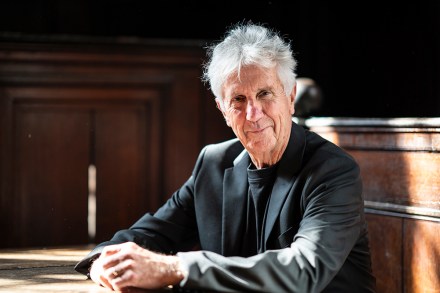
At 6.58 p.m. on 30 April 2024, Siri Hustvedt’s husband of 43 years, the novelist Paul Auster, died of cancer in the library of their Brooklyn home. He was surrounded by family, including his adored daughter Sophie, who three months earlier had given birth to his first grandson, Miles. Hustvedt and Auster met at a poetry reading in 1981 and married later that year. It was she who proposed to him. Auster, aged 34, was not yet famous and Hustvedt, aged 26, was still a graduate student. By the 1990s, when she too became a novelist, they were New York literary royalty. In the 1970s, Auster had been married to the translator and short story writer Lydia Davis, with whom he had a son called Daniel. If Sophie was a summer’s day, Daniel was darkness.

In praise of uncertainty over hollow conviction

When I met Brian Dillon in February 2023, he seemed to have a lot on his mind. We had arranged to speak about Affinities, the newly published final instalment of Essayism, his sprawling three-part survey of literature, art and aesthetics. That morning, as he sipped decaf coffee in a quiet corner of the Barbican Kitchen café in London, he still didn’t know what his book was about. ‘At this point you don’t,’ he confessed. But even though he hadn’t made up his mind about Affinities, Dillon had already begun to think about his next project. It was to be a memoir of his education, called Ambivalence. This has now come to fruition.

Why it’s permissible to betray family secrets

Blake Morrison is the quintessential man of letters. More exactly, he’s a man of genres – poet, novelist, playwright, essayist, librettist and, most notably, memoirist. (Four memoirs so far, each a prize winner and/or bestseller). Although in the introduction to On Memoir he refutes the notion that he established the genre of life writing in the UK (he was professor of creative and life writing at Goldsmiths University, London for 20 years) or that he has ‘encouraged its growth’, he has somehow become its guru, the critic every literary editor turns to on the publication of yet another raw family story or celebrity revelation.

An outpouring of jaunty black comedy

In 2005 Xandra Bingley published Bertie, May and Mrs Fish, an extraordinarily lively and enjoyable memoir of her childhood on a Cotswold farm during the second world war. Much of the writing was glancing rather than straightforward, its narrative not strictly chronological, while its title hinted at something not fully explained in the text. Dispensing altogether with conventional punctuation, the book contained not a single comma or quotation mark, using instead ellipses. This was brilliantly imitative of both the clipped speech of its upper-class characters, particularly when facing disasters large and small, and the hell-for-leather pace of lives spent galloping on horseback across the Gloucestershire countryside.

Was Cat Stevens the inspiration for Carly Simon’s ‘You’re So Vain’?

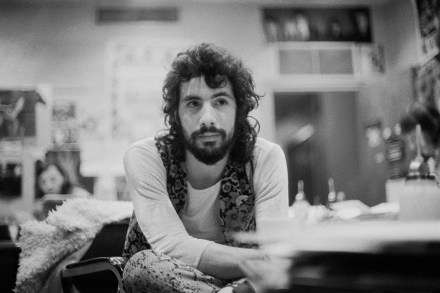
Essentially this is a book of two halves –before and after Cat’s conversion to Islam in 1977 – and the first half is immeasurably the more engaging. He was born Steven Georgiou in 1948, the youngest of three children, to a Greek-Cypriot father and a Swedish mother, with a much older brother and sister. His parents ran a café, Moulin Rouge, on Shaftesbury Avenue, in the heart of London’s West End, and the family lived above it. He went to a Catholic primary school near Drury Lane and then, having failed the 11 plus exam, to a secondary modern in the City. But he left school at 16 with only one O-level, in art. It was enough to get him into Hammersmith Art School, but he was already more interested in writing songs.

The key to Giorgia Meloni’s resounding success

Giorgia Meloni has emerged as one of the most significant politicians in Europe since she became Italy’s first female prime minister in October 2022. I Am Giorgia, already a bestseller in Italy, is her account of how a short, fat, sullen, bullied girl – as she describes her young self – from a poor, single-parent family in Rome managed to do it. Her explanation is that she refused to play the victim, and found iron in her soul – even if, as she admits, she has never found happiness. It is an amazing story: how she transformed from an ugly duckling into the swan who is now a familiar figure on the largely male-dominated world stage, and whose humour, charm, friendliness and no-nonsense talk make her such a refreshing change.

The sexual escapades of Edmund White sound like an improbably sordid Carry On film

Edmund White grew up in a world where sex, and gay sex in particular, was an unspoken reality. In 1950s Cincinnati, ‘no one “came out” except drag queens and the campy peroxided waiter at the diner’, he writes in the first chapter of The Loves of My Life. That blanket of near-silence doesn’t seem to have inhibited him much. He was sexually precocious from the age of 12, as his autobiographical novel A Boy’s Own Story (1982) first suggested. But it may account for the determined frankness with which he has treated sex in both his fiction and memoirs. For an author who came of age in pre-liberation America, erotic candour has always been a political act, at least in part – never merely profligate.

The ghost of his father haunts Winston Churchill

Winston Churchill hoped and expected his autobiography, My Early Life, to be read as much as literature as history, and also as an adventure story. He dedicated it ‘To a New Generation’, and it was especially intended to inspire people in their early twenties. ‘Twenty to 25, those are the years,’ he wrote. ‘Don’t be content with things as they are.’  Aged 56, Churchill was singularly discontented with things as they were. He was out of office and out of favour with his party, and had already entered his ‘wilderness years’.

‘You can really sing!’ – Sonny discovers the teenage Cher

This is a very odd book. Where you’d expect to find an author’s photo inside the dust-jacket it just says: ‘Cher is a global icon.’ As for the ending – there isn’t one. It feels as though the publishers snatched the manuscript out of Cher’s hands almost mid-sentence, saying: ‘Keep the rest for Part Two.’ Still, it’s a breathlessly exciting story. With 5,000 screaming fans at the airport, success had arrived. And Cher was still only 19 ‘I mean, jeez, my family,’ Cher exclaims at one point, ‘you couldn’t make it up.’ Her mother Jackie Jean, a dazzling beauty from a dirt-poor Arkansas background, had been taught not to sleep with anyone before marriage.

Four legs good, two legs bad – the philosophy of Gerald Durrell

We know of the Durrells mainly through their own writings, outstandingly My Family and Other Animals, about their years in Corfu in the 1930s, and from the image of them created by TV and film adaptations of this work. Gerald and Lawrence were the best known members of the family, the first as a zoologist and conservationist, the second as an experimental writer. Their siblings, Margaret (Margo) and Leslie, will always be perceived through the lens Gerald turned on them in My Family – the former as a flighty eccentric, something like an extra from a Carry On film, the latter as a pantomime villain. Their mother, Louisa, was loved unreservedly by her children and comes across in My Family as a kindly eccentric.

The good soldier Maczek – a war hero betrayed

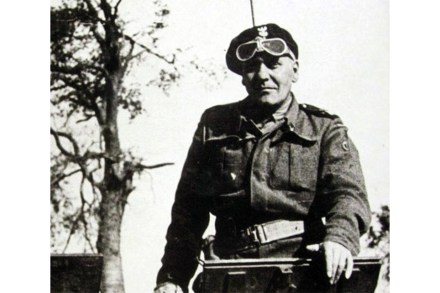
Who could forget the Polish squadrons in RAF Fighter Command when, in the 1969 film The Battle of Britain, a British squadron leader, frustrated by the excited radio chatter on being allowed into action at last, orders ‘Silence! In Polish!’ Or the Polish Parachute Brigade at Arnhem, whose commander, Stanislaw Sosabowski, played by Gene Hackman in A Bridge Too Far (1977), thinking the venture disastrous, growls ‘God Bless Field Marshal Montgomery’ as he jumps from his Dakota? Commander Eugeniusz Plawski, the captain of the Polish destroyer Piorun which first spotted the Bismarck and charged at her to draw fire, might be better known if he had featured in the 1960 film Sink the Bismarck! – but that wasn’t expedient, with the honours going instead to a Royal Navy officer.

Who’s still flying the flag for Britpop?

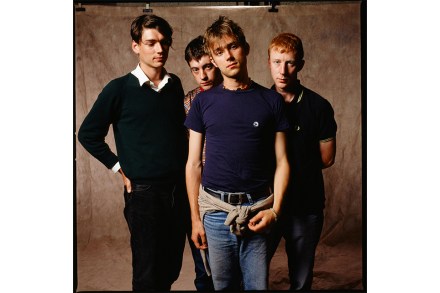
There’s only one Cincinnatus in the Cotswolds, and it’s not Boris Johnson. Over the Rainbow tells the story of how, once again, Alex James was torn from his life in a very big house in the country to fulfil his national duty to play bass with Blur. The tale comes in the form of a diary, like Brian Eno’s wonderful A Year with Swollen Appendices, except that this is a year with inflated egos. To make sure our sympathies are in the right place, it begins with a preamble at the end of December 2022, during which the author attends a series of parties, each more wearisomely smug than the last. Then he sets up the stakes of the plot.

Fortitude, emotional intelligence and wit – the defining qualities of Simon Russell Beale

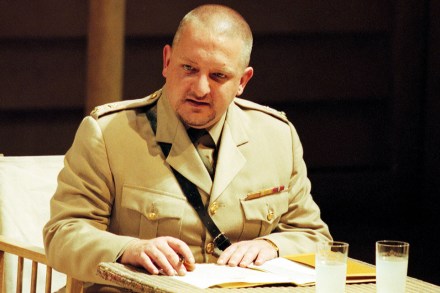
The path to National Treasureland is no paved highway. Simon Russell Beale, the finest classical actor of his generation, was nearly lost to academia (he swerved a PhD in Victorian literature), and faced down pigeon-holing from an agent who wanted to change his name to Simon Beagle, the better to capitalise on a knack for dopily jolly comedy roles. Now – and not before time – he’s written an elegant study of Shakespeare that does double duty as a juicy actor’s autobiography. The pleasure here is in the mix of green room gossip and literary insight. There’s plenty of the former: dining next to Lauren Bacall at the chat show queen Barbara Walters’s place? Good. Watching Top Gun with Imelda Staunton and Penny Downie? Even better.

From street urchin to superstar: the unlikely career of Al Pacino

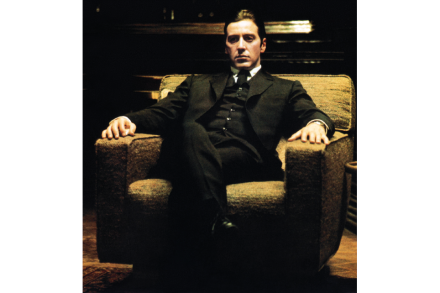
Ellen Barkin, Al Pacino’s lover-cum-prime- suspect in his comeback movie Sea of Love (1989), once dismissed the artifice of the British acting tradition (by way of an oddly ill-tempered pop at Nigel Havers) by comparing it with the immersive naturalism of the greats of post-war American cinema: Marlon Brando, Meryl Streep, Robert De Niro and Al Pacino. It’s a questionable claim, especially given that in Pacino Barkin had perhaps the least naturalistic co-star imaginable. He is forever searching for the off-beat, the syncopation that will spring the line open Pacino is – albeit in his own highly idiosyncratic way – no less theatrical an actor than John Gielgud, more invested in the musicality of his line readings than in fidelity to the real.

David Baddiel’s father and mother must be the most talked about parents in Britain

According to Clive James: ‘A life without fame can be a good life, but fame without a life is no life at all.’ In My Family: The Memoir, the famous comedian David Baddiel proves he’s also had a life. Or, at least, a family. For anyone who hasn’t been paying attention – and Baddiel, as he admits, craves attention – or who has never watched television or listened to the radio over the past 30 or 40 years, Baddiel is famous as a stand-up comedian specialising in a ‘sweary and often not-very-nice-Jewish-boy style of comedy’, as a TV chat show host with fellow comedian Frank Skinner, presenting Fantasy Football League and Baddiel and Skinner Unplanned. He also writes films, sitcoms, novels and non-fiction, including the recent Jews Don’t Count.

‘I’m a hypocrite and a total fraud’ – the confessions of a French Surrealist poet

Michel Leiris (1901-90) was one of those intellectual adventurers who are the astonishment of French literature in the 20th century. Their achilles’ heel is that most were communists, in a few cases Nazis; and nothing kills the life of the mind more thoroughly than preaching. Their saving grace is that many were eccentric characters, and their autobiographical work can often be their most luminous legacy. Among Leiris’s subjects are his dogs, his ideal hotel, his hatred of Wagner, his Anglophile snobbery and his tailor Because they were anti-form, the ideal prose vehicles became ‘aphorism’ or ‘fleuve’. The most brilliant of the French aphorists, Emile Cioran (though he was Romanian), exclaimed in an interview ‘Expression – that’s the cure!

The sheer drudgery of professional tennis

Wimbledon’s starched whites, manicured flower beds and hushed silence enable tennis to present itself as a genteel sport. But Wimbledon only represents tennis in the way that an Olympic 100m final represents athletics. It is the best players in the best setting for a brief period. Actual tennis, the day-to-day life of a regular player on the circuit, is very different. It is relentless, stingy and unsentimental. The most surprising thing about The Racket, Conor Niland’s bruising account of his career as a good (but not great) tennis player, is that he emerges with both his sanity and his compassion intact. Tennis is not an easy game to break into.

The ordeal of sitting for my father Lucian Freud

The frontispiece of this book is Lucian Freud’s portrait of his daughter Rose naked on a bed. Rose says that when her father asked her to sit, which she had long hoped he would do, she naturally assumed he would want her naked, but asked him not to paint her hairy legs. He, in turn, asked her to remove her mascara, but she refused. When she saw the canvas she was shocked at how much it focused on her vulva, but she did not object. She sat for him at night – he had other sitters during the day – and he sometimes gave her purple hearts to keep awake. When the portrait was finished, she took on the task of cleaning Freud’s studio, which ‘made me feel special, downtrodden, and loved for all the wrong reasons’. Rose was born in 1958, 18 months after her brother, Ali.

The lonely passions of Emily Hale and Mary Trevelyan

This year marks the centenary of the publication of The Waste Land, the poem that made T.S. Eliot famous. His story is familiar and yet still surprising. What is well known: Ezra Pound whipped The Waste Land into shape, it was published in The Dial and then The Criterion, and it was quickly recognised as a poem of great importance. Eliot emerged as the poet of his age and his views on the ‘impersonality’ of poetry would dominate the next several decades of poetry and criticism. What is less well known is how Eliot’s work was shaped and influenced by a few key women. This dynamic is what Lyndall Gordon’s The Hyacinth Girl and Mary Trevelyan and Erica Wagner’s Mary & Mr Eliot set out to explore. Gordon has written about Eliot before.

Ian McEwan’s capacity for reinvention is astonishing

McEwanesque. What would that even mean? The dark psychological instability of The Comfort of Strangers and Enduring Love? The gleeful comedy of Solar and Nutshell? The smart social realism of Saturday and The Children Act? The metafictional games of Atonement and Sweet Tooth? Ian McEwan’s brilliant capacity for reinvention is a hallmark of his literary career. It’s simpler to say what McEwanesque is not: baggy, meandering, plotless, long. Yet all of these adjectives could be applied to his surprising new novel, Lessons. This cradle-to-grave (well, seven-ish to seventy-something) narrative concerns the life and times of Roland Baines, born, like McEwan, in 1948. Roland shares more than just a birth date with his author.