Mike Jakeman

The Enhanced Games isn’t what you think it is

From our UK edition

When it was first announced three years ago, the Enhanced Games was described by Aron d'Souza, its Australian founder, as a direct rival to the Olympics. ‘The International Olympic Committee has effectively been a one-party state running the world of sport for 100 years’, he declared, ‘and now the opposition party is here. We are ready for a fight.’ For the IOC and the rest of global sport, the promised fight of the Enhanced Games has fizzled out D’Souza envisaged an annual competition with events in five sports – athletics, swimming, weightlifting, gymnastics and martial arts, with ‘a couple of thousand’ participants.

In praise of Thomas Tuchel’s England squad

From our UK edition

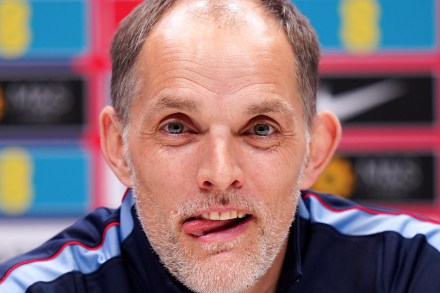
For England coach Thomas Tuchel, the real work has just begun. Forget the phoney war of a qualifying group in which England played eight matches against the mediocrities of Albania, Andorra, Latvia and Serbia and won the lot without conceding a goal. Disregard the end-of-season friendlies when the squad was shaped by club commitments and injuries. It was in picking his World Cup squad that Tuchel started to show how he intends to win the trophy that has evaded England for 60 years. Tuchel has more freedom as England coach than any of his recent predecessors, and the squad shows that he intends to use it. As a foreigner who came to the job with a stacked trophy cabinet, his reputation will not be made nor lost by how England fare in the US.

The allure of bullfighting

From our UK edition

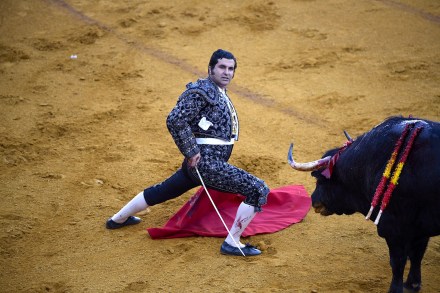
For the six days in April, the Maestranza ring in Seville is the centre of the bullfighting world. During one of the traditional corrida, Spain’s greatest living matador, Jose Antonio Morante, made a mistake. Local press described ‘un exceso de confianza’. Suddenly, he found himself with the bull at his back, charging, and was gored at the top of his thigh, suffering injuries so eye-watering that they made international news. One of his colleagues, Roca Rey, was also hospitalised several days later, with a severe injury to his right leg. Morante described the ‘immense pain’ of the incident. Sport has a complex relationship with danger.

Do the best cricketers have to play Test cricket?

From our UK edition

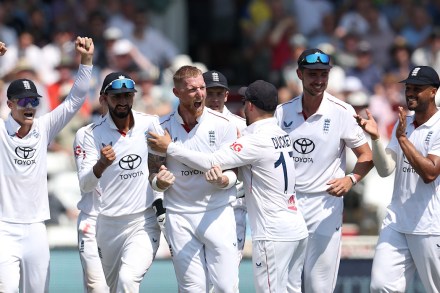
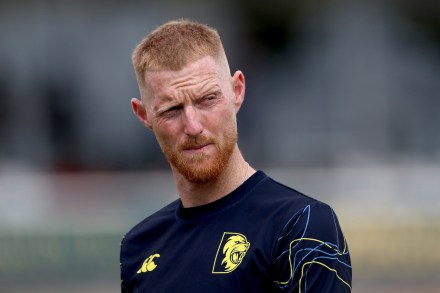
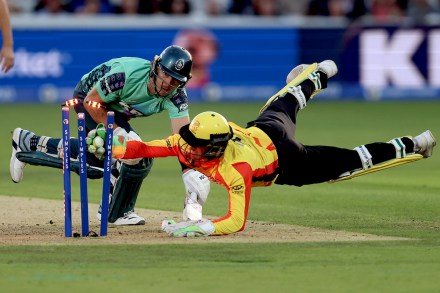
England opener Ben Duckett had a miserable winter. His most memorable contribution to the Ashes tour was not his 202 runs (with a top score of 42) but footage of his drunken walkabout in Noosa. England picked him for the World T20 squad, but he never made the XI.  In March, Duckett announced he was withdrawing from the IPL, forgoing his £160,000 contract with Delhi Capitals, to focus on playing first-class cricket for Nottinghamshire. Turning down IPL money has become a theatrical way for players to remind the England selectors that they remain committed to Test cricket. It is also an expensive gesture. Pulling out of the IPL after the auction carries a two-year ban from the competition.

The Hundred still has a problem with Pakistani cricketers

From our UK edition

Throwing open the Hundred to foreign investment was intended to attract more elite players, boost attendances and position it as the baby brother of the gargantuan IPL. English cricket has succeeded in bringing in a lot of overseas cash: sales of stakes in the eight franchises raised more than £450 million. But it has also imported problematic foreign politics.  Prior to the revamped player auction, a BBC journalist, Tom Grundy, ran a story based on messages from a senior ECB official to an agent that confirmed only non-IPL-owned teams would consider signing Pakistani players. No Pakistani cricketers have been selected to play in the IPL since a Pakistani terrorist group, Lashkar-e-Taiba, attacked Mumbai in 2008.

The Premier League is not boring

From our UK edition

In the Premier League this season, the number of open-play goals, shots and passes are all the lowest in years. There have been just six wins by four goals or more, compared with 33 two years ago. Arsenal are on course to win the league with 84 points, nine fewer the average of the champions over the past decade. Some 28 per cent of goals this season have come from corners, free-kicks and penalties, compared with 19 per cent five years ago. Phone-ins, podcasts and message-boards are full of journalists, pundits and fans lamenting how boring the Premier League has become. Not so: this is the most interesting Premier League season in years.

India are becoming unbeatable in T20 cricket

From our UK edition

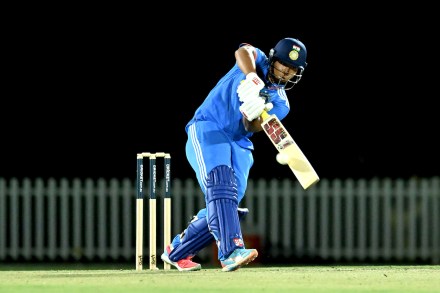
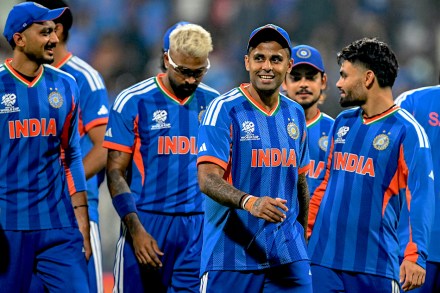
India are very likely to win the T20 World Cup that they are currently co-hosting with Sri Lanka. They won the last one, in the US and the Caribbean, in mid-2024. They are also very likely to win the 2028 tournament in Australia and New Zealand and the 2030 tournament that is so far away that the hosts have yet to be chosen. This is because the Indian team have finally figured out how to capitalise on their incredible advantages in T20 cricket. When we think of India playing cricket’s shortest form, we should really be comparing it to the US men’s national team in basketball.

Is it over for the Old Firm?

From our UK edition

For 40 years Glasgow has held the power in Scottish football. Since Alex Ferguson’s Aberdeen won the league in 1985, Celtic have won 22 titles and Rangers 18. No other team has had a sniff. But this year, Edinburgh’s Hearts are the best team in the league. With 16 games to go, they have a six-point lead over the Old Firm giants. This unlikely story is a combination of a smaller team using its resources efficiently and two large clubs struggling with structural changes that are eroding their dominant position. If there has been a modish trend in British football in the past two decades, then Hearts have tried it.

Can Arteta hold his nerve?

From our UK edition

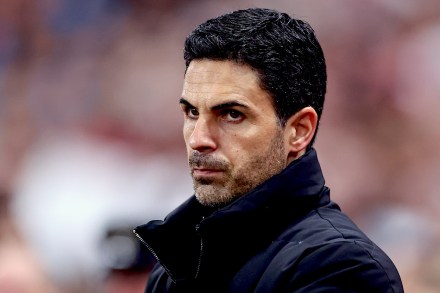
The second half of the Premier League season is brimming with stories and subplots. Hundreds of players are hoping to secure places in their national team squads ahead of the World Cup; Sunderland and Leeds are trying to buck the trend for promoted teams to head straight back to the Championship; Manchester United’s permacrisis has entered its next phase; and BlueCo’s financial revolution at Chelsea has moved into a new gear with the appointment of one of their own as coach – Liam Rosenior, from also-BlueCo-owned Strasbourg. More than anyone else, however, the next six months matter to the Arsenal manager, Mikel Arteta. After seven years in the job and three consecutive second-place finishes, the time has come to land a big prize.

Australia’s cricket was just too good

From our UK edition

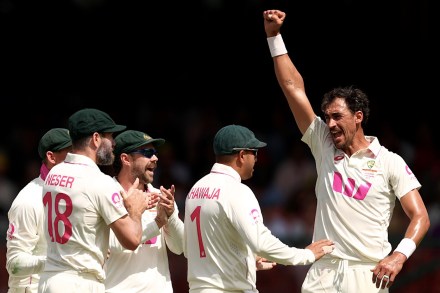
The longest postscript in sport is finally over. On the eve of the first Ashes test, which began on 21 November, English pundits were talking up their team’s best chance of winning down under in 30 years. Australia were old, slow and injured. Mark Wood, Jofra Archer and Josh Tongue would rough up the hosts with genuinely quick bowling. And Bazball, the only-good-vibes philosophy that had underpinned the team’s singular focus on the Ashes for the past two and a half years, would prevail. Such predictions proved as wild as Brydon Carse’s new-ball bowling. Australia mathematically retained the urn before Christmas. But in reality the Ashes were won on 22 November, the day after the series began.

The circus of the Joshua-Paul boxing fight

From our UK edition

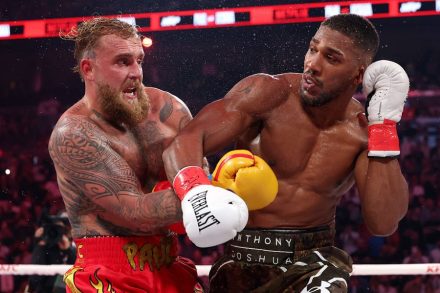
'The numbers are putrid, to say the least,' harrumphed commentator Maura Ranallo at the start of the fourth round of last night’s fight between British boxer Anthony Joshua and American YouTuber Jake Paul. For the first three rounds, Paul skittered around the edges of the unusually large ring, evading Joshua’s every attempt at a setup. Paul had no interest in trying to hit Joshua. Stepping in would have risked being clobbered himself, given the Brit’s far longer reach. Instead, he put his mind towards provoking Joshua by dropping his hands, sticking his tongue out, coming in for a clinch whenever he could. By the end of the fourth, the referee, Chris Young, was also despairing. He brought the pair together, reminding them that 'the fans did not pay to watch this crap'.

The sickness at the heart of boxing

From our UK edition

There is a lot of death in the latest, and potentially last, book on boxing by the South African journalist Donald McRae. In less than two years he loses his sister, both his parents and his mother-in-law. To cope with the trauma he returns to the sport that has sustained his life and work for 30 years. But when he reimmerses himself in boxing he does not like what he sees. He finds a sport where bouts are controlled by gangsters; where famous boxers dope and lie about it; where fights still have inadequate safety protocols; and where the centre of power has shifted from Las Vegas to Riyadh, lured by Mohammed bin Salman’s money. Each of these trends, McRae believes, knits boxing and death closer together. ‘I want boxing to sweep me away from real life,’ he confesses.

The sheer drudgery of professional tennis

From our UK edition

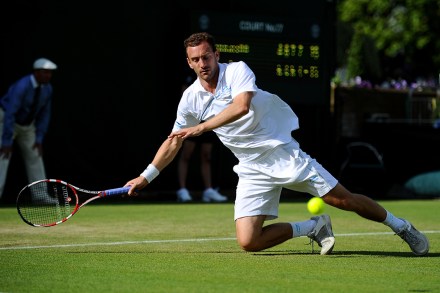
Wimbledon’s starched whites, manicured flower beds and hushed silence enable tennis to present itself as a genteel sport. But Wimbledon only represents tennis in the way that an Olympic 100m final represents athletics. It is the best players in the best setting for a brief period. Actual tennis, the day-to-day life of a regular player on the circuit, is very different. It is relentless, stingy and unsentimental. The most surprising thing about The Racket, Conor Niland’s bruising account of his career as a good (but not great) tennis player, is that he emerges with both his sanity and his compassion intact. Tennis is not an easy game to break into.

The secret of success in Formula 1

From our UK edition

Formula 1 is having a moment. Its global popularity is soaring off the back of a wildly successful Netflix docuseries, Drive to Survive, and the launch of glitzy races in Miami and Las Vegas. It is even drawing attention away from other sports. The most significant move of European football’s January transfer window was Lewis Hamilton’s announcement that he is off to Ferrari next year. A pivot towards entertainment has created a new generation of fans. But will it come at the expense of the racing itself? The Formula, by Joshua Robinson and Jonathan Clegg of the Wall Street Journal, immediately establishes that Formula 1 is all about rules.

The slippery stuff of slime: should we loathe it so much?

From our UK edition

As humans, we are supposed to have an aversion to slime. It should repel us. Objects and organisms that might be harmful trigger feelings of disgust which keep us away. And, according to the biologist Susanne Wedlich, the common denominator of ‘wide-ranging microbial threats, covering sickness, sex, death and putrefaction’ is their sliminess. It is easy to test this theory. Google ‘slime moulds’ and note your first response. They are gross. But these organisms are worth sticking with. Japanese researchers once conducted an experiment using a slime mould and a map of the country. They put the mould on top of Tokyo and dropped food on to the city’s surrounding towns.