More from Books

How the Romans set an example of good business practice

‘The purpose of corporations,’ writes William Magnuson, ‘is, and always has been, to promote the common good.’ That’s a very bold claim in an era when the left is convinced that shareholder-owned limited liability companies (which is what Magnuson means by corporations) largely exist to exploit the customer, the worker and the planet for the enrichment of owners and executives; while plenty of entrenched boardroom opinion believes with Milton Friedman that the sole social responsibility of business is ‘to use its resources and engage in activities designed to increase its profits, so long as it... engages in open and free competition without deception or fraud’.

Miller’s thumb and Mother-in-law’s garotte: the marvellous lexicon of angling

Despite its many centuries of popularity – enthusiasts have ranged from Cleopatra to Eric Clapton – angling has been the subject of precious little historical scholarship, giving rise instead to anecdotalists or grim technicians. So Chris McCully’s latest animated and vigorous addition to the Bibliotheca piscatoria arrives as fresh and welcome as a run of summer salmon from the estuary. The lexicon of angling, he suggests, can encode cultural histories – and so it does. The result is a stargazy pie of a book rich in natural lore and quirks, assembled with etymological rigour and finished with crisp wit.

Empress Eugénie’s shrine to the Bonapartes

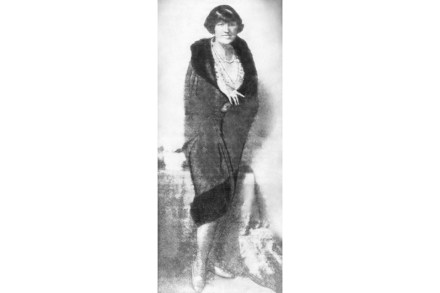
The empress Eugénie – the Spanish-born last empress-consort of France, wife of Napoleon III, mother of the prince imperial – lived for the last 40 years of her life in Farnborough, between the military towns of Aldershot and Sandhurst. There she created a home, museum, mausoleum and chantry in commemoration of the first and second French empires.  Farnborough Hill was the place she chose ‘après que tout fut fini’ (after it was all over).  In 1870, Eugénie had accompanied her husband into exile in England, following the defeat of France in the Franco-Prussian War.  Together with their teenage son, they lived in Camden Place, a large country house in Chislehurst.

A courtier’s lot: writing to prime ministers one minute, acting as nanny the next

Apart from when the government has been self-immolating, the royal family has dominated the news recently: the passing of Queen Elizabeth II and the solemn accession of the King; the continuing and rather tragic psychodrama of the Sussexes; the sad tale of the Duke of York. And, of course, we now have the latest series of The Crown. Apart from the weird sensation of seeing oneself portrayed on screen (thank you, Ben Lloyd-Hughes), I found the ten episodes, with their portent of tragedy to come, quite gripping. Just the right time, then, for a book revealing the hidden wiring which powers the royal family. Courtiers is a suave history of the monarchy over the past century, seen through the prism of those who serve it. What is a courtier?

Whoever persuaded Bono he could sing?

There are a few pop stars whose work I can’t help liking in spite of myself – their song-writing, that is. I’d be happy never to see the faces or hear the voices of Mick Hucknall or Chris Martin again, but the moment ‘Stars’ or ‘Trouble’ starts, I’m mesmerised – only to wonder crossly the minute the song ends: ‘Why couldn’t they have given it to someone with a decent voice?’ Think about it: dancers have choreographers and actors have scriptwriters, so why should we assume songwriters can sing? Bono’s another.

Meghan and Harry have never grasped the notion of ‘only connect’

In June 2017 Graydon Carter, the editor of Vanity Fair, was surprised when Jane Sarkin, his features editor, told him they should do a cover story on Meghan Markle, the star of Suits. Carter had never heard of Markle, but then nor had most people. In her own eyes she was a huge Hollywood celebrity, but actually she was mainly unknown outside Canada, where Suits was filmed. She wasn’t even the star of the series; she was about sixth in the billing. But Sarkin knew something else about her: that she was rumoured to be marrying Prince Harry. Markle happily agreed to the interview, but said, of course, she could not talk about Harry. She wanted to be celebrated as a global ‘activist and philanthropist’.

Robert Lowell struggled all his life to elude his rarefied Boston heritage

The American poet Robert Lowell (1917-77) was a so-called ‘Boston Brahmin’, a Lowell of Boston, where, in the widely known distich, ‘the Lowells speak only to Cabots, and the Cabots speak only to God’. (In 1923, when one Harry H. Kabotchnik, against furious protests from the Cabots, succeeded in getting his name changed, this briefly became ‘and the Cabots speak Yiddish, by God’.

The butcher of Chad who died in a private Senegalese clinic

Recent years have not been kind to the campaign for universal justice. The notion that some crimes are so serious that perpetrators should be hunted down and prosecuted irrespective of where the atrocities were actually committed has taken something of a beating since the International Criminal Court (ICC) opened for business in the Hague in 2002. Just this August, William Ruto, a politician once charged with crimes against humanity by the ICC, was voted president of Kenya, wresting power from Uhuru Kenyatta, who had faced identical charges before the same court. A lawyer accused of witness-tampering in their cases then died in what looked very like a poisoning. So much for ending impunity for the ethnically targeted violence that swept Kenya after its 2007 polls.

The utter vileness of Richard Harris

Brawling, boozing and womanising, those vaunted hell-raisers of the 1960s – Peter O’Toole, Oliver Reed, Richard Burton and, of course, Richard Harris – were all frightful bores. Because their professional lives involved dressing up and wearing mascara and silly wigs, it was essential for them to show what he-men they were: how hard. Like Stanley Baker (another one), Harris boasted to columnists: ‘I’ve got great contacts with the underworld,’ especially the Krays. He never had anything to say about the artistic merits or meaning of any of his films. His stories were exclusively about his prowess as a bully. Crushing an apple, he typically said to one of his directors: ‘If you don’t get out of this room right now, this is what I’ll do to your skull.

David Dimbleby turns out to be a bit of a closet republican

In Keep Talking, David Dimbleby takes us through a gentle romp of a stellar, unrivalled broadcasting career spanning, incredibly, 70 years. There are no great revelations (even the name of the BBC boss who tried to fire him from Question Time is withheld), no dramatic insights to make us rethink well-known events, no ponderous thoughts on broadcasting for media studies students to pore over (andthe book is all the better for that). As the face of the BBC’s coverage of our most important national events over the decades, from general election nights to every major royal ceremony, Dimbleby has been authoritative, well-informed, impartial and appealing.

The house in Ghent haunted by Hitler

In 2000, the author Stefan Hertmans was disturbed to discover that the house in Ghent he had lived in for more than 20 years and restored from dilapidation had once been home to a Flemish collaborator with the SS, Willem Verhulst. On the pink and brown marble mantelpiece which Hertmans had become so fond of Verhulst had kept a bust of Hitler. The fact that Hertmans would use this as a springboard to write a work of auto-fiction seems inevitable, given that his International Man Booker longlisted novel War and Turpentine (2016) and his later novel The Convert (2019), have their roots respectively in notebooks belonging to his grandfather and a historical essay about the village in Provence that Hertmans now lives in.

How the West misunderstood Russia’s military capabilities 

Books about Putin’s war against Ukraine are like the No.11 bus: you wait for ages, then a whole bunch turn up at once. Owen Matthews and Mark Galeotti are among the first. They will eventually be superseded by the scholarly histories. Meanwhile they bring clarity to a picture confused by instant comment in the media. Both are prolific and engaging writers, long-standing and reliable observers of the Russian scene. Both pepper their accounts with illuminating comments by their innumerable Russian and Ukrainian contacts. Matthews’s involvement in the story is deeply personal. His mother descends from a Mongol who defected to Moscow five centuries ago. An ancestor was appointed by Catherine the Great to help manage newly conquered Ukraine and Crimea.

The year’s best children’s books, featuring animals real and imaginary

It’s not often that my tastes are validated by Netflix, but Jonathan Stroud’s brilliant series about teenage ghost hunters, Lockwood & Co., is being turned into a series. If you haven’t read it, give it a go. The mordant talking skull alone is worth it. Stroud has already embarked on another series about a tough nut sharp-shooter, Scarlett, and her amiable sidekick, Albert Browne, who, handily, can read or sieve minds.   The Notorious Scarlett & Browne: Being an Account of the Fearless Outlaws and their Infamous Deeds (Walker Books, £7.99) is the second in the series, and the subtitle gives the gist. Here they carry out an impossible heist, complicated by ghouls.

Emma Dent Coad’s ‘love letter to Kensington’ is nothing of the sort

Few places can rival the London borough of Kensington in diversity. In the 19th century, new mansions sat alongside the cholera-ridden slums around the piggeries and brick claypits. A speculative racecourse came and went. More recently, postwar slum clearance created new housing divides and Portobello Road became a key London destination. Racial tensions erupted in the 1958 Notting Hill race riots, and in the 1970s the Westway motorway sliced through the north of the borough, reinforcing its landlocked character and poor transport links to the rest of London. In 1965, following a major reorganisation of London’s government, Kensington was combined with Chelsea to create a new borough. In 2013, I became the leader of Kensington and Chelsea Council.

The secrets of a master art forger

Tony Tetro’s memoir starts with a bang – or, rather, a bust. On 18 April 1989, 25 policemen spilled into his condo in Claremont, California, confiscated the $8,000 he had just been paid in cash and proceeded to search the place, slicing through wallpaper, pulling up carpets and emptying drawers. The scene is pacy, thrilling, a bit silly. It reads like a Hollywood film script; which, if I’m being cynical, is probably the point. The pièce de résistance: If you pressed #* on the cordless phone, a full-length mirror would pop open and reveal my secret stash of special papers, pigments, collector stamps, light tables, vintage typewriters, certificates of authenticity, notebooks with signatures – everything a professional art forger might need.

Shirley Hazzard – so in love with Italy she spoke in arias

Shirley Hazzard’s ‘untimeliness’ is a recurrent aspect in most descriptions of her, both the writing and the person. She came to represent ‘a vanished age of civility’: there is something Victorian about her novels, despite the last of them, The Great Fire, being published in 2003, by which time she was starting to resemble ‘an exotic bird blown off course’.

The world’s best wrecks and ruins

Ruins, shipwrecks and lost cities are endlessly intriguing. I once went to Kolmanskop in Namibia and found myself wondering quite what it was that was so alluring. At one level it’s just a rather dowdy German town out in the desert, abandoned in 1956. But what’s special there is the sand and the way it has sifted through halls and kitchens and up the stairs. It’s as if a little bit of our history had somehow ground to halt and got left behind. Fordlandia, built in the heart of Amazonia in 1928, is now quietly crumbling away as the forest returns The travel writer Oliver Smith has a neat phrase for these places: ‘enclaves of the past’. In his Atlas of Abandoned Places, he offers us 50 wrecks and ruins, all exquisitely photographed and mapped.