More from Books

To know him is to love him, usually

The eight short stories which form this collection began life in a multicultural magazine called Metro Eirann, which was set up in 2000 by two Nigerian journalists living in Dublin. Roddy Doyle heard of the magazine, liked the idea, and offered his services. As he says, in his introduction: There’s a love story, a horror story, a sequel, sort of, to The Commitments. Almost all of them have one thing in common. Someone born in Ireland meets someone who has come to live here . . . Today, one in ten people living in Ireland wasn’t born here. The story — someone new meets someone old — has become an unavoidable one. No one could say this is a bad premise for a book.

Sources of inspiration

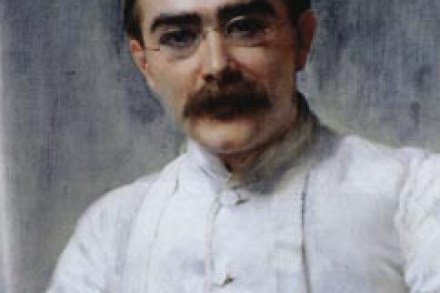
‘The Craftsman’ is one of my favourite Kipling poems: ‘Once, after long-drawn revel at The Mermaid, /He to the overbearing Boanerges /Jonson, uttered (if half of it were liquor, /Blessed be the vintage!)’ ‘The Craftsman’ is one of my favourite Kipling poems: ‘Once, after long-drawn revel at The Mermaid, /He to the overbearing Boanerges /Jonson, uttered (if half of it were liquor, /Blessed be the vintage!)’ Then, in four stanzas he has Shakespeare reveal originals of his most famous female characters: Cleopatra, Juliet, Lady Macbeth, Ophelia, until: ‘London wakened and he, imperturbable, /Passed from waking to hurry after shadows . . . / Busied upon shows of no earthly importance?/ Yes, but he knew it!

Alternative reading | 8 September 2007

Alternative reading Fences and Gates, Walkways, Walls and Drives by E. Annie Proulx E Annie Proulx is the Pulitzer Prize-winning author of The Shipping News and Brokeback Mountain: she has also won the PEN/Faulkner Award, the O. Henry Award and the Dos Passos Prize, and is thus one of the most lauded of all American writers. But her literary apprenticeship was spent writing a number of practical self-help manuals. They include Sweet and Hard Cider: Making It, Using It and Enjoying It; The Complete Dairy Foods Cookbook: How to Make Everything from Cheese to Custard in Your Kitchen; The Gourmet Gardener: Growing Choice Fruits and Vegetables with Spectacular Results; and Plan and Make Your Own Fences and Gates, Walkways, Walls and Drives.

Flights upon the banks

Thames: Sacred River by Peter Ackroyd For some reason, the sight of the sea or a river in any historical film always strikes the viewer with a shock, as though some gross anachronism had been committed. It looks frankly very odd to see people walking along a beach, or even by the side of many rivers, in Elizabethan dress. It’s quite irrational, but it does suggest that, fundamentally, we don’t think of bodies of water in historical terms. They seem, as embankments and hills do not, like projections of the unconscious mind, and perpetually contemporary. The Thames is, in geographical terms, not much of a river.

Once more with less feeling

Diary of a Bad Year by J. M. Coetzee In the last scene of J. M. Coetzee’s Booker Prize-winning novel, Disgrace, the main character, David Lurie, helps to put down homeless dogs. He places their remains in black plastic bags and takes them to the incinerator. Until then, Lurie has not shown himself to be the most sympathetic character; but now, as he performs his grim task, he tries ‘to concentrate all his attention on the animal they are killing, giving it what he no longer has difficulty calling by its proper name: love.’ The main character in Coetzee’s latest novel, Diary of a Bad Year, dreams about a woman coming to ‘soften the impact of his death’.

Agony of the aunts

Singled Out by Virginia Nicholson One day in 1917 the senior mistress of Bournemouth High School for Girls told the assembled sixth form, ‘I have come to tell you a terrible fact. Only one out of ten of you girls can ever hope to marry.’ She was right. Nearly three quarters of a million young British men died in the Great War. Girls born around the turn of the century had been reared to assume that marriage and motherhood were their natural destiny. Even before the war there were more women than men, and post-war the problem of the ‘surplus women’ became a public issue. Women had worked in factories and the trades during the war, but the returning soldiers wanted their jobs back.

A choice of first novels | 8 September 2007

Giles Wareing, a freelance journalist, is days away from his 40th birthday, pretty sure he has gout and otherwise minding — well, monitoring is perhaps more accurate — his own business, typing ‘Giles Wareing funny/brilliant/clever’ into search engines. When a perverse impulse leads him to try some less flattering adjectives he discovers the Haters: ‘A lifetime of inchoate paranoia gelled.’ On a specially dedicated chat site every article he writes is held up to scorn and ridicule and, worse still, psychological analysis. This is enough to accelerate anyone’s midlife crisis, and Wareing’s progresses with delightful precipitation.

Safe for the kiddies

The Golden Age of Censorship by Paul Hoffman T. S. Eliot thought it a curiosity of our culture that we use the word ‘taboo’ purely negatively. The word ‘censor’ is surely similar: the notion that any person or society could survive for long without some forms of censorship is fatuous, and yet it is something that tends to arouse disapproval. It implies political oppression, sexual squeamishness, or even worse, the meddling in other people’s psyches in order to ‘put them right’. We are far more likely to protest about it than celebrate its achievements. The Lord Chamberlain’s office became a byword for the kind of fatuity that John Osborne spent decades lampooning. So Paul Hoffman’s title might seem inherently paradoxical. But no.

The measure of the man

Euan Uglow: The Complete Paintings Catalogue raisonné by Catherine Lampert; Essays by Richard Kendall and Catherine Lampert Whether we know it or not ‘we crave the inexpressive in art’, Bernard Berenson wrote, as an antidote to the sensationalism of ‘the representational arts most alive, the cinema and the illustrated press’. He was writing about Euan Uglow’s great hero Piero della Francesca in an essay called The Ineloquent in Art, which came out in 1954, the year Uglow left the Slade, and made a deep impression on him: ‘There’s something about the title — the fact that there’s more force in controlled passion than in exuberant passion. That’s the idea I like. I like it slowly to creep out on you.

Welsh wizard prang

A Pembrokeshire Pioneer by Roscoe Howells In 1903, in one tremulous little 12-second hop, just 10 feet off the ground, Orville Wright made the first powered flight by a man. Or was it? In the village of Saundersfoot on the Pembrokeshire coast there is the belief amongst the old who can still remember what their fathers told them that a local carpenter, Bill Frost, flew seven years before the Wrights. The author of this book, Roscoe Howells, novelist, local historian and farmer, is 87. I must declare an interest at this point. I came across the story about 15 years ago, and wrote about it. In the course of my meeting Mr Howells and many other OAPs what staggered me was the off-hand way they all talked about the event. ‘Oh yes, old Bill Frost. He kept goats, you know.

Starved for choice

Zugzwang by Ronan Bennett Zugzwang, from the German Zug (move) and Zwang (obligation), is a term used in chess when the player whose turn it is to move has no move that does not worsen his position. It is not merely a bad position, but the state of being obliged to move when no move at all would be preferable. Ronan Bennett, who co-writes an enjoyable chess column for the Observer, has used the concept as a starting point for his fifth novel.

Cash for cachet

Them and Us: The American Invasion of British High Society by Charles Jennings A dinner-party hosted by Chips Channon at his ostentatious Belgrave Square flat in 1936 frames this book. It is described in the introduction and appears again in the final chapter, for its composition defines what had gradually happened to high society in the previous 50 years.

Long live the weeds and the wilderness

The Wild Places by Robert Macfarlane Robert Macfarlane is a Cambridge don, Fellow in English at Emmanuel College, with an artistic eye for wild and lonely places. He was a friend and follower of Roger Deakin, whose last book I reveiwed three weeks ago. Deakin swam in strange waters; Macfarlane sleeps — or spends the night — in unlikely places, such as tentless on the top of Ben Hope, northernmost high mountain in Britain, in a northerly hailstorm in winter. Both of them attempt the heroic task of conveying the genius loci of wild landscapes in words, with little help from pictures or maps.

You have been warned

The Confidence Man: His Masquerade by Herman Melville Many years ago in Texas, a movie advertisement urged viewers ‘to thrill to Herman Melville’s immortal story of the sea, Moby-Dick, with Gregory Peck in the title role,’ prompting the New Yorker to comment, ‘A whale of a part.’ And how! I’ve just finished reading the book again. It was my fifth read and the first time I’ve read every word. When I was a boy I read the whaling chapters and skipped everything else. Later I advanced through the hero Ishmael’s relationships with the harpooner Queequeg, Captain Ahab and the first mate, Starbuck.

Likely lads in their day

Simon Raven’s first novel, The Feathers of Death, was published in 1959 Simon Raven’s first novel, The Feathers of Death, was published in 1959 when I was in my second year at Cambridge. We fell on it with glee, as I remarked, a few weeks after Raven’s death, to a fellow-novelist, somewhat to her amazement. ‘I’ve never read any of his books,’ she said. ‘I think my husband has.’ Not so surprising perhaps. I doubt if he ever had many devoted female readers. What attracted us to the novel was not so much its for the time decidedly daring story — army officer’s affair with blond, blue-eyed drummer Malcolm Harley — as the tone and style. This was nicely summed up by the Sunday Times reviewer, J. D.

Waking up late at the Palace

The Uncommon Reader by Alan Bennett Since The History Boys transferred first to Broadway and then to the cinema, Alan Bennett has made the journey from national treasure to international superstar. The dustwrapper of this droll novella spends two lines on the London gongs that play picked up, and more than five lines on the American awards (‘five New York Drama Desk Awards, four Outer Critics’ Circle Awards . . . six Tonys including Best Play’), festooned with which he returned to his native Yorkshire. The catalogue of glory reaches a final climax: ‘He was named Reader’s Digest Author of the Year 2005.’ I imagine that would have made Bennett smile when the proofs came through.

Movies and talkies

Mornings in the Dark: The Graham Greene Reader edited by David Parkinson Arriving at Oxford in 1923, the young Graham Greene made one move he was to regret 30 years later, when applying for a US entry visa — he joined the Communist party for a few weeks. Much less regrettable, he appointed himself the film critic of Oxford Outlook (editor G. Greene). This of course was the heyday of the silent movie and the undergraduate Greene could be found bent over the latest piece on montage by Pudovkin or Eisenstein in the magazine Close-Up. He later recalled his horror at the arrival of ‘talkies’ — it seemed like the end of film as an art form, just as he later regarded the arrival of colour ‘with justifiable suspicion’.

The politics of the plot

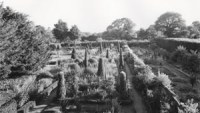
The Arcadian Friends: Inventing the English Landscape Garden by Tim Richardson The man ‘of Polite Imagination’, according to Joseph Addison, was able to delight in things lesser mortals might fail to appreciate, particularly the landscape. ‘It gives him indeed a kind of Property in everything he sees, and makes the most rude uncultivated Parts of Nature administer to his pleasure.’ If an Englishman’s home used to be his castle — the basis of his liberty — his garden was a blank canvas on which to express his originality and freedom. This book ends with the arrival of Lancelot ‘Capability’ Brown in the 1740s, and Tim Richardson regards his work as creatively conservative and formulaic.

Back to St Trinians

The Great Big Glorious Book for Girls by Rosemary Davidson and Sarah Vine One of the publishing triumphs of last year, The Dangerous Book for Boys, with immaculate timing tapped into a rich vein that combined nostalgia with exasperation at the seemingly unstoppable advance of Nanny State, with her stifling regime of risk assessment and avoidance. It followed a long line of similar books stretching back over 200 years. In fact its objectives were identical to those of the authors of The Boy’s Own Book of Sports and Pastimes (c.