More from Books

Who are the losers now?

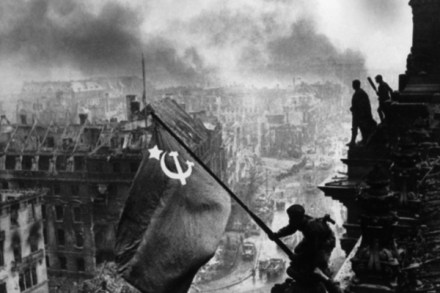
Keith Lowe’s horrifying book is a survey of the physical and moral breakdown of Europe in the closing months of the second world war and its immediate aftermath. It is a complex story and he tells it, on the whole, very well. Though the first world war took the lives of more uniformed young men, in the useless slaughter of the Flanders trenches, many more people, chiefly civilians, died in 1939-45. Soviet casualties were the greatest: 23 million killed, of whom two million came from Belarus and seven million from Ukraine. Next came the Poles, with losses of 6,028,000, the largest percentage of the population in any country. The Germans also lost six million, and the Yugoslavs over a million.

Picking up the pieces

‘The World of Interiors’ might have been a better title for this novel. Its two chief protagonists, Catherine Gehrig and Henry Brandling, live a century and a half apart, but both are beset by circumstances that make them physically isolated and emotionally stunted. They rail in furious misery, and are sunk in interior communing. Commodities matter to them: they are materialists gift-wrapped as aesthetes. Gehrig muses on ‘the huge peace of metal things’, appreciates Clarice Cliff tea-cups, arrays with austere elegance the tools of her work, ‘pliers, cutters, piercing saw, files, hammer, anti-magnetic tweezers, brass and steel wire, taps and dies, pin vice.

Architectural bonsai

In the summer of 1961 I was in my second year at Magdalen College, Oxford with rooms in the 18th-century New Buildings. One of my neighbours there was a quiet man called Jonathan Green-Armytage. Sitting out on the steps of the building’s colonnade, in the sun, we became friends. He was already a distinguished photographer. He showed me photographs he had taken of Edith Sitwell, with her medieval face and gnarled, beringed fingers. They were at least as good as Cecil Beaton’s portraits of the old poet. One day, Jonathan said to me: ‘I think you’d enjoy to meet my god-mother, Vivien Greene; and I think she’d like to meet you.

Memory games

I read this novel while convalescing from pneumonia. It proved admirably fit for purpose. A light diet, mildly entertaining and with enough twists and turns of plot to serve as a tonic. John O’Farrell is a man of many parts — comedy scriptwriter (Spitting Image, Alas Smith and Jones), political satirist (An Utterly Exasperating History of Modern Britain) and bestselling novelist. The Man Who Forgot his Wife is his fourth. The protaganist, Vaughan, hasn’t just forgotten his wife, he’s forgotten everything.

Siege mentality

The mirrored sunglasses worn by Putin on the cover of Angus Roxburgh’s The Strongman give the Russian president the look of a crude mafia boss, while the half-face photo on the cover of Masha Gessen’s book makes him appear both more ordinary and more sinister. This hints at the difference of the authors’ approach. Gessen focuses on the trajectory of a postwar Soviet boy growing up in a shabby communal flat, fierce and vengeful in street fights, who dreams of joining the KGB. This dream was fulfilled: Putin got a boring job as an agent in East Germany, and ten years after returning home he surprisingly became the most powerful man in Russia — which, 12 years later, he remains. His years in the KGB taught him secrecy.

A choice of first novels | 24 March 2012

Charlotte Rogan’s The Lifeboat (Virago, £12.99) comes garlanded with praise from the likes of J. M. Coetzee and Hilary Mantel. Rogan, who has only taken up writing after a career in architecture and engineering, tells the story of Grace Winter, a young woman on trial for murder as the novel opens. She and her husband Henry had been travelling on a transatlantic liner, the Empress Alexandra, in 1914. When the ship mysteriously sank, Grace managed to secure  a place on a crowded lifeboat, commanded by the enigmatic Hardie. But what happened to her husband? And why did the ship sink? Rogan does an excellent job of conveying the fear and claustrophobia of a lifeboat full of strangers, whose travails form a large part of the story.

Bookends: A matter of opinion

In an age when the merely mildly curious believe they can get all they really need to know from Wikipedia for free, A. N. Wilson’s fellow literary professionals must take heart from his expectation that there is still possibl to charge for a work of such succinctness that it is essentially an extended Wikipedia entry enlivened by some opinions. Wilson’s Hitler: A Short Biography (Harper Press, £14.99)certainly trumps Wiki for stylistic brio and brims with the author’s customary zip and zing.

Hero of his own drama

Sam Leith is enthralled by the larger-than-life genius, August Strindberg — playwright, horticulturalist, painter, alchemist and father of modern literature When I’m reading a book for review, it’s my habit to jot an exclamation mark in the margin alongside anything that strikes me as particularly unexpected, funny or alarming. I embarked on Strindberg: A Life with — I’m ashamed to confess — the expectation of a weary plod through 400-odd pages of lowering Scandinavian neurosis, auguring a low exclamation-mark count and a high number of triple zeds. But by the end, there was an exclamation mark beside almost every paragraph.

Lest we forget | 17 March 2012

It was not possible, as Primo Levi memorably wrote, to convey the full horror of the Nazi extermination camps because no one had survived to describe death in the gas chambers. There were no ‘sommersi’ (drowned) left alive to speak for the men, women and children driven in naked to die.  Apart from Levi himself, one of the very few people to have got close is Claude Lanzmann, whose nine-and-a-half-hour film on the deaths camps, Shoah, transformed the way successive postwar generations have come to remember and perceive the Nazi killings. In his autobiography, The Patagonian Hare, Lanzmann provides much interesting material on the 13 years spent filming and editing, and on the life that first led him to Israel in the 1950s.

Inflated dreams

When almost every tale about the Arctic has been told, when the major explorers have been assessed and re-assessed, when even the most obscure bit-players have been drawn into the light, what is a polar-minded author to do? Publishers can be such tiresome sticklers for novelty, always hankering after books to fire off into some perceived gap in the market. Failing that, they often insist on reputational piggy-backing — the author following in the footsteps of a legendary explorer, urgently intuiting the past, like a cross between a hiking holiday and a séance. Alec Wilkinson ignores the fashionable justifications.

Deviation and double entendre

If there’s anything full-time novelists hate more than a celebrity muscling in on their turf, it’s the celebrity doing such a good job that it seems as if anybody could write fiction. Happily for the pros, this isn’t a problem with Briefs Encountered. Not only is the book full of obvious flaws, but it also makes the whole business of novel-writing look unbelievably difficult. There is, it turns out, so much to do — what with plot, characters, dialogue and tone all to be created and, worse still, made coherent. And then there’s all those pesky sentences you have to string together… In fact, Clary’s set-up is quite promising.

Joy to the world

Patrick Gale’s new novel could be read as a companion work to his hugely successful Notes from an Exhibition, and in fact, in a satisfying twist, some characters and even objects slip from the latter into this novel. Notes from an Exhibition centred around the character of Rachel Kelly, whose mental instability and solipsistic devotion to her art left a painful mark on her family. The ‘perfectly good man’ of this title is a vicar, Barnaby Johnson, as kind, gentle and balanced as Rachel Kelly was not, yet with the same sense of vocation — in this case, selfless service to the church — that moulds and in its own way scars his family. ‘Ah,’ says his daughter Carrie to another child of a ‘very good man’, ‘you have my deepest sympathy.

Agreeing to differ

‘Frankie and Johnny were sweethearts; Lordie, how they could love.’ The ballad has many variant versions but the denouement is always the same; he was her man and he did her wrong. Rooty-toot-toot three times she shoot, and Johnny ended up in a coffin. Thatcher and Reagan were sweethearts; Lordie, how they could love. But Reagan did her wrong: over Grenada, over nuclear disarmament, as near as nothing over the Falklands. The relationship was to end in ostentatious affection, but if Mrs Thatcher had had a gun in that celebrated handbag, it might have been a case of rooty-toot-toot all over again.

Last of the swagmen

I have hitherto resisted my wife’s frequent recommendations that I should read a daily blog about the life of the denizens of Spitalfields, but, now that they have been published in book form, I can see why she is such an enthusiast. The Gentle Author is deliberately anonymous and bases his style on a combination of John Gay and Henry Mayhew, a pseudo-18th-century faux naïf, who wanders round his local neighbourhood collecting the tales of ordinary folk, including the last of the so-called swagmen who has a market stall in Spitalfields, the waiter in an Indian restaurant just off Brick Lane, Fred, who sells chestnuts at the corner of Bell Lane and Wentworth Street, and Paul Gardner, the fourth generation in his family to sell paper bags.

Here be monsters | 17 March 2012

The lovely title of this book comes from the philosopher David Hume. The question he posed was this: if a man grew up familiar with every shade of blue but one, would he be able to recognise the hue in a chart of blues, or would it register only as a blank? In other words, can the intellect supply information, or may we know things only through the senses? Dwelling too long on this sort of problem famously sends people mad. Hume himself suffered a breakdown, after which he sensibly made it his business to get out more. In this novel, two of the three people central to the story have experienced, or are experiencing, psychiatric problems, while another important but peripheral character spends the duration locked in a loony bin.

Abiding inspiration

In 1971 looking back over his life, Lionel Trilling (1905-1975) declared himself surprised at being referred to as a critic. Certainly his plan when young had been the pursuit of the literary life, ‘but what it envisaged was the career of the novelist. To this intention, criticism, when eventually I began to practise it, was always secondary, an afterthought: in short, not a vocation but an avocation.’ As Adam Kirsch comments, in his timely, incisive, succinct study, this admission was made when Trilling was ‘the most famous and authoritative literary critic in the English-speaking world.

Africa’s excesses

There are an awful lot of prostitutes in Africa and most of them seem to pass through the pages of Richard Grant’s book at one time or another. All this puts him in a terrible lather — ‘I had been so long without a woman’, he moans at one point, this while weighing up the attractions of a woman called Felicia ‘with extraordinary skin’ in the Rwandan capital, Kigali. But Grant also has a girlfriend back home who he’s determined to remain faithful to, and a mind set on higher things. He wants to become the first person to navigate the second longest river in Tanzania, the Malagarasi.

Bookends: A life of gay abandon

Sometimes, only the purest smut will do. Scotty Bowers’s memoir, Full Service: My Adventures in Hollywood and the Secret Sex Lives of the Stars (Grove Press, £16.99) is 24 carat, 100 per cent proof. Now rising 89, Scotty (pictured above in his youth) was for years the go-to guy in Tinseltown for sexual favours. Black, white, short, tall, same sex, opposite sex: he could supply it all. But this was no prostitution ring he was running, good lord no. He didn’t charge for his services. He just liked ‘to help folks out’. And he was winningly discreet — until now, that is. His book is Hollywood Babylon and then some, sharing with that legendary and error-packed volume the advantage that everyone written about is long dead.