Richard Shone

Into the limelight

From our UK edition

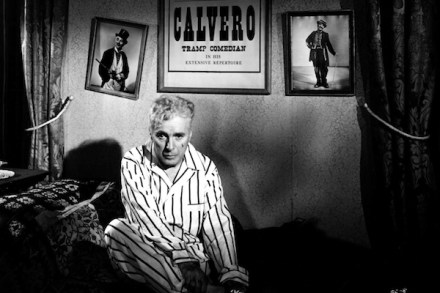
The online accessibility of British population censuses has resulted in an outpouring  of ‘who and how we were’, keeping amateur genealogists, local historians and social commentators extremely busy. Barry Anthony’s book relies heavily on the censuses of the late Victorian and Edwardian years, combined with a close reading of the astonishingly detailed stage magazines and papers such as the Era and the Entr’acte, to flesh out what we know of the early life of England’s most famous comic actor. Charlie Chaplin’s stage career was not long; he seems to have seen, in some flash of foresight, that film was the coming medium and by 1914 he had transferred his gifts from theatre to screen.
The sage of Aix

From our UK edition

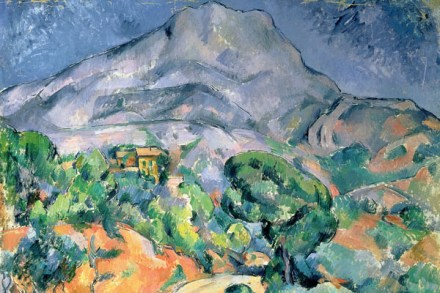
Like Mont St-Victoire itself, looming over the country to the north of Aix-en-Provence — seen unexpectedly, then just as suddenly hidden, now clear-cut against the sky, at other times a presence in the corner of the eye— the work of Paul Cézanne has been a landmark in the art of the century and more since his death in Aix in 1906. Unlike Monet, Matisse or Picasso, his influence in his own lifetime was restricted to a small circle of admirers — mostly in the last decade of his life. It is an unusual occurrence for so crucial a figure in the history of painting to have gained a reputation that was almost entirely posthumous.

The past is another city

From our UK edition

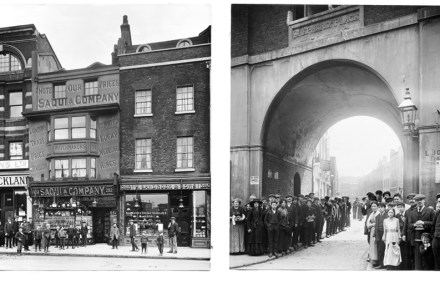
This absorbing book is — in both format and content — a much expanded follow-up to the same author’s very successful pictorial anthology Lost London of 2010. It replicates some of the photographs that appeared there and contains many new ones, all in captivating detail. The photographs are ones of record. There is little sense of artful composition or a striving for special effects. Many are of great beauty in their direct simplicity, as though the images were breathed onto the page with no human intervention.

Oh brother!

From our UK edition

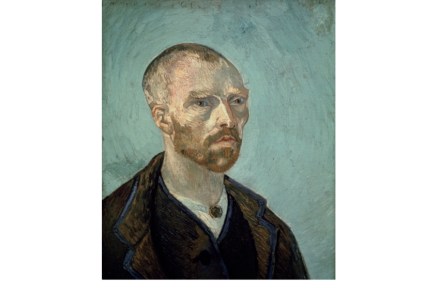
Long in the writing, deep in research, heavy to hold, this is the latest of umpteen biographies of Vincent van Gogh (1853-90). But it should be said straightaway that it is extremely readable, contains new material and is freshly, even startlingly re-interpretative of a life whose bare bones are very familiar. The more one reads, the more absorbing it becomes, both in its breadth of approach and its colossal detail. Potential readers, however, should be warned: this is no sentimentalising study, no apologia for the excesses of the ‘mad genius’ of popular renown. Quite the contrary: one’s dismay intensifies as the self-crucifixion of Van Gogh’s life unfolds, disaster after disaster on page after page.

A lightning tour

From our UK edition

In her foreword to this short study of Virginia Woolf,  Alexandra Harris writes that ‘it is meant as a first port of call for those new to Woolf and as an enticement to read more’. There is some justification for such a book — a synthesis giving the outline of Woolf’s life with pertinent interpretative commentary on the novels and other writings. While such an aim is not new, the book will inevitably reflect the concerns of the moment, the stamp of each generation’s particular interest. If this is so, the longer appeal of such a study is not necessarily guaranteed. Harris presents a Woolf for the early 21st century. Over the years, the variety of approaches to Virginia Woolf has been greater, perhaps, than for many another considerable figure.

Painting the town together

From our UK edition

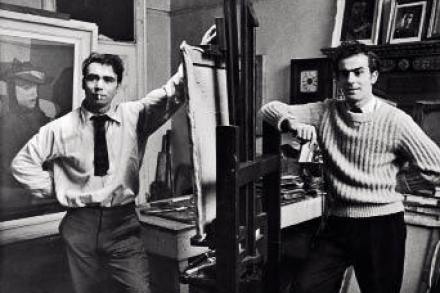
This book recounts a terrible story of self-destruction by two painters who, in their heyday, achieved considerable renown in Britain and abroad. Robert Colquhoun (1914-62) and Robert MacBryde (1913-66), both from Scottish working-class families, met in 1932 when they were students at the Glasgow School of Art. From then onwards they were personally and professionally inseparable in their headlong rise to fame and descent downhill. Although both have been the subject of anecdotes and snapshots in many a memoir of the period — all those accounts of Soho and ‘Fitzrovia’ — this is the first full-length study devoted to them, the result of over 20 years’ research.

The optimism of a suicide

From our UK edition

A postal strike would have been a disaster for Van Gogh. Letters were his lifeline and consolation. Not only did he receive through the mail his regular allowance from his brother Theo but, in letter after letter in return, he poured out his thoughts and feelings, recorded his work in progress and conveyed his impressions of books, people and places. In his often solitary existence, he was an avid recipient and kept in touch with a variety of correspondents, especially when he was in the South of France during the last two years of his life. The glory must be shared, however, with Theo, in that he kept Vincent’s letters, many of which contained drawings, either appended or on the sheet itself, surrounded by his tumble of words.

From worthless to priceless

From our UK edition

A combination of art history ‘lite’ and the personal touch — a common yoking together these days, even in books supposedly of art history ‘full strength’ — makes for, in Philip Hook’s hands, an engaging read. As a dealer and auctioneer, and the author of several thrillers, he has advantages not given to the general run of such investigative writers. His subject is the rise of French Impressionist painting, after its initial years of critical contempt and commercial failure, to international mass appeal and soaring value. It’s a familiar story, frequently told, and a reader looking for new light on the fortunes of Monet, Pissarro, Renoir, Sisley et al. will search in vain. Where Hook scores is in his practical experience.

Sinister levity of an all-seeing spider

From our UK edition

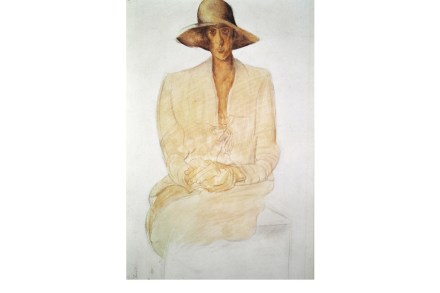
As an an outstanding English painter and a delectable personality, Edward Burra deserves this entertaining biography. It should be admitted, however, that because Burra was a letter writer of great verve and individuality, half Jane Stevenson’s battle is won: the quotations flare up from the page. Luckily, they do not destroy the surrounding narrative, for Stevenson too can be stylish and sharp. Anyone who knows the engrossing volume of Burra’s letters Well, Dearie!, edited by his lifelong friend William Chappell, will surely pounce on this new book to reacquaint themselves with those letters already published and laugh aloud at extracts that will be new to them. A Burra letter is a joy forever: droll, delicately malicious, irrepressibly camp, full of forensic observations.

Richard Shone on Leonard Woolf

From our UK edition

The large garden at Monk’s House, Rodmell, in Sussex, bounded on one side by the village street, and on the other by gently sloping ground towards the River Ouse, was locally famous for its summer brilliance. In August — the month in which I paid my first visit — when most gardens have a moment of exhaustion, Leonard Woolf had contrived a quilt of dahlias, lilies, purple Jerusalem artichokes, gaillardias and fuchsias in the flowerbeds. A conservatory along the side of the house bristled with cacti. Woolf appeared from a distant corner, secateurs in hand, twine dangling from a jacket pocket, a dog fiercely kept to heel.

The calm and solid Cubist

From our UK edition

The personalities of only a handful of artists are known to the public at large. Most live on through their work with, perhaps, a ticket of biographical cliché attached to their reputation — Van Gogh’s ear, Lautrec’s legs, Turner lashed to the mast of a ship in a storm. A few are known through the distortions of the biopic — Michelangelo, Gauguin, Pollock. With others, the very sparseness of available human detail — about Piero or Vermeer, for example —becomes their name tag. Of the great names of 20th-century art, Georges Braque is still among the unknown personalities. This problem is addressed in Alex Danchev’s very welcome, readable biography.

The painter properly portrayed

From our UK edition

We are continually told that biography is the dominant literary expression of the age, that Britain, in particular, is a nation of biographers, and that the new Oxford Dictionary of National Biography is the massive climax of this protracted love affair. Even our fiction suppurates with real-life figures both past and present, from Mrs Thrale and Charles Lamb to Henry James, Alma Cogan and Baroness Thatcher. Biographies of politicians and adventurers, duchesses and spies, consorts and comedians hog the limelight on the publishers’ seasonal lists. But artists receive only sporadic attention. It is true that most of the leading British painters and sculptors have been ‘done’, some more than once, but they are not the easiest of subjects.

The girl who played Ophelia

From our UK edition

‘A truly extraordinary achievement,’ trumpets A. N. Wilson on the jacket of this book. In a sense, of course, he is right. Lucinda Hawksley deserves praise for making something substantial out of very little. With the addition of some original research, she has synthesised what is known of Elizabeth Siddal (1829-62), the long-suffering model for Millais’ ‘Ophelia’, the muse and wife of Dante Gabriel Rossetti, and herself a painter and versifier. Hawksley sifts the evidence, commendably trying to unravel truth from legend in order to bring proportion to her subject’s story, one which, boiled down, is not unfamiliar.

Verdict as open as ever

From our UK edition

Readers of the thrillers of the American writer Patricia Cornwell will find elements of her new book familiar but others oddly different. Her novels are fiction closely based on fact; Portrait of a Killer purports to be a work of fact but is founded on fiction. It supposedly unravels the mystery of Jack the Ripper, a name given by the press to the most notorious serial murderer in Britain, about whom virtually nothing is known. Cornwell squarely lays these atrocious murders of East End women in 1888 at the door of the painter Walter Richard Sickert (1860-1942). When this story first broke on US television late last year, Cornwell said that if she were to be proved wrong 'not only will I feel horrible about it, but I will look terrible'. These may well be prophetic words.