Alexander Fiske-Harrison

Desmond Morris was a master of provocative truths

From our UK edition

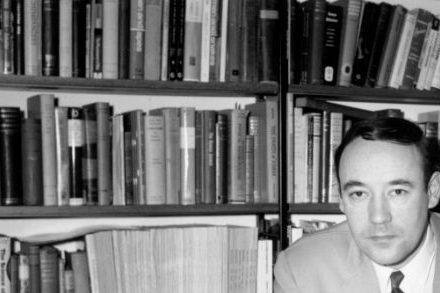
When the recently deceased zoologist Desmond Morris chose the title for his 1967 book – The Naked Ape – that would make his name, one wonders if he didn't look back at the last book of 'popular science' in the field of biology. Charles Darwin's 1871 The Descent of Man scandalised Victorian society by claiming that humans are descended from apes. Morris seemingly decided to go that one step further and claim that we still are apes, just hairless ones. Morris was a master of provocative truths. He enjoyed generating pseudo-scandal by extrapolating from known scientific facts towards possible implications in realms which were difficult to stomach even in the Swinging Sixties.

Stately Spanish galleons with gold moidores

From our UK edition

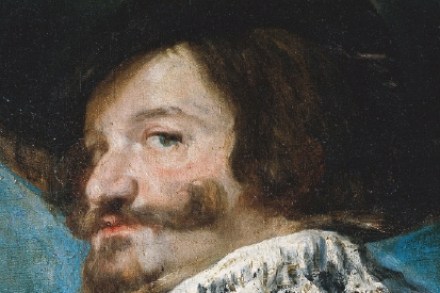
As every schoolboy knows, ‘the empire on which the sun never set’ was British, and ‘blue-blooded’ was a phrase applied to the nobility who ruled it for most of its history. And every schoolboy is wrong. The phrase was coined to describe the dominions of the Holy Roman Emperor Charles V (or Charles I of Spain), which were the first to span the requisite number of time zones; and ‘blue blood’ — sangre azul — referred to his Visigothic ancestors who reconquered Spain from the Moors, who had held it since 711 AD. These northern warlords would apparently show the purity of their ancestry by revealing the visible veins in their untanned forearms.

Blunt is right. Being posh in the arts is career suicide

From our UK edition

Yesterday saw Labour's shadow minister for the arts, Chris Bryant MP, amusingly and justly savaged by the pop star James Blunt for some ill-advised remarks about the predominance of public school boys in the arts: he cited both the Old Harrovian Blunt and the Old Etonian Eddie Redmayne as evidence of a lack of diversity. Now, I am sure the multi-award-winning, multi-platinum-selling former Captain Blunt can look after himself, and during awards season, the Oscar-nominated Redmayne has other things on his plate, but it reminds this former actor of how narrow the arts really are.

Kajaki review: never have I seen a more gruesome depiction of war

From our UK edition

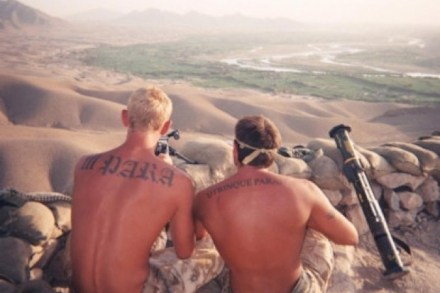
On September 6th, 2006, a mortar unit from 3rd Battalion, 3 Para, defending the Kajaki dam over the Helmand River in Afghanistan, spotted an illegal road block set up by the Taliban. The enemy were too distant for the unit’s sniper, Lance Corporal Stuart Hale, and to call in an airstrike would have caused civilian casualties, so Hale set out with two other paratroopers to get close enough for his sharpshooting talents. En route, Hale walked into an old Soviet minefield which had not been marked on their maps and lost his leg. Hale survived, but by the time he and his comrades were rescued four hours later, another six men were seriously injured, two other losing legs, and one, Corporal Mark Wright, his life.

I guarded Rudolf Hess

From our UK edition

I had the misfortune to meet Lord Richards on probably the darkest day of his 42 years in the military. In July 2009 I went to visit the then Commander-in-Chief UK Land Forces in his office on the edge of Salisbury plain and we spoke about his career, and the army in general. All the while staff officers ran in and out with updates and requests concerning a double IED attack which had left five soldiers of 2nd Battalion, The Rifles, dead and a dozen wounded — the single worst incident in our 13-year involvement in Afghanistan. Richards was, as the title of his auto-biography suggests, in total command of himself and the situation — eloquent but concise, knowledgeable and incisive; and while far from unfeeling, his judgment was completely unclouded by emotion.

Does the world need 17 volumes of Hemingway’s letters?

From our UK edition

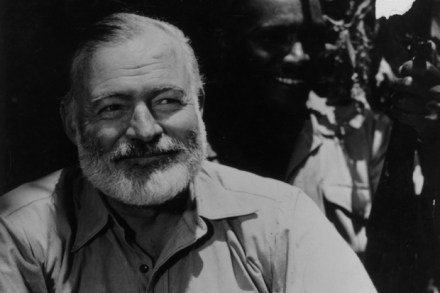
‘In the years since 1961 Hemingway’s reputation as “the outstanding author since the death of Shakespeare” shrank to the extent that many critics, as well as some fellow writers, felt obliged to go on record that they, and the literary world at large had been bamboozled, somehow.’ So wrote Raymond Carver in the New York Times in 1981. My, how times have changed.

Alexander Fiske-Harrison enjoys a ‘story slam’ at the Edinburgh Fringe

From our UK edition

The Edinburgh Fringe is a place of youthful hopes, naive dreams and occasional flashes of genuine inspiration. Usually these turn out to be very much flashes in the pan. But not so last Friday night’s ‘story slam’ at the Southall: a contest of storytelling between writers, poets and ne’er-do-wells divided into two teams, representing their home cities of Edinburgh and Chicago. The idea grew out of the ‘poetry slam’ format, invented in Chicago in 1980s, which was itself the child — or rather, the polite third cousin — of the ‘rap battle’ wars of words, in which aspiring hip-hop performers would twist language, rhythm and rhyme into weapons to wound an opponent’s amour-propre.

A good run

From our UK edition

I have just finished running — with a thousand like-minded souls from around the world — down a half-mile of medieval city streets while being pursued by a half-dozen half-ton wild Spanish fighting bulls. They were accompanied by an equal number of three-quarter-ton galloping oxen, but we didn’t worry about them: they know the course as well as anyone and keep the bulls in a herd. This is good, because when fighting bulls are on their own they become the beast of solitary splendour and ferocity you may see in bullrings across Spain, France, Portugal, Mexico and much of Latin America. However, every second week in July, during the festival of Saint Fermín, they are run together as a herd from the corrals to the bullring.

Stronger than fiction

From our UK edition

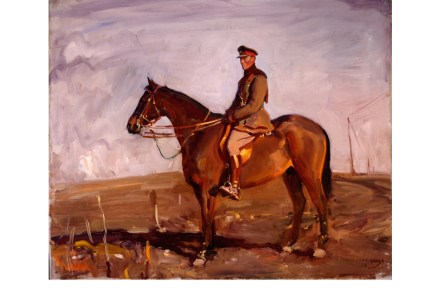
I think it was a Frenchman — it usually is — who observed that the English love their animals more than their children. At first glance, General Jack Seely’s Warrior: The Amazing Story of a Real War Horse — originally published as My Horse Warrior in 1934 — is striking proof of this. In an entire book devoted to the exploits of his horse, the author’s final mention of his son Frank is stunning in its brevity: We had a last gallop together along the sands, Warrior and [Frank’s charger] Akbar racing each other; then I drove him in a motor-car to rejoin his regiment .… He asked me to take care of Akbar, and I replied that Warrior would take care of that. He was killed not long afterwards while leading his company.