More from Books

Nimble-witted wanderer

It was a certain unforgettable ex-girlfriend, Harry Mount confesses — named only as ‘S’ in his dedication — who came up with the idea for this new book, which he has therefore written to honour her, or in the hope of winning her back, or possibly, in some obscure way, to annoy her. Whichever it is, S must surely share some blame for its misleading subtitle. You can’t follow in the ‘footsteps’ of mythology’s greatest sailor. As Homer repeatedly says in the Odyssey, ‘No one travels on foot to Ithaca.’ OK, this is pedantic, but the author doesn’t really follow in Odysseus’s wake either. If that’s the book you want, try Tim Severin, or, better, Beaty Rubens and Oliver Taplin.

An exquisite flowering of talent

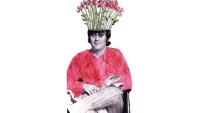
It seems odd that a singer, musician, television performer and sculptor who typified the 1960s as vividly as Rory McEwen should now be known principally for his botanical paintings. From the early 1950s until his tragically early death in 1982 he was everywhere and knew everyone, but as The Colours of Reality shows, McEwen was never more himself than when working within the discipline and timeless tradition of an art form that links him with the greatest flower painters of the past. Not every botanical painter can count Jim Dine, Joseph Beuys and Ravi Shankar as his friends, play the 12-string guitar, shoot at Balmoral, influence Van Morrison, bolster the fortunes of the Wakefield and North of England Tulip Society and drive a purple Ferrari with ‘Ecosse’ on the tail.

Last day

None of the teachers who taught us were around that final afternoon at Grammar school — probably frightened of being assaulted after giving us so much grief for five years, no more of that though. We sat around unsupervised, playing cards and smoking a bit and then it seemed so simple, so absurdly easy to just walk down the drive and out of the front gate for the last time.

Poison and parsnip wine

First, a quote from the novel under review. The context: it is a flashback scene of the behaviour of a character at a birthday celebration for her aged mother. She is confessing her bulimia to a crowded room: ‘I make myself sick! I vomit! I vomit! I vomit! I lock myself in the lavatory while you’re all stuffing your faces and I put my fingers down my throat! I vomit! I vomit! I vomit!’ she had cried aloud, as she waved her long, prehensile hands in the air. We shall skate over the use of the word ‘prehensile’ to describe hands, which are all, unless deformed, prehensile anyway, and concentrate on the character’s speech. Somewhat histrionic, would you say? A little bit unlikely?

Reducing poetry to a science

Is it possible to tell a good poem from a bad one? To put the question another way: are there objective, even scientific, standards for evaluating literature? Helen Vendler has no doubts. Her spiky new collection of essays begins with the insistence that it is possible to prove how one poem is ‘superior’ to another, and ‘those who suppose there are no criteria for such judgments merely expose their own incapacity’. That’s a bold claim, but in her hands, literary criticism is a science, and anyone who disagrees with her judgments is put sharply in their place.

Sometimes it’s good to worry

At last, a snappy pop philosophy book which offers to sort out absolutely none of your personal issues. If anything, it will make them worse. ‘There are,’ Francis O’Gorman admits, ‘serious problems for me with the ethics of writing on worry.’ Since words are the very stuff of worry, O’Gorman (himself a worrier) suspects that reading is unlikely to provide a cure. Sufferers would do better to contemplate the sublime balance of Brancusi’s ‘Bird in Space’ (‘a glimpse of a world without fretfulness’) or listen to Bach’s contrapuntal fugues, in which ‘Everything, whatever happens, fits.’ But O’Gorman is not really here to dole out advice: A while ago, I described this book as I was writing it to a friend.

Divide and quit

In 1929, when Edwin Lutyens handed over the newly completed building site of New Delhi to the Viceroy, Lord Irwin, many believed he had created a capital for a British empire in India that would last if not 1,000, then at least 100 years. It was, as Lord Stamfordham wrote, ‘a symbol of the might and permanence of the British empire’ that had been commissioned specifically so that ‘the Indian will see for the first time the power of western civilisation’. The plan of New Delhi was deliberately intended to express the limitless power of the Viceroy. In the words of Sir Herbert Baker: ‘Hurrah for despotism!

From Major to minor

‘Lobbying,’ writes William Waldegrave in this extraordinary memoir, ‘takes many forms.’ But he has surely reported a variant hitherto unrecorded in the annals of politics. The Cardinal Archbishop of Cardiff (‘splendidly robed and well supported by priests and other attendants’) had come to lobby him (then an education minister) against the closure of a Catholic teacher-training college. After discussion the archbishop suggested their respective entourages leave the room. Face to face and alone with Waldegrave, the archbishop told him he had a distinguished 16th-century ancestor, who was a candidate for beatification. The unspoken implication was left hanging.

Amanda

When I didn’t recognise the number and saw the text with kisses, but no name — ‘Thinking of you: they’re playing Native New Yorker’, I racked my brain and was filled with shame. Was this the divorced father and one-night stand, or was this someone who had heard me sing in hospital when I was bored out of my mind, or was this a teenage flame rekindling? And then I was relieved to realise it was not a blast from the past, but you who heard me play that record in the Seventies when we were small, who shared with me and knew my childhood home, pets, dad and mum, yet lost your own mother, aged so young.

Growing Up

This morning, as I commuted through Hendon Central, I remembered you telling me you saw that day’s newspaper there on a board, announcing the king had died, how life stalled for a moment. This evening I got the call I’d long dreaded, telling me you were dead. ‘We are not a grandchild,’ Thatcher might have said. My kingdom has lost its last queen. I grow tall into the footsteps of each late centenarian grandmother, may start taking the Telegraph. I cry, then hear both of them laugh with an obstinacy that skipped a generation, realise I’m now their only resurrection, have crossed the chess board, no longer a pawn.

The murderous gangs who run the world

Rosalio Reta was 13 years old when recruited by a Mexican drug cartel. He was given a loyalty test — shoot dead a man tied to a chair — then moved into a nice house in Texas. Soon he was earning $500 a week for stakeouts and odd jobs, but the big money came from slitting the throats of the gang’s enemies, which paid a $50,000 bonus. Four years later he was arrested after 20 murders; his only remorse was over accidentally sparking a massacre that left him fearing his bosses might exact revenge on him. Such bloodstained stories of obscene violence in pursuit of obscene wealth fill the pages of the Italian journalist Roberto Saviano’s investigation into the cocaine trade.

Stately Spanish galleons with gold moidores

As every schoolboy knows, ‘the empire on which the sun never set’ was British, and ‘blue-blooded’ was a phrase applied to the nobility who ruled it for most of its history. And every schoolboy is wrong. The phrase was coined to describe the dominions of the Holy Roman Emperor Charles V (or Charles I of Spain), which were the first to span the requisite number of time zones; and ‘blue blood’ — sangre azul — referred to his Visigothic ancestors who reconquered Spain from the Moors, who had held it since 711 AD. These northern warlords would apparently show the purity of their ancestry by revealing the visible veins in their untanned forearms.

One événement after another

The great conundrum of French history is the French Revolution, or rather, the sequence of revolutions, coups and insurrections during which the nation was repeatedly destroyed and recreated. How is it that a heap of cobblestones, furniture and overturned vehicles — handcarts in 1848, 2CVs in 1968 — erected at particular points on the Left Bank of Paris can bring down a régime whose domain extends from the North Sea to the Mediterranean? As Baudelaire observed when Napoleon’s nephew conducted a coup d’état in 1851 and installed himself as supreme leader, it seemed that ‘absolutely anybody, simply by seizing control of the telegraph and the national printing works, can govern a great nation’.

The rich are a different species

The scene: a funeral parlour in New York. Doors clang as a family relative, the ‘black sheep’, saunters in halfway through his brother’s eulogy and brazenly strolls down to the front pew, ignoring the scandalised glances. He’s late, a whisper spreads, because he had a meeting with director James Toback. Wait. James Toback? Lame! The hearse leaves, and the congregants assemble on the street. An attractive brunette in her late forties weeps desolately. Did she know the deceased well? Not at all: she has discovered that someone at the service walked off with her Christian Dior trench and left her with a shabbier coat from a chainstore.

Reality games

The title of Victor Pelevin’s 2011 novel stands for ‘Special Newsreel/Universal Feature Film’. This product is made by the narrator, who pilots his hi-tech camera without leaving his room, propped up against cushions. The corpulent Damilola Karpov lives in Byzantion, or Big Byz, an ‘offglobe’ hovering over what’s left of the old world after the collapse of its superpowers and other apocalyptic events. Down below is a country called Urkaine (the apparent misspelling is a pun on a slang Russian word for ‘criminal’), populated by drunks and ruled by gangsters, its symbol a golden ‘spastika’, its economic goal ‘to catch up with and overtake Big Byz in terms of major stock indices’.

Lovely house of ill repute

Well, you can’t say he wasn’t warned. Swimming pools, Nancy Astor told her son, Bill, were ‘disgustin’. I don’t trust people in pools.’ If he wanted to swim he should take a dip in the River Thames, which flowed through the grounds. But when his horse won the Oaks, Bill Astor built his long-desired pool, and before long Christine Keeler was emerging naked from the water and Cliveden was branded a den of iniquity. Scandal, it transpires, is in Cliveden’s DNA. The house was conceived by the second Duke of Buckingham, favourite of Charles II, who wanted a love nest for himself and his mistress, Anna Maria, Countess of Shrewsbury, whose husband he had killed in a duel in 1668.

The glory that was Greece

Financial crises are nothing new in Greece. Back in 354 BC, at a time when Frankfurt was still a swamp, the Athenian general Xenophon wrote a briefing paper designed to help his city negotiate the aftermath of a disastrous war. His proposals mixed supply-side reform with Keynesian stimulus. The regulatory powers of Athenian officials, so Xenophon suggested, should be streamlined and enhanced; simultaneously, the city should invest in increasing its commercial and housing stock. The economy, boosted by these measures, would also benefit from encouraging foreign investment. ‘Imports and exports, sales, rents and customs’: all would then surely flourish.

Epitaph for a Star

A chance in a million: he was perfectly cast In the role of his own life, though he almost flipped When told it was all in the future, and not in the past, And someone (who?) had forgotten to give him the script. He tried his damnedest, but there were other factors That made the going tough. The director allowed No rehearsals and gave the supporting actor All the best lines. His face was lost in the crowd. The shooting proceeded in too much of a rush For him to be shown the rushes. All those heartaches! That foiled ambition! He demanded re-edits, But the final cut revealed his busted flush. There was never an occasion to save the out-takes, And in the end his name was removed from the credits.