More from Books

The sting of betrayal

This may seem an odd thing to say about a writer who’s been officially declared a National Living Treasure in his native Australia, and was shortlisted for the Booker Prize three times before winning it with Schindler’s Ark — but I sometimes think Thomas Keneally is badly underrated. After all, Schindler’s Ark won that Booker Prize 35 years — and 19 Keneally novels — ago, and since then his reputation appears to have settled down into that of a solid craftsman: the sort of novelist who rarely lets you down, but who never quite hits the literary heights either.

The bridge of size

Before Brooklyn exceeded it in cool, Manhattanites spoke dismissively of BNTs. These were the Bridge ‘n’ Tunnel folk, the out-of-towners who needed civil engineering to help them reach social nirvana. The ambitious critic Norman Podhoretz, a master of self-invention, was one such. His notorious Making It (1967) begins: ‘One of the longest journeys in the world is... from Brooklyn to Manhattan.’ But since 1883 the journey over the East River has only been 5,989 feet, although physical distance was not the measure that pained Podhoretz. That’s the total length of Washington Roebling’s Brooklyn Bridge, the first connection between the outer boroughs and the elite ‘New York’.

A man with an agenda

What’s this? An autobiography by Stuart Hall? Wasn’t he one of the guys who put the Eng. Lit. departments out to grass by arguing that it was senseless to talk about fictional characters as if they were real people when the truth was that real people were fictional constructs? Indeed he was; but don’t go thinking that just because Hall embarked, shortly before his death in 2014, on writing his life story, that he’d given up on the decentred subject. As he remarks early on in Familiar Stranger, despite our need to grasp our inner being, ‘we’ll never be ourselves’. It’s a nice line. It’s also a rare moment of clarity in a memoir that can be as cloudy and windy as a Turner sea study.

First signs of thaw

The Twentieth Congress of the Communist Party in February 1956 passed off entirely without incident. Speeches on the next five-year plan were applauded and Stalin’s pet agronomist Lysenko made his customary appearance to denounce bourgeois genetics. A visiting communist from Trieste, Vittorio Vidali, noted his envy of two Uzbek party members who sat reading short stories throughout the proceedings. By late on Friday, the Congress was over, except for the announcement of one additional closed session the following morning. How many delegates skipped this dreary-sounding extra session? Any that did missed the single pivotal moment in the history of the Soviet Union.

Lessons and games

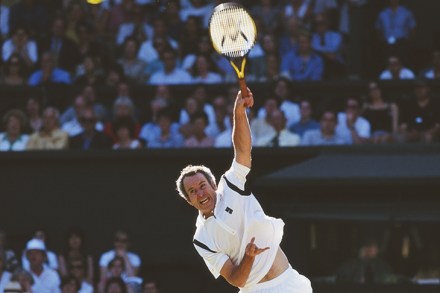
‘Kokkinakis banged your girlfriend. Sorry to tell you that, mate,’ the Australian tennis player Nick Kyrgios remarked to his opponent Stan Wawrinka during a match in Montreal in 2015. He was referring to Thanasi Kokkinakis, who had partnered Wawrinka’s girlfriend in mixed doubles. After Kyrgios’s remark, Wawrinka’s game went to pieces, and he soon retired from the match with a ‘back problem’. Was Kyrgios’ gambit unethical? That is the sort of problem that occupies David Papineau in this mixed bag of essays. Papineau, a philosophy professor at universities in London and New York, is obsessive even by the standards of sports obsessives.

Pirates and puritans

In The Growing Pains of Adrian Mole, Sue Townsend’s hapless teenage diarist, reeling from the news that Argentina has just occupied the Falkland Islands, fails to locate the archipelago on his world map. Eventually, his mother comes to the rescue and discovers it ‘hidden under a crumb of fruitcake’. If general awareness of the Falklands before 1982 was somewhat limited, as Townsend slyly implied, it pales into complete insignificance in comparison with the all-but-forgotten former British territory of Providence. This is a place I have to confess to never having heard of before picking up The Island that Disappeared. My ignorance is one thing and, according to Tom Feiling, common enough.

Immaculate conceptions

Some 30 summers ago we were staying at a famously beautiful villa outside Turin; our hostess was — indeed is — renowned for her superb taste and distilled perfection of every aspect of douceur de vivre. Each night we dined in a different sylvan setting — under inky trees, in flower-filled gardens and in 18th-century rococo salons, amid porcelain bouquets of those selfsame flowers. Another room, with candles lighting the chinoiserie panelling, is forever incised in my mind, not only for the decor but for the last course.

Towering tree of God

In his biography of Gaudí, published in 2001, Gijs van Hensbergen opined that ‘we should never try to finish the Sagrada Família, otherwise we undo the web of power that is elaborately woven into this mysterious religious spell’. But he now appears to take the view that it should, and will, be finished by 2026, the centenary of Gaudí’s death (though the sculpted decoration will take considerably longer to complete). If indeed this extraordinary building is ‘topped out’ in nine years’ time, it will have taken 144 years to build, which is a good deal less than many medieval cathedrals (Toledo’s took more than 250 years).

A cursed house

Beyond the patricide and even the incest, the horror of the Oedipus myth lies in its insistence that our fates are not ours to change. And yet the story itself is far from unalterable, having been handed down in multiple variants — something that Natalie Haynes knows very well as a classics scholar. Now Haynes has written her own version of the tragedy, finding new space in the narrative by looking at it through the eyes of two characters neglected by antiquity: Oedipus’s mother/bride Jocasta and their youngest daughter Ismene. We meet Jocasta as a clever 15-year-old girl married off to old King Laius of Thebes, in what her grasping father declares ‘the best deal of [his] life’.

Brava Bella

I like Bella Pollen for her open-mindedness, self-deprecation and verve. Given her early success as a fashion designer — top client Princess Diana — her memoir is extraordinarily modest. Now in her mid-fifties, she has also published five novels — one, Hunting Unicorns, a bestseller. Unusually, this had a dead narrator, and Meet Me in the In-Between also begins with an unearthly creature — a ‘demon’ sexual predator, who won’t leave our memoirist alone. It also deals with writer’s block.

Every horror imaginable

The group of kidnapped women were terrified. They had been brought back to the camp as booty and were being urged to convert to Islam with machetes pressed to their necks. They did their best to gabble words that sounded like the prayers they were being taught before one fighter noticed a captive with a swollen belly. ‘I’m not pregnant,’ she insisted, spreading her hands over her belly in an instinctive reaction that only showed she was lying. The most senior of the armed men, who looked barely 20 years old, ordered her to lie down on the ground. ‘We don’t bring any Christian babies into the world here,’ he screamed.

The last great pandemic

The symptoms of the Spanish flu could be ghastly. Perhaps Laura Spinney should have chosen her title with more care because rather than becoming pale and interesting, as with tuberculosis, frequently the flu’s victims turned completely black before dying. ‘It is hard,’ one US army doctor observed, ‘to distinguish the colored men from the white.’ The pandemic is often thought of as a forgotten catastrophe. That is despite its monumental scale. The death toll, which peaked in the autumn of 1918, is variously estimated to be between 50 million and 100 million — far exceeding the 17 million fatalities of the Great War. But have we really forgotten the Spanish flu — and, if so, why? Spinney is both a novelist and science writer.

Forty years of comfort-eating

In 2015 a pair of linen drawers belonging to Queen Victoria sold at auction for over £12,000. In old age Queen Victoria swathed herself in wraps and loose gowns which artfully concealed her figure, and her official photographers were ordered to photoshop her outline. But these knickers with their 45” waistband make plain that the 5’-queen was borderline obese. Annie Gray has written a culinary biography of Queen Victoria which tells us what she ate. Breakfast was a hearty meal, often featuring lamb chops. For dinner Victoria ate rich French food, and her menus were always written in French. No plain Mrs Beeton-style cooking for the queen. Dinner began with a choice of soups.

The war in the shadows

I once spent an evening, back in the mid-1980s, with William Colby, the legendary spy and director of the CIA. I was an undergraduate at the time, and the CIA’s Iran–Contra debacle was in the news. Lured by the agency’s mystique, I was eager to ask him about the fabled Phoenix programme he directed — a top secret initiative to target and eliminate Viet Cong who had infiltrated South Vietnamese villages, often conducted by Americans who had crossed over some invisible line, leaving behind them the normal life that comprised my world. To my disappointment, Colby demystified Phoenix. He was very proud of the programme, and while he never said so, I distinctly remember feeling convinced by him that the CIA should have run the whole war in Vietnam.

Perfect, gentle Knight

I once asked Baroness Manningham-Buller, the former head of MI5, what she did to relax. Nailing me to the wall with her no-nonsense look, she said: ‘I keep sheep.’ A similar association with the animal kingdom resounds through Henry Hemming’s excellent new life of Maxwell Knight, the famous spymaster and possible archetype for Ian Fleming’s ‘M’. Knight’s family and friends observed that, at an early age, he had a particular way with animals that allowed him to bring them under his spell. As a young man he kept a menagerie in his small London flat consisting of a bulldog, a bear and a baboon.

Home from the hill

As well as being a leading architectural historian Mary Miers is an editor at Country Life. For her latest book she has mined the magazine’s unmatchable picture library and the photographs are by Country Life regulars Simon Jauncey, who lives in Highland Perthshire, and the late Paul Barker, who sadly died before publication. His memory is duly saluted. Crucially the author is a Highlander by birth and domicile. Every week she commutes between London and her Black Isle home and she summers on South Uist. She knows the Highlands and Islands, or the Gàidhealtachd, from top to bottom: from Balmoral and the Highland balls of the Northern Meeting to crofters’ kitchens and island ceilidhs.

Moments of absurdity

The bestselling humourist and New Yorker essayist David Sedaris is renowned for an almost hypnotic deadpan drollery and maybe especially for The Santaland Diaries, his uproarious account of earning part-time cash as a department store Christmas elf. Now he is bringing out an edited version of his personal diaries. It’s the first volume of two, taking us from his days as a broke student, stoner and young gay man in North Carolina and Chicago, through to the years of literary fame and success in New York and Paris as the new century dawns — a distinction worn lightly. Fans, semi-fans and non-fans (I am midway between the first two categories) may well crack open this book in search of David Sedaris’s private reality.

Cold comfort | 25 May 2017

All animals, Scott Carney tells us, seek comfort. But human beings are a bit different. We don’t need to spend much time actively seeking it. He’s right: it’s all around us — in your nice warm house, your air-conditioned car, your shoes, your bed, the temperate shopping mall you visit. Here in the affluent west, we eat comfort food in comfortable chairs, and then we recline on cushions, tweaking our dimmer switches and thermostats and adjusting the brightness on our screens. Good for us, you might think. We can ‘control and fine-tune our environment so thoroughly that many of us can live in what amounts to a perpetual state of homeostasis’.