More from Books

In praise of LSD

Ayelet Waldman is, surely, not the first writer to have scrolled through a list of ‘Books of the Year’ and become increasingly enraged to find her own book not on it. But where other authors manage to keep a dignified silence (sticking pins into critics’ byline photos in private), Waldman demonstrates a lively lack of

The classic that conquered the world

Somewhere between his first and second drafts, Victor Hugo decided to change the title of his great novel from Les Misères to Les Misérables, shifting the focus from society’s problems to the people suffering them. And what problems they were. Hugo had never been brutally poor himself, but he’d borne witness to enough brutal poverty

Swash and buckle aplenty

A feeble king and his scheming minister, a hunchback noble and the Daughters of Repentance, a botched assassination and a walled-up prisoner, some comic horse-sex, cross-dressing valets, a handful of gay jokes, a dwarf, and a literal éminence grise. The latest instalment of Game of Thrones? No, actually: a sequel to The Three Musketeers. December

What the secretary saw

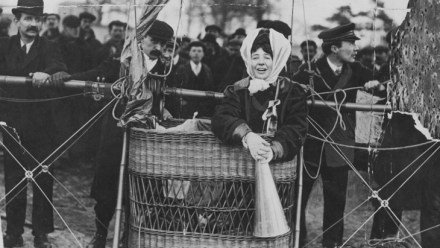
What the secretary sawSarah Churchwell Big Bosses: A Working Girl’s Memoir of the Jazz Age by Althea McDowell AltemusUniversity of Chicago Press, £10.50, pp. 220 In 1922, writing a facetious review of her husband’s second novel, The Beautiful and Damned, Zelda Fitzgerald made an ironic reference to the fact that Scott Fitzgerald had used sections

Tricks of the trades

Oddly enough, one of the most historically influential pieces of British writing has turned out to be an essay that appeared in the June 1800 issue of the Commercial, Agricultural and Manufacturers Magazine. Over the preceding decades, there’d been much anguished debate about the size of the country’s population. Many commentators were convinced that, thanks

The nature of genius

On 21 December 1945, Ezra Pound was confined to St Elizabeths hospital in Washington DC. He had broadcast for Rome Radio from 29 January 1942 to July 1943. To avoid his almost certain conviction for treason (and the death penalty visited on William Joyce, Lord Haw-Haw), the superintendent Winfred Overholser testified that Pound was insane

A whirlwind life

The dust cover features one of the best-known caricatures of Richard Wagner, his enormous head in this version opened like a boiled egg, with a photograph of Simon Callow either emerging from his skull or sinking into it. The idea is that rather than just writing another book on this over-biographised figure, Callow will let

Righter of wrongs

I used to work for Ludo, as we all knew him on BBC2’s Did You See?, and was once thought to be his illegitimate son. In 1963, on a visit to Phnom Penh, he danced with my mother in a nightclub under the stars, but I was already six years old and, according to her,

Thirtysomething blues

If ever there was a book for our uncaring, unsharing times, it is Gwendoline Riley’s First Love, in which Neve, a woman in her mid-thirties, struggles with a truly awful family and with the men in her life, while trying to make a career as a writer. That latter point might suggest some kind of

Old, unhappy, far off things

August Geiger led an unremarkable life. Born in 1926, the third of ten children of a Catholic farming family in western Austria, the most unusual thing about him was his unwillingness ever to leave Wolfurt, the village where he had grown up. He built a house there, for his schoolteacher wife and their children, and

Intimations of mortality | 9 February 2017

In Deaths of the Poets two living examples of the species, Paul Farley and Michael Symmons Roberts, retail the closing moments of close on 30 poetical lives, ranging from Thomas Chatterton to Robert Frost, Lord Byron to Rosemary Tonks, John Clare to Thom Gunn. Why? Because they feel the influence on ‘our’ generation (Farley was

Bad behaviour

Molly Keane achieved fame and critical acclaim in 1981 aged 75, when she published the novel Good Behaviour, a razor-sharp social comedy about the Anglo-Irish in the 1930s. Her success was the more sensational because it was unexpected. Twenty years previously her play Dazzling Prospect had flopped disastrously at the box office. A drawing-room farce

The Baron is back

Sigizmund Krzhizhanovsky was born in the wrong place at the wrong time. Had his Polish ancestor not been exiled to Siberia, he might have become a figure in European literature; living in Soviet Russia he was, in his own words, ‘known for being unknown’. His fiction and plays, written in the 1920s–1930s, remained mostly unpublished

A diamond set in sapphires

I was a young, aspiring writer when I decided to leave everything behind and move to Istanbul more than two decades ago. I rented a tiny, dingy flat at the bottom of the Street of Cauldron Makers not far from Taksim Square, the heart of the modern city. That first night, I sat by the

Recent crime fiction | 9 February 2017

There isn’t a clear line separating crime and literary fiction, but a border zone where ideas are passed from one genre to another. Flynn Berry’s debut Under the Harrow (Weidenfeld, £12.99) is set well to the literary side of this border, but doesn’t shirk on the thrills of a psychological mystery. Nora Lawrence expects to

Flights of fancy | 9 February 2017

Michael Chabon’s back. He’d never gone away, of course — more than a dozen books in all — but it’s been a long time since The Amazing Adventures of Kavalier & Clay (2000), a book entirely true to its title, so amazing and adventurous, indeed, so full of pizzazz, that it seems to have taken

The great Norse soap opera

Norse myths are having a moment. Or should I say another moment; one of a long chain of moments, in fact, beginning in the primordial soup of the oral tradition of storytelling in Iceland and Scandinavia. This mythology is old; old and very tenacious. First chronicled by scholars and historians some centuries after the Christianisation

And then there was one

After a long struggle to receive mainstream publication, Paul Auster’s first few novels were a genuinely significant contribution to American letters, his patented mix of postmodernism, deadpan comedy and metatextual homage to Kafka, Hamsun, Melville and Hawthorne so singular it invited parody. Among these books, The New York Trilogy and The Music of Chance seem