More from Arts

Original and absorbing: A Highland Song reviewed

Grade: A- Why don’t you go outside and get some fresh air instead of playing that stupid game? A) I’ve been outside, and I didn’t like it. And B) there’s a game for that. A Highland Song excellently simulates the experience of going outside for a walk and regretting it. Moira sets off to meet her Uncle Hamish at the lighthouse – but like Virginia Woolf’s lot, takes her sweet time getting there. Once you’re 100 yards from her front door, she has no idea where she is. Despite her och-aye-hoots brogue, she turns out to be no less clueless than the tourists who head up Ben Nevis in flip-flops and have to be helicoptered back to civilisation by mountain rescue three days later. Think of this as a getting-lost-in-the-glens simulation.

The art of walking

My pilgrim companion William Parsons and I did not call our first journey a pilgrimage. Rather, it was a song walk: a walk with a purpose of taking a song, ‘The Hartlake Bridge Tragedy’, back to where it came from. It was also an attempt to reclaim my place in the world, after too much time spent in front of my computer. Stepping out and walking with intention. It did the trick. When we arrived at the monument that commemorates those who had drowned, we were met by chance by a couple who had three ancestors who had died in the Medway tragedy but did not know the song. Thus we returned the song to its bloodline, not just its place.

A short history of stained glass

On 13 December 1643, a Puritan minister called Richard Culmer borrowed the Canterbury town ladder and carefully leaned it against the Cathedral’s Royal Window. He then ascended the ladder’s 60-odd rungs, holding a pike; according to his account, modestly written in the third person, ‘Some people wished he might break his neck.’ Culmer had in his sights the ‘wholly superstitious’ depictions of the Holy Trinity, of ‘popish saints’ such as St George, and in particular of St Thomas Becket. There Culmer perched, he recalled cheerfully, ‘rattling down proud Becket’s glassy bones’.

Has all the charisma of Chernobyl: Manchester’s Aviva Studios reviewed

There is a (possibly apocryphal) story about William Morris, where he spends most of his time in Paris inside the Eiffel Tower’s restaurant because ‘that is the only place where you can’t see the damned thing’. Aviva Studios risks a similar fate. Designed by architects OMA as the permanent performance venue for the Manchester International Festival and headquarters for its organisers, Factory International, it’s been savaged by critics and citizens alike for its ugliness. But not unlike the Eiffel Tower, it is from within that one can really witness the spectacles it has in store.

Why intellectuals love Disney

This month marks the 100th anniversary of Walt Disney’s company. The first cartoons it was founded to produce – the animation/live-action shorts Alice Comedies – are largely forgotten, eclipsed not least by the resounding success of Mickey Mouse. Mickey Mouse grabbed much of the attention from the get-go, including that of several philosophers, sociologists and critical theorists, who perceived in him an emblem of the best and worst of the modern age. Also celebrating its 100th anniversary this year is the founding text of western Marxism, Georg Lukacs’s History and Class Consciousness.

Why everyone should go to life-drawing classes: Claudette Johnson interviewed

While looking at Claudette Johnson’s splendid exhibition Presence at the Courtauld Gallery, I kept trying to pin down an elusive connection. Her works are large drawings (sometimes very large – one reclining figure is more than two-and-a-half metres wide), and each one zooms in on a single figure seen in close-up, often larger than life-size. They reminded me of something, but for a while I couldn’t place it. About halfway round I got it. They look a little like fragments from the cartoons Renaissance masters made as templates for painting. These, too, tend to concentrate on the human body on a monumental scale.  Those who dedicate themselves to drawing and work from live models are scarce.

Gripping tale of Ireland’s most polite bank robber: I’m Not Here To Hurt You reviewed

There should really be a special word for it: that vicarious fragility you feel when hearing of a minor decision with catastrophically heavy consequences, as if a falling acorn had tipped a boulder. In the case of John O’Hegarty, the subject of the engrossing podcast I’m Not Here To Hurt You, the catalyst for disaster was a quick short cut the wrong way down a one-way Dublin street while working as a bicycle courier. It would ultimately lead him – an academic with a master’s degree in psychology – into heroin and crack cocaine addiction, followed by a stint as a bank robber and eight years in prison.

‘She had no neutral gear’: Lindy Dufferin remembered

In 1957, when my dear godmother, the Marchioness of Dufferin and Ava (1941-2020), was 16, she began her diary. The granddaughter of the Duke of Rutland and daughter of Loel Guinness, an MP, financier and Battle of Britain pilot, Lindy Dufferin had a gilded childhood. Her entries as a teen are like no other: ‘Randolph Churchill [Winston’s son] was staying the night here… It was most embarrassing because Randolph was very drunk…’ In October 1957, she was in Paris: ‘The Dutchess [sic] of Windsor came… I did a show of Rock & Roll. It was all great fun. Bon Soir!’ But, amid all the luxury, a note of seriousness enters – there was art, too. Clandeboye became a kernel of art, literature and music. Vikram Seth stayed.

Move fast to snap up one of Elizabeth Blackadder’s sleek cats at the Scottish Gallery

If there’s one thing the internet knows, it’s that cats sell. The Scottish painter Elizabeth Blackadder, who died in 2021 at the age of 89, knew it too. Her sinuous, characterful cat pictures, watercolours mostly but also oils and prints, helped cement her place as the nation’s favourite painter. She was an establishment favourite too, becoming the first woman to be elected to both the Royal Scottish Academy and the Royal Academy in London. In 1995, her cats adorned a set of Royal Mail stamps and, in 2001, she became the first woman to be appointed as Her Majesty’s Painter and Limner, a position unique to the Royal Household of Scotland, previously occupied by the likes of Henry Raeburn, David Wilkie and David Young Cameron.

Free, noisy, fun: Young V&A reviewed

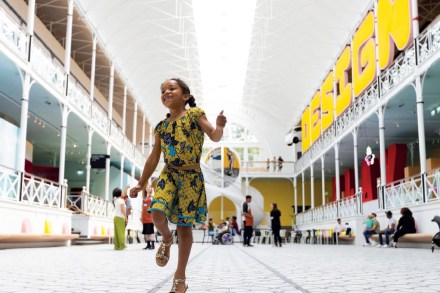
One of the annoying things about too many contemporary museums is that, having ditched old-fashioned closely typed descriptive labels and display cases, they often seem to be pitched at the level of a 12-year-old. So it’s refreshing to go to a museum that really is for 12-year-olds – or, at least, babies to 14-year-olds. Three cheers for the Young V&A, formerly the Museum of Childhood. It’s a combination of museum and playground, with an engaging Alice in Wonderland feel to it.

Policed conviviality: Serpentine Pavilion 2023 reviewed

As I sat down at this year’s Serpentine Pavilion, I overheard a curious exchange. ‘You mustn’t create art within art,’ said an invigilator frostily. He was telling off Fred Pilbrow, an architect, who had been taking in the Pavilion’s sociable atmosphere with friends and painting a watercolour of the scene. They proceeded to enter a perverse negotiation as the invigilator struggled with the theoretical parameters of his orders; apparently the watercolour may stain the furniture but dry media like pencils aren’t allowed either; actually, all art-making is not allowed in any of the exhibitions, ‘but photography is OK’.

Can we know an artist by their house?

Show me your downstairs loo and I will tell you who you are. Better yet, show me your kitchen, bedroom, billiard room and man cave. Can we know a man – or woman – by their house? The ‘footsteps’ approach to biography argues that to really understand a subject, a biographer must visit his childhood home, his prep-school boarding house, his student digs, his down-and-out bedsit and so on through barracks, shacks, flats, garrets, terraces, townhouses and final Georgian-rectory resting-place. Walk a mile in their shoes – then put on their carpet slippers. So, to know Horace Walpole, we board the 33 bus to Strawberry Hill. For Henry Moore, it’s Hoglands and its cactus house. For Barbara Hepworth, St Ives and sculptor’s dust.

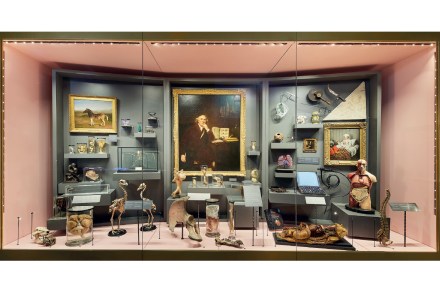
Are surgical museums such as the Hunterian doomed?

I have a soft spot for specimen jars and skeletal remains. Museums of natural history, surgical pioneering or anthropological oddities have always struck me as equally suitable for lunch breaks and first dates as for serious study and research. As far as public and casually accessible encounters with mortality go, these kinds of museums are the most straightforward way of confronting the realities of human nature. But whether we should have this kind of casual access is now increasingly being questioned. Telling history through displays of human remains presents a challenge for curators.

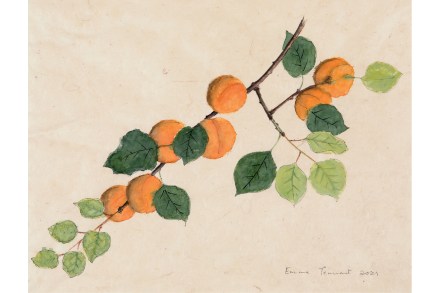
‘I love twigs’: botanical painter Emma Tennant interviewed

Hermitage, where the heel of Roxburghshire kicks into the once-lawless Debatable Lands, seems an unlikely place to find a botanical artist. It’s hard to make anything grow here, let alone an exhibition-load of rare and sometimes exotic plants. Lorded over by Hermitage Castle, a menacing hulk of medieval brutalism described by George MacDonald Fraser as ‘shouting “sod off” in stone’, this is a remote, rarely visited stretch of the border. Once the playground of reivers, and the graveyard of their victims, today it’s a land of sheep farming, forestry plantations and cruel May frosts. But there, hunkered against the wind in the foot of the Hermitage valley, is the studio of Emma Tennant, who has lived, farmed and painted here for more than 50 years.

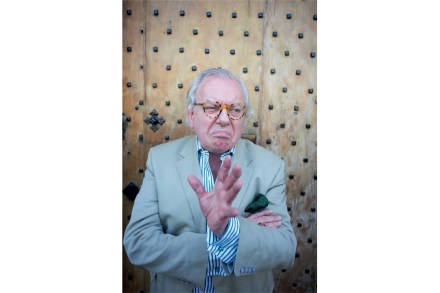
‘I have uncancelled myself’: David Starkey interviewed

David Starkey’s commentary on the Queen’s funeral on GB News was generally agreed to be the best of all the TV coverage, and now he is covering the coronation, and has made a three-part documentary about it for GB News called The Crown. Of course he knows the history, going back to King Edgar’s coronation in 973, but will he also be expected to recognise the guests? Will he have to say: ‘Oh look, there’s Elton John?’ No, he laughs, he leaves all that to his co-presenters. His job will be to explain what the coronation is about, and indeed that is what he proceeds to do when I arrive at his house in Highbury. He talks so seamlessly there seems very little chance of my ever asking any questions.

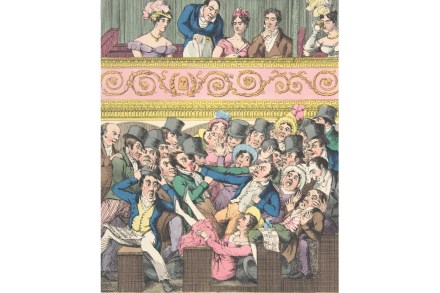
Why do theatres hate their audiences?

War has broken out in theatreland. Managements are increasingly at odds with the audiences who fund their livelihoods. A recent stand-off involved James Norton’s new show, A Little Life, which contains a couple of scenes in which the actor removes his clothes. A punter at a preview in Richmond secretly photographed the moments of nudity and posted the images online. This sparked a furore in the newspapers and the majority of commentators took the producers’ side against the theatre-goers. Dr Kirsty Sedgman, a media studies lecturer, spoke piously to the Independent about ‘an absolute violation of the unwritten contract between audiences and performers’. The Mirror reported that ‘drastic measures’ might be needed to ensure that similar ‘privacy breaches’ don’t occur.

The day I sold my destroyed piano to the Tate

One day in October 1966 I came home from school and found a large man stripped to the waist, attacking the family piano with a woodman’s axe. Seeing the anxious look on my face, my father assured me there was nothing to be afraid of. The axe-wielding man was, he explained, an ‘artist’ who was ‘creating a work of art’. My 11-year-old brain was puzzled: how could this axe-wielding lunatic be an artist? Can you destroy a piano and call it art? These same basic questions came to my mind last week when I went to Tate Britain and found that very piano hanging on a wall after 11 years in the Tate’s storage rooms. The piece – entitled, ‘Duncan Terrace Piano Destruction Concert’ – was by the American destruction artist Raphael Montanez Ortiz.

The puppetry renaissance

Advance ticket sales for My Neighbour Totoro, the Royal Shakespeare Company’s current production running till mid-January, beat all Barbican box-office records. I went on a rainy weekday evening last month, and the place was heaving with Hayao Miyazaki fans of all ages, lots of them clutching furry Totoros they’d bought in the theatre shop.  It’s an impressive, dreamlike production, set in rural Japan after the second world war, and another triumph for the art of puppetry. Totoro himself is huge and cuddly, with an enormous round tummy and inane grin when he bares his teeth. There’s a whole puppeteer inside his pink tongue, as well as three or four more inside his body, which gives you a sense of the scale of him.

Why do British galleries shun the humane, generous art of Ruskin Spear?

Where do you see paintings by Ruskin Spear (1911–90)? In the salerooms mostly, because his work in public collections is rarely on display. Until the National Portrait Gallery closed for redevelopment it was, however, possible to study Spear’s splendid portrait of ‘Citizen James’ (Sid James) peering from a black and white TV screen, and his oil sketch of Harold Wilson wreathed in pipe smoke, the epitome of political cunning. Both were strikingly more convincing than their companion array of anodyne commissioned images. Like his beloved Sickert, Spear painted commissioned portraits but also took to making enigmatic ‘unofficial’ portraits based on press photographs — or, in the case of Sid James, a snap off the telly.

Is Gauguin redeemable? No. Would he have wanted to be redeemed? Absolutely not

‘This is not a book,’ is the first line of Paul Gauguin’s final memoir, Avant et Après, written on Hiva Oa in the Marquesas Islands in 1903 a couple of months before his death aged 54 from syphilitic heart disease. In his dedication to the critic André Fontainas he describes the manuscript as ‘born of solitude and savagery — idle tales of a naughty child who sometimes reflects and is always a lover of the beautiful’. Fontainas failed to find a publisher as Gauguin had hoped, and although a facsimile appeared in 1918 it wasn’t until 1923 that the artist’s eldest son Émile had the memoir published in an English translation.