More from Arts

The grumpy genius of Raymond Briggs

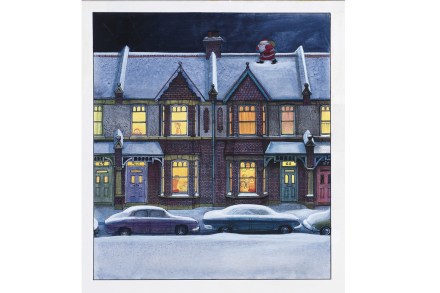
Raymond Briggs has often spoken of his annoyance at being associated with Christmas. His Snowman may fly across our screens each Christmas day, but in the book there is no Father Christmas, no sleigh, and certainly no figgy pud. The North Pole scene featuring the jolly elf was written into the story for John Coates’s TV adaptation in 1982 and struck Briggs as rather mawkish at the time. As readers and viewers of Father Christmas know, Briggs’s Papa Noël is anyway rather a grouch at this time of year. As if the cold isn’t enough for him to contend with, there are the chimneys, the tasteless presents, and, oh yes, ‘blooming Christmas’ itself.

Every page of this astonishingly beautiful ode to the citrus is a treat

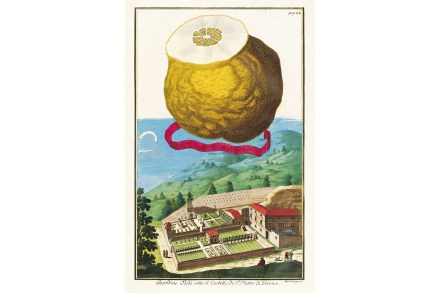
There’s an episode of Yes Minister called ‘Equal Opportunities’. Minister Jim Hacker is under pressure to recruit more women to the civil service. The hunt is on for female mandarins. ‘Ah,’ says principal private secretary Bernard. ‘Sort of… satsumas?’ At this time of year, I can’t help thinking of Bernard as I hover in the Co-op over nets of tangerines, mandarins, clementines, satsumas and ‘easy peelers’, whatever they are. ’Tis the season for citrus. For oranges at the bottom of stockings, for Buck’s Fizz on Christmas morning, for smoked salmon blinis with slices of lemon, for Milanese panettone with candied parings of peel, and for J.C.

What’s an art form that feels unpopular and pointless, but isn’t?

How did the universe begin? Did the great god Bumba vomit us up, as the Kuba believe? Or did we emerge, as the Navajo think, from a cloud of coloured mist? Or do we listen to the ancient Egyptians who thought the curtain opened on a giant cobra slithering across the oceans? Perhaps it starts with a computer screen: Milky Way wallpaper, a folder labelled ‘History_Of_Universe’ and a sharp intake of breath. That’s how one of the great video artworks of the 21st century begins anyway. This summer New York’s Museum of Modern Art uploaded Camille Henrot’s ‘Grosse Fatigue’ (2013) to its YouTube channel. It gives you the birth of the world in 13 minutes. This is a show to bust through those Covid blues. Who needs Pfizer when you have Michael Clark?

Maggi Hambling’s Wollstonecraft statue is hideous but fitting

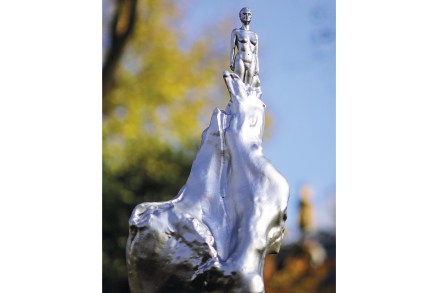
Frankly, it is rather hideous — but also quite wonderful, shimmering against the weak blue of a late November sky. The new statue ‘for’ Mary Wollstonecraft (1759-97), the radical writer, journalist, teacher and novelist, had drawn quite a crowd to Newington Green in north London when I went to see it. They were gathered round it, puzzled and questioning, trying to work out what to think of the tiny figure on top, the garish silvery finish, the heaving bulbous mass below. The memorial, designed by the sculptor Maggi Hambling, has been vilified since its unveiling a few weeks ago by critics who have focused on the nude female figure, bothered by the beautifully styled tits and perhaps perturbed by the very obvious bush of pubic hair.

Why great speeches are made for stage and screen

Curious thing, writer’s block. If you believe it exists. Terry Pratchett didn’t. ‘There’s no such thing,’ he said. ‘It was invented by people in California who couldn’t write.’ He had a point. Writers write, period. But there is a syndrome in my house known as Not Starting Anything New Through Fear Of It Being Not Very Good. Less catchy than ‘writer’s block’, but arguably a more accurate description of the condition. My Covid-induced version of the above involved endlessly ‘honing’ an already completed play about my mother to devastatingly little effect and musing on the oldest creative question of all: is there a formula for writing success, and if so what is it?

The rise of blocked-off design

Plexiglass bubbles hover over diners’ heads in restaurants. Plastic pods, spaced six feet apart, separate weightlifters in gyms. Partitions of all kinds are creeping up in workplaces. As offices, restaurants, bars and businesses reopened after months of lockdowns and closures, a new phenomenon emerged, one that I’ve come to think of as ‘blocked-off design’. It’s design and layout that aims to construct and enforce distancing in a somewhat makeshift way. It’s characterised by partitions, sheer walls, six-foot markers. As a visual language, it’s defined by barriers and blockage — physical reminders that spaces where we once went to mingle with others are now fraught, and that even in public, isolation is necessary.

The death of the Southbank Centre

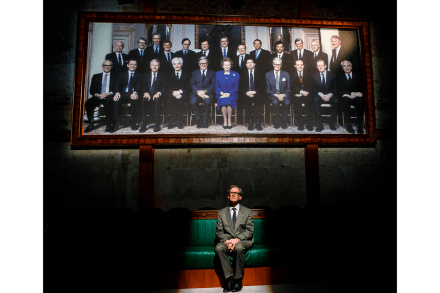
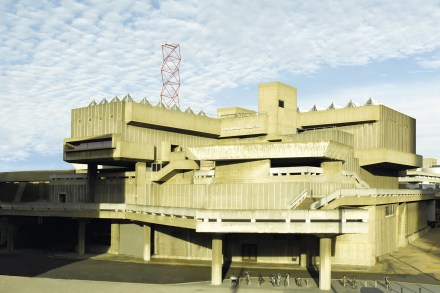
The one thing everyone agrees is that the Southbank Centre is in deep trouble. In May, the institution made an unusually public plea for government help. Management predicted the best-case scenario was ending the financial year with a £5 million loss, having exhausted all reserves, used the £4 million received from the furlough scheme and having gobbled up the remainder of its Arts Council grant. All the while, with the exception of the Hayward Gallery, the 21-acre site on London’s Thameside, incorporating both the Royal Festival Hall and the Queen Elizabeth Hall, remains closed. It was pitiful news, but there was worse to come. With no concerts, performances, talks or readings, drastic staff cuts are in the offing.

Louis Theroux’s podcast reveals a master at work

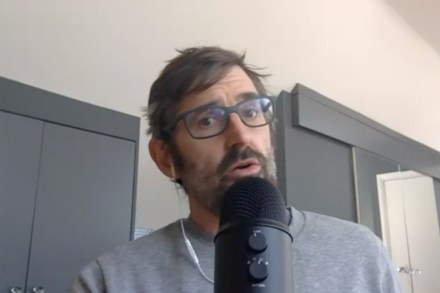
I always want to know more about Louis Theroux, which is odd, since I’ve seen so much of him already. I’ve seen him hanging out with Nazis, auditioning for Broadway and undergoing liposuction. I’ve seen him chased by scientologists and given the runaround by Jimmy Savile. I’ve even seen him evading the insistent romantic advances of an American sex worker. Why am I still interested? Perhaps it’s that his personality veers close to seeming like an act. The otterish earnestness, the jerky, mannequin physicality. The spectacles that feel like a prop. There is something in me that wants to lift the lid on the real Louis Theroux, to sweep the curtain aside with a flourish and say: ‘This is how he gets them to say what he wants!

The best podcasts for all your corona-gardening needs

The American diet was probably at its healthiest in the second world war. Fearing interruption to supply chains, Washington launched a national Victory Gardening programme within a fortnight of Pearl Harbor, and saw two thirds of the population heed the cry to fill their backyards, rooftops and window boxes with veg. The scheme was so successful that, by 1943, home-gardeners were producing 43 per cent of all fresh food consumed. ‘Dig for Victory’, the latest episode of Gastropod, a superbly researched food and science podcast, opens with the co-hosts Cynthia Graber and Nicola Twilley rustling bags of manure as they attempt to plant tomatoes, peppers and ‘urbs’ in a tiny patch of earth in New York.

Why haven’t podcasts cracked the recipe for audio drama?

In Beeb-dominated Britain, the commercial triumph of podcasting — epitomised by Spotify’s recent £100 million deals with Joe Rogan and Kim Kardashian — is held up as proof of the complacency of the radio establishment. Freed from the constraints of box-ticking commissioners, wily podcasters have been able to steal a march on Broadcasting House by giving audiences what they actually want. Or so runs the theory. But I can’t help thinking there’s one large slice of legacy radio territory the podcasters haven’t taken yet. And that’s the good old-fashioned audio drama. Not the most fashionable genre right now admittedly, but an important one nonetheless.

Why is Robert Burton’s masterpiece Anatomy of Melancholy being sold as self-help?

The BBC has been having a good pandemic. Stuck at home, a generation raised on podcasts and YouTube has discovered the comfort of a radio that babbles quietly in the corner. The concerts from the empty Wigmore Hall, streamed live on YouTube once a day, have been the first classical concerts of my life that could honestly be described as cultural events. And in the initial terror of the disease’s spread, everyone reverted to watching the BBC simply to find out what would happen next. Perhaps our vaunted passion for fake news was only a fad of convenience given that, when our lives depended on it, we really listened to Auntie.

Pointless but beautiful – and good for going to sleep to: Monument Valley reviewed

I was going to write about Monument Valley, and I suppose I will eventually, but first I have to write about this total catastrophe that has overwhelmed my life. Online Scrabble has gone! This was the proper Mattel trademark version that I’ve been playing for years with friends and it has suddenly been replaced by some hideous all-singing all-dancing version called Scrabble GO which looks like Candy Crush and — worse — is infested with ads. Not quick flash ads either but interminable videos about, say, a new type of squeegee. Everyone tells me I will get used to it eventually but I’m not sure I want to. Did you ever, as a child, lose your favourite old sucking blanket when some hygiene Nazi put it in the washing machine and it came out in shreds?

From Hogarth to Mardi Gras: the best art podcasts

If you study History of Art, people generally assume you’re a nice, conscientious, plummy-voiced girl. Sometimes, people are right. It is the only subject I can think of that requires a student to describe what is already printed on the exam sheet. ‘In the foreground of the picture is a tree — in full leaf! — and on the horizon, a tower.’ It feels a little basic. But with art history podcasts description is everything. And to do it well is a real art in itself. The presenters of the Art Newspaper’s The Week in Art podcast were superb last week in their exploration of a portrait by William Hogarth.

The art of the incel

Let’s say you have a diagnosis of autism, depression or anxiety. You sleep too much or too little. You masturbate too often. You play computer games and don’t open the curtains. You have no money and you are often profoundly lonely and frequently bored. From this unedifying starting point, can you, let’s say, weightlift your way out of misery? Can you trick yourself into being sociable? Can you ultimately get beyond your fantasy that a woman will save you (she won’t) and learn to live with everyday misery? Alex Lee Moyer’s documentary TFW NO GF, internet-speak for ‘that feel(ing) when no girlfriend’, is the first attempt to make cinema out of incel subculture (and perhaps thereby also signalling its end).

The power of cheap music: pop podcast round-up

Noël Coward was so right that his words have become a cliché: it is indeed extraordinary how potent cheap music can be. Its potency, however, is not innate. Amanda Prynne, from Coward’s Private Lives, would not have been especially struck by ‘Some day I’ll Find You’ had it been playing on a wireless in a shop; its impact came from hearing it as she again encountered her ex-husband. For cheap music to be potent, context is everything. Without a wider meaning, a cheap little pop song is just notes and chords. With meaning, the most throwaway frippery can become an object of fascination. That’s often true of the best known of songs.

Privatisation is the best option for the South Bank Centre

I must have written about this subject 100 times in 30 years and I’m still having to restate the bloody obvious. London’s South Bank Centre, which has just gone bleating to the government for more money, is the biggest subsidy guzzler in the country and the despair of the rest of British arts. The South Bank receives £19 million a year from the Arts Council, on top of the many millions that go to each of the so-called ‘resident ensembles’ that perform within it. What it does with the money is anyone’s guess because, as far as the eye can see and the nostrils can smell, the South Bank is now a fast-food mall with an occasional classical concert buried within it. How did it get so bad?

The problem with mystery podcasts like Wind of Change

Did the US secretly write a power ballad in order to bring down the Soviet Union? That’s the question behind Wind of Change, a serial documentary that has topped the podcast charts. It’s the work of an investigative journalist called Patrick Radden Keefe who claims to have once received a tip-off, from an intelligence contact, that the song ‘Wind of Change’ — recorded by the hair metallers Scorpions — was actually a CIA campaign to encourage anti-Soviet uprisings. Now he wants to prove it. This week’s episode, the fourth of eight, takes Keefe to a collectors’ convention in Ohio in pursuit of an internet user called ‘Lance Sputnik’ who creates customised versions of GI Joe action figures.

The Literary Disco podcast made me want to throw my laptop at the wall

One of the stranger things that happened in the period just before lockdown was the sudden disappearance of audiences from TV and radio shows. Late-night hosts told jokes to silent rooms in front of a white background, dutifully pausing for a laugh that never came; panel shows were broadcast without so much as the sound of tumbleweed. Punchlines flopped, charisma evaporated. It was as if Earth’s comedians had been banished to some purgatorial realm, where they would be forced to tell jokes to no one as a form of penance. Comedy needs an audience. It’s not clear that the same is true of short stories. In Selected Shorts, well-known actors read short stories to a room full of people.

Why do they call it a game? It is servitude: Nintendo Switch’s Animal Crossing reviewed

Welcome to my debut as gaming correspondent, the apex of my journalistic career! And how witty of The Spectator to choose someone who has never played a computer game in her life. But luckily I have some grandchildren to advise me. First decision is what games console I want and the general consensus is Nintendo Switch, which has the advantage of being small and portable and not attached to the television. Then — what game? The experts recommend Animal Crossing because, they say, it is foolproof. (Ha!) So I order a Nintendo, which takes days to come (apparently ‘everyone’ is into gaming during lockdown) and go through the rigmarole of registering. What name do I want to call myself? Well, Lynn has the advantage that I might remember it. And what avatar? Huh?

The author who made a living measuring the legs of lice

Wilhelm Nero Pilate Barbellion, real name Bruce Frederick Cummings, earned his living measuring the legs of lice in the Natural History Museum. ‘To the lay mind how fantastic this must seem!’ he exclaimed in his journal, before enumerating his enthusiasms for Burton’s Anatomy of Melancholy, names like ‘Mr. Hogsflesh’ and ‘Pickle Herring Street’, and Petticoat Lane on Sunday mornings. The young naturalist had a habit of landing himself in embarrassing situations. He once spotted a pretty woman at the theatre and composed a notice for the classifieds in a bid to find her. The editor sent his missive back supposing he was a white-slave trafficker.