More from Arts

Ridiculously fun: Assassin’s Creed – Shadows reviewed

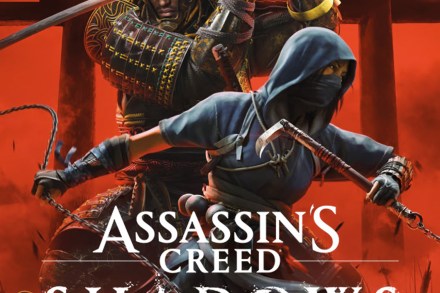
Grade: A Sometimes you want to admire the pluck and inventiveness of an indie developer. At other times, you just want to sink into some thumping AAA franchise that’s thrown all the time, design talent and VC megabucks in the world at the screen. The new Assassin’s Creed has you covered there. Irresistibly, it’s set in a richly detailed and (kinda) historically accurate 16th-century Japan – which means, as all teenage boys will know, ninjas and samurais. Be warned, though: I downloaded the PC version, but the screen appeared to announce that I don’t have an STD so my new game wouldn’t run. Talk about a mixed blessing. Turns out it meant an SSD, or solid-state drive – me neither – and they’re harder to catch than theother thing. The PS5 version worked just fine.

The new Civ is gorgeous and richly rewarding

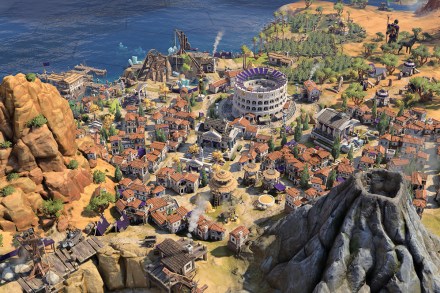
Grade: A- It has been nearly ten years since addicts of the empire-building simulator Civilization – or Civ, as players call it – have had a fresh fix. Was it the original Civ that cost you a first in your finals? It’s back, and this time round it aims to cost you a promotion at work. You’ve both grown up. Prepare to lose very many hours to its attractive blend of diplomacy, resource management, city-building and strategic ultraviolence.  Your path through history comes in three linked chunks: you’ll play through the ancient world, then carry forward some of your progress into the age of exploration, and then do the same again in modernity. What’s more, your leaders no longer have to be historically or geographically appropriate.

The problem of back-story in drama

Olga in Three Sisters, the opening speech: ‘Father died just a year ago, on this very day – the fifth of May, your name-day, Irina.’ Jeeves says somewhere in P.G. Wodehouse that people with monogrammed slippers are afraid of forgetting their names. Irina, the absent-minded sister, probably needed reminding it was her birthday. A useful side-effect is that the audience also knows exactly when and where we are. Tracy Letts’s August: Osage County begins with a frank information offload: Beverly Weston, the patriarch, conveniently explains to the new native-American hire, Johnna, the basic set-up: ‘My wife takes pills and I drink.’ This bald set-up is ‘concealed’ by digressions about Berryman, T.S.

Visual ingenuity and wit: Monument Valley 3 reviewed

Grade: A The original Monument Valley was a handheld puzzle game of beautiful design and high originality. Why it was called that I have no idea: the title suggests a desert landscape of red dust and sand-scoured buttes, but the playspace was a series of architectural arabesques hanging in space, around which the player navigated a mournful little stick princess. It made wonderfully clever use of isometric perspective: knobs and handles allowed you to rotate the playspace and slide structures together or apart. As you fiddled with the architecture, Escher-like perspectival tricks would open fresh paths or surfaces for Ida to walk on. The atmosphere was absorbing and the puzzles were great.

What makes a good title?

Liszt’s compositions tend to have descriptive titles – ‘Wild Chase’; ‘Dreams of Love’ – whereas Chopin avoided titles. Thomas Wentworth Higginson wished titles on Emily Dickinson’s poems, opposed by his fellow editor Mabel Loomis Todd. They didn’t stick. Maybe this is why Dickinson is acclaimed but unread. ‘I heard a Fly buzz’ is easier to remember than 465. We can express this truth by quoting Dickens on the Bible in Little Dorrit: ‘such hiccupping reference as 2 Ep. Thess. C. iii, v. 6 & 7.’ Or by remembering how often we forget our several PINs. For poets, titles can be a resource, a useful press release before the actual poem Titles are important. Titles are useful.

The Natural History Museum’s new Evolution Garden is inspired

The Natural History Museum is one of the most beautiful buildings in London, but its gardens have long been a bit boring – just a pavement on the way in to Alfred Waterhouse’s ornate ‘cathedral to nature’. Most people noticed them solely when the ice rink appeared at Christmas. There was a wildlife garden in one corner that only real enthusiasts (like me) bothered to visit. Where else in London could you walk three billion years along pavements this good? With this enormous overhaul of the site, that’s all changed. The scale of the Evolution Garden, designed by landscape architects J&L Gibbons and architects Feilden Fowles, is enormous, both in size and the period of time it covers.

The latest Dragon Age game is unbearably right-on

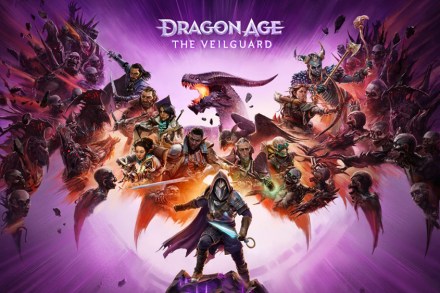
Like all other forms of culture, video games offer a way to escape from, or reflect on, reality through fiction. Unlike almost any other form of culture, they are interactive – you, the player, control the experience. Nowhere is this more true than with immersive role-playing games (RPGs), in which the player embodies a character forced to make moral (or wildly immoral) choices in a fictionalised world, which change the narrative of the game for good or ill. That might sound nerdy (it is), but it’s big business. Baldur’s Gate 3 has comfortably topped $1 billion in global sales, and won numerous industry awards. Baldur’s Gate 3 gives you lots of choices.

Tate’s finances are on the skids and I think I know why

Among the many destructive after-effects of the pandemic, the impact of two years of lockdowns has had serious consequences for public museums and galleries, particularly so for our national museums and galleries. More than two-and-a-half years since the last restrictions were lifted, visitor numbers to many of the big London institutions have yet to return to the levels seen pre-pandemic, according to the latest figures released by the DCMS. Although the British Museum and Natural History Museum have come roaring back, surpassing their 2019/20 figures (the NHM attracting some half a million more visitors alone), the picture varies wildly, mostly between the more ‘scientific’ museums and those whose remit is visual art.

Lovingly designed, touching and immersive: Neva reviewed

Grade: A- There’s a very faint echo of Jeff VanderMeer’s unheimlich Southern Reach Series in the new indie side-scroller Neva. You’re plonked at the start of the game into a pleasant dreamlike landscape of pastel foliage, benign fauna and the gentle twitter of birds. But as you progress you start to encounter something darker – literally. An unexplained corruption is infecting the land. Black patches on the ground send up spooky alien tendrils. Birds fall out of the sky.  Soon you’re guiding the story’s protagonist, Alba – a little-red-riding-hood figure with a darning-needle blade – through a deepening nightmare. Patches of black petals spawn demons whom you must dodge and dispatch with your sword. You’ll find yourself running before a giant black beetle.

Why is Elon Musk so obsessed with Diablo IV?

Grade: A- I usually try to write about new games, but indulge me in addressing Blizzard’s open-world dungeon crawler Diablo IV this week even though it came out last year. Why? Because along with simultaneously trying to save American democracy and make humanity an interplanetary species, Elon Musk’s third preoccupation is Diablo IV. When he’s not tweeting about the first two things, he’s tweeting clips of himself roaring through Diablo’s endgame content, slaying hordes of very high-level demons in timed dungeon runs. He’s good at this, and since it takes getting on for a solid week without eating or sleeping even to reach the endgame, he’s sinking a lot of time into it. ‘Finished faster after masterworking my rod three times,’ he tweets, proudly.

A stone-cold banger: Black Myth – Wukong reviewed

Grade: A Remember the mad 1970s TV series Monkey? Here, excitingly, is the closest you’ll get to it in videogame form. In a pre-credit sequence, you are the Monkey King, Sun Wukong, and you not only fly about on a little cloud but suffer from that headache-inducing circlet on your bonce. The main game is set much later. Sun Wukong is locked in a stone egg and you take command of a monkey warrior – the Destined One – in search of the magic objects which will revive him.   Black Myth: Wukong is the first AAA blockbuster game to come out of China, and it’s what I believe the young people call a stone-cold banger.

Charming and silly: Sam & Max – The Devil’s Playhouse reviewed

Grade: B Readers of a certain age (mine, roughly) may have fond memories of 1993’s Sam & Max Hit the Road – a joyously silly and absorbing two-dimensional point-and-click adventure starring the ‘Freelance Police’: a tubby cartoon Irish wolfhound called Sam and his partner Max, a ‘hyperkinetic rabbity thing’ with a propensity for random violence. It was Itchy & Scratchy meets Raymond Chandler, with puzzles to solve and wisecracks to enjoy. Point-and-click has gone the way of the abacus, but much of the feel of the original franchise is to be found in this remastered version of the final game in the series. As it opens, our heroes are locked in the brig of a spaceship commanded by General Skun-ka’pe, a megalomaniac space-gorilla in quest of the Toys of Power.

Children have the Proms. Grown-ups head to Salzburg. Snob summer

Salzburg Festival doesn’t mess about. The offerings this year include an adaptation of Thomas Mann’s Magic Mountain in Lithuanian, a Soviet-era operatic treatment of Dostoevsky’s The Idiot, and Igor Levit tackling one of the Himalayan peaks of the piano rep. Kiddies, meanwhile, could enjoy the children’s opera Die Kluge (brilliantly done), a Nazi-era allegory on the rise of Hitler by Carl Orff, a composer they love here but whose politics are shall we say, um, complicated. (Pleasingly, I’m not sure the festival understands the concept of cancellation.) People always think Salzburg is pretty and fun. It’s not. It’s dark and primal, with a festival that is far more uncompromising and exhilarating than a global-elite bun-fight in provincial Austria has any right to be.

Can video games be funny?

Grade: B+ Games can be exciting, puzzling, scary, competitive and – occasionally – moving. Can they be funny? Not often. But this lovingly crafted indie cartoon adventure has a creditable bash at it. The protagonist is an oval-headed yellow homunculus in a shirt and tie, as if Family Guy’s Stewie Griffin, Dilbert and a minor Simpsons character had been squished in a particle collider. He is dispatched to the fictional Yorkshire town of Barnsworth by his boss to do... something. But the mayor won’t meet him so he finds himself wandering around the town. ‘Thank goodness you’re here!’ say various townspeople in ee-bah-gum accents, before inviting you to help them out of some absurd pickle. It’s not clear why they’re so pleased to see you.

Completely batty: Vampire Therapist reviewed

Grade: B+ Looter-shooters, match-three games, dragons and spaceships... Sometimes you despair of video games doing the same thing again and again – and then a lone developer gets a severe bump on the head and produces something completely batty.  Vampire Therapist is a comedic adventure-story therapy-simulation starring a vampire, except he’s also a cowboy, and he’s training to be a cognitive behavioural therapist in the backroom of a German nightclub under the tutelage of a 3,000-year-old bisexual vampire who was romantic with Marcus Aurelius back in the day.  Our hero was a bad vamp in the Wild West for many years, you see, but he fell in with the Transcendentalists and learned to ‘walk a better path’. Now he hopes to persuade others to do the same.

I’ve finally shaken my Candy Crush addiction

Most of us, once we pass the age when we wash our own underpants, don’t play games on a PC or a console. We think ‘Twitch’ is what you get when your spouse stacks the dishwasher and ‘Discord’ is what comes next. But you bet we play Candy Crush on the commute. Mobile gaming is still gaming, and it’s a big deal. Problem is, most of it’s crap. This is true even when the games are OK. Take the new Strange Horticulture, which ports a well received PC/console original to mobile. It’s a cartoon-gothic puzzle game (you identify plants apothecary-style; there’s a murder plot; vibes abound) which is dragged from a solid B+ to a glum C by the fiddly interface on an iPhone. Peer angrily at the tiny script; stab clumsily at the screen with your Homer Simpson thumbs; give up.

Gorgeous and deeply absorbing: Manor Lords reviewed

Grade: A ‘God games’, as they used to be called, have a storied history. SimCity, Civilisation and the excellently sadistic Dungeon Keeper have all been responsible for many a PhD thesis being delivered late. The Almighty seems to have smiled on the latest iteration of the genre. The product of a one-man-band independent developer, Greg Styczen, its current pre-release version scored a million downloads on the first day it was available. You can see why. It’s made with such care and love. You take the role of a medieval lord of the manor – choose a surly avatar and a coat of arms – who starts with a handful of peasant families in a tented encampment in a drizzly forest. Zoom down and watch them as they drag timber about with their mangy ox.

Entirely pointless and extremely pleasant: House Flipper 2 reviewed

Grade: B+ Most video games challenge the player’s problem-solving skills, reaction time or hand-eye co-ordination. But a handful of them offer satisfactions of a different sort: the gentlest of difficulty curves and the calming pleasure, instead, of a mildly absorbing repetitive task which whiles away the idle hour in the way you might pass it flicking through a set of worry beads or making a cat’s cradle with a ball of string. The unexpected sleeper hit House Flipper (2018) was one such. It was boring, but in a good way. Its sleeker, prettier sequel has had the wisdom not to depart far from the formula. The premise is that you travel around a breezy seaside town sprucing up properties for profit. You start small.

The joy of jump-scares in gaming

Grade: A- One thing videogames are surprisingly good at is scaring the willies out of you. Claustrophobia, unease, jump-scares, anxious-making camera-angles... Gamers of my generation will not have forgotten the spooky crackle of the Geiger counter in Silent Hill; nor needing fresh trousers after that dog jumps through the window in the first Resident Evil. The granddaddy of them all was Alone in the Dark – which, when it came out in 1992, essentially invented the survival horror genre. It sent you crawling through a spooky old mansion solving puzzles, fretting about your inventory and being jumped by sluggish monsters. Now a lavish and loving reboot stars B+-listers David Harbour and Jodie Comer. The former is grizzled PI Edward Carnby; the latter his employer Emily Hartwood.

Never achieves the flow of the Arkham series: Suicide Squad – Kill the Justice League reviewed

Grade: B- There was much to hope for with this game. Its developer is Rocksteady – the studio which gave us the superb Batman: Arkham series. A lot of money was poured into it, and a lot of time (the release date was much delayed). The premise is a winner, too: the Suicide Squad – Harley Quinn, Deadshot, Captain Boomerang and King Shark (a massive bloke with a shark’s head) – are dispatched to murder the noisome goody-goodies of the Justice League because, y’know, alien invasion, mind control etc, etc. Who wouldn’t be tickled by the prospect of having Harley slap Wonder Woman upside the head with a giant mallet, or – a boy can dream – seeing King Shark stuff the top half of the Flash in his mouth in one go so just his legs are sticking out?