More from Arts

The perfect game for any thwarted sadist

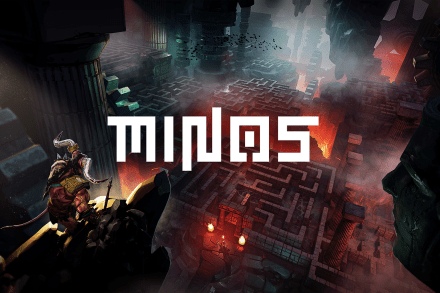
Grade: B+ Some of us lost a lot of our early twenties to a god-game called Dungeon Keeper, in which you built and maintained a dungeon and filled it with tricks, traps and monsters to kill the goody-two-shoes heroes who periodically tried to invade it. Minos is a descendant of that game, and a welcome one. Similar isometric projection, similar vibe, similar moral outlook. You control the minotaur (not very bull-like, is this Asterion, though: more of a faun as imagined by a thirsty anime fan) and, with the help of Daedalus, prepare your labyrinth to see off successive waves of invaders who pour in without so much as a by-your-leave.

The man who rescued the Notre-Dame

The Notre-Dame de Paris has had several close shaves down the years – even before the 2019 fire that nearly obliterated it. The revolutionaries temporarily turned it into a ‘Temple of Reason’, then a grain warehouse; some of it was even sold for scrap. It only became the recognisable Gothic fantasy and French national icon that we know today largely down to the efforts of architect Eugène-Emmanuel Viollet-le-Duc, who headed its definitive restoration from 1844 to 1864. Following the cathedral’s 2024 rebirth, Bard Graduate Center is now hosting the most comprehensive exhibition in the Anglosphere of the architect’s work. Viollet-le-Duc kept superhuman working hours: 6 a.m. to midnight.

Glorious: Resident Evil – Requiem reviewed

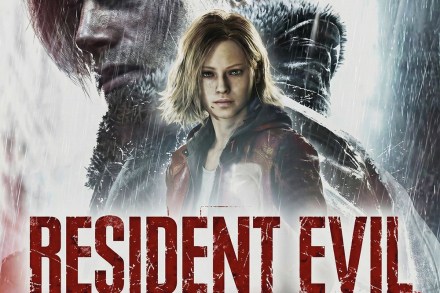
Grade: A Lordy. The Resident Evil survival horror series is three decades old. It probably qualifies by now as Sitting Tenant Evil. Picture it snacking on flies in just the sort of dingy, hasn’t-been-tidied-for-30-years rent-controlled apartment that would make a good setting for a scene in the game. We’re still waiting for the instalment in which the Umbrella Corporation – a biotech firm that makes Purdue Pharma look like a model of caution and probity – faces a class-action lawsuit (X button to file an amicus brief; circle button to object in cross-examination), so for now here’s more of the glorious same. After all these years, it’s still capable of being ace.

Will the Houses of Parliament burn down?

What does £450 million get you these days? With that cash, you could buy a Premier League football club. Or fund 10,000 nurses for a year. If you’re feeling civic-minded, why not give everyone in the UK a fiver and have a chunk of change left over? In the case of the Parliamentary Restoration and Renewal (R&R) programme – the plans to rebuild and repair the Palace of Westminster – the best part of £500 million has been spent on, well, it’s quite hard to tell. MPs and peers have batted ideas back and forth about how to fix their grade I-listed, Unesco World Heritage workplace for more than two decades. ‘We’re sleepwalking into a Notre-Dame-style inferno’ Meanwhile, parliament crumbles.

Entirely absorbing – and wonderfully tense: Cairn reviewed

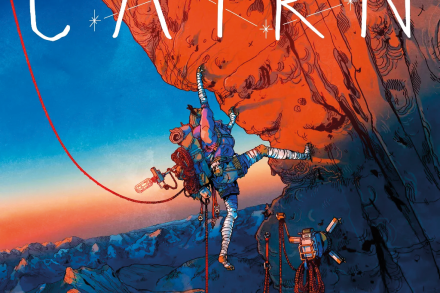
Grade: A– A cairn, as readers will know, is a pile of stones often placed to mark a grave. Yikes. Not the most encouraging title to give to a videogame about someone trying to climb a mountain. Aava is a dedicated rock-climber determined to make the first solo ascent of Mount Kami, despite the countless lives it has already claimed. Equipped with chalk, rope, pitons, climbing tape and a limited supply of snacks and bottled water, not to mention a friendly robot that follows you around picking up your pitons and screening your calls, off you set. The heart of the game – though the story contains surprising emotional and thematic depth – is the climbing simulation. You position Aava’s limbs one by one, reading the rock-face to find holds and cracks that will take your weight.

John Mulaney at his best is unstoppable

John Mulaney appeared to be just another of those identical, slick, clean-cut, young comedians in suits until Covid. But all was not well. In December 2020, a bunch of his showbiz pals staged an intervention and sent him to rehab for his addictions to cocaine and various prescription drugs. Out of rehab, he promptly parted from his wife, the artist Annamarie Tendler, and met the actress Olivia Munn. As he noted in Mister Whatever, his latest show, when their son was born, he and Munn had known each other for ‘nine months and 45 minutes’. They are now married.

The demise of London’s junk shops

‘The place through which he made his way at leisure was one of those receptacles for old and curious things which seem to crouch in odd corners of this town and to hide their musty treasures from the public eye in jealousy and distrust.’ In Dickens’s The Old Curiosity Shop, Nell Trent’s grandfather loses his precious shop to the malicious money-lender Quilp. London’s junk shops have, it seems, always been under some form of threat. But the forces against them today appear unstoppable. The junk shop is increasingly the sole preserve of the city’s ‘odd corners’ – pushed out by hiked rents, the charity-shop boom with its variety of cost dispensations, and the popularity of eBay and Vinted.

The depressed duck detective is back

Grade: B– It’s a duck, except he’s a detective. Or a detective, except he’s a duck. Anyway he wears a fedora, seems depressed, quacks wise, and eats too much bread – so we can leave the rest to the philosophers. In this sequel to Duck Detective: The Secret Salami (who knew the world needed two such games?) this pleasingly drawn cartoon hero navigates a series of locations solving puzzles. Reminded me a lot of the 1990s. Fancy the funny-animal thing still going strong all these years after Adolescent Radioactive Black Belt Hamsters I was about to write, but then I remembered Aesop. Likewise old-school point-and-click adventures, though now they’re swipe-and-tap adventures, so that’s progress of a sort. Anyway, it’s set on a campsite, or glampsite if you will.

Why I love blowing up worms

Grade: B+ War, as we all know, is hell. But if it involves small squeaky annelids blowing each-other up with bazookas, it is also hella fun. And so to the newest installment in the long-running turn-based strategy series Worms. Can it be a coincidence that Worms Across Worlds arrives on Apple Arcade just in time for the release of Philip Pullman’s final His Dark Materials book? Yes, it absolutely can. Nevertheless the latest Worms, like Pullman’s work, is set in a multiverse in which intrepid heroes travel through portals between worlds. The world of Worms, like the world of His Dark Materials, mingles science and experimental theology: you can see off rival worms with a nuclear strike or a holy hand grenade.

What a joy to welcome back the Metal Gear series

Grade: A As gamers of my generation who grew up on the Metal Gear series will know, its creator Hideo Kojima is a got-dang genius. The attention to detail and love and inventiveness he gave to 1998’s Metal Gear Solid and its sequels was second to none. There were quirks (smoking was good for you); there was devilment (to beat the Mantis fight you had to use the other controller); and there were silly names (Revolver Ocelot, anyone?). So it’s with great joy that – amid a rash of rereleases and remasters and reboots aimed squarely at nostalgic middle-aged gamers – we see this, a new-generation redo of the third game in the series.

A gallery that refuses to dumb-down

The DNA of Dulwich Picture Gallery is aspirational, in the sincerest sense. Opening in 1817 when private collections were still the norm, it’s the world’s first purpose-built public art gallery. (It’s also a credible contender for inspiring the design of the red telephone box.) After a significant reworking, and the addition of a new children’s space and sculpture garden, the Gallery is again hoping to redefine what it means to make art accessible. The Grade II*-listed building was Sir John Soane’s utterly original embodiment of the dying wish of the founders: for their collection of old masters to ‘go down to Posterity for the benefit of the Public’.

The decline of Edinburgh International Festival

Edinburgh International Festival was established to champion the civilising power of European high culture in a spirit of postwar healing. But its lustre and mission have now been largely eclipsed by the viral spread of its anarchic bastard offspring, the Fringe. In competition with the latter’s potty-mouthed stand-ups and numberless student hopefuls, the dignified old Festival proper struggles to make much mark on the hordes who descend on the city in August, inflating prices and infuriating the residents. Perhaps the kids will love it, but if this is the future of ballet, then count me out Nicola Benedetti, a splendid woman and a wonderful violinist, is now in her third year directing this beleaguered institution.

Pacy, fast-moving and graphically lavish: Tony Hawk’s Pro Skater 3 + 4 reviewed

Grade: B+ Tony Hawk is an old guy these days. The most famous sk8r boi ever to have lived is now 57. A sk8r geezer, if you will; and the video games celebrating his glory days are of an age too. Gamer-geezers who remember losing hours to the original Tony Hawk’s Pro Skater games will welcome this pacy, fast-moving, graphically lavish remake. The Sex Pistols and Run-DMC and suchlike blare in your ears as you guide your skater around any number of wildernesses of kneecap-imperilling concrete. (Gen-Z players will probably be mystified by the floating VHS tapes that you need to pick up as you skate.) You can do ollies and kickflips and medusas and acid drops, grinds and spine transfers and skitches, and manuals and reverts and wallplants.

The Alfred Hitchcock of British painting

Carel Weight, the inimitable painter of London life and landscape, was my godfather. I remember a clownish-faced elderly man with an air of mild quizzical enquiry, who for 16 years held one of the most important teaching jobs in Britain. In charge of painting at the Royal College of Art when David Hockney passed through, Weight taught the ‘Pop People’ (as he called them) – Peter Blake, Patrick Caulfield and R.B. Kitaj – as well as Bridget Riley, Leon Kossoff, John Bellany and the singer-songwriter Ian Dury. Weight himself never received the critical recognition he deserved. He was overshadowed to a degree by abstract expressionism, which crash-landed from the US in the 1950s. His day may yet come.

What we get wrong about modernism

In The Art of the Novel, Milan Kundera writes, witheringly: ‘we must reckon with the modernism of fixed rules, the modernism of the university – establishment modernism, so to speak.’ He is addressing the novels of Hermann Broch, which, he argues, don’t fit the standardised mould. ‘This establishment modernism, for instance, insists on the destruction of the novelform. In Broch’s perspective, the possibilities of the novel form are far from being exhausted. Establishment modernism would have the novel do away with the artifice of character, which it claims is finally nothing but a mask pointlessly hiding the author’s face. In Broch’s characters, the author’s self is undetectable.

Truly awful: Roblox’s Grow a Garden reviewed

Grade: D– There’s some scholarly research to be done, I fancy, on the strange psychological appeal of boringness in videogames. These gaudy things could be non-stop excitement, and yet many of the most successful are mega boring. ‘Grinding’ – repetitive tasks undertaken for incremental rewards – is a matter of pride and pleasure for serious gamers; and some games – I’m looking at you, interior-decorating Sims – really do offer a digital equivalent to watching paint dry.   Remember FarmVille, for instance? Here was a truly mind-numbing Facebook game where you managed a virtual plot of land and grew corn and tomatoes and whatnot, traded them for imaginary currency, bought seed to grow more crops, and so ad infinitum.

Ridiculously enjoyable: Doom – The Dark Ages reviewed

Grade: A In the beginning, there was Doom. The videogame landscape was formless and void. But id Software created a square-headed space marine and several billion two-dimensional demons for him to kill with a shotgun, a chainsaw and a BFG (Big Fracking Gun); and several billion teenage boys saw that it was good, and they called it the First-Person Shooter, and lo, they gave up leaving their bedrooms altogether. The original Doom (1993) really was the genesis of a genre: dark, intense, relentless, addictive. The latest iteration of the game – which plunks our space marine and his demon hordes in a medieval world rather than a space station – stays true to its vibe, while using all the processing grunt available in next-gen consoles to tune that vibe up.

Imagine Dua Lipa releasing an album of Victorian parlour ballads

Grade: B+ This is unexpected. A bright young cellist – one of the brightest, in fact – makes his recorded debut with a collection of opera fantasies. In the 19th century, touring virtuosos routinely ransacked hit operas for melodies, then decked them out with every conceivable bit of flummery, dazzlement and top-end-tinsel, the better to excite their fans. They were wildly popular. The young Wagner spent a miserable few months in Paris compiling opera fantasies for cash in hand. The process basically radicalised him. Nowadays, there’s no less fashionable genre, and for the excellent 26-year-old American cellist Zlatomir Fung to record a whole disc of the silly things – well, it’s as if Dua Lipa had suddenly released an album of Victorian parlour ballads.

Kingsley goes to the toilet

In 1978, I gave a poetry reading at Hull University. Philip Larkin was glumly, politely, in attendance. I was duly appreciative, knowing what it must have cost him. He was deaf as well as disaffected. Perhaps the deafness helped. The next day, we had a lunchtime drink at the University bar. We talked about Kingsley’s recently published Jake’s Thing, a fictionalised account of Kingsley’s sexual relations with Jane Howard. Larkin was puzzled: ‘It’s determinedly foul-mouthed, which I like, but there is a central implausibility. Jake can do it, but he doesn’t want to.’ An innuendo? A suggestion that Jake, and by implication Kingsley, couldn’t? He sipped something improbable like a Dubonnet. A year previously, Kingsley had taken me to lunch in Wheeler’s.

Winning little narrative adventure: South of Midnight reviewed

Grade: A– For this winning little narrative adventure we are in the South – all gris-gris gumbo yaya, decaying mansions and ghosts of the underground railway – and it is a bit midnighty, what with the sinister otherworldly beings you fight.  Our protagonist is sassy, cornrowed Hazel, a mixed-race Lara Croft, who sets out to rescue her social-worker mother after her mobile home is swept downriver in a hurricane. Her snooty grandma Bunny, rotting in her vast plantation house, is no help whatever. But Hazel does manage to half-inch some magic hooks from granny’s ottoman, which allow her to manipulate glowing magic strands in the air and use them to unravel ‘haints’, the ropey-looking demon-things that pop up from time to time to attack her.