Lead book review

Why does Max Hastings have such a hatred for the British military?

One of the great problems for any historian writing of 1914 and the slide into conflict is that everyone knows the causes of the first world war and those of us who don’t still imagine that we do. It is clear that no historian can simply ignore the causes and get straight down to the fighting, but with the best will in the world it is hard not to feel like some poor Easyjet passenger, stranded on a Gatwick runway and sadly watching the precious take-off slot slipping further into the distance while the cabin crew go though the familiar old pre-flight safety instructions that they know perfectly well nobody is listening to.

Danubia, by Simon Winder – review

Why do we know so little about the Habsburg empire, given that it is the prime formative influence on modern Europe? Its pomp gave us the art, music, literature and pageantry of our high culture; its relationship with the Ottoman East and burgeoning European protestantism drew our religious and our political maps; its collapse fomented the nationalisms that shaped the 20th century across Europe. A popular abbreviation on the internet is ‘tl; dr’. It stands for ‘too long; didn’t read.’ There’s space for another one that would come in especially helpful for the Habsburg empire: ‘tc; du’ — ‘too complicated; didn’t understand’.

The Rocks Don’t Lie, by David R. Montgomery – review

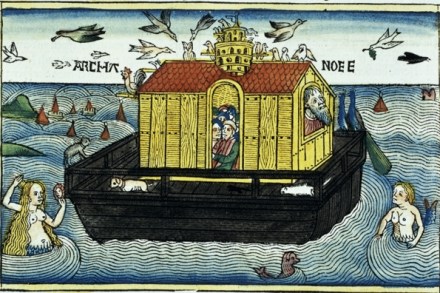
This is a book about the clash of faith and reason over the truth or otherwise of a catastrophic, world-shaping flood — and it doesn’t once mention climate change. The debate here is much less stale. David Montgomery is a prize-winning geology professor at the University of Washington, Seattle, and he recounts the history of his discipline from Aristotle to plate tectonics, showing how geological thinking has always been shaped by the great narrative of Noah’s flood. It is a grand tale, and told with verve and excitement. Montgomery also entertainingly surveys the archaeological and literary evidence for ancient Middle Eastern floods — each of which has been acclaimed, in turn, as ‘Noah’s’.

Models of impropriety

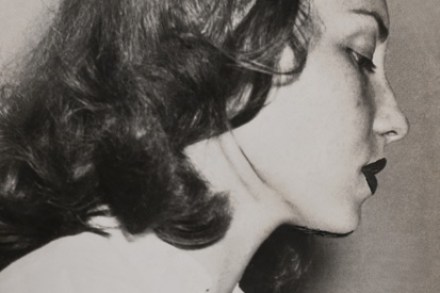
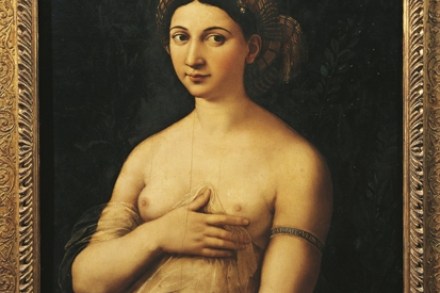
Once upon a time, there was an art scholar called John. He spent his days admiring marble statues, his nights in praying that he might be allowed a real-life statue as his wife. And in due course, he met a beautiful girl. She was a bit younger than him, but that was OK, because it meant she would be easier to control. Her name was Good Reputation, which seemed promising too. But on the wedding night, John got a nasty shock. For on lifting her trousseau, he found that, unlike the statues in the museums, Good Reputation had pubic hair. He was aghast. Unable to consummate the marriage, he channelled all his energies into his writing. This proved a mistake, for along came an artist who wasn’t so fussy, and John was left all on his own.

The Huguenots, by Geoffrey Treasure – review

France’s early 21st-century Protestants are eco-friendly, gender-sensitised and respectful of the Fifth Republic’s laïcité. But their ancestors were a less accommodating lot. La réforme in the France of the 16th century was well-educated, predominantly urban and organised as part of a pan-European Protestant movement which set out to subvert the territorial sovereignty of Catholic princes. Its leaders included some of the French aristocracy’s boldest spirits, whose dynastic ambitions to exercise an earthly dominion blended easily with the dogmatic confidence of Protestantism at its most driven and alluring.

The Selected Letters of Willa Cather, edited by Andrew Jewell – review

Willa Cather is an American novelist without name-recognition in Europe, yet she had a wider range of subject and deeper penetration of character than other compatriot novelist of her century. Hemingway, Fitzgerald, Faulkner, Bellow and Roth vie with, but never beat, her emotional force and the beauty of her prose. The great obstacle is that she is a woman, with a name that sounds silly. She knew more about survival in extreme conditions than other novelists, she wrote in 1913, ‘but I could never make anybody believe it, because I wear skirts and don’t shave’. As a young woman, Cather feasted on Virgil and Shakespeare — and it shows. In O Pioneers!

Tudor, by Leanda de Lisle – review

As parvenus, the Tudors were unsurpassed. In the early 15th century no one would have predicted that within a couple of generations these minor Welsh land-owners would mount the English throne and rule the kingdom for more than 100 years. Notwithstanding their ‘vile and barbarous’ origins, their name would become synonymous with historical glamour and the ruthless exercise of regal power. The family started their precipitous ascent when young Owen Tudor was taken to England by his father and secured himself a position as a chamber servant to Henry V’s widow, Catherine de Valois. Having opportunely tripped and fallen into her lap while dancing, he secretly married her and had four children.

Glorious Misadventures, by Owen Mathews – review

So: Russia’s imperial possessions on the Pacific North West of America. Remember those? No. Me neither. Something vague about the Russians flogging a bit of Alaska to the United States in the middle of the 19th century perhaps. But until I’d read this book I didn’t know that at one point Continental Russian America, not counting the Aleutian Islands, stretched 1,400 miles from its Eastern Tip (today called Cape Prince of Wales, by little Diomede Island in the Bering Strait) to its southwestern boundary near Sitka. If laid on top of the Continental United States, the territory — which closely corresponds to the modern state of Alaska — would stretch from California to Florida.

Edwardian Opulence, edited by Angus Trumble – review

She sits there on the cover exuding sex and wealth and a certain knowingness. Mrs Lionel Phillips, who came from a modest background in South Africa, had the good sense to marry one of the ‘Rand Lords’ who made their piles in the new gold and diamond fields. She and her husband bought their way into society in Britain, accumulating houses and furniture and having themselves painted, as in this wonderful portrait, by the fashionable Giovanni Boldini. That of Mr Phillips is more subdued, even sombre.   The face, said the Athenaeum, ‘is amazing in its unscrupulous vulgarity’. Well, one might think, the anonymous critic could have taken a look around him.

Churchill and Empire, by Lawrence James – a review

A fraught subject, this, and one which makes it difficult to sustain undiluted admiration for Churchill. Lawrence James is the doyen of empire historians, and has traced the great man’s engagement with the enormous fact of the British empire. What emerges is a sense of the individual nations being dealt with at the end of the day, when everything that really mattered had already been handled, and being subject to a series of trivial dismissals, outbursts of comic rage, and with little effort made to understand what might be an appropriate way to govern these immense territories. I am sorry to place a limit on anyone’s admiration for Churchill, but there it is.

Disraeli, by Douglas Hurd; The Great Rivalry, by Dick Leonard – review

‘Who the hell is Disraeli?’ This, as a gleeful footnote in Douglas Hurd and Edward Young’s new book reminds us, was the response of John Prescott when asked on television what he made of Ed Miliband’s speech last year extolling the virtues of Dizzy’s world-view. Actually — as their book goes on to make clear — Prescott asked the right question. Who the hell was Disraeli? He certainly wasn’t anything close to what posterity — in search of a Tory Great Man — has made of him. Not only, they tell us in this vigorously debunking romp through his political life, did he never use the phrases ‘One Nation’ or ‘Tory Democracy’, he was actively hostile to the concepts that they are now understood to represent.

Music & Monarchy, by David Starkey – review

British royalty, considered from a purely mechanistic angle, cannot function adequately without music. Deprived of marching bands, trumpeters and choristers or even of those ever so well-mannered regimental ensembles which dispense selections from favourite musicals at an investiture or a garden party, the royal performance would lose much of its authenticity. Playing the king in this country has always depended on being able to do the whole shtick to the right tunes. If, from time to time, a genuinely gifted or truly inspired composer should become available, so much the better. Dash and panache for parties and parades, decorous gloom for funerals and the occasional wedding anthem or victory Te Deum sound more like the real thing when knocked off by a Purcell, a Handel or an Elgar.

Summer reading

Mary Killen Gone Girl by the American writer Gillian Flynn comes recommended by both high- and middle-brow readers (Orion, £7.99). I want the reported total absorption from the off and the welcome relief from thinking about anything other than what’s on the next page. The Blue Riband, Peter York’s anecdotal history of the Piccadilly Line (Penguin, £4.99) is ideal for lounger life as almost every sentence is interesting, stylish and witty, and you can read it aloud at random to pool mates too lazy to hold a book up themselves. Gerard Manley Hopkins’s Poems and Prose (Everyman’s Library Pocket Poets, £9.99). Just focus on learning by heart, say, three poems per holiday.

The Men Who Lost America, by Andrew O’Shaughnessy – review

On Christmas Day 1776, the ambitious, well-connected war hero, General John Burgoyne, soon to be appointed commander of British forces in Canada, agreed a wager of 50 guineas with Charles James Fox ‘that he will be home victorious from America by Christmas Day 1777.’ Nine weeks short of that date, on 17 October, Burgoyne surrendered his sword and an army of more than 8,000 men, together with 50 cannon and vast quantities of muskets and gunpowder, to an American general, Horatio Gates, after defeat and encirclement at the battle of Saratoga in upstate New York. No bet was ever more comprehensively lost. The victory at Saratoga, won by citizen-soldiers over professional troops,  played a vital role in the dramatic events that led to the birth of the United States.

China’s War with Japan, by Rana Mitter – review

The Sino-Japanese struggle that began in 1937, two years before the rest of the world plunged into war, is not as unknown as Rana Mitter, a professor of Chinese history and politics at Oxford, contends in this comprehensive new book. His copious notes, after all, display how well that conflict has been studied by many scholars. But in the sense that few Westerners under the age of 80 can string more than two sentences together about those terrible eight years, he is right. It is a big story, and for the most part Mitter tells it well. The scene — China — is vast. Two competing leaders, Chiang Kai-shek and Mao Zedong, dominate it.

The birth of modern Britain

‘Does history repeat itself, the first time as tragedy, the second time as farce?’ asked Julian Barnes in A History of the World in 10½ Chapters. ‘No, that’s too grand, too considered a process. History just burps, and we taste again that raw-onion sandwich it swallowed centuries ago.’ Reading David Kynaston’s densely detailed new book — in a ‘projected sequence of books about Britain between 1945 and 1979’ with the slightly magniloquent general title of Tales of a New Jerusalem — there isn’t half a whiff of onions.

How do you define a ‘northerner’?

Obviously, now that every high street in England looks identical, and everyone under 30 uses exactly the same Australian rising inflection in speech, books of this sort are based on a false and wishful premise. But let us enter into Paul Morley’s game and ask the question he has asked again. What is ‘the north’ — or ‘the North’ — anyway? Obviously, as a geographical entity, we know (roughly) what we are talking about; we can argue about Derbyshire, but between Yorkshire and Scotland no one is going to dispute what the north is. Culturally, we may think we know what we are talking about, but all attempts to pin this down founder on the rocks of narrowness and outdated stereotype.

Byron’s War, by Roderick Beaton – review

On 16 July 1823 a round-bottomed, bluff-bowed, dull-sailing collier-built tub of 120 tons called the Hercules made its slow, log-like way out of the port of Genoa. Roderick Beaton writes: Aboard were a British peer, who happened to be one of the most famous writers of the day, a Cornish adventurer, an Italian count, a Greek count, a doctor and a secretary (both Italian), half a dozen servants of several nationalities, five horses, two dogs and a prodigious amount of money in silver coin and bills of exchange. The Hercules was not the most glamorous vessel to carry Lord Byron towards Greece and immortality, nor was the ship’s company the most bellicose to have sailed to a ‘seat of war’, but then little about Byron’s last days has ever corresponded with legend.

Feral, by Geoge Monbiot – review

One of the greatest difficulties environmental activists have always had in the war for hearts ’n’ minds is that they so often seem priggish and negative. Everyone knows what they are against (central heating, fun, cod and chips, James Delingpole etc). Fewer people know what they are for. Here, therefore, is George Monbiot’s attempt — shot through — no, positively ravished — with personal feeling — to tell us. He offers, he says, a set of ideas ‘not about abandoning civilisation but about enhancing it [...] to “love not man the less, but Nature more”.

“The right hero” – Douglas Murray reviews Jesse Norman’s Burke biography.

Edmund Burke is one of the most difficult thinkers to write about. His philosophy defies easy summary. His career, while noble, was not glittering. Many details that he exhausted himself over — such as the impeachment of Warren Hastings — were arcana before he was dead. And hardest of all is that Burke’s prose style is among the best in the language. Writing about Burke’s prose is like singing about Maria Callas’s voice. On each re-acquaintance with it you wonder why you don’t read Burke all the time. There was hardly a subject he tackled which he did not master, and not a register that he did not perfect. In A Letter to a Noble Lord he writes of one detractor: The Duke of Bedford is the Leviathan among all the creatures of the Crown.