Lead book review

Doctor in distress | 12 December 2012

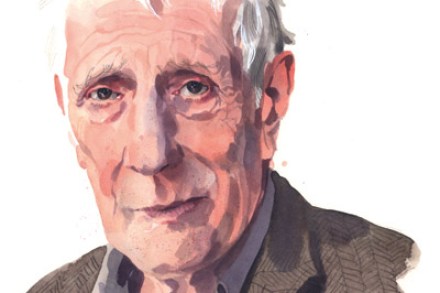
The passing of Jonathan Miller’s father Emanuel Miller — a very distinguished psychiatrist — was terrible. ‘His last words, as he reared up on his deathbed, were: “I’m a flop! I’m a flop!” ’ One should be cautious about being Freudian here — Emanuel might approve; his son wouldn’t; his son’s biographer might, slightly — but that is a hell of a sentiment to inherit. As theatre and opera director, author of learned papers in medicine and neuropsychology, TV presenter and public intellectual, quotable crosspatch and lightning-rod for English anti-intellectualism, Jonathan Miller looks like someone for whom not being a flop consumes a lot of anxiety. He came out of the traps as not-a-flop with some energy.

Boxed and stalled

What does fashion look like? When intellectual or artistic vogues change, how do we know when they have happened? The most popular men’s trousers in the UK at the moment are probably ones in a sort of indeterminate beige colour, if you go by the number of people wearing them. But I don’t think that’s fashion. The most read novel of 2012 is Fifty Shades of Grey. But nobody would regard that as an exemplar of the novelist’s art, or think of it as trendy in any way. The link between popularity — or ubiquity — and importance is a complicated one. Here, in an ingenuous way, is an object for a case study. Opera is not ‘popular’ in any sense at all. Almost nobody is interested in it, apart from you and me.

A deeply stricken country

When, many years ago, I finished reading Cecil Woodham-Smith’s fine and tragic The Great Hunger, I swore never to read another book about the Irish famine of 1845-9. But they continue to be published, and they do not always agree. Tim Pat Coogan’s The Famine Plot: England’s Role in Ireland’s Greatest Tragedy, whose title says everything about the book, claims that ‘fully a quarter’ of Ireland’s population died of starvation or emigrated. John Kelly’s The Graves Are Walking puts the proportion at one third. There is a huge difference between one third and one quarter. Which is correct? There is also much emotion.

Books of the year | 22 November 2012

Byron Rogers When TV presenters write history books it is the mistakes you treasure most, as when David Dimbleby blithely pronounced that Augustine had introduced Christianity to Britain (Christianity being over 200 years old in Britain, with Welsh bishops, before Augustine came). But Andrew Marr’s A History of the World (Macmillan, £25) is different. It is a distinguished work of history in its own right. The TV series wasn’t up to much, but the book is wonderful, and better than H.G. Wells’s The Outline of History. It made me wonder what else is deliberately hidden away to advance the careers of those prattling public faces that appear on our screens. All we need now is Simon Cowell’s concordance to the Gododdin.

Books of the year

A.N.Wilson Sidney Chambers and the Shadow of Death by James Runcie (Bloomsbury, £14.99). At last, an Anglican Father Brown. Runcie has sensibly set his detective stories in the 1950s, before the boring era when DNA and science spoilt the poetry of crime investigation. Canon Chambers, a self-effacing, clever clergyman with a taste for pubs and shove-halfpenny, and an agonised capacity to fall in love with women, is surely a bit as Archbishop Runcie must have been when he came out of the Guards and took orders?  Each tale is beautifully crafted and surprising. I hope for many more volumes.

Nostalgic nationalist piety

Parish churches are the sentinels of England’s past. They soar over every town and village, pinning it to the nation’s soil. The nave may be empty, the graveyard unkempt and the roll-call of the faithful soon to cede primacy to the mosque. But the Church of England guards our rituals and speaks for our communities. The English still want their local spokesmen to be vicars not mayors. Roger Scruton should have been a bishop. He would have gone to the top, and spared Anglicans their present agony over whom to send to Canterbury. Archbishop Scruton would have gathered up the church’s shattered canticles, creeds and conflicts and marched them to death or glory with learning and charm. This book is an elegant manifesto. It should have been a job application.

A family at war

The Quest for Corvo started something rather peculiar in biography. A.J.A. Symons’s 1934 classic — described as ‘an experiment’ — set out the biographer’s search for his subject, and not just the results. This was justified in the case of an elusive and unusual figure like the ‘Baron’ Corvo. Nowadays, many biographies are written like this, and we have to hear about the author tramping from archive to library to study. Can it really be justified in the case of a 20th-century duke, whose papers are in the order in which he left them?

Ace of bureaucrats

Thomas Stamford Raffles (1781-1826) is a man whose name is now better known than his doings. Its syllables conjure a world-famous hotel, a prep-school, the former business class brand of Singapore airlines, a shonky packet of fags, E. W. Hornung’s Raffles the Gentleman Thief, and Viz comic’s Raffles the Gentleman Thug. He also gave his name to a tropical flower that has the largest bloom on earth, and which gives off ‘precisely the smell of tainted beef’. Most of us will have had the vague sense that he founded modern Singapore (we’re half right about that), and a still vaguer sense that his was a life of glamour, buckle and swash. About that, we are a bit less than half right.

The sage of Aix

Like Mont St-Victoire itself, looming over the country to the north of Aix-en-Provence — seen unexpectedly, then just as suddenly hidden, now clear-cut against the sky, at other times a presence in the corner of the eye— the work of Paul Cézanne has been a landmark in the art of the century and more since his death in Aix in 1906. Unlike Monet, Matisse or Picasso, his influence in his own lifetime was restricted to a small circle of admirers — mostly in the last decade of his life. It is an unusual occurrence for so crucial a figure in the history of painting to have gained a reputation that was almost entirely posthumous.

Love letters to foreign lands

Xenophilia is as English as Stilton. Despite a reputation for insularity, no other nation has produced so many writers who have  immersed themselves in other countries. From Borrow to Lawrence, Byron to Auden, the list is impressive. In one of the wonderful letters quoted in this perceptive, haunting and highly readable biography, Patrick Leigh Fermor called living in England ‘like living in the heart of a lettuce. I pine for hot stones and thorns and olive trees and prickly pears.’ In the opinion of his biographer Artemis Cooper he had an ‘entirely European sensibility’. In the house he built in the mountains of Mani in the Peloponnese, between olive groves and the sea, however, he sometimes missed London.

Blackmail, bribery and bullying

You can always tease Hungarians if you say that they have more Nobel Prize-winners than the Japanese, and that that really remarkable statistic is the abnormally high percentage of non-Jews among them, namely 17½. In 1900 Jews made up about 25 per cent of the Budapest population, and once abroad they hit the world with great force, whether in Hollywood or in nuclear physics (the memoirs of Arthur Koestler are a testimony to their drive and adaptability, as well as to their sense of humour). There is a black story involved, just the same: their role in the Communist takeover between 1945 and 1948. Anne Applebaum does not evade this question, nasty as it is: the four leading figures were Jews, chief among them, Mátyás Rákosi.

Smackhead cows in the backyard

Krystal had never shot up before … but she knew how to heat the spoon, and about the tiny little ball of cotton wool you used to soak up the dissolved smack, and act as a filter when you were filling the syringe. She knew that the crook of the arm was the best place to find a vein, and she knew to lay the needle as flat as possible against the skin. Yes, J.K.Rowling is back — though I have to admit, I don’t myself recall passages like this in the Harry Potter sequence, nor all the f***s and c***s or detailed descriptions of a teenage boy’s enthusiasm for porn. It seems unlikely they appeared in the 300-odd pages of Harry Potter and the Half-Blood Prince that were left when I finally abandoned it, unable to put up with it any longer.

The authorised version

The first volume of Peter Ackroyd’s six-volume history of England took us from prehistory to the death of Henry VII. Now the great charabanc rattles on. Here is a fat book of old-fashioned, great-man history taking in the second of the Harries twain, Ned the Lad, Mary and Bessie. Things don’t begin well; the speed at which Ackroyd is producing this material is perhaps starting to show. ‘The land was flowing with milk and honey,’ Ackroyd tells us.

A way with clay

Most cultural tourists, apart from the Japanese, skirt the six towns of Stoke-on-Trent.  They are wrong. The bottle kilns have tumbled and the smoke-ridden skylines are no more. Yet museums teem with quality. And remaining pottery firms disclose glimpses of the design and craftsmanship admired throughout the city’s history. The founding father of Stoke’s global pre-eminence was Josiah Wedgwood, perhaps the most talented all-rounder among British industrial revolutionaries. His achievements are the subject of A.N. Wilson’s latest novel, The Potter’s Hand. It closes with Wedgwood’s death. Nearly 30 years ago Wilson completed a biography of Hilaire Belloc, an even more prolific writer than he himself.