Lead book review

Perilous Question, by Antonia Fraser— review

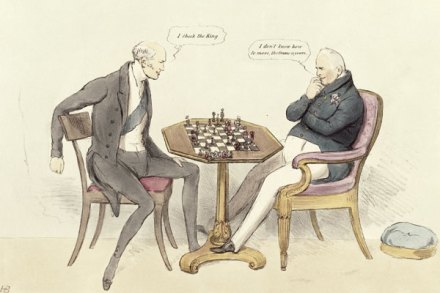
There are times when a major drama in the House of Commons really does change the course of British history. The period 1974–79, dramatised in the play This House, was one such. The crisis over the Great Reform Bill was another. Not so long ago, every schoolboy knew that the 1832 Reform Act gave the vote to the middle classes. Nowadays, thanks to the collapse of history teaching, very few schoolboys or girls know anything about it at all. Antonia Fraser has written a compelling and timely book on this almost forgotten political battle. The story begins with the election of 1830, which was called because of the accession of King William IV. The Tories, who had been in power for virtually 60 years, scraped in with a flaky majority.

The Devonshires, by Roy Hattersley – review

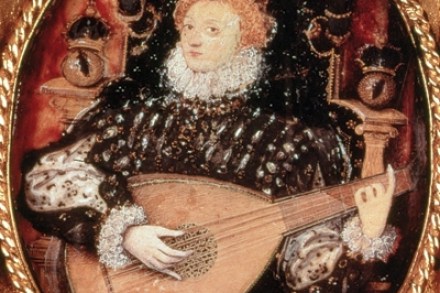
Recalling being taken as a teenager on repeated outings to see Chatsworth, Roy Hattersley disarmingly confesses that in those days ‘I was impressed by neither the pictures nor the furniture’. Over the past three years, while working in the Chatsworth archives on this history of its owners, the Cavendish Dukes of Devonshire, Hattersley would break off from research to roam the rooms and reacquaint himself with the house’s treasures. Yet if he is now more appreciative of its contents, he is not completely under the spell of Chatsworth’s past occupants. The ‘founding mother’ of the Devonshire dynasty was the Tudor virago known as Bess of Hardwick.

‘Falling Upwards: How We Took to the Air’, by Richard Holmes – review

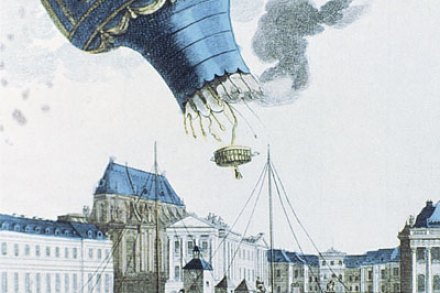
‘Caelum certe patet, ibimus illi’ was the phrase blazoned on the side of the Royal Vauxhall, an 80-foot, red and white candy-striped coal gas balloon launched from Vauxhall Pleasure Gardens in 1836 to fly overnight from London to the continent. The motto is from Ovid: ‘Surely the sky lies open, let us go that way!’ It well captures the exuberantly adventurous temper of the early days of ballooning, that gorgeous dead-end in the history of human aviation. Richard Holmes himself caught the ballooning bug in a Norfolk fairground aged four, he tells us, when his RAF pilot uncle fastened a red party balloon to the top button of his aertex shirt.

‘1913: The World Beforethe Great War’, by Charles Emmerson

In May 1913 a British delegation visited the United States to discuss plans for celebrating 100 years of Anglo-American peace. At their final meeting in New York’s Plaza Hotel, the representatives of both sides had just agreed on a five-minute silence to be observed across the English-speaking world on 17 February 1915, when Professor Hugo Munsterberg of Harvard interrupted proceedings. Did the delegates realise, he wanted to know, that there was widespread belief that Britain and America were getting together to join a war against Germany? Charles Peabody, a member of the New York committee, quietened him down.  Neither country was contemplating war, he said. Indeed, he continued, all nations could be part of a universal bond of brotherhood which would abolish it.

‘Lost, Stolen or Shredded’, by Rick Gekoski – review

Below the title of this book, engendering immediate distrust, lies the legend ‘Stories of Missing Works of Art and Literature.’ ‘Story’ is such a weasel word, implying a tale as much as truth; a fiction that when turned into a narrative develops into the fact that every schoolboy knows; or a real event embroidered with fictitious detail to amuse; even a ripping yarn — as proves to be the case with the first of the essays in this book. ‘Has anyone seen the Mona Lisa?

‘Deserter: The Last Untold Story of the Second World War’, by Charles Glass – review

On the morning of 31 January 1945, a private soldier in the United States army, a minor ex-con with a juvenile record for theft, called Eddie Slovik was put to death ‘by musketry’ for desertion at the village of Sainte Marie-aux-Mines in France. There had been no execution of an American soldier for desertion since the Civil War in 1865, but what made Slovik’s death so peculiar was that, in a war that had seen 50,000 American servicemen and 100,000 British desert, his was the only sentence that was carried out. Before his death he said: They’re not shooting me for deserting; thousands of guys have done that. They just need to make an example out of somebody and I’m it ...

West’s World: The Extraordinary Life of Dame Rececca West, by Lorna Gibb — review

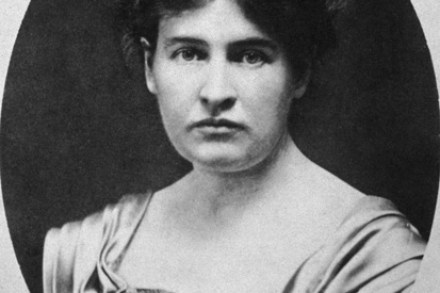
Lorna Gibb ends her book on Rebecca West by saying: ‘That she would be remembered because her work would go on being read was her greatest legacy.’ A more measured suggestion might be found in a sentence 20 pages earlier, from a 1973 TLS survey of her writing: ‘Dame Rebecca’s work has not fused in the minds of critics, and she has no secure literary status.’ It is always dangerous to declare what posterity will think, but West does seem to be on the slide. Some of her books are in print. They now seem quite mixed in quality. Of her novels, The Fountain Overflows is probably the best: a late-ish autobiographical novel, with some charming whimsy and some very unexpected turns in direction.

Fractured Times: Culture and Society in the 20th Century, by Eric Hobsbawm – review

Like many posthumous books from distinguished thinkers, this isn’t one. A book, I mean. Not really. The problem is that nobody seems to buy cobbled-together collections of previously published essays, talks and book reviews. The thing to do if you’re a publisher, therefore, is to give it a title that makes it sound like a book, shoehorn the content into vague, grand-sounding sections (‘Part I: The Predicament of “High Culture” Today’; ‘Part II: The Culture of the Bourgeois World’; ‘Part III: Uncertainties, Science, Religion.’; ‘Part IV: From Art to Myth’) and put it between hard covers for 25 quid. That said, the situation’s not quite as bald as all that.

Servants: A Downstairs View of Twentieth-century Britain, by Lucy Lethbridge – review

The first illustration in this absorbing survey of domestic service in 20th-century Britain is a group photograph of the household servants at Erdigg, the Yorke family home in Wales. Each holds an emblematic item; the housekeeper is defined by her bunch of keys, the butler holds a wine bottle and corkscrew, the footman, in full pantomimic rig down to his buckled shoes, bears a salver for the calling cards that formed an intricate and arcane method of communication amongst the upper orders. The picture was taken in 1912. It is expressive of a system governed by age-old rules and unshakable hierarchies. How unimaginable that only two years later the outbreak of war would initiate the great dismantling of this system.

‘Daphne du Maurier and Her Sisters: The Hidden Lives of Piffy, Bird and Bing’, by Jane Dunn – review

Jane Dunn is something of a specialist on sisterhood. She has — we learn from the dedication — five sisters of her own; she has already written a book about the sisters Virginia Woolf and Vanessa Bell, and another about the cousins Elizabeth I and Mary, Queen of Scots. Now the du Maurier sisters are in line to capture the public imagination like the Brontës or the Mitfords, their group celebrity fortified by genuine claims to fame. The fascination for readers is the different character and destiny of each sister, plus their relationships with one another and with the dynamics of the family romance —  and few family romances have been more potent than that of the du Mauriers.

Thinly veiled threats

No one could ever accuse Shereen El Feki of lacking in courage. To spend five years travelling around the Arab world in search of dildos, questioning women about foreplay and anal sex, is not a task many writers would relish. Sex and the Citadel is a bold, meticulously researched mini Kinsey Report, rich in anecdote and statistics. El Feki’s father is Egyptian and a devout Muslim, her mother a Welsh Baptist, who converted early to Islam. An only child, with fair northern features, she grew up in Canada and was raised as a Muslim.

Oh, Calcutta!

The Chandan Hotel is not a bit like the Exotic Marigold Hotel. It occupies, not a rambling rundown mansion, but a piece of pavement, about six feet by six feet, on Free School Street in downtown Calcutta. Here under the hotel sign, from time to time men doss down on string beds, shrouded from head to toe in sheets to keep out the sound and light of the Indian afternoon. Next to the Chandan Hotel stands Nagendra with his heavy iron and ironing board, and on the same pavement there is Ramayan Shah’s restaurant where you can also sleep if no one is eating or chopping vegetables there. It’s the human equivalent of those buildings by modern architects where all the ventilation and plumbing pipes are on the outside.

Family differences

Andrew Solomon’s simple and powerful guiding idea in this book is that there are two sorts of identity that affect your place in the world. Your ‘vertical identity’ is what you share with your parents — and it usually, but not always, includes such things as race, religion, language and social class. Children are born with ‘horizontal identities’ too — which is to say, things that they don’t share with their parents but that they have in common with others elsewhere: being the deaf child of hearing parents, the schizophrenic child of mentally well parents, or the gay child of straight parents. Some of these horizontal identities are things that are, or were, regarded as impairments; some of them are understood as mere difference.

The music man

When Humphrey Carpenter published the first major biography of Benjamin Britten in 1992, many of the composer’s associates were still alive and breathing down his neck. Carpenter’s knowledge of the music wasn’t intimate, nor did he have available to him the primary source of the superb edition of Britten’s correspondence, now completed with a sixth 800-page volume covering the decade before his death in 1976: deadly dull though these letters intrinsically are, the magnificent accompanying annotation and detailed apparatus make them richly revealing.

Secrets and ties

It is a truth universally acknowledged that secrets are toxic and break up families. Today we look back smugly on the bad old days of the stiff upper lip when skeletons were kept firmly locked in their cupboards. We think we know better. The English, once famous for their secretiveness and reserve, have become addicted to confessional culture. Celebs expose their childhood scars in misery memoirs, and transparency is hailed as the greatest good. In this timely book, American historian Deborah Cohen challenges our complacency. The history of secrets and their relation to the family turns out to be far more complex and vastly more interesting than might be imagined. In spite of our much-vaunted openness, we hide away our mentally disabled children.

Whatever happened to dear Aunt Jane?

In 1818, an unknown critic in Blackwood’s Edinburgh Magazine went out on something of a limb. One day, he claimed, Jane Austen would be among the most popular of English novelists. By the middle of the century, with George Henry Lewes complaining that she’d been unjustly forgotten, this claim must have seemed even more unlikely than it did at the time. Only with the 1869 publication of A Memoir of Jane Austen by her nephew James Edward Austen-Leigh did the tide begin to turn, and her books to be more widely read. But, as we now know, that anonymous critic turned out to be a master of understatement. These days, you can trumpet your love of Austen with key rings, mugs, calendars and fridge magnets.

Love among the ruins

The phrase that gives this book its title is Graham Greene’s: The nightly routine of sirens, barrage, the probing raider, the unmistakable engine (‘Where are you? Where are you? Where are you?’), the bomb-bursts moving nearer and then moving away, hold one like a love-charm. Greene was apparently proud of ‘love-charm’: he used it more than once. It seems to me that the most telling part of the full quotation, though, is that ‘unmistakable engine’. Isn’t Greene’s determination to hear those words in the machine noise a token of the way writers appropriate bare reality? The love-charm is crafted by the one it ensorcels.

An almost perfect catastrophe

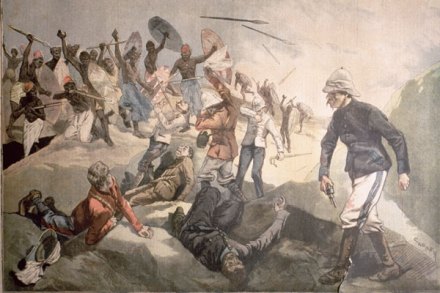
Lots of people have subsequently discovered this important imperial maxim: ‘Don’t invade Afghanistan.’ But the first western power to demonstrate the point of it was the British, in the late 1830s. The First Afghan War is the most famous of Queen Victoria’s ‘little wars’ for its almost perfect catastrophe. The British went in, installed a puppet emperor, and three years later were massacred. The story goes that only one man, Dr Brydon, survived the march back from Kabul to Jalalabad. Actually, there were a few more survivors, though not many. The celebrated canvas of Dr Brydon’s solitary arrival, Lady Butler’s ‘The Remnant of an Army’, has stuck in the communal mind.

Dirty tricks campaigns

There are already two excellent books about the Profumo Affair — An Affair of State (1987) by Phillip Knightley and Caroline Kennedy, and Bringing the House Down (2007) by David Profumo — as well as five not-so-excellent ones by poor old Christine Keeler. Now Richard Davenport-Hines has marked the scandal’s 50th anniversary with An English Affair, which is set to become the standard work. He has found new material — the police files on Perec Rachman and Charles Clore, for example — and, as his subtitle suggests, he is big on historical context.

A master of tactical retreat

A fanciful and doubtless risky parallel between Charles de Gaulle and the Russian emperor Alexander I suggested itself while I read Marie-Pierre Rey’s superb new biography of the latter. Both men came to power through an act of political parricide: Alexander because he was tacitly complicit in the plot to overthrow his father, a plot which ended in Paul’s sordid murder in 1801, strangled with a scarf by the conspirator-courtiers after they discovered him cowering behind a screen in his bedroom; de Gaulle because he rebelled against his former mentor and the undisputed national hero from the Great War, Marshal Pétain, both on military strategy before the second world war and on the political choice to be made once it broke out.