Paulina Neuding

Paulina Neuding is a Swedish journalist who writes for Svenska Dagbladet.

How Sweden fell again for transgender madness

From our UK edition

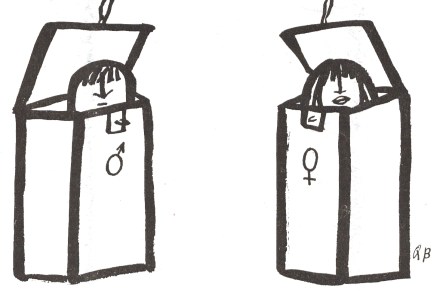
When it comes to the transgender issue, Sweden sobered up earlier than many other countries. Paediatricians have pleaded with politicians to take into account the suffering of young people, especially girls misdiagnosed as trans In 2022, the Swedish National Board of Health and Welfare decided that children diagnosed with gender dysphoria must no longer be treated with puberty blockers (except in a few very rare cases). This came after SVT, Sweden’s equivalent of the BBC, uncovered several dreadful scandals related to Sweden’s transgender care for children. In one case, a biological girl was, at the age of 15, suffering from osteoporosis as a result of being given puberty blockers.
Sweden’s street gangs are gaining power

From our UK edition

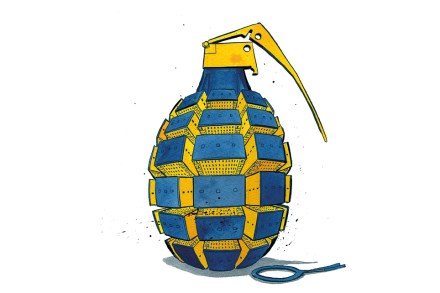
Stockholm Barely a day goes by in Stockholm without a shooting or a bombing. In one part of the city, housing estate residents have been informed about what to do if their building is a bombing target. For all too many Swedes, this is the new normal. Under Swedish law, children under 15 cannot be sentenced to any criminal punishment and older teenagers are seldom given more than four years in ‘compulsory care’. So mobsters now recruit young people, arm them with thermos-flask bombs or guns and send them out as soldiers in their gang wars. The country’s liberal criminal justice system and the fact that the police were never trained for such problems have made life comfortable for new gangs in immigrant neighbourhoods.

Sweden’s new powerbrokers

From our UK edition

Sweden may soon have a centre-right prime minister – an unusual turn of events for a country in which the Social Democrats have won 19 of the last 24 elections. Ulf Kristersson, leader of the Moderate party, is now set to take power. ‘I am now starting the work of forming a new, effective government,’ he said ‘A government for all of Sweden and all citizens.’ But it’s a government that is not really due to his success: his party, the Moderates, actually lost ground in the election and finished third for the first time in decades. He is preparing for power thanks to the success of another party: the anti-immigration Sweden Democrats (SD). You might have heard of them: a party often described as ‘neo-fascist’ or ‘far right’.

Sweden is burning again

From our UK edition

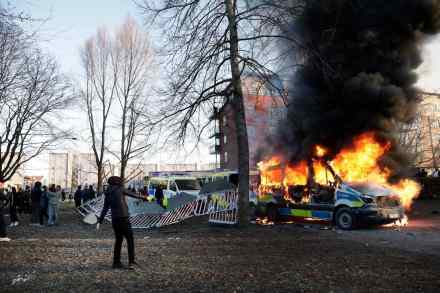
Sweden has seen streets riots before. The country has witnessed attacks on police and rescue workers. But what played out this Easter weekend has left Swedes in shock. Rasmus Paludan, a Danish politician on the extreme right who also holds Swedish citizenship, decided to tour the country last week, seeking out immigrant neighbourhoods where he could stage public burnings of the Quran. Paludan’s support in Sweden is isolated to the very fringes of the extreme right, especially since it was alleged last year that he had written sexually explicit messages to underage boys online. But there is no prohibition against blasphemy in Swedish law, which is why the police granted him permission for his rallies. Chaos erupted almost everywhere he went.

How gang warfare took over Sweden’s streets

From our UK edition

Nils Grönberg was 19 years old when he was shot and killed: one bullet to his chest and one to his face. Images of his lifeless body lying on the ground in one of Stockholm’s more affluent neighbourhoods – the hyper-modern Hammarby Waterfront Residential Area – soon spread on social media. Many Swedes heard the news from their children. Nils Grönberg, or ‘Einár’ as he called himself, was one of Sweden’s most popular artists. And while middle-class Swedes keep hoping that their kids can be kept away from what goes on among the country’s criminal gangs, the murder of Einár once again proved that this is a mess we’re all in together.

Sweden’s gun crime epidemic is spiralling out of control

From our UK edition

The shots were fired at 1pm on a Sunday, in spite of a heavy police presence at the scene. A 44-year-old shop owner was killed by a bullet to the head. The murder victim was a hard-working man who was trying to make a better life for his family. Now he is dead: another victim of Sweden’s gun-violence epidemic. On 28 May, two days before the shooting, riots had broken out in the same neighbourhood, the immigrant area of Hjällbo (pronounced ‘Yel-boo’) in Gothenburg, as a local criminal gang clashed with shop owners and their relatives. On the surface, the events were sparked when a 14-year-old boy was pushed off his moped. But according to police, the riots and murder took place against a backdrop of hostilities between clans and a criminal gang.

Most-read 2020: Sweden’s new epidemic – clan-based crime

From our UK edition

We're closing 2020 by republishing our ten most-read articles of the year. Here's No. 10: Paulina Neuding on a Swedish crime wave. ‘We have an obvious problem,’ admitted the Swedish Prime Minister Stefan Löfven recently. He was referring not to the Covid pandemic, but to a summer of crime that has left even jaded Swedes reeling in disbelief. There are regular bombings, hand grenade attacks and shootings. Young men are killing each other at a horrific rate — ten times that of Germany. The feeling is growing that the government has completely lost control. Yet, while Löfven has finally acknowledged the existence of the problem, he still seems in denial about its true nature.

Where’s Boris? A government at sea

From our UK edition

37 min listen

From Covid to Brexit to even the culture wars, Boris's performance seems to have been lacklustre. Where is the effervescent leader he was promised to be? (00:45) Sweden's violent crime is spiking - and are politicians afraid to say why? (16:45) And on the other side of the world, why are the Japanese so much happier to wear masks? (27:55)With Spectator Editor Fraser Nelson; Director of Political Insight Stewart Jackson; journalist Paulina Neuding; the FT's Nordic Bureau Chief Richard Milne; Professor Jordan Sand; and Spectator Assistant Editor Lara Prendergast.Presented by Cindy Yu.

Sweden’s new epidemic: clan-based crime

From our UK edition

Stockholm ‘We have an obvious problem,’ admitted the Swedish Prime Minister Stefan Löfven recently. He was referring not to the Covid pandemic, but to a summer of crime that has left even jaded Swedes reeling in disbelief. There are regular bombings, hand grenade attacks and shootings. Young men are killing each other at a horrific rate — ten times that of Germany. The feeling is growing that the government has completely lost control. Yet, while Löfven has finally acknowledged the existence of the problem, he still seems in denial about its true nature.

Coffee House Top 10: Bomb attacks are now a normal part of Swedish life

From our UK edition

We’re closing 2019 by republishing our ten most-read articles of the year. Here’s No. 7, Paulina Neuding's piece from October, on bomb attacks in Sweden: One night last week, explosions took place in three different locations in and around Stockholm. There were no injuries this time, just the usual shattered windows, scattered debris and shocked people woken by the blast. The police bomb squad was already on its way to the first explosion in the district of Vaxholm when it had to turn around and prioritise the detonation at a residential building in the more densely populated city centre. Residents whose doors had been deformed by the shock wave had to be rescued.

Bomb attacks are now a normal part of Swedish life

From our UK edition

 Stockholm Until recently no one would have thought of adding a column on bombings to the crime statistics One night last week, explosions took place in three different locations in and around Stockholm. There were no injuries this time, just the usual shattered windows, scattered debris and shocked people woken by the blast. The police bomb squad was already on its way to the first explosion in the district of Vaxholm when it had to turn around and prioritise the detonation at a residential building in the more densely populated city centre. Residents whose doors had been deformed by the shock wave had to be rescued. The third target (seemingly unrelated) was a facility belonging to a Syriac Orthodox church, which had already been bombed twice in the past year.

Victims of the Cologne sex attacks are still searching for justice

From our UK edition

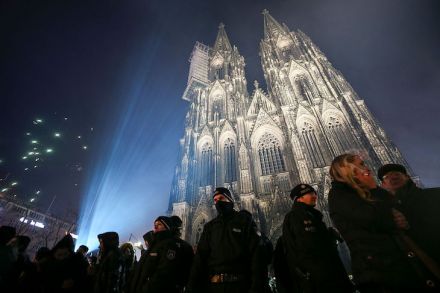
The mass sexual assaults around Cologne's main railway station on New Year’s Eve 2015 rocked Germany, not just because of their scale (police believe hundreds of men were involved) but because of the sense that news of the attacks was being suppressed, and its links to the migrant crisis then at its peak, denied. In response to public anger, Chancellor Angela Merkel was moved to promise that the crimes would be met with a 'hard response from the state'. Three years on, what has happened to that response? In terms of resources, German authorities have delivered on Merkel’s promise. It has been followed by one of the most extensive criminal investigations in the history of modern Germany. More than 600 victims of sexual offences have been questioned.

Violent crime in Sweden is soaring. When will politicians act?

From our UK edition

We’re closing 2018 by republishing our ten most-read articles of the year. Here’s No. 3: Paulina Neuding on Sweden's crime wave: January was a particularly violent month in Sweden. A 63-year-old man was killed in Stockholm by a hand grenade lying in the street. A Dutch exchange student was hit by a stray bullet during an execution-style killing at a pizza restaurant in Uppsala. In Gothenburg, a hand grenade was thrown into a flat and exploded in the kitchen — the same predominantly immigrant-populated suburb where an eight-year-old British boy was killed in a grenade attack less than two years ago. In Malmö, a grenade was tossed at a police station and exploded outside. So it has not, so far, been a very happy new year.

Living in fear

From our UK edition

January was a particularly violent month in Sweden. A 63-year-old man was killed in Stockholm by a hand grenade lying in the street. A Dutch exchange student was hit by a stray bullet during an execution-style killing at a pizza restaurant in Uppsala. In Gothenburg, a hand grenade was thrown into a flat and exploded in the kitchen — the same predominantly immigrant-populated suburb where an eight-year-old British boy was killed in a grenade attack less than two years ago. In Malmö, a grenade was tossed at a police station and exploded outside. So it has not, so far, been a very happy new year. For Swedes, this has become a familiar theme. Gun violence is on the rise, with daylight shootings and without regard for bystanders.

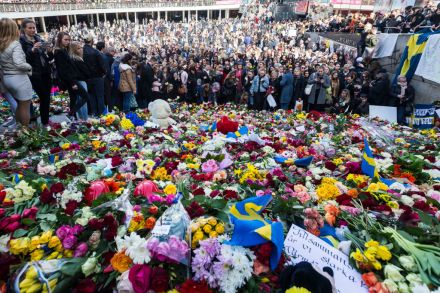
Sweden is divided in the wake of the Stockholm attack

From our UK edition

Last Friday, only hours after the terrorist attack in central Stockholm, police found themselves pelted by rocks in the city’s largely immigrant Tensta neighbourhood. The following evening, officers were once again attacked, this time in Hammarkullen in Gothenburg. On Sunday, a familiar story: rioters aimed Molotov cocktails and a fire bomb at police as unrest broke out in the area. In the days following the truck attack, Swedish newspapers had been full of defiant headlines: ‘Stockholm stands united’ and ‘Love conquers all.’ But the subsequent violence put paid to much of that: ‘Unity’ and ‘love’ are, for many Swedes, not the words that spring instantly to mind.