Nick Robinson

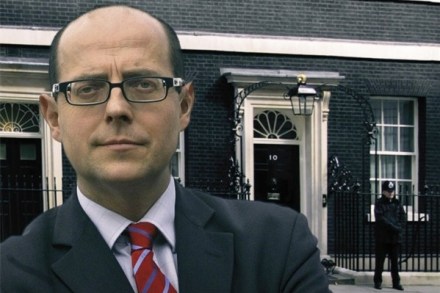
Nick Robinson presents Radio 4’s Today programme.

Rod Liddle is wrong about the BBC

From our UK edition

There is little to beat the thrill of finding a letter you didn’t know existed and being transported back in time and deep into your family’s history. Dated January 1955, it is addressed to ‘Desmond and Evelyn’ and urges them to show ‘tenacity, resolution and COURAGE’. It is signed ‘Pater’. These were the qualities deemed necessary for the son of an English colonel to marry the daughter of a German Jewish refugee against her father’s ferocious opposition. ‘I have the greatest respect for the good qualities of your race and I respect their fighting qualities,’ the man who would become my English grandfather wrote to the couple who would become my mum and dad.
Voters still don’t know what Keir Starmer stands for

From our UK edition

Keir Starmer is frustrated. He wants to talk about the future but interviewers like me will insist on asking him about the past. ‘I can’t believe I’m still talking about my parents when I’m over 60,’ the Labour leader has been heard to complain to his advisers. In my BBC Panorama interview with him, I asked him about his mother’s words on her death bed: ‘You won’t let your dad go private, will you?’ I felt that plea – which he revealed to me in a previous interview – told a great deal about Starmer’s ideological roots. So too does his passionate belief in comprehensive schools. Unlike plenty of senior Labour figures – Diane Abbott, to name but one – he wouldn’t let his kids go to a selective school, let alone go private.

My run-in with Nigel Farage

From our UK edition

To think I once thought cricket dull. For more than 40 days and 40 nights, I have been gripped by the Ashes. I still couldn’t tell you where short third man ends and deep backward point begins, but I have fallen in love with the rollercoaster ride that Ben Stokes and his team have taken us on. So much so that I covertly watched every ball of the final hour of the final day while on a family outing to Come and Sing: Abba. I could stand the tension no longer when the ninth wicket fell so made my excuses and left to watch the final act outside with a beer in hand. After Stuart Broad secured a victory he and I will never forget, I returned to my seat in the grand concert hall at Snape Maltings and sang ‘The Winner Takes It All’ with added gusto.

My meeting with Europe’s new Iron Lady

From our UK edition

‘Look at the dates.’ That’s what I am told as I enter the State Elders Room in Tallinn. I’m here to interview the woman dubbed Europe’s new Iron Lady – Estonia’s Prime Minister Kaja Kallas. The walls in the room between her office and the cabinet room are lined with portraits. A small plaque beneath each one records the dates of their birth and, more significantly, death. The first shows that its subject died in 1941. The next I notice also reads 1941. So too the third. And the fourth. The story is soon clear. Each of those elders of this now proud independent wealthy European state died fighting in what they call here the communist terror. This country is haunted by its past and the refusal of so many around the world to believe it could, it would, happen again.

Why political interviews matter

From our UK edition

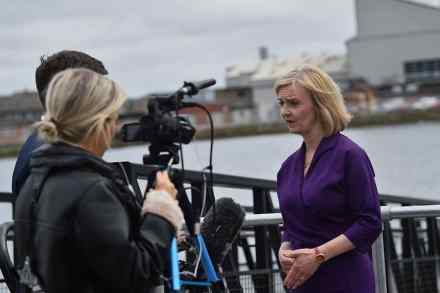
She’ll never do it. She’d have to be mad. Why take the risk? That’s what everyone said when I announced at the end of my BBC1 interview with Rishi Sunak that we were still hopeful that Liz Truss would also agree to a half-hour in-depth conversation in prime time. Well, guess what? She has agreed and will come into Broadcasting House just a week before most people expect her to move into No. 10. Too late to have any impact on the result, say the cynics. That ignores the fact that 10 to 15 per cent of the Tory selectorate will not, I’m told, vote until the last minute. More importantly, it ignores the tens of millions of people who have had no say in the choice of their next prime minister.

My escape from Kiev

From our UK edition

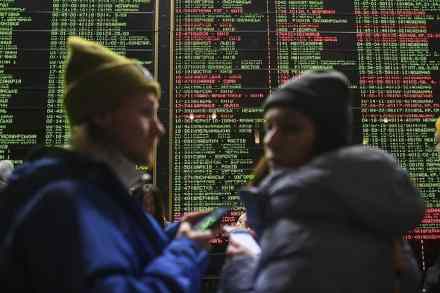
I spent my last night in Kiev in the ‘Presidential Suite’ of a city hotel – what used to be known as the underground car park. The general manager, a man whose name I never knew but who I hugged tightly before leaving, had promised to make it a shelter for guests who hadn’t checked out by the time it was clear that war was looming. We stayed there with his staff, their young children and elderly parents, their dogs and cats too. It is still the home of the BBC staff who remain in Kiev: the reporters and presenters you know as well as those whose roles are just as important but whose names you seldom hear.

Nick Robinson: Am I a superspreader?

From our UK edition

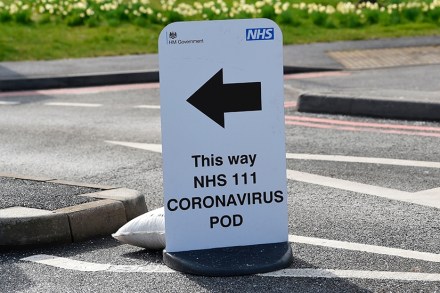
‘Aren’t you meant to be in quarantine?’ the man in the cloakroom queue asks. I sense that his enquiry is motivated more by concern about his wellbeing than mine. ‘Don’t worry! I’ve not got the coronavirus,’ I try to reassure him cheerily. That’ll teach me to talk about my health on the Today programme. I mentioned on air that I’d taken a precautionary test after returning from holiday in south-east Asia with a cough. Soon afterwards my guide in Phnom Penh sent a message to ask how the rest of my trip had gone. Pleased and somewhat puzzled by her solicitousness, I quickly realised that she had heard about my test and wondered whether I — or rather, she — was all right.

There’s one thing coronavirus has changed for the better

From our UK edition

There is one thing Covid-19 has changed for the better. It’s persuaded No. 10 that Today’s seven million listeners do deserve to hear from a cabinet minister. The Health Secretary, Matt Hancock, was the first to appear since the election. The ministerial boycott has actually been welcomed by many, who say it’s made for a better listen. To be fair to politicians, I think that is a comment on us as much as them. People had grown weary of tetchy and unproductive standoffs between presenters who felt their questions were being ignored and ministers who felt frustrated they weren’t being given a chance to get their message across. It will always be a vital part of our role to hold to account those with power — in government, business or anywhere in public life.

I didn’t ‘ambush’ Douglas Murray

From our UK edition

Douglas Murray was not 'ambushed' by me on the Today programme. Nor was he called out. Nor was he misquoted.  He was asked about something he once said and wrote in a lengthy Today programme discussion – around eight minutes and not the four he suggests – about Barack Obama’s warning about the idea that young people should be “woke” – quick to seize on allegedly offensive remarks.  Douglas had already had two opportunities to spell out his thinking in response to questions which could scarcely be described as aggressive: “Are you surprised to find yourself cheering along with Barack Obama?

Nick Robinson: is the country ready for Hexit?

From our UK edition

The nation is deeply divided. We can, it seems, talk of almost nothing else. Passions could scarcely be higher. No court or parliament can block or postpone it. Hexit is happening. That’s right. Hexit. Humphrys is leaving the Today programme after 30 years. On learning the news, one of more than seven million loyal listeners revealed his outrage and sense of loss, tweeting: ‘Who will I shout at on the radio in future?!’ My friend and companion in the Today studio Justin Webb replied with his characteristic charm. ‘Oh, that’s simple. Nick Robinson.’ I have been warned. John is famously irascible.

Is Martin Selmayr a friend of Britain?

From our UK edition

By this time next week the Johnson era will surely have begun. ‘We can, we will, we must now escape the giant hamster wheel of doom,’ our new Dear Leader will have declared in Downing Street. Or something like it. He will be rewarded with headlines such as ‘BoJo gives us back our mojo’. We will all have been urged to believe in Britain again. Then the questions will begin. With the same deadlocked parliament, the same deeply divided party and country and the same intransigence, what will the new prime minister be able to achieve that Theresa May hasn’t? I’ve been examining the past three years of failed Brexit negotiations for a BBC One documentary called Britain’s Brexit Crisis. What’s clear is that Britain never had a plan for Brexit.

Diary – 18 July 2019

From our UK edition

By this time next week the Johnson era will surely have begun. ‘We can, we will, we must now escape the giant hamster wheel of doom,’ our new Dear Leader will have declared in Downing Street. Or something like it. He will be rewarded with headlines such as ‘BoJo gives us back our mojo’. We will all have been urged to believe in Britain again. Then the questions will begin. With the same deadlocked parliament, the same deeply divided party and country and the same intransigence, what will the new prime minister be able to achieve that Theresa May hasn’t? I’ve been examining the past three years of failed Brexit negotiations for a BBC One documentary called Britain’s Brexit Crisis. What’s clear is that Britain never had a plan for Brexit.

The debate about Syrian airstrikes already feels hackneyed

From our UK edition

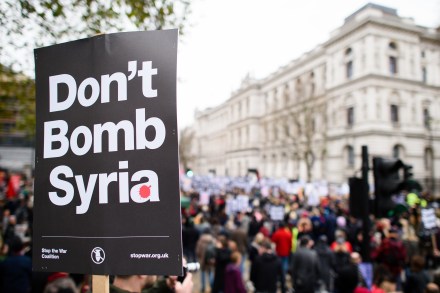
Two years ago, just a few days after the Commons opposed airstrikes on Syria, I read another memorable phrase to David Cameron. It was what President Putin’s spokesman had been saying about Britain in private — ‘a small island no one pays attention to’. I have had the sense ever since that the Prime Minister has been haunted by the remark. I expect MPs will change that next week when they back RAF attacks on IS targets in Syria. However, so much else in this debate already feels wearily familiar. Backers of airstrikes will call opponents of them ‘appeasers’.

Diary – 26 November 2015

From our UK edition

Scientists are experimenting with growing replacement vocal cords in the lab, as well as transplanting them from dogs. That was the Sun’s imaginative angle on my somewhat croaky debut as a Today programme presenter (only one of mine is working properly). It led me to ponder which species of donor would be fitting for my new role. Rottweiler? Too aggressive. Terrier, perhaps? Annoying after a while. Maybe a shepherd or a pointer would fit better with the mission to explain? All suggestions gratefully received. Bar one, that is. Husky is out. If my first programme had not been dominated by events in Paris, I had planned to talk about the world’s greatest city. I speak of Manchester, of course.

BBC’s Nick Robinson: why I said sorry for my ‘Muslim appearance’ remark

From our UK edition

It was my first taste of free love — for the brain. A first visit to what Bill Clinton dubbed the ‘Woodstock of the Mind’. With just one afternoon at the Hay festival, I rolled up at the first thing that caught my eye — a distinguished prof talking about nanotechnology. Bear with me here. I was soon learning that making things nano-sized changes their essential properties. Surfaces can be made which repel water. A single drop can be made bouncier than a children’s rubber ball. So what, you ask.

Diary – 25 October 2012

From our UK edition

I am standing in the courtyard of HMP Wormwood Scrubs with the Prime Minister. He’s there, or so I read, to convince the papers that his approach to law and order has moved from ‘hug a hoodie’ to ‘mug a hoodie’. I’m there to ask him not just about that but about why he let his Chief Whip stumble along wounded for so long; and to put to him suggestions from his own party that he and his ministers look, well, less than competent. Having batted away my questions with painful ease, the PM delivers a final blow as we film a couple of editing shots. With a mischievous smile he tells me he resisted the temptation to raise the subject of an organisation really facing a crisis. Ouch. These are not the easiest of days to be working at the BBC.

Trying to work out what David Cameron really thinks, I had a strange sense of déjà vu

From our UK edition

He is the longest serving of our major party leaders. He could be Prime Minister next year. He has had publicity that many a politician would kill for. Yet how many voters can answer a simple question — what does David Cameron really think? That is what I have been trying to do for a documentary on BBC Radio 4. My producer Martin Rosenbaum and I have spoken to those who know Cameron best — his friends, his colleagues and a few of those who he’s crossed over the years. Eighteen months ago we made a programme which asked the same question about the man who then looked set to be the next occupant of 10 Downing Street, Gordon Brown. Our aim then and now was to examine the values and the influences upon the man who would be Prime Minister rather than their policies.