Features

The government’s pathetic response to the Now Teach scandal

One Saturday last July, a couple of hundred people gathered in a conference centre on the bank of the Thames to talk about education. In an earlier life they were lawyers, bankers, engineers, publishers and software engineers, but now they are all secondary school teachers and here they were giving up part of their weekend to talk about how better to help the kids they teach and the schools they work in. All these people joined the profession through Now Teach, the charity I co-found in 2017 when I was still a columnist on the Financial Times. Back then, at the age of 58, I wanted to become a teacher but didn’t know how to begin.
Meet Hillingdon Man, Britain’s unhappiest chap

It’s official. I live in the unhappiest place in Britain. Who says so? My neighbours here in Hillingdon, that’s who. They’ve been polled by the property company Rightmove, along with citizens the length and breadth of the country, and Richmond came top(seems money can buy you happiness, after all) while my own London borough, Hillingdon, a few miles away, came rock bottom. For me, this was a complete surprise. In 2011, my wife and I moved to Hillingdon, from insufferably trendy Chiswick to profoundly unfashionable Ruislip, and we’ve never been happier. We raised our two children here, and even though they’re now both away at university they return home whenever they can. What’s so good about living here?

Joseph Stiglitz: ‘We know where fascism led last time’

When Joseph Stiglitz talks, the left listens. The Nobel laureate has advised multiple Democratic presidents and the World Bank, where he worked as chief economist and senior vice president. He’s long been a leading critic of the liberal leanings that have dominated the West’s economic policy for four decades. So when we meet in The Spectator’s office, I ask him if the Labour party has sought his advice. It wouldn’t be unthinkable. ‘I just met with, in a TV show, one of the Labour shadow ministers. We had a good discussion,’ he says, smiling. But the New Keynesian economist is in the UK for four days, and his new book, The Road to Freedom, is keeping him busy. No summits on ‘securonomics’ this time.

Paris, city of blight

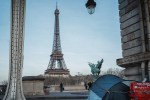
You know that feeling when you haven’t seen someone for several years and when you do, you really notice the changes? Generally it is a melancholy moment: you spot the extra wrinkles, the added pounds. Occasionally it can be positive: gym-toned physique, amusing new green-and-orange hair. Lots of us had these moments as we emerged, blinking and bewildered, from the bunker of Covid. I’ve just had this same experience, but with a city. Paris. The French capital is a place that I know well. I must have visited a dozen times over the decades. I’ve seen the Louvre Pyramid go up, I’ve seen Notre-Dame go down in flames (on TV, in a horrified airport in Vegas). But I have not been to Paris since before the pandemic, so I was keen to check out how the old girl was doing.

Survival plan: is Rishi ready for the rebels?

Ever since Rishi Sunak became leader of the Conservative party, he has been preparing for this week. Entering 10 Downing Street without winning a general election or even the Tory membership vote, he owes his position entirely to Conservative MPs. At any moment, they could decide to replace him as they did Boris Johnson. This bank holiday weekend, as the results of the May elections roll in, has always had the potential to be his moment of greatest vulnerability. The results will show how the Tories are performing now compared with the local elections of 2021 when a triumphal 30ft giant-sized Boris balloon in Hartlepool came to symbolise his political dominance.

Why were Germany’s Covid files redacted?

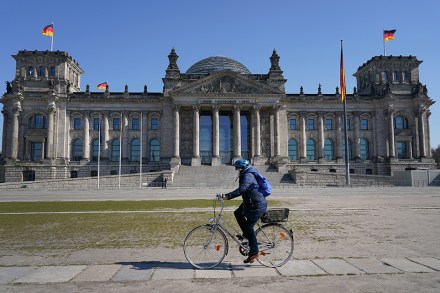
There are two kinds of long Covid. One is a medical syndrome, the other manifests as a healthy obsession – an urge to shed light on what happened during the pandemic crisis. Too many questions remain unanswered: why did Sweden come out of the pandemic better than other countries without having endured a lockdown? Why were masks imposed when scientific studies repeatedly demonstrated that they were unnecessary? Why was discrimination introduced between the vaccinated and the unvaccinated when it was clear that vaccines were incapable of blocking the transmission of the infection? And why, since the lockdowns, has there been such a high excess-death rate in Europe? Why were masks imposed when scientific studies repeatedlyshowed they were unnecessary?

Has the C of E got its reparations bill all wrong?

Reparations have a troubled history, and rightly. The word itself, in its familiar sense, seems to have been a euphemism thought up by lawyers after the first world war. President Woodrow Wilson had promised a peace ‘without indemnities’. So no indemnities: ‘reparations’ instead. It sounded less objectionable. It was further agreed that liability should cover only demonstrable damage, not be punishment for the act of war itself – a remarkable and perhaps unprecedented concession by the victors to the vanquished (who had themselves recently imposed heavy indemnities on Russia, and before that on France). Yet reparations – relatively modest in total and largely unpaid – still became probably the most divisive and damaging aspect of the post-war Treaty of Versailles.

Daniel Dennett’s last interview: ‘AI could signal the end of human civilisation’

Do we still need philosophers? Daniel Dennett, who died last week, believed strongly that we do. ‘Scientists have a tendency to get down in the trenches and commit themselves to a particular school of thought,’ he told me from his home in Maine, not long before he died. ‘They’re caught in the trenches so a bird’s eye view can be very useful to them. Philosophers are good at bird’s eye views.’ Scientists of all sorts valued their conversations with him, ‘I think because I could ask them questions that they realised they should have had answers to,’ he said. I grew up with Dennett. First, as a teenager, watching YouTube videos as he raged joyfully against the irrationalities of religion. Then, as an undergraduate, I came to his ideas about consciousness.

Forget Eton. This Mumbai team should play Harrow at Lord’s

The first thing I do is turn my watch upside down. India is five-and-a-half hours ahead of the UK, so the trick does the conversion for you. Well, sort of – a time like 11.40 works perfectly (becoming 5.10), but anything on the half hour leaves you guessing which number the short hand should be pointing to. Still, it feels appropriate, because I learned it from Christopher Martin-Jenkins on Test Match Special, and cricket is the reason my son and I are here. Our first match is in Jaipur, where the Rajasthan Royals host the Delhi Capitals. Ever since I was Barney’s age (14) I’ve wanted to visit this country and experience its national religion, and these days that means the Indian Premier League. The match is an evening one, so the temperature has dipped to a comfortable level.

Hyper-history: why did politics go crazy?

On the day Theresa May signed her Brexit withdrawal agreement with Brussels, Dominic Raab, the Brexit secretary, resigned. She tried to dragoon Michael Gove, a leader of the Brexit campaign, into taking the job. Dominic Cummings, the erstwhile campaign director of Vote Leave, persuaded Gove to resign rather than take the job. It was mayhem. That day Cummings texted a friend in Westminster to say: ‘Sometimes nothing happens for years. Sometimes years happen in days.’ The phrase was originally Lenin’s, though he referred to ‘decades’ rather than years – but it was apt for the almost revolutionary cascade of events unleashed by the EU referendum of 2016, which we are still living with eight years later.

The Xi files: how China spies

Most states spy. In principle there’s nothing to stop them. But China’s demand for intelligence on the rest of the world goes far beyond anything western intelligence agencies would typically gather. It encompasses masses of commercial data and intellectual property and has been described by Keith Alexander, a former head of America’s National Security Agency, as ‘the greatest transfer of wealth in history’. As well as collecting data from government websites, parliamentarians, universities, thinktanks and human rights organisations, China also targets diaspora groups and individuals. Chinese cyber intrusions have targeted British MPs and stolen population-level data from the UK Electoral Commission database.

Why Mummy smokes

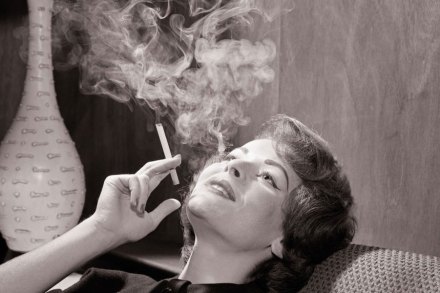
It’s 7.02 p.m. and I’m standing outside my house by the bins smoking a fag. Upstairs, I can hear that my six-year-old is awake but I’m choosing to ignore her. How repellent, I hear you murmur. And it is repellent, in many ways. I am a smoker and a mother, hardly the Madonna and child. How can these two realities ever be reconciled? They jam against each other all day long, uncomfortably.  Smoking is bloody great. If you’re a smoker that is. Otherwise it’s just disgusting It’s OK, I tell myself, every single day. I never smoke in front of them. Instead, I smoke when they’re in bed, when the day is done, and the bedroom doors are firmly shut. Often, I smoke during the day too.

Why does the West protect Israel but not Ukraine?

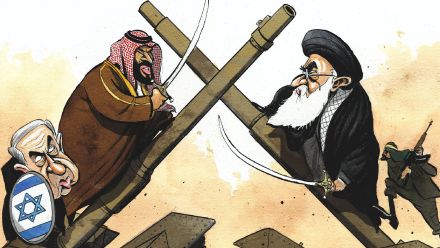
When Israel and its allies shot down hundreds of Iranian drones and missiles, they demonstrated what an effective air defence looks like. The slow-moving Shahed-136 suicide drones were not hard for the Israeli, Jordanian, British, American and (probably) Saudi air forces to find and eliminate. Even Iran’s cruise missiles were thwarted. It was an overwhelming victory for Israel and a humiliation for Iran. In Ukraine, all this was watched with desperation and even anger. While Israel boasts robust air defence systems and, with its allies, can deploy hundreds of combat aircraft to repel Iran’s attack, Ukraine must ration its defence munitions. Kyiv is forced to choose which cities to protect.

The fair-weather ‘revolutionaries’ of Youth Demand

‘Won’t you take me to… Funkytown!’ At around 10 p.m., in a bar under a railway arch in south London, members of a group called Youth Demand are doing the conga to 1970s disco music. They are celebrating a week of good protesting. ‘I’m sooo ketty!’ shouts a girl on the dance floor. (‘I’ve taken a drug called ketamine,’ is what she means.) Youth Demand want Britain to stop selling weapons to Israel. Earlier this month they put toddlers’ shoes outside Keir Starmer’s house, and a day later threw red paint on the Ministry of Defence. Their actions got lots of press coverage, so they’re having a party. Many protestors are only helping out for the week.

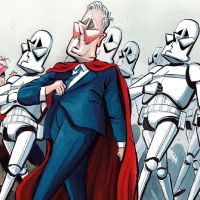
Confessions of a defecting Starmtrooper

Next month, Keir Starmer is expected to lead his party to victory in the local elections. The Tories are forecast to lose about half of their councillors who are up for re-election. If it’s a very bad night they could also say goodbye to Ben Houchen and Andy Street, the metro mayors of Tees Valley and the West Midlands. All this would confirm that Labour is on track for a super-majority at the general election. Yet there is one election Starmer’s Labour must fight the left to win: that for the North-East mayor, which takes place on 2 May. The new mayoralty – which covers two million people from Northumberland to Co. Durham – is already the subject of internal party turmoil.

The Lebanese always return home

Beirut You might have thought that the threat of the Gaza war spiralling into an all-out regional conflagration, along with breathless travel advice from western governments urging their nationals to leave the country, would have deterred Lebanon’s expats from flying home to celebrate Eid al-Fitr this year. Not one bit. Flights, hotels and restaurants were fully booked despite Iran’s drone strike. The Lebanese know that even if there is fighting (and in South Lebanon, there is on an almost daily basis), if it isn’t on your doorstep, there’s no reason to stop the party. The Lebanese know that even if there is fighting, if it isn’t on your doorstep, there’s no reason to stop the party In any case, the Lebanese always think they have the inside track.

The dangers of political prosecution

At the start of January, Donald Trump offered up a cheery new year message for Americans. ‘If I don’t get immunity, then Crooked Joe Biden doesn’t get immunity,’ the former president declared on his social media platform Truth Social. With this, he touched on a looming question about 2024: will the presidential race be decided by lawyers and jurors, rather than voters? Trump showed up in court for the first criminal lawsuit against him this week, a case which could in theory result in a decades-long jail sentence. He’s accused of paying hush money to the former porn star Stormy Daniels, then falsifying business records to conceal the information from voters during the 2016 presidential campaign. (He denies the charges.