Features

The wit and wonder of Alan Garner

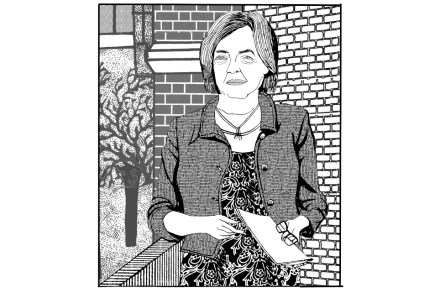
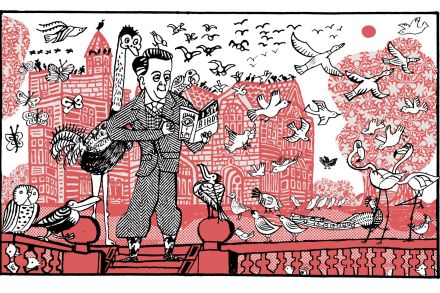
Alan Garner is sitting in a high-backed leather porter’s chair right inside the hearth enclosure of an immense fireplace, with a chimney stack stretching up 27ft and a very strange-looking firepit. I duck under a beam to join him. He adds a log to the fire and says: ‘This firepit is made from a disused steam engine we found in an old lead mine and the rear brake-drum of a Model T Ford lorry.’ The flames give a crackling warmth and smoke swirls up the vast chimney, down which whooshes, periodically, the thunder of a passing train. I recognise this as the sound of ‘Noony’ from Garner’s most recent novel, Treacle Walker. I perch on a low beam and Garner tells me that this is where his protagonist Joe Coppock sits. ‘The chimney wrote Treacle Walker, I didn’t,’ says Garner.

Éric Zemmour: ‘I am not intending to conquer Europe’

Two years ago, Éric Zemmour was the most talked-about man in France and a serious contender to be the ninth president of the Fifth Republic. A controversial journalist turned incendiary politician, he vied with Marine Le Pen for second place behind Emmanuel Macron in the polls. Crucially, he seemed to have something she lacked – an ability still to appeal to the Catholic bourgeoisie while tapping into widespread anger at mass immigration. But then Russia attacked Ukraine, the mood of Europe changed, and Zemmour’s political fortunes sank as quickly as they had risen. He finished a distant fourth in the first round of the presidential election, with 7 per cent of the vote.

The problem with a slimmed-down monarchy

When he was Prince of Wales, the King began to advocate the need for a slimmed-down monarchy. The perception was that there were too many royals, an image confirmed in the eyes of the media and the public when they all appeared together on the balcony following the Trooping the Colour. The ill-informed man in the street would go away thinking the taxpayer was supporting all these disparate family members. This was a misconception, but it lingered. At the time of the Diamond Jubilee, the Queen’s advisers were delighted when only a handful of royals appeared on the balcony after the service at St Paul’s Cathedral in 2012 – the Queen, the Prince of Wales, the Duchess of Cornwall, the Duke and Duchess of Cambridge and Prince Harry (the Duke of Edinburgh was in hospital at the time).

Women love flowers. Who knew?

It’s funny how long it can take a man to learn a simple lesson. For example, for years I had assumed that women couldn’t really love flowers, that it was all some sort of conspiracy created by Big Florist in league with Big Greetings Card that everyone, apart from me, had fallen for. On Valentine’s Day I would look pityingly at the men on the Tube clutching a dozen red roses, or the girls in the office with big bouquets pretending to like them. I knew better. ‘She’d much prefer a nice bottle of dry sherry,’ I’d think to myself – and then wonder why my girlfriend looked so cross come 14 February. My first encounter with the possible link between female satisfaction and flowers came in the 1990s.

Inside the plot to take down Rishi Sunak

Westminster and its drinking holes have always been a fertile ground for conspirators. There was the dead sheep coup against Margaret Thatcher, the curry house conspiracy against Tony Blair, the great goose plot against Gordon Brown and the pork pie putsch to oust Boris Johnson. Now that Rishi Sunak has the worst approval ratings of any prime minister in an election year, it’s inevitable he should be the target of a new plot. The Tories have become the party of regicide. The dispatching of Liz Truss was carried out with record-breaking speed. When things get bad, the Tories change leader. It’s the party’s natural reflex. ‘If you are working on a plot, you don’t go around telling everyone. That’s plotting 101’ For many, the idea of removing Sunak is mad.

Why are politicians so ignorant about history?

The news over the weekend that Russell Group universities are letting in students from overseas on lower grades than home students has provoked understandable fury. Having been the proud vice-chancellor for five years of the university Margaret Thatcher helped found, Buckingham, I wince at the story. The fact that undercover journalists for the Sunday Times winkled out the widespread practice made it sound even murkier than it is. The response of the Russell Group that the lower offers applied to ‘foundation’, not undergraduate degrees, and that numbers of domestic students are rising more quickly than overseas students, has been lost in the noise. Universities need to get their act together and be on the front foot, focusing more on the experience they are giving students.

Don’t believe Emirati promises of editorial freedom

Should the Emirati government be allowed to buy The Spectator and the Daily Telegraph? The government is considering this important question and has hinted that it may allow the sale if promises are made about editorial independence. Fine words, but what would this mean in practice? Assurances of editorial freedom mean nothing when they come from an autocracy like the United Arab Emirates. You simply cannot cross the Emirati royals: they call all the shots, down to the smallest detail. It’s the way it works. I should know. My story starts in 2007 when France and the UAE agreed to create the Louvre Abu Dhabi, a great universal museum on Saadiyat Island. The Art Newspaper, which I co-founded in 1990, supported the plan.

Biden’s Iran policy has backfired

Nine years ago, Barack Obama, with his vice president Joe Biden at his side, announced the Iran nuclear deal. Ayatollah Khamenei’s regime would not enrich weapons-grade uranium for 15 years. The US would lift economic sanctions in return. It was ‘historic’, said Obama. The Iranians had been close to developing their first nuke: this agreement stopped them. ‘This deal demonstrates that American diplomacy can bring about real and meaningful change – change that makes our country, and the world, safer and more secure,’ added the president from the White House lectern. If recent months are anything to go by, these diplomatic efforts to fix the Middle East have been a disaster. The region isn’t safer, nor more secure. Obama’s nuclear deal was too narrow.

The grim life of a Roman legionary

Over the heather the wet wind blows, I’ve lice in my tunic and a cold in my nose. The rain comes pattering out of the sky, I’m a Wall soldier, I don’t know why. The mist creeps over the hard grey stone, My girl’s in Tungria; I sleep alone. W.H. Auden was right. Life for a Roman legionary on Hadrian’s Wall was bloody miserable. The Vindolanda letters sent to and from legionaries living near the wall – on show in a new British Museum exhibition – chime with Auden’s lines in ‘Roman Wall Blues’. The Romans hated the English weather. In one letter found at Vindolanda fort, near Hexham, Northumberland, a legionary hears about some prized woollen underpants.

Your country needs you, Gen Z

Gen Z doesn’t look like it wants to fight for Britain, but last week, General Sir Patrick Sanders, the Chief of the General Staff, said we might have to. He suggested that people my age should be prepared to join a ‘civilian army’ in case we go to war with Russia. But could we handle being cut off from our phones and friends? Do we have the fellow-feeling necessary to defend our country? What if we won’t submit to authority? There are any number of reasons why my generation might reasonably not want to enlist. Accommodation will be uncomfortable and the food will be grim, according to army discussion forums. The application process will take 18 months, and at the end it’s just a 50 to 60 per cent acceptance rate. Then if you do serve, the future of war looks bleak.

How the Tories gave up on liberty

Rishi Sunak stood glowering over a school table and listed, with disdain, the flavours of the vapes that lay on the table in front of him. ‘Grapefruit,’ the Prime Minister declared. ‘Bubblegum. Strawberry. Berry Burst.’ Pupils at Haughton Academy were then invited to express their own disgust: ‘Bright colours,’ observed one student. ‘Appealing to younger people,’ said another. ‘Do you think that’s right?’ the Prime Minister asked the circle of 13- and 14-year-olds. ‘No,’ they dutifully answered. Sunak told the students, in a video posted to his Instagram account, that the ‘good news’ is that he is announcing a full ban on disposable vapes and a crackdown on packaging and flavours that might be particularly popular with the young.

The insanity of banning vape flavours

Nicotine may have some deleterious and costly health effects, but so do winter sports, mountaineering, motorcycling and many other activities we leave to personal choice. (I have never been asked to work on a government anti-skiing campaign, though if the opportunity arose I would happily volunteer my services for free.) But it is absurd that vaping is now the target of much more opprobrium than alcohol. I suspect part of the explanation can be found in an HM Government health warning which appeared on cigarette packets in the 1980s: ‘Most Doctors Don’t Smoke.’ Indeed so. Most doctors don’t vape either. But, in my experience, doctors drink a lot.

Beware the ‘K Hole’

Go to any nightclub and, if you know what to look for, you will see people on ketamine. You can spot them because, unlike those who have taken ecstasy or cocaine, they stand nearly motionless, struggling to move. They appear lost in a self-inflicted paralysis. This is called a ‘K-hole’– a state induced when ketamine is taken in large doses, causing a person to slip into a dissociative state. It can be terrifying: they are temporarily unable to interact, and even move. Users feel separated from their body and reality. Time is grossly distorted: hours passing can feel like a few minutes. Anyone who works in A&E will see people in K-holes regularly.

The customer is never right

Penny Mordaunt, who carried her sword with such panache at the coronation, has called for 2024 to become the year we ‘make the consumer the king again’. I like Mordaunt. You should see the way she demolishes her Labour and Scots Nats counterparts in the Commons. But with her call for customers to be treated as monarchs, she may face an unwinnable battle. Businesses regard customers not as kings but as potential muggers, racists and a thoroughly dodgy lot. ‘Le client n’a jamais tort,’ said the hotelier César Ritz (d.1918), and he made a fortune. The more common attitude among today’s business owners, particularly in London, is that le client n’a jamais right. Are they correct – or is their much-paraded suspicion worsening the atmosphere? The customer as king?

How can Germany deploy a tank battalion without any tanks?

Last year, Olaf Scholz, the German Chancellor, made a pledge that would have been unthinkable not long ago: to send a combat brigade to be permanently deployed in Lithuania. The plan was to station almost 5,000 troops an hour away from the Suwalki Corridor, the 40-mile-long border between Poland and Lithuania, flanked by Belarus to the east and the Russian exclave Kaliningrad to the west. Scholz, and his new defence minister, Boris Pistorius, wanted to transform Germany’s military from a medium-sized operational force to one which can be Europe’s first line of defence if Vladimir Putin ever attacks a Nato territory. If Scholz’s announcement seemed too good to be true that’s because it was. So far just 30 German soldiers have been sent to Lithuania.

Ukraine’s new strategy hits Russia where it hurts

Ukraine is fighting not one but two hot wars against Russia. The first, a conventional, bloody land war along an 810-mile front line, has descended into stalemate. But the second – drone and missile strikes and sabotage raids deep into enemy territory – may prove to be a game-changing strategy for hitting Russia where it hurts. Last week, two Ukrainian kamikaze drones scored a spectacular hit on an oil and gas refinery and an oil export terminal in Ust-Luga near St Petersburg. At a range of 775 miles from Ukraine, the strike has severely dented Russian ability to produce and export naphtha, jet fuel and gasoil, and export liquefied natural gas (LNG). It might take weeks or months before the refinery returns to significant capacity.

How to pass Harvard’s unconscious bias exam

Like Prince Harry, I never knew I had unconscious bias until it was pointed out to me, but now it has been I know I will have to do something about it. Except that in my case that ‘something’ is not to moan to Oprah Winfrey about members of my family speculating on the colour of my baby’s skin. It is to dig a little deeper and ask: do I really have an inner Ku Klux Klan that is controlling all I do and preventing me from becoming a good person? I had heard of unconscious bias training on many occasions – not least when the then Cabinet Office minister Julia Lopez told the Commons that a government review of evidence had suggested it was ineffective and would therefore be phased out in the civil service.