Features

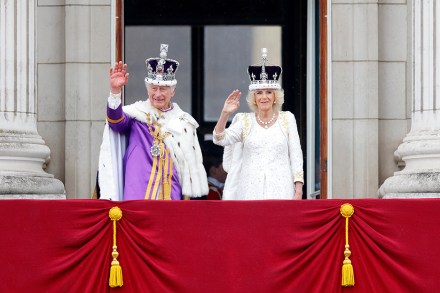
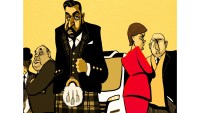
My advice for King Charles, my ‘twin’

Truly, Harry, who is engaged in a preposterous legal contretemps with the Mail, is his mother’s son. While the Prince is filling his boots by turning his self-pity into an industry, his mother, I would argue, invented the art of victimhood – that insidious, debilitating, very modern malaise. The irony is that, unlike Harry, whose hatred for the Mail is almost as great as that for his father and brother, Diana was rather fond of us. She assiduously read the paper and so did her friends. In the vicious post-separation propaganda wars between Charles and her (‘She’s nuts, you know, old boy’), the Mail, whose target audience has always been up-market women, unashamedly took Diana’s side.

Why I’m bored of National Treasures

Here they come, see them run, twinkling away like a bunch of irritatingly flashing fairy lights, the milk of human kindness curdling on their breath and dollar signs in their beady little eyes. I’m referring to the National Treasures, wheeled out every Christmas as we huddle around the television. A quick list of those who come immediately to mind – though other NTs are available, if the price is right – are Ant, Attenborough, Balding, Beard (Mary), Carr (Alan), Coles (Richard), Colman (Olivia), Church, Dec, Dench, French, Fry, Izzard, Lineker, Margolyes, Norton, Oliver (Jamie), Osman, Peake, Perry (Grayson), Robinson (Tony), Rosen (Michael), Sayle, Staunton, Thompson (Emma), Toksvig.

This Christmas in Bethlehem will be the saddest yet

I am on my way to Bethlehem, which is where I come from and where I tend to spend Christmas. When I visit from London, I am given strict instructions to bring with me a generous amount of cheddar cheese, a good whisky and, as unlikely as it sounds, Yorkshire tea. I have made it into a local tradition and there is no one else but me to supply the tea in the quantities required. Normally, my biggest concern is trying to find enough space in my suitcase for all these supplies. I so wish this was my main concern this time round. Since the start of Israel’s bombing campaign of Gaza, life in Bethlehem has been turned upside down. The place has known sad Christmases but this one will be unlike any other.

‘Many happy returns’: an exclusive Jack Reacher story by Lee Child

Tony Jackson had worked 30 years for MI5. He was a grammar-school boy recruited straight out of his redbrick university, after sitting a fast-track civil service exam. His results had not impressed the civil service itself, but clearly something in his psychometric paper had caught someone’s eye. Two weeks after his formal rejection he received a plain and enigmatic letter inviting him to an appointment at a hotel near Regent Street. Just after his arrival he had been required to sign the Official Secrets Act. Just before his departure he had become a government agent. Thirty years later he still was, now an Assistant Director, in charge of all his nation’s counterterrorism efforts.

The moment I realised the study of literature was over

I’ve run away. I’m not saying where I’ve run to because then they’d be able to find me. I’m not saying who ‘they’ are either. So far no one has noticed I’m missing. I shuffle along with my head down, my old-geezer Woody Allen bucket hat sheltering my face, my hands shoved deep into the pockets of my shorts. Damn! The mention of ‘shorts’ gives away that I’m somewhere hot. You have to be careful writing a clandestine piece. Fearing I’ve been spotted, I veer off the path, clamber over rocks and find myself on a black volcanic beach. It’s like walking on a fire that everyone hopes has gone out. That’s another clue. Which volcano? Anyone would think I want to be found.

‘A war for Middle East stability’: Israeli President Isaac Herzog on what’s at stake in the conflict with Hamas

President Isaac ‘Bougie’ Herzog is Israeli aristocracy. His father, Chaim Herzog, was the sixth president, serving between 1983 and 1993; his grandfather Yitzhak Herzog was chief rabbi; his maternal uncle was Abba Eban, the most famous of the country’s foreign ministers. After leading the Israeli Labor party and the parliamentary opposition in the Knesset between 2013 and 2017, Isaac became Israel’s 11th president in July 2021. He is the first to be born in Israel since the Declaration of Independence 75 years ago. My first question rather asks itself: how is the war going? ‘Depends on what you mean by war,’ Herzog quickly replies, before turning the discussion away from Gaza to ‘the grand picture’.

Christmas as a Jehovah’s Witness

When I was growing up, there was no Christmas – at least, not one that was recognised in our household. As Jehovah’s Witnesses, we were taught that it was a dressed-up pagan festival that had nothing to do with the Bible and should be avoided. At school, I’d even be hauled out of any Christmas assemblies and made to feel alienated from the other kids. When the big day came, my family just went out knocking on doors as usual, looking for souls to save. I’d skulk behind them, praying that none of my schoolfriends were on the other side of those doors. To Jehovah’s Witnesses, Christmas is ‘worldly’. That is to say: a bad thing. I left all this behind as a teenager and my life is now, well, more ‘worldly’.

The New Theists

One of Professor Richard Dawkins’s most influential ideas was the concept of the ‘meme’, which he coined in The Selfish Gene. A meme is an idea or form of behaviour that spreads by imitation from person to person. Memes can be beneficial or harmful to the individual and the wider community. The most successful have some great psychological appeal. Memes are a form of contagion, and with 21st-century technology, the power of that contagion has grown. Yet people are not merely passive recipients of ideas. Indeed, one aspect of human psychology clearly visible on social media is the willingness of people to meme themselves into belief.

Students annoyed their elders in the 1930s, too

Astriking generation gap in the western world has been revealed by the responses to the 7 October atrocities in Israel. Noting in these pages the surge in pro-Palestinian sentiment among young people on both sides of the Atlantic, my old friend Douglas Murray worries that ‘When it comes to Palestine, the kids aren’t all right’. Murray is correct to say that something has changed. He is also correct that it is mainly a phenomenon in the English-speaking world. In the UK and the US, young people are far less well-disposed towards Israel than a decade ago.

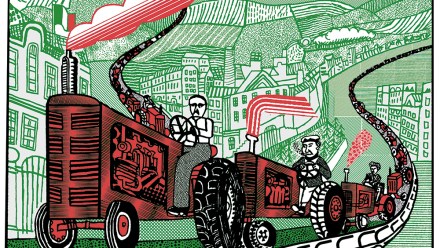
Cornwall’s fishermen are being drowned by bureaucracy 

Bill Johnson is the assistant harbour master in Mousehole and skipper of the pilot Jen, a small boat of the inshore fleet. I know him because in summer, when tourists fill the tiny harbour with pleasure craft, he stands on the wharf offering conversation and advice. He is, of course, regarding the wreckage of Mousehole as a centre of the pilchard industry and home to Cornish people. A century ago, the harbour was a forest of masts: now just six fishing boats sail out of here. The rest are kayaks and paddleboards. But Bill is a kindly man, and he smiles on them. Fishermen were poster boys for Brexit, much lauded, discussed and used. It was easy to persuade them to the cause: fishermen understand freedom.

The dying art of thank-you letters

‘Still no word of thanks. No letter, no email, no text. No acknowledgement that it even arrived. Did it arrive? Did I post it to the wrong postcode? Did I tap in the wrong account number? Of course it arrived. He just can’t be bothered to thank me. Such bad manners! I blame his mother for not bringing him up properly.’ These are the insomniac thoughts of the older generation as they try to come to terms with the younger generation’s bewildering non-thanking habit. The silence of early January, the non-landing of letters from grandchildren and godchildren on the mat, the non-pinging of affectionate emails of gratitude, really pains them, brought up as they were on the belief that writing thank-you letters is good manners, and good manners mean everything.

My Christmas in Bucharest as Ceausescu fell

I never intended to spend Christmas 1989 on a short break in Bucharest. I had enjoyed a long, thrilling autumn in dark, sad cities in eastern Europe, running and marching with ecstatic crowds as they overthrew communism. But this had all been in the calmer, less exotic regions of the Warsaw Pact, where dumplings were on the menu, passions were equally stodgy, and both rebels and governments would rather hold press conferences than open fire on each other. I was in lovely but dreary Dresden when news came that Nicolae Ceausescu’s baroque dictatorship was tottering, and my foreign desk urged me to head to Hungary and on into Romania as soon as the border opened, if it did. Air travel was impossible. It had to be by land.

Does Keir Starmer stack up?

Few Labour politicians have anything nice to say about Margaret Thatcher, so when Keir Starmer wrote an op-ed over the weekend praising her for bringing ‘meaningful change’ he was looking for a reaction. The left of the party obliged, calling her legacy destructive and chastising Starmer. Even some former Blairites stepped in to say the Labour leader had gone too far. His comments were part of his ongoing pitch to win over former Tory voters who feel, as he puts it, ‘disillusioned, frustrated, angry, worried’. But for those who are trying to get a sense of Starmer and his plans for the country, his article is unlikely to have helped.

The myth of the Boston Tea Party

At 6.30 p.m. on Thursday 16 December 1773, a group of between 100 and 150 Americans raided three East India Company merchantmen moored in Boston and threw 92,000lb of tea (worth $1.7 million in today’s terms) into the harbour. A central part of the American founding story, the 250th anniversary of the Boston Tea Party is being commemorated this month as a key moment when patriotic Americans fought back against the greedy British and their oppressive taxation policies that forced up prices on commodities such as tea, which in turn led to the American Revolution.

The Ukrainian war can only end in a peace deal

Kyiv In Ukraine, the political mood has become sombre and fractious. As the front lines settle into stalemate, Russia ramps up for a new season of missile and drone attacks, and vital US support for Ukraine’s war effort crumbles under partisan attack in Congress, one existential question looms large. Should Volodymyr Zelensky continue to fight endlessly in pursuit of a comprehensive defeat of Russia which may be unattainable – or should he consider cutting his losses and reaching a compromise? At the war’s outset, the Ukrainian President had a clear answer. ‘I am sure there are people who won’t be satisfied with any kind of peace [with Russia] under any conditions at any time,’ he told the Associated Press.

Make drag innocent again!

One of the most regrettable things about the last decade of general cultural awfulness has been the politicisation and sexualisation of drag. The crude and frequently obvious art of blokes dolled up in women’s clobber has been a golden thread running through British comedy for centuries, from Falstaff in The Merry Wives of Windsor to Jack Duckworth as Ida Fagg in Coronation Street. Now, like everything else we used to enjoy, it’s wrapped up in the suffocating shroud of American identity politics. Astonishingly, drag is regularly referred to as a way for a man to find his ‘authentic self’. This surely is the opposite of its primal function – to dress up as something you are evidently not, for a giggle.

Help! I’m trapped in a leasehold flat

Generation Rent, we are always being told, are fed up of having to pay ‘dead’ money to their landlords. The rate of home ownership among 35- to 44-year-olds plunged from 74 per cent in 2003 to 56 per cent in 2019. But no one should think they will necessarily be better off, or feel more in control of their destiny, if they succeed in taking the plunge and buying a home. They could end up like me. Notionally, I have become a home owner by virtue of buying a one-bedroom flat in an ‘affordable housing’ scheme in Wandsworth, south London. Yet I feel more like a serf who must pay an exorbitant annual tithe to her feudal overlord. In common with the ‘owners’ of Britain’s other 4.6 million leasehold properties, I will never actually own my property.