Features

Putin’s ‘peace’ is a partitioned Ukraine

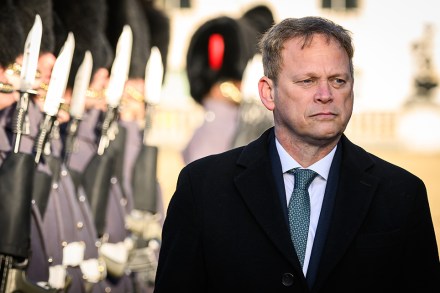
Is Vladimir Putin trying to end his war in Ukraine? According to recent reports, the Kremlin has launched a new ‘back-channel diplomacy’ to reach out to senior officials in the Joe Biden administration. Putin’s message: to signal that he could accept a ceasefire that freezes the fighting along current lines. Reactions to the story have been furious. Some Ukrainians, sheltering from Russia’s biggest-ever missile and drone assaults of the war over Christmas, saw it as evidence of a nefarious Washington insider plot to sell Kyiv down the river. President Volodymyr Zelensky dismissed Putin’s initiative as disingenuous, saying that he saw ‘no sign’ Russia genuinely wanted to negotiate. ‘We just see brazen willingness to kill,’ he told the New York Times.

Has Iran lost control of its proxies?

During a press conference in Tehran at the end of last month, Islamic Revolutionary Guard Corps spokesman Brigadier-General Ramezan Sharif claimed that ‘the Al-Aqsa Storm was one of the retaliations of the Axis of Resistance against the Zionists for the martyrdom of Qasem Soleimani’. It was an extraordinary statement. Iran had insisted that while it supported the Al-Aqsa Storm (what Hamas calls its 7 October attack), it wasn’t directly involved in its planning or execution. Israeli intelligence believes this to be true. Despite receiving significant Iranian weapons and training, Hamas had not informed Tehran in advance of its plans.

Farming is fighting its own culture wars

I have come late to farming. There was no epiphany, no eureka moment watching Clarkson’s Farm. The blame lies partly with my neighbour, who’s my running partner and a fellow Pony Club Dad. He’s an agronomist and would enliven our jogs along country lanes with talk of crop rotations. In the end, that other form of muck-raking – journalism – provided the shove I needed. After 24 years at Sky TV, I joined the first presenter line-up (of many) at GB News. I went in the hope of a fresh start at an exciting new channel, only to be thrown out of it when my ratings failed to pass muster. So, at 55, I am a student again. Or, as those who find themselves at the Royal Agricultural University in Cirencester prefer, an ‘agri’ at ‘siren’.

Darren Jones: ‘Labour will reform, not splurge’

This time next year, Darren Jones could very well be deciding how your tax money is spent. As shadow chief Treasury secretary, his days are spent having difficult discussions with would-be Labour ministers and explaining that it would be hard for them to spend any more than the Tories already are. If Labour wants to change Britain, the party will have to rely on reform rather than cash. This message would be a theme of Keir Starmer’s government, in which it is assumed Jones would be a key player. In his office, Jones, who is 37, has a framed front page proclaiming Labour’s 1997 election victory. Next to it hangs a picture of the Bristol council house he grew up in.

Aleksandr Dugin: ‘I see no reason why we should not use nuclear weapons’

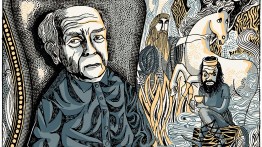
Is the invasion of Ukraine a holy war? If that is how Vladimir Putin sees it, it might have something to do with the ideas of Aleksandr Dugin, a former anti-communist who is touted by some to be the Russian President’s favourite philosopher. He is described as a Rasputin-style mystic, a comparison which is aided by his thick beard. For him, Ukraine is a proxy war against the ‘satanism’ of the West. While the level of his influence on Putin is disputed, there is no question that this unapologetic supporter of the Ukrainian invasion has had a major impact in Russian intellectual and political circles and has gained a growing audience in China, the Middle East, Latin America and the developing world.

Alexa, do you love me?

My husband and I got a Peloton bike for the usual reasons: because we were time-poor, money-rich and feeling fat. And we kept using it for the usual reason: because we wanted to please the gorgeous ghosts in the machine. The American fitness brand Peloton employs some of the most beautiful, athletic and charismatic people ever to have lived. Their job is not actually to teach an effective class to the viewers at home on their stationary bikes, or to make their users healthier and slimmer (I have accomplished neither). Rather, it is to give an impression of warmth and intimacy while staring at a silent camera lens in an empty room. My favourite coaches (since you asked) are Tumi, Ally, Emma and Denis, the last of whom has a particularly passionate following among older ladies.

How to make an Old Fashioned, by Kendall Jenner

This Old Fashioned is my go-to for the holiday season. The rich and complex flavour of the tequila pairs so well with bitters and orange. It’s made to be savoured and is a classic Old Fashioned with a twist. I made this cocktail with my mom over the summer for National Tequila Day. It has become one of our favourites ever since. Ingredients 75 ml 818 Tequila Añejo 1 sugar cube 2 dashes of Angostura bitters A splash of water A twist of orange peel 1 cocktail cherry Preparation Add bitters, water and sugar to glass. Muddle to make a paste. Add ice cube and tequila. Garnish with a cocktail cherry and orange peel. Enjoy!

‘I am working night and day’: Rishi Sunak on Jilly Cooper, immigration – and his plan for the next election

This Christmas, Rishi Sunak will be reading Tackle!, Jilly Cooper’s new bonkbuster. Cooper sent the Prime Minister a signed copy after she discovered – through The Spectator – that he is a fan. Tackle! is about an equestrian-turned-football manager who inspires a ragtag team to unexpected victory. ‘If you want to score, you’ve got to be a player,’ declares the cover. ‘It is literally on my bedside table,’ says Sunak when we meet in his office in 10 Downing Street. ‘This is the first year in a long time that I have actually read some fiction,’ he says. ‘I read these lovely books, which is good escapism for me.

The literary canon of P.G. Wodehouse

When T.S. Eliot published ‘The Waste Land’ in 1922, it was seen as a masterpiece of modernism. It was, but it was also a work steeped in cultural tradition. This was made apparent in the ‘Notes on The Waste Land’ with which Eliot supplemented his poem. In them, he glossed its literary echoes – the Upanishads, Dante, Chaucer, Mallory, Shakespeare, etc. Another master of the modern who came to his greatest flourishing between the world wars was P.G. Wodehouse. Though seven years older than Eliot, Wodehouse first achieved real fame at much the same time, after the publication of The Inimitable Jeeves in 1923. Like Eliot’s, his work’s modernity, making such innovative use of the main literary traditions of the West, would have been unimaginable in the 19th century.

Black holes are changing our understanding of everything

One thing upon which my friend Jeremy Clarke and I always agreed is the value of seeing the world from different points of view. In that sense we partially agreed on everything. This essential skill needs to be learned, and I assert that nature is a wonderful teacher. Perhaps the most surprising and bamboozling example can be found in the study of black holes.   Here are two apparently contradictory properties of black holes. When viewed from the outside, time stops on the event horizon – the boundary that marks the black hole’s edge, beyond which light cannot escape – and anyone attempting to cross into the interior would be seen frozen there forever.

I’m a Tory trapped in a Labour voter’s body

I’ve been on tour around the UK with my stage show about identity called A Show All About You. In Edinburgh it coincided with the last weekend of my retrospective at the Royal Scottish Academy. I dropped in for an hour and sat on a bench so people could come and sit next to me to chat. Someone said on viewing my exhibition, which deals with many social issues, that they could not tell which way I vote. This pleased me. In my stage show I talk a lot about the tense relationship between our conscious intellect and our embodied intuition. I describe myself as a Tory voter trapped in a Labour voter’s body. I also talk about the dangers of ‘in’ groups and ‘out’ groups, then I ask the audience if they would support proportional representation.

The case for photo-bombing

A few months ago, I visited Angkor Wat, the majestic temple in present-day Cambodia that once stood at the centre of a vast empire. As the five towers of the palace came into view, I was, despite the intense heat, fully immersed in the beauty of the place. I imagined how excited a visitor from a faraway land in the 12th century, full of anticipation for a meeting at court, would have felt arriving at what was then the largest settlement on Earth. And like that imaginary visitor, I felt propelled forward, impatient to cross the moat that separated me from the edifice, to get a closer look. At that moment, I heard a confident American voice. ‘Excuse me,’ the man shouted, as he crouched on the floor, phone in hand. ‘I’m taking a picture.

Did England lose its mind in the pandemic?

My dog Sonny broke my finger earlier this year. He’s a Chart Polski, which translates as ‘Polish sighthound’, and he’s one of about 700 in the world. I was trying to stop him from going after a deer. Even with a muzzle, he could’ve felled it. Chart Polskis hurl themselves in front of the deer’s legs to trip it with their impossibly strong necks. On this occasion, Sonny, who I named after the boxer Sonny Liston, pulled me down a mountain. Because of my broken finger, I came up with a new temporary playing technique. I figured that if the jazz great Django Reinhardt could play guitar with two fingers, then I could have a go on the violin with three. I played a couple of gigs in Germany and no one noticed the difference.

The hell of putting on a Christmas play

In July, when I was asked to confect ‘another Christmas entertainment’ for my community, I viewed such a distant elephant with equanimity. Like memories of the pain of childbirth, the nightmares of amateur dramatics soon fade. Besides, I’d done this many times and survived to tell the tale. All I needed was to reassemble last year’s cast and then write something for them to perform. A piece of cake.  By October I was seeing things differently. The steepness of the gradient we had to climb was becoming all too clear. Amateur dramatics are held together by string and paperclips. There are no understudies Very few of this year’s cast are seasoned performers.

48 ways the Tories could win

Conservative strategists gawp at their end-of-year opinion-poll ratings like European space officials watching another Ariane rocket plop into the ocean off French Guiana. Fret not! To misquote Emperor Hirohito, electoral fortunes may have developed not necessarily to their advantage, but extinction could yet be averted by adopting the following measures: Be more cheerful and stop Rishi doing his ‘your cat just died’ voice. Scrap the government car service and tell ministers to take National Express coaches or hitchhike. Give National Express coach drivers a small pourboire as compensation for having to accept these difficult new passengers. Short, sharp Bill to remove the last hereditary peers from the Lords. Bishops to be given the heave-ho, too.

Remembering Jeremy Clarke through his books

On a hot afternoon in October, I joined a lunch party. By the time I arrived, the company was on coffee and liqueurs. A pretty woman in her seventies mentioned an academic friend who was downsizing and how the prospect of getting rid of thousands of books had upset him so much he sought help from a counsellor. The counsellor had said: ‘But they’re only books.’ My husband, Jeremy Clarke, wrote the Low Life column in this magazine for 23 years until his death in May. In one of his columns, he wrote about how, after the sale of his mother’s house in Devon (where he’d lived for 30 years), he sent two Mercedes Sprinter van loads of stuff, mostly books, here to Provence. Seventy boxes arrived, containing around 2,500 volumes.

I’ll never take culture for granted again

‘Has this been the happiest year of my life?’ I found myself asking recently. It has certainly been topped with the arrival of a third granddaughter last month. (My first, little Sara Maria, died a few years ago.) The birth of Rosie Elisabeth has taken our joy to cosmic levels, but 2023 has been a succession of delights, mainly connected to the concerts I’ve been able to conduct around the globe, from St Louis to Tallinn. After the evils of lockdown, many of us worried that musical life would never return. But it has. I will never, ever take cultural life for granted again. One highlight this year was the culmination of a huge project at my festival in East Ayrshire, the Cumnock Tryst.