Features

Meet the western conservatives moving to Russia

Tofurious Maximus Crane was sitting in a barber’s chair in Moscow when he received the greatest news of his life. It was 19 August, the day Vladimir Putin signed a decree allowing foreigners to immigrate to Russia. Now, the 46-year-old native of Virginia Beach, Virginia, could finally achieve his life’s dream of remaining in Russia for ever. ‘For me, the decree is the best thing that ever happened in my life besides, you know, family and children,’ says Crane, a charismatic bear of an American who sports a long Old Testament beard and perfectly coiffed hipster hair. ‘I got the notification about the decree, and I jumped up out of the chair and was crying. I was very excited.

Leaving the ECHR won’t fix Britain’s immigration chaos

If you tuned into the Tory party leadership race, you will have heard rather a lot about the European Convention on Human Rights (ECHR). Robert Jenrick wants Britain to leave because it stops us deporting foreign criminals. Kemi Badenoch argues that leaving won’t fix our immigration woes. She’s not wrong. Of the 144,200 people who have arrived on small boats since the start of the crisis in 2018, just 3,788 have been returned. That’s despite the fact that, according to the left-leaning charity the Refugee Council, some 40 per cent of people who come to the UK this way are not refugees. If you apply that rather liberal calculation to the total number, 57,200 should have been made to leave. And yet here they still are.

Who do US psychics predict will win the election?

A week away from the American election, and the polls cannot tell us who will be president. But can they ever? A poll is, as the pundits always remind us, a snapshot of public opinion, not a prediction. Nate Silver himself said that anyone dissecting an individual poll is ‘just doing astrology’. So what predictions are actual astrologers making about the election? She looks relieved when she draws the High Priestess: a trump card, but possibly not a Trump card Under the electoral college system, nationwide data is not as important as predictions for the swing states, so I look for astrologers in the seven states which will decide the election. The drawback to this methodology quickly becomes apparent: predicting the future is illegal in half of them.

The dark side of life in Cuba

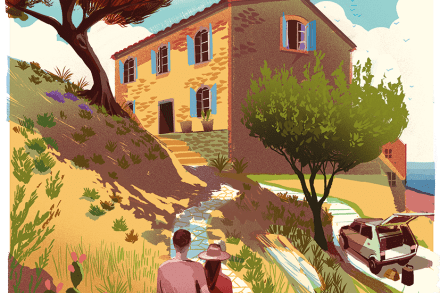
The first scent of trouble came when Cuba’s government ordered all its non-essential workers home. By packing them off (and there are plenty of them, given Cuba is one of the world’s last centrally planned communist states) the government hoped the island’s exhausted national power grid would get a breather. It didn’t work, the main power station crashed, and Cuba went dark. At first, I didn’t think it was a big deal. Power cuts in this all-but-bankrupt state have long been a daily scourge. But it turns out there’s a categoric difference between 20 and 24 hours of blackout. I came to Cuba in 2018 for a three-month stay and here I am, now married with a three-year-old son. Friends call this my ‘Cuban midlife crisis’, which I resent.

Albania has long lived in Italy’s shadow

Albanians are descended from the most ancient of European peoples, the Illyrians. The country came into existence only after 1912 with the demise of Ottoman power in Europe. Its first ruler, the glorified Muslim chieftain King Zog, was hounded out by Mussolini when fascist Italy invaded in 1939. (Zog was put up in London for a while at the Ritz.) Five years later the Nazi Germans were expelled by the Albanian resistance fighter Enver Hoxha. Outwardly a Stalinist, the artful Hoxha was a Muslim-born Ottoman dandy figure who terrorised his Balkan fiefdom through retaliatory murders, purges and the trap-door disappearance of class enemies. Albania has long lived in Italy’s shadow.

Trump makes America laugh again

‘Tradition holds that I’m supposed to tell a few self-deprecating jokes this evening,’ said Donald Trump in his speech at the Al Smith Dinner in New York on Friday night. ‘So here it goes.’ He paused. ‘Nope. I’ve got nothing… There’s nothing to say. I guess I just don’t see the point at taking shots at myself when other people have been shooting at me.’ The crowd roared. Many of the jokes were close to the bone: ‘We have someone in the White House who can barely talk, barely put together two coherent sentences, who seems to have mental faculties of a child. It’s a person that has nothing going, no intelligence whatsoever. But enough about Kamala Harris.’ We can’t know whether Harris herself would have laughed.

Decline and fall: how university education became infantilised

Last month, after 21 years studying and teaching Classics at the University of Cambridge, I resigned. I loved my job. And it’s precisely because I loved the job I was paid to do, and because I believe so firmly in preserving the excellence of higher education, in Britain and beyond, that I have left. When I arrived in Cambridge two decades ago, giants were still walking the earth. Students could attend any lecture, at any level, in any department; graduate and research seminars were open to any interested party, and you could sit at the feet of the greats. Unforgettable gatherings of everyone from undergraduates to professors would discuss the big questions late into the night.

Is it really too much to ask students to read children’s books?

The Shakespeare scholar Sir Jonathan Bate recently claimed that students are struggling to read long books. Depressingly, he’s right. I could have told him the same thing five years ago, when I was teaching at a well-respected Russell Group university. The problem isn’t that students won’t read Moby-Dick in five days. It’s that even if you give them what they want, they’ll still find fault. This all points to a tussle at the heart of modern education: do you cave in to the blighters, or not? To my surprise, when convening a BA course on children’s literature, I discovered that some of my students balked at reading children’s books. The course looked at the whole caboodle from the Romantics to the present day.

Kemi vs Robert: who would be the best Tory leader?

Ed West on Robert Jenrick It’s a testimony to the sheer unpopularity of Keir Starmer’s government that only three months after voters gave the Conservatives their biggest electoral kicking in two centuries, Labour has already lost its polling lead. Indeed, it has achieved this so quickly that its opponents still don’t even have a leader. But as much as Labour has failed to impress, its dire poll numbers reflect a wider trend across the western world, where political leaders are now roundly hated almost everywhere. This suggests something more profound is going on. If politicians are disliked, it’s in part because western countries are so badly governed, although Britain seems especially so.

The tragedy of Scotland’s church sell-off

‘We are not a heritage society,’ insisted the Rev David Cameron, Convener of the Assembly Trustees of the Church of Scotland. Speaking to the BBC in January, Mr Cameron claimed the Church has a ‘surplus of buildings and large property’, and that there is a need ‘to address our estate’. A church or kirk is usually the most historically important building in any given town or village In other words, the Church of Scotland is selling off its churches. Not just one or two here or there, but a lot, and for cut-price rates. Of course, the Church insists that the move is ‘painful but essential’, aping the language of a corporate multinational’s HR department. Yet the sheer scale and decisiveness of the move belie the patronising smiles of the Church hierarchy.

Has your local shop blacklisted you?

Britain’s obsession with surveillance is reaching new heights. Several of the UK’s largest retailers have quietly installed facial recognition checkpoints on their doorways and inside their shops. It means that automated identity checks are taking place on our high streets without customers even being aware of it. You won’t be informed if your photo is taken and added to a watchlist, and no police report is required The cameras look like any other CCTV cameras, except they take a biometric scan of every customer’s face, like at a passport e-gate. The facial recognition scans are then compared against a private database run by the software company Facewatch.

‘Not all suffering can be relieved’: A debate on assisted dying

As Kim Leadbeater’s private member’s bill comes before the Commons, the former justice secretary Lord Falconer (who introduced a similar bill to the Lords) and The Spectator’s chairman Lord Moore debate assisted dying. ‘When people talk about the moral overreach of the state, they are blind to the fact the state is already there’ CHARLIE FALCONER: The law has effectively broken down. If you assist anybody to take their own life, you’re immediately guilty of an offence, irrespective of motive, and you can be sent to prison for a maximum of 14 years. Even the authorities no longer think that’s enforceable.

Does anyone know what Keir Starmer is thinking?

Even at the best of times, Keir Starmer has remained tantalisingly out of reach for those who crave simple definitions. Before the election, he consistently defied demands to set out a big vision or draw straight dividing lines. He’s always more comfortable with ambiguity and complexity. As he liked to say during the final days of the campaign, ‘There’s always a “but” with me somewhere.’ Now, of course, he really isn’t having the best of times. All those ‘buts’ are piling up. The ill-disciplined briefing battle within his team appeared to elevate office politics above real politics. The Treasury decision to means-test pensioners’ winter fuel allowances was inept. Most damaging of all were the expensive freebies which smouldered on for almost a month.

Inside the race for the Chancellor of Oxford

What do we mean these days when we talk about the British ‘establishment’? When Henry Fairlie coined the term in 1955 – in The Spectator, of course – he defined it as ‘the whole matrix of official and social relations within which power is exercised’. A lot has changed in the past 70 years. The influence of the monarchy has diminished, the class system no longer holds sway, party politics is almost unrecognisable. Yet the idea of the establishment retains its powerful allure and, in the election of the next chancellor of Oxford University, we see how much it still matters to Britain’s 21st-century elite.

Rachel Reeves has backed herself into a corner on the Budget

As a championship chess player, Rachel Reeves must know that the first few moves can be some of the most important of the game. In preparing her Budget, she appears to be starting her tenure as Chancellor from a position of strength. Her background in the Bank of England gives her institutional credibility, and the size of Labour’s majority means she faces little opposition in the Commons. But the truth is that her room for manoeuvre has been dramatically limited by decisions she has already made. Unforced early errors, as well as an election strategy that prematurely took options off the table, have left her with only a handful of choices, fewer of which are palatable.

Meloni’s migration strategy is working – and the rest of Europe is watching

Giorgia Meloni, Italy’s first female Prime Minister, has this week achieved what the Tories failed so fatally to do with their doomed Rwanda scheme. Thanks to her determination and charm, Italy has become the first European nation to successfully offshore illegal migrants to a non-EU country. However bogus the claims of migrants, once they’re in the EU it’s virtually impossible to deport them  Under Meloni’s scheme, migrants picked up by Italian naval and coastguard vessels from small boats in the Sicilian Channel will be ferried directly to Albania, 750 miles away. They will not set foot in Italy. It is potentially a game-changer, particularly as voter fury across Europe forces politicians to do something to stop illegal migrants.

Meet England’s octogenarian matador

It’s a sunny October morning at a bull-breeding ranch north of Seville, and 82-year-old Frank Evans is preparing to step into the ring. Born in Salford, Evans is one of the few British men ever to become a professional bullfighter, or torero. There is something of the retired rock star about him. He is dressed in the traditional matador’s outfit of black trousers, white shirt and red-and-black waistcoat. Although a little frail, he is toned. His thinning hair is dyed brown but still reaches his shoulders. ‘There are a million people in the local cemetery who’d love to have my eye problem’ Evans and I are here for a tienta – a practice session in a private bullring, in which young cows and bulls are assessed for breeding.

Ukraine’s Nato fantasy

Ukraine’s President Zelensky was in Downing Street last week – as well as Paris, Rome, Berlin and Dubrovnik – asking for Nato membership. In every city, he heard the same ‘not yet’ as he’d received in Washington last month. Some of Kyiv’s western allies believe membership is the only way to guarantee Ukraine’s independence. Russia has never attacked a Nato country, because of the Article 5 guarantee that an attack against one is an attack against all. Therefore, Ukraine will never be safe from Russia unless it joins. The US government wants to avoid the war that Ukrainian membership would oblige it to fight But there’s a fundamental flaw to this logic: Ukraine cannot join Nato in the foreseeable future.

The mystery of Huw Edwards’s missing phone

The best thing about being a playwright? The satisfaction of creativity. The worst? Press-night parties attended by friends, industry people and celebs. Playwright Terry Johnson says he knows writers who find such occasions so hellish they’ve been put off writing plays altogether. The problem is the corrosive, deeply unsettling belief that everyone is lying to you. Everyone knows the rules: on press night, say something nice, even if it was a giant turkey. No negatives. That’s the critic’s job. But writers know this, so never believe any compliment, ever, even if the person paying it is telling the truth. The only time a writer can be sure of something is when they hear the dreaded words ‘You did it again!’ or ‘What an achievement!

Meeting the Chagos islanders of Crawley

Departing Gatwick train station, with nine minutes till Crawley, I tried to get in the head of a Chagossian. In 2002, Tony Blair gave everyone from the Chagos Islands British citizenship, permitting 10,000 Chagossians to live wherever they liked in the UK. About 3,500 have chosen Crawley. And what a weird thing to do. They took a 6,000-mile Air Mauritius flight to Gatwick airport to start a new life, then settled just a mile from the runway. Why so close? I was visiting Crawley to meet these people I didn’t understand, to find out what they made of our government handing over their islands to Mauritius. On the train I clicked through a few Facebook groups and found a man named Maxwell Evenor who said he was around to talk.