Features

The Christian case for hunting

When I was a teenager, my closest friend, Henry, would vanish into the Shropshire Hills over the hunting season’s weekends. When he returned, it was with a wind-beaten face, wearing the traditional beagler’s white breeks and green socks, with a leather hunting whip slung over his shoulder. I knew nothing of this world, until one late autumnal Saturday he invited me to join him. As I watched the beagle pack race across the landscape, I realised I had stepped into a magical event, a hunting scene from a medieval tapestry brought to life. I was hooked. To this day, many sporting Christians throughout Europe honour St Hubert with songs and prayers after a hunt Beagling was my entry into field sports, but soon the door might be closed to others.

‘I’m a new kind of Christian’: Jordan Peterson on faith, family and the future of the right

Professor Jordan Peterson is a Canadian psychologist, author and commentator whose latest book, We Who Wrestle with God, is about the psychological significance of Bible stories. He speaks to The Spectator’s editor Michael Gove about supernatural relationships, the folly of net zero and what’s next for Europe. ‘A lot of the atheist argument misses the mark because the God that’s being disbelieved is never defined’ MICHAEL GOVE: In your book, you work intimately with Bible stories to bring out their meaning, their relevance and their importance. Why should anyone read the Bible? JORDAN PETERSON: The simple answer is because you have to have your story straight or you go off course badly.

‘They don’t want me to rise again’: China’s gene-editing scientist on why he’s back in the lab

Before he agrees to be interviewed, He Jiankui has one request: that he is introduced as a ‘gene editing pioneer’. This may come across as grandiose, but it is also indisputable. No one else in history, after all, can say they have created genetically edited human beings. In 2018, He dropped the mother of all scientific bombs when he announced that he had used Crispr, a gene-editing technique, to alter the DNA of two babies. In a YouTube video, He explained that the twins, ‘two beautiful Chinese girls’, codenamed Lulu and Nana, had been born safely just a few weeks before in Shenzhen. Both had had their embryos edited to prevent them catching HIV from their father. Later, it emerged that another woman was pregnant with a genetically modified baby.

Good riddance to 2024

January. When the assisted dying bill comes in, I’ll be first in the queue. Non-stop nosebleeds, Covid-esque symptoms, leg cramps, a cough resistant to antibiotics, and unremunerated press interviews for my Burton/Taylor book. In the old days I’d be in New York, running amok with publicity handmaidens, going on television and racking up bills in the Gramercy Park Hotel. Now everything is done from the back-bedroom here in Hastings, where I dwell in the slum district, my window overlooking immigrants doing their laundry. Paul Bailey went to the trouble of getting his name removed from my acknowledgements. That’s real hatred February. First anniversary of my myocardial infarction, when I collapsed in Morrisons car park.

How my father’s bedtime stories shaped my life

It’s half an hour before lights out when my dad arrives at my bedroom door holding Roald Dahl’s Danny the Champion of the World. He kicks off his shoes, loosens his tie and wedges himself next to me in my small single bed, his toes waggling in their socks as they regain freedom after a long day in the office. In the evening he smells of the menthol toothpicks he always carries in his top pocket (in the morning, when he drops me off at school, he smells of the spicy pink toothpaste which I once tried and which burned the roof of my mouth).

Christmas on patrol with the Royal Navy’s submariners

This Christmas, a Royal Navy Trident submarine will be quietly prowling the seas as part of the Continuous At Sea Deterrent mission. She will have slipped out of HM Naval Base Clyde in Scotland in late August. Her location is a secret, known only to a handful of officers aboard. Even the highest ranks of the navy, such as the Chief of Defence Staff and the First Sea Lord, remain unaware of where their ‘bomber’ is. For the rest of the crew, the submarine’s whereabouts are a mystery, with only the temperature of the water against the hull offering them a vague sense of geography.

How pagan is Christmas?

Many people today feel an ambivalence towards the history of the Christmas festival. They sense that it has deep pre-Christian roots and yet are also aware that most of the actual customs associated with it are relatively modern. The problem is that both views are correct. Most of the current trappings of the season are Victorian inventions or importations: the cards, the tree, the stocking, the turkey and Father Christmas with his reindeer and his sack of presents. Even local seasonal activities which look genuinely primeval have turned out not to be.

How to turn eggnog into a superfood

Recently, scientists were baffled by the discovery that ice cream is a superfood. Yes, that’s right, people who eat ice cream tend to be healthier than those who don’t. A lot healthier. It’s ‘nutrition science’s most preposterous result’, according to the Atlantic. In fact, there’s nothing preposterous about it, if you actually know anything about the ingredients that go into ice cream. You’ve got high-quality milk protein and fat, sugars and a whole lot of vitamins and minerals. The fats make the protein and the vitamins and minerals more bioavailable – meaning you can absorb more – and they slow the digestion of the sugars, so you don’t get a massive sugar spike, just a gentle release of energy. The same could be said of eggnog.

The Andrew problem: a short story

People offended by name-dropping are absolutely no fun. I’ve experimented with this concept on five continents – OK, four: Antarctica’s social whirl isn’t what it might be – and those who roll their eyes at shocking new developments in the world of celebrity are just the worst. Not content with having zero information to offer, they diminish what is given, and in a more efficient world such bores would be carried at high speed to the guillotine.

The lure of the spy novel

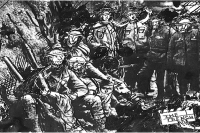
Anniversaries. Back in mid-December 1998, 26 years ago to the month, we wrapped my first (and probably only) feature film as a director, The Trench. I always think about the film on 11 November, because during the shoot we observed a uniquely different minute’s silence in the labyrinth of trenches we had constructed on a soundstage at Bray Studios in Berkshire. The film follows a squad of young soldiers as they wait, over two fraught days in 1916, for the Battle of the Somme to begin. We paused filming at 11 a.m. and fell silent. I was standing in the frontline trench with a dozen young actors who were all in their totally authentic first world war uniforms, Lee-Enfield rifles in their hands. Time travel.

The end of Christendom is nigh

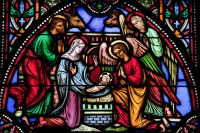
If you are of a traditional turn of mind, you might well go to church this Christmas, sing the carols you knew in childhood and feel a bit of a Dickensian glow. If you are already Christian, the experience will confirm your sense that what is commemorated is the most stupendous thing in human history – the arrival of Jesus Christ, whether or not you believe the stories as told in the readings. Statistically, however, it is highly unlikely that you will be going back to church for months – probably not until next year. If you did venture into your local church on a normal Sunday, you would find a tiny band of old people like me who go regularly and who are wondering, all the time, how much longer it can all continue.

A Christian revival is under way

This is my second Christmas as a Christian. As an atheist, I had dismissed the bright lights and customs of Christmas as traditions that had evolved to keep our spirits up as the cold of winter creeps in. But the more I learn about, and participate in, the rituals of my adopted faith, the less Grinch-like I become. Christmas isn’t just crass commercialism, it’s vital to a western revival. Celebrating it is more important than ever. The date of 25 December was significant before the birth of Christ of course. It coincided with the Ancient Roman celebration of Winter Solstice, just as 25 March was the Spring Equinox.

Demonia: a short story

They passed into the harbour of Favignana at the beginning of spring, the island’s single small mountain heaving into view from the Trapani ferry, burned brown by centuries of parch and abandonment. A disused Bourbon castle sprawled upon its summit, while below it near the water stood an old tuna-processing factory with 19th-century industrial chimneys. The raffish little port lay alongside. They came down on to a deserted quay with the harbour on their right filled with the pale blue and copper boats of the bluefin fishermen listing in shallows. The fishermen seemed to have walked off into a different life, perhaps never to return.

Elon Musk is wrong about the Roman Empire

I was in Washington D.C. during The Election, living halfway between the Capitol and White House. Concerned friends suggested I move to some boutique hotel in Virginia for election week, in case of ‘trouble’ in Washington. Or at least, they said, I should stock up the freezer, as I might not be able to get safely to the shops for several days if the results were bitterly contested. I took the freezer option (plus an enhanced cellar) and planned a week of working from home, to follow the news from each swing state, fortified by my supplies. It was all for nothing. By the time I woke up on the morning after the election, everything was settled: Mr Trump had incontestably won. So I gave up the working-from-home option and walked to my office on the Mall.

I hope nobody watches Meet the Rees-Moggs

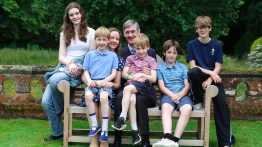
Towards the end of last year, the production company Optomen TV contacted Jacob about the possibility of filming a documentary series on what life was like as an MP. The idea was to start shooting in June, since it was assumed the show would build to the natural finale of an autumn general election and its aftermath. A pilot day was filmed in Somerset in March, when the children were home from school and we hosted our annual meet for the Mendip Farmers Hunt. The producers decided the show could work. Then Rishi Sunak fired the starting gun for the election on 22 May, before we’d signed anything. Jacob took the plunge and agreed to start filming that afternoon. The crew were already waiting when I returned from school with the children.

The otherworldly artist who made his name at The Spectator

There is something otherworldly about Rory McEwen’s paintings of plants, leaves and fruit. They are indisputably beautiful, often breathtakingly so, but they are almost eerie in their self-possession. They are like planets vibrating to the music of the spheres – quivering with arrested energy. These images are super-real (rather than surreal) but they sometimes have a surreal edge that can be disturbing. ‘I paint flowers as a way of getting as close as possible to what I perceive as the truth’ Although best known for painting these botanical watercolours on vellum, Mc-Ewen (1932–82) was a man of many parts: an extraordinarily talented figure, a poet and broadcaster, a folk and blues musician as well as, for many, the greatest botanical painter of the past hundred years.

What The Spectator taught Benjamin Franklin

Christmas came early this year. No, I’m not moaning about the carols that my local café started piping at the beginning of September (although that’s enough to enrage any priest). This year my first proper Christmas moment occurred two weeks early when a lovely couple chose to have not one but two Christmas carols for their wedding. We hadn’t even hit December before I found myself in the curmudgeonly position of muttering ‘Except Easter’ as a full church belted out the line ‘This holy tide of Christmas all other doth efface’. It was all very jolly, even if I felt momentarily Scroogelike. Not that this was the most amusing of the winter weddings that we’ve held at my church, St Bartholomew the Great in West Smithfield.

Notes from a national treasure

I’ve started rehearsals for the pantomime Beauty and the Beast at Richmond Theatre: two shows a day and just 13 days to learn everything, with songs, tongue-tying shticks, ghouls, hairy beasts and all. It’s like weekly rep with falsies and fart jokes. At the first rehearsal I confess I felt a little out of place in the cast of ridiculously bright-eyed young things with shiny cheeks and Lycra shorts. The director asked us all to introduce ourselves in one sentence. ‘I’m Maureen Lipman,’ I muttered, ‘and I’m a fucking National Treasure.’ The baked potato I eat in a café near the old Battersea Town Hall, now a slightly bedraggled, palazzo-style arts centre, may have been put in the oven in 1946, when I was. It’s an unhealthy shade of taupe.