Features

Do no harm: the progressive case against assisted dying

Next week, parliament will have its first opportunity to vote on assisted dying in almost a decade. This is a matter of conscience; it supersedes party politics and each MP is rightly given the freedom to make up their own mind. I sympathise with many of the views expressed on both sides of this debate, which are put forward in good faith and built from a genuine desire to achieve the best outcomes for patients. While I disagree with my colleagues who have come out in support of this bill, I do not doubt for a second that they do so in accordance with their genuinely held beliefs. I sincerely hope next week sees a high-quality, respectful debate. This is no less than people deserve. After much consideration, I have decided I will be voting against the bill.

Fear and gloaming at Whitby Goth Weekend

Every April and every Halloween weekend, Whitby in Yorkshire is chock-full of goths. As I seem to be The Spectator’s adopted goth, I was asked if I might like to write about Whitby Goth Weekend (WGW). Goth is a fashion that emphasises darkness and death: Edgar Allan Poe and Alice Cooper are the best examples. But the only thing to fear from WGW is the horrific train journey. It took six hours to go from King’s Cross to Whitby. Whoever called the TransPennine Express an express needs to explain themselves. When I finally got to Whitby, I was met by thousands of people in costumes. Even the dogs were taking part. Some were wearing wings covered in silver cobwebs, others had orange witches’ hats. One was dressed as a bat.

Welcome to life on Planet Elon

On 13 July this year, an assassin’s bullet grazed the ear of Donald Trump as he turned his head on stage in Butler, Pennsylvania. The whole world saw it and his response: ‘Fight, fight, fight.’ For Elon Musk, this was not just a news event but a galvanising and clarifying moment. He immediately posted a video of the shooting to X and wrote: ‘I fully endorse President Trump and hope for his rapid recovery.’ Musk is different from most people. For him, going all-in really means going all-in. When Trump returned to Butler last month, he was joined on stage by the billionaire. Musk is now one of the most important figures in the team around the President-elect as he prepares his new administration.

Labour’s war with Elon Musk

How do you solve a problem like Elon? That is the dilemma facing Keir Starmer. Musk seems particularly exercised about the state of the UK and is quick to criticise the man he calls ‘two-tier Keir’. Using his platform X, he has weighed in on just about all the worst Labour news, from over-taxing farmers to mass-releasing prisoners while locking up others for speaking freely about the Southport riots. ‘Don’t expect him to be invited in for a fireside chat any time soon,’ says a minister. Now, following Donald Trump’s re-election, another story could bring Starmer’s inner circle into a direct confrontation with Musk, plunging the PM’s top aide into a high-profile congressional investigation.

After Welby: what’s next for the Church of England?

It’s taken him more than a decade, but Justin Welby has finally united the Church of England. The petition calling for him to resign over the findings of the Makin Review into the serial abuser John Smyth was set up by three clergymen who would normally disagree: Dr Ian Paul, Robert Thompson and Marcus Walker, the spirit animals of the C of E’s evangelical, liberal and High Church wings. ‘Over any other issue Ian Paul and Robert Thompson would practically be suggesting pistols at dawn across the Synod chamber,’ says one member of the General Synod. Yet they were united in their anger against the Archbishop of Canterbury and in their conviction that he needed to resign.

Keir Starmer’s choice of Attorney General should concern conservatives

Of all Keir Starmer’s appointments to government, none have been so personal or politically significant as his choice of Attorney General. The Prime Minister’s politics have been shaped, refined and hardened by his time as a human-rights barrister. The role of Attorney General – the government’s chief legal adviser and the minister responsible for the Crown Prosecution Service, which Starmer ran as director of public prosecutions – is of critical importance to him. While the PM may or may not take a close interest in who is minister for planning, veterans or food security, he will have thought very carefully about who should be his AG. The choice of Richard Hermer is deeply revealing – and should be profoundly worrying.

The appalling truth about London’s ambulance service

‘An old lady’s fallen down – quick! She’s bleeding. Come help.’ An elderly woman lay on the entrance steps of the block of mansion flats, food from a Tesco bag spilled around her, blood spreading on the stone. It was clear she’d tripped and banged her forehead, opening a large gash over her right eye. The courier had already tried to call an ambulance, but been put on hold. He had to continue his delivery run, so he’d begun ringing doorbells to summon assistance. The lady was groggy but awake. I asked her name – Daphne. I helped her sit up, slowly, and propped her against the doorway’s cold brickwork. Checking she wouldn’t keel over, I ran inside for a box of tissues. We wadded up handfuls and pressed them on the wound to staunch the bleeding.

‘Kids were tougher in the 1990s’: what happens in Dan Pena’s £27,000 ‘tough love’ seminars?

Dan Pena has a picture of Adolf Hitler on his wall, but not any old picture. You know, not a simple portrait with Bavarian hills in the background, or a snap of the Führer doting on Helga Goebbels, Joseph’s daughter. No, Pena has a Hitler collage – Nazis marching through Nuremberg, a swastika blotting out the sky, hellfire on the horizon and, the final layer, a red and murderous photograph of the man himself superimposed on to the right-hand side. ‘Allegedly I used to hit my students in the 1990s.

Reality check: why the Democrats lost

For the past decade, Donald Trump has been the most famous and influential man on the planet. But he had too many failures and electoral defeats to his name to be able to claim he dominated a whole political era. That changed on Tuesday night. Trump will be remembered as both the 45th and the 47th President of the United States. At the time of going to press, he is very likely to win full control of Congress. He is even likely to win the popular vote – making him the first Republican to do so in 20 years. All of this will allow him to impose his will on the nation to a much greater extent than he did during his first term in office. Every country is vulnerable to this form of political appeal Back in 2016, the whiff of aberration hung over Trump’s success.

Not even close: how Trump confounded the pundits

It was supposed to be close. On the eve of election day, Donald Trump was up just 0.1 per cent in the RealClearPolitics polling average. FiveThirtyEight projected a tiny Trump advantage. PredictIt had Kamala Harris ahead. A celebrated pollster ran 80,000 simulations, and Harris won 50.015 per cent of them, versus 49.985 per cent for Trump. And it made some sense to expect a close result. With the exception of Barack Obama’s victories, every US election since 2000 has been close. In two cases, 2000 and 2016, the winner didn’t win the popular vote, which before then hadn’t happened since 1888, when Benjamin Harrison beat Grover Cleveland.

American titan: inside Donald Trump’s remarkable political comeback

Palm Beach, Florida Donald Trump’s bid to take back the White House has been triumphant. It is a decisive victory and even Trump’s bitterest enemies should recognise him for what he is: an American titan, the most extraordinary politician of our time. He has just pulled off arguably the biggest comeback in US history – a feat greater even than Richard Nixon’s Lazarus-like return in 1968. To understand the scale of his victory, recall how weakly he began. On 15 November 2022, when Trump launched his now-triumphant bid to regain the presidency, he did not seem himself.

How Trump could temper tensions in the Middle East

One of Donald Trump’s 2024 campaign ads was aimed at Jewish voters. Three stereotypical New York bubbes are kvetching about the state of the world. ‘Israel’s under attack. Anti-Semitism like I never thought I would see.’ One says: ‘Oy vey… You know Trump I never cared for, but at least he will keep us safe.’ This was a canny appeal, recognising that many American Jews were traditionally Democrats and would have to hold their noses to vote for Trump. But Trump has been – as he says himself – Israel’s ‘protector’ and Israel’s Prime Minister, Benjamin Netanyahu, was the first foreign leader to praise him for his victory: ‘Congratulations on history’s greatest comeback!’ Netanyahu signed off his message to Trump ‘in true friendship’.

Dam shame: what really caused Valencia’s floods?

Who is to blame for the devastating floods that hit Valencia on 29 October? The mob that surrounded King Felipe at the weekend and drove Prime Minister Pedro Sanchez out of town with a hail of mud and stones was angry at the failure to forecast the flood and warn people to get out of its way. The BBC would like us to be angry at man-made climate change for causing the storm – putting out a headline the very next day: ‘Scientists say climate change made Spanish floods worse.’ Charts of rainfall in Spain show no trend towards a higher frequency of more extreme downpours Yet Valencia had a similarly terrible flood in 1957, in which 81 people died, long before climate change became the go-to excuse for any bad weather.

Could inheritance tax changes help farmers in the long run?

Britain’s farmers are in a bind. Despite sitting on land worth millions, they are unable to release that wealth without selling – and many struggle to make money from what they produce. According to Defra, almost one in five farms make a loss, while a quarter made less than £25,000 last year. Yet there are parts of the Labour movement that see farmers as money-grubbing, tweed-clad elites benefiting from special tax breaks and hefty subsidies. James Buckle, a farmer from Suffolk, understands those frustrations: ‘If our farm is worth £10 million, and we’ve got these new inheritance tax rules, we’ve got to pay something like £1.6 million to pass it on. And £10 million is a ridiculous value for an asset that one person owns.

My glimpse into a childless world

If you are looking for a pointer for the future of the world, the free-diving fisherwomen on the matriarchal, shamanistic South Korean island of Jeju are not an obvious example of where we’re heading. Because the haenyeo are famously unique. And famously hardy. But what is happening to them should concern us all. In simple wetsuits they spend hours in the cold, clear waters, seeking out sea slugs, oysters, conches and abalone. They are fiercely independent – they spearheaded resistance to the Japanese in the 1930s and 1940s. But here’s the thing, as Nari (age 70) tells me in the haenyeo’s coastal mud-room: ‘We are probably the last. We have been diving since the men went to war in the 18th century, but maybe no one will do this in 20 years’ time.

Labour’s war on the countryside

Two miles from where I am writing, the neighbouring village is plastered with posters demanding ‘Say No to Pylons’. The object of loathing is a 112-mile power line from Norwich to Tilbury that would carry wind-generated electricity from the North Sea to a supposed 1.5 million homes. As a concession to the famous landscape of Dedham Vale on the Essex-Suffolk border, the cabling will run underground for 3.3 miles. But because of John Constable’s inexplicable failure to paint the rest of the route, people living near the other 108.7 miles must have their vistas ruined by 160ft pylons. The developers claim it is twice as expensive to bury power lines than to hoist them on great metal towers. Objectors disagree and demand more consultations.

Scroll model: confessions of a clickbait writer

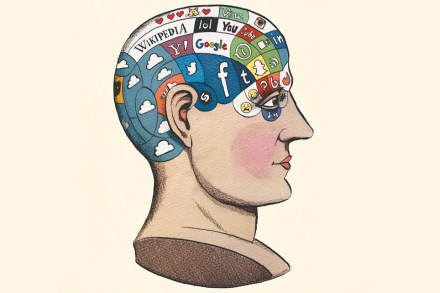
Working on a ‘trending’ news desk is the journalistic equivalent of being a battery-farmed hen. When I was still at university, I wrote pieces for one of the most-visited clickbait news sites in the UK, which boasts 300 million followers worldwide. My brief was to pump out a 400-word article in 45 minutes, every 45 minutes, for nine hours straight. My fee for these 12 articles was £125 in total (£13 per hour or, more saliently to a student, a pint for 250 words). All of you will have come across clickbait online. Some of you might even admit to having clicked on it.

Team Trump: who’s in – and who’s out?

If Donald Trump wins back the White House next week, adopt the brace position. His opponents will go beserk, inevitably, and try once again to put him in prison. Yet Trump allies might go even more crazy as they scramble for influence. Trump claims to have learned from the mistakes of his first term. But what counts as a mistake depends on who you talk to. And it’s impossible to even guess at what a Trump Redux might mean without some sense of who he talks to these days – and who might shape and influence his agenda if he is elected. The awkward truth – for insiders anyway – is that King Donald and his clan hide in plain sight.

How quickly would Trump wash his hands of Ukraine?

For American politicians, all wars are two-front wars. There is a hot battlefield somewhere in the Middle East or the South China Sea, and there’s a political battlefield in Washington, D.C. The domestic contest is decisive. The same goes for Europe. With Joe Biden riding into the sunset and the presidential campaign drawing to a close, American interest in Ukraine is winding down, too. Europeans talking tough about ‘standing up’ to Russia had better be prepared to do so on their own. The next president will find the domestic pressure to scale back involvement in Ukraine irresistible Donald Trump’s campaign message, muddled though it is, bodes ill for the Ukrainian war effort. His patience with this war would not extend 24 hours into his presidency, he warns. For J.D.