Sam Bidwell

Sam Bidwell is director of the Adam Smith Institute’s Next Generation Centre.

Badenoch is leading her party in the right direction on migration

From our UK edition

Since becoming Conservative leader in November, Kemi Badenoch has taken a restrained approach to saying what she’d do if she wins the next election. Given the slapdash ‘policy by press release’ approach of recent Conservative governments, it’s easy to see why Badenoch has been keen to avoid making careless policy announcements. But four years of silence won’t convince frustrated voters to turn back to the Tories. Announcing policy as Leader of the Opposition is a bit like planning to open a restaurant: you don’t need to reveal the whole menu, but you do need to let people know what cuisine you’ll be serving.
Migration mystery, Ipso’s trans muddle & are you a ‘trad dad’?

From our UK edition

46 min listen

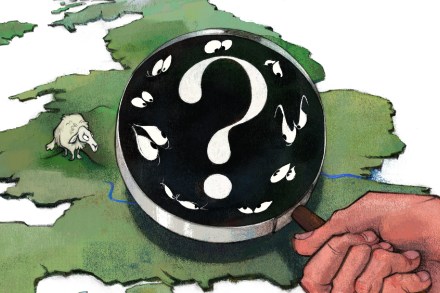
This week: why don’t we know how many people are in Britain?How many people live in the UK? It’s a straightforward question, yet the answer eludes some of the nation’s brightest statistical minds, writes Sam Bidwell for the cover this week. Whenever official figures are tested against real-world data, the population is almost always undercounted. For example, in England alone, nearly 64 million patients are registered with GP practices – higher than the Office for National Statistics (ONS)'s estimated population of 58 million. Sam argues there are serious consequences for our society at large, including for tax, housing and our utilities. Who is to blame for this data deficiency? And why is Britain so bad at tackling illegal migration?

Why don’t we know how many people are in Britain?

From our UK edition

How many people live in Britain? You would think there would be a straightforward answer, but it eludes some of the nation’s brightest statistical minds. The problem of undercounting has worsened in recent years, largely because of high post-Brexit migration This week the Office for National Statistics (ONS) projected that our population will grow by some 4.9 million people over the next seven years, bringing Britain’s official population to over 70 million. The bulk of that population growth will come from immigration – nearly ten million people. But can these projections be trusted? Never mind how many people will live in Britain in seven years, we do not know how many people are living here now.

The problem with outdated Commonwealth voting rights

From our UK edition

It’s time to decolonise Britain. And no, I’m not talking about tearing down statues of Victorian imperialists, or running roughshod over the school curriculum with self-flagellating historical revisionism. Instead, I’m talking about the fact that more than two billion people worldwide have the automatic right to vote in British elections, thanks to an archaic feature of our post-colonial citizenship laws.  Ludicrous as this might sound, Commonwealth citizens – that is, citizens of any of the Commonwealth’s 56 member states – enjoy automatic voting rights in the UK, whatever their reason for settlement in the UK and regardless of their intention to seek citizenship.

Young people are right to resent national service

From our UK edition

Young Britons like me have already done our fair share of national service. For two gruelling years, we sacrificed the best years of our lives to protect the elderly from Covid, dutifully abiding by each arbitrary restriction on our freedoms. Parties were cancelled, concerts were postponed, and evenings were spent alone, all in the name of national solidarity. Like most of my peers, my memories of university life will forever be tarnished by lockdowns, social distancing, and Zoom lectures. Even now Covid is over we still face sky-high house prices, crippling student debt, and a historically high tax burden, which squeezes working-age people in order to fund the ever-increasing cost of social care and the state pension.