Features

Why C of E bishops are so bland

Nolo episcopari. These were the words a person was expected to say on being offered an episcopal see. It basically translates as ‘Don’t bishop me!’ and goes back to at least St Ambrose, who so wanted to avoid being made a bishop that he skipped town. The Church of England has worked itself into a new position, Nemo episcopari: nobody will be bishoped. In the past year, the process for appointing new bishops to Ely and Carlisle fell apart as the Crown Nominations Commission (CNC) decided not to appoint any of the shortlisted candidates. This has created a sense of crisis in the Church, and an emergency meeting of the House of Bishops was held after a report was hastily drafted by the Bishop of London.

Britain’s foreign policy is increasingly feeble

For those of us who grew up during the Cold War, it’s heartbreaking to watch the western countries fail to defend the interests of liberal democracy. The free world is being challenged on three fronts, by Russia, Iran and China, all of whom threaten the international order established so painstakingly after the second world war. The West should be standing up for its values, yet even Britain, the great bastion of democracy, the country that heroically held out alone in 1940-41, seems to have lost the will to fight. The fact that the government has transferred sovereignty of the Chagos Islands to Mauritius is symptomatic of a country that no longer has geopolitical perspective. Britain is obsessed with its own shame over its imperial history – and has been for quite some time.

The ladies who punch

Double jab, right, hook body, duck, right… Right, left, right, upper, four hooks… Ten straight punches… And ten more… Twenty roundhouse kicks… Now the other leg… When I tell people that I’ve started kickboxing, they tend to think they’ve misheard. It’s true I’m not who one might think of as a typical fighter. I’ve spent my life working with books and now along with the books I juggle three kids and a dog. The closest I usually get to fighting is when I drag my whippet away from a scuffle in the park, or get elbowed out of the way in the school bake-sale scrum.

Labour’s new approach to China 

The Foreign Secretary David Lammy will touch down in Beijing next week to pay his respects. Next year, Rachel Reeves, the Chancellor, is expected to do the same. We haven’t seen this level of deference to the Chinese Communist party since 2019. Back then, Philip Hammond heaped praise on his hosts. He endorsed their Belt and Road initiative – of Chinese-funded infrastructure spanning the globe – and promised British co-operation ‘as we harness the “Golden Era” of UK-China relations’. The calls from Tory China hawks to label Xi’s empire ‘a systemic threat’ hold little sway with the new regime That was the high-water mark of Anglo-Chinese collaboration. George Osborne and David Cameron had courted the Chinese hard.

How I keep Question Time audiences under control

Philadelphia is the city of brotherly love – or it’s supposed to be. William Penn, good Quaker that he was, wanted his city to be a place of religious and political tolerance; a haven for those who’d been persecuted for their beliefs. There are quotations inscribed on walls everywhere about the power of love, selflessness and charity. Given how vicious and divisive this presidential election is, the message seems lost on both parties. I flew out to Philly this week for a special Question Time episode, the first time the programme has been to the US since 2008. One of our panellists has had to pull out at the last minute, so the hunt is on to find a replacement. This is a usual problem for QT. I’m more worried about the studio audience, since they will be unfamiliar with the format.

An ode to lamplighting

I was growing impatient with a recent blog by Sam Altman, who runs OpenAI, promising progress, universal prosperity, ‘a space colony, and the discovery of all of physics’ through artificial intelligence. I won’t go over that ground now, because I suddenly sat up at a passing remark he made: ‘Nobody is looking back at the past, wishing they were a lamplighter.’ Stephen’s task for Paddington council was to cycle round with his ladder fixing street lamps on the blink I’m not so sure. I used to know a lamplighter and I miss his company. His name was Stephen Fothergill, and in the 1980s he was a welcome sight in the French pub in Dean Street, Soho, late in the evening.

Israel’s Iron Prime Minister

At home, the left sees him as cynical, conniving and corrupt; while the right sees him as tired, weak and unambitious. Abroad, he is almost universally loathed and distrusted. And yet no one can deny his Machiavellian mastery of the dirty game of politics, domestic and international. Modern history has produced only two figures who fit this description. The first is Germany’s Iron Chancellor, Otto von Bismarck. The second is Israel’s Prime Minister, Benjamin Netanyahu. For Bibi – his nickname and the title of his recent autobiography – read Bibismarck. Netanyahu has been Prime Minister for almost 14 of the past 15 years, not quite the 19 years Bismarck served as German chancellor.

Are you Beatles or Stones?

You find me in the south of France, holed up in that inn of near perfection called La Colombe d’Or in St Paul de Vence. I escape here twice a year and marvel at how little has changed since the 1950s, when it was Mecca for artists of all types, painters such as Chagall and Picasso (Matisse was an early fan between the wars) and stars of stage and screen, Brigitte Bardot, Yves Montand, Simone Signoret, all looking breathtakingly cool, smoking of course. One can still catch a glimpse of the fabulous Dame Joan C and her husband Percy sipping ice cold glasses of rosé. It is a place where the living is easy but civilised – not something one can say about London these days. Oh London, what have we done to you? ‘To be tired of London…’ Hmm, sorry Dr J, but that is no longer true.

Reflections on 15 years in the editor’s chair

In the late summer of 2009, Andrew Neil invited me to his villa in the Côte d’Azur but didn’t say why. I was mystified. I was then political editor of The Spectator and in eight years of working closely with Andrew, the then chairman, he’d never hinted that he saw me as an editor. I certainly didn’t see myself as one. I was just a writer who knew nothing about how magazines were made. I’d never written a headline and didn’t even have a desk in the office. I wouldn’t know where to start. We put a notice on our fridge asking staff to make sure that two bottles of Pol Roger were chilling at all times But when Andrew offered me the job, I heard myself saying yes. Did I think I was good enough? Not even close.

Israel is reshaping the Middle East in its favour

Iran has fallen into the trap set by Israel. It has taken the bait after months of failing to respond to a series of devastating – and humiliating – attacks, which decapitated its Lebanese militia, Hezbollah, and killed the leader of Hamas in Tehran. But the regime may have self-immolated by firing missiles at Israel on Tuesday night, an attack meant to inflict real harm – which inevitably means an Israeli response. Israel’s Prime Minister, Benjamin Netanyahu, may now get the war that some have accused him of wanting all along: a war to destroy the regime in Tehran, fought with American help. The hardliners on both sides are running things. The past week has shown there is no such thing as ‘escalating to de-escalate’ – only escalation.

China’s fear and loathing of the Japanese

Chinese nationalism is a mixture of self-pity and cultural arrogance Ten-year-old Shen Hangping was walking to school when he was stabbed. Japanese on his father’s side, Chinese on his mother’s, he was a pupil at the Japanese School in Shenzhen. There are only a small number of these expat schools across China, and they have recently become targets of Chinese nationalist anger. Shenzhen was the second such attack in three months. In June, a knife-wielding man tried to board a bus full of children attending the Japanese school in Suzhou. The Chinese bus attendant held him off: he killed her instead.

Inside the Welsh village where English speakers aren’t welcome

On a Saturday morning, no life stirs. The village café is closed and the ancient church of St Beuno’s is locked and deserted. Beside the stone porch stands a dusty glass case that advertises church services and parish gatherings. Not a single event is scheduled. This is the peaceful village of Botwnnog (pronounced Bot-oon-awg) in the Llyn peninsula, north Wales, whose council recently rejected a plan to build 18 houses for rent. Few Welsh words have found their way into English, even though we inhabit the same island The language chosen by the council made headline news.

The death of widowhood

There were many tributes paid to the Jersey aid worker Simon Boas when he died of throat cancer in July, aged 47. In writing and speaking about his terminal diagnosis with courage and humour, he was admired on the island and beyond. My mother-in-law, having spent years working with aid charities, lives on Jersey and knew Simon well. So I listened with interest earlier this month to an item about him on BBC Radio 4’s Today programme. The host, Emma Barnett, had spoken to Simon days before he died. Now she was about to interview his widow. Or, as she referred to Aurelie Boas, ‘his wife’. As editorial mistakes go, this may not seem especially grievous. It is certainly common.

Why French students want English uniforms

Béziers, France The École Mairan in Béziers in southern France is a happy neighbourhood elementary school housed in a superb renovated 19th-century hôtel particulier. In the middle of the medieval city, surrounded by both great houses and humbler tenements, it is attended by 120 pupils aged six to 11. There are the children of Algerian and Moroccan immigrants and the children of distinguished Biterrois families, with a sprinkling of Spaniards, Italians, Ukrainians and one American. Mairan is one of four schools in Béziers, and 100 in France, where this autumn children have started wearing school uniforms. So I went to Béziers to have a look. ‘The children love their uniforms.

What does ‘victory’ for Ukraine look like?

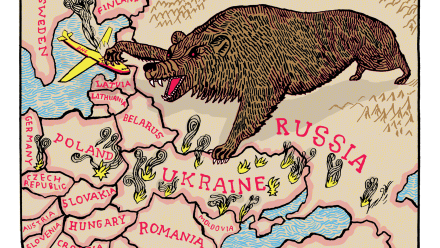
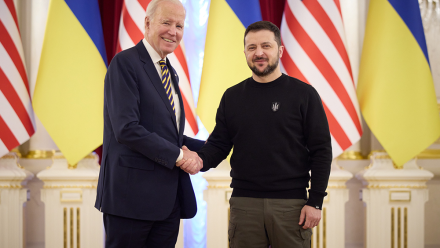
This week in New York Volodymyr Zelensky will present Joe Biden with a ‘Victory Plan’ for Ukraine. But how to define what ‘victory’ actually means? A fundamental and fast-widening distance is opening up over that question between Zelensky and his western allies – as well as inside Ukraine itself. Zelensky insists that the bottom line of a Ukrainian victory remains ‘the occupation army [being] driven out by force or diplomatically, in such a way that the country preserves its true independence and is freed from occupation’. He has also rejected the idea of a ceasefire, saying that any ‘freezing of the war or any other manipulations… will simply postpone Russian aggression to a later stage’.

Is Israel trying to drag America into a war with Iran?

The American general David Petraeus famously asked of the invasion of Iraq: ‘Tell me how this ends.’ That’s the question as Israeli bombs and missiles fall on Lebanon and the few missiles Hezbollah has sent in response are intercepted. Iran’s ‘axis of resistance’ seems paralysed with indecision. Does Benjamin Netanyahu take this as a win, the vindication of the enormous chance he took by opening a new northern front? Or, like a gambler intoxicated by success at the tables, does he press on? More airstrikes, followed by an invasion of Lebanon… and then the bombers fly on to Iran?  Some Israelis commentators are already calling this the Third Lebanon War (after the wars of 1982-2000 and 2006).

Who’s on top in the Tory leadership contest?

In recent years, the Conservative party conference has become something of an irrelevance. Often it is little more than a networking event, filled with dull speeches, all carefully stage-managed by No. 10. But next week’s gathering in Birmingham will be one of those rare Tory conferences that decide the party’s future. The leadership race has gone on for so long that the conference will be a political talent contest, with the four remaining leadership candidates – Kemi Badenoch, Tom Tugendhat, James Cleverly and Robert Jenrick – setting out their stalls. ‘We know each other’s lines so well now that we could imitate each other,’ says one leadership contestant. ‘There is definite growing regret that it’s taking so long,’ says a member of the shadow cabinet.

Why the Tories lost – by the Tory leadership candidates

As the four candidates prepare to make their pitch at the Conservative party conference in Birmingham, we quizzed them about their ideas and ambitions. Why did the Tories lose the general election? JAMES CLEVERLY: We lost the ear of the British public. They stopped listening to us. We over-promised and under--delivered on a load of issues so our election promises were met with real cynicism. People had literally closed their ears – and minds – to our arguments. Even if we had had the best policy platform in the world, people weren’t willing to give us the time of day. If we make fewer promises but make sure that we deliver on all of those promises, we will regain trust. But that means being disciplined.