Jo Johnson

Jo Johnson is a former universities minister, chairman of Tes Global and president’s professorial fellow at King’s College London

It’s time to end Tory uniphobia

From our UK edition

Before the exams meltdown, universities were losing both friends and influence on the Tory benches. They were deemed to be on the ‘wrong’ side of the referendum and then enemy combatants in a low-level culture war. The ministerial message to young people was shifting from the sensible ‘you don’t have to do a degree’ to the openly discouraging ‘too many go to university’. The high watermark of uni-phobia perhaps came last month when cabinet ministers denounced Tony Blair’s target of 50 per cent of children going to university and warned that any institution finding itself in financial difficulties would be ‘restructured’. To say our universities feel unloved by this government is an understatement.

Will the Covid crisis turn into a university crisis?

From our UK edition

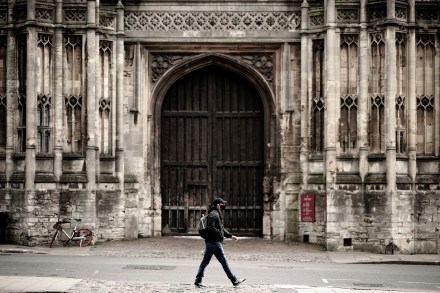
A big question hangs over British universities. With open days cancelled, visa offices and language testing centres closed, incomes dented and long-haul travel unreliable, just how many international students will enrol this September and what will vice-chancellors do to survive without them? As students from the global south scramble home, governments in English-speaking countries, which dominate the global education industry, are waking up to the existential threat their absence poses to universities young and old. The UK’s ability to bounce back will be gravely impaired if international students are no longer around to underpin the foundations of institutions central to our performance as a knowledge economy.

David Cameron’s For the Record ends where the sorriest three years in modern British history begin

From our UK edition

It’s fun to look for what’s missing in a memoir; the forgotten egos, the policy howlers buried for posterity. Some omissions are accidental. When Tony Blair published his autobiography in 2010, he raised eyebrows by neglecting to mention his celebrated blue-skies thinker, John Birt. Over more than 700 pages, For the Record is punctilious and dutiful in name-checking the many fallen Cameroonian foot-soldiers who sacrificed themselves in the cause of Conservative modernisation. It is a testament to David Cameron’s great qualities — his quick wit, habitual cheeriness and calmness under pressure — just how many of them there are. No one working in No.

Diary – 15 November 2018

From our UK edition

Jacob Rees-Mogg observed that my resignation last week was ‘the “Emperor’s New Clothes” moment in the Brexit process’. If this is right, that makes me the child, too young to understand the importance of maintaining pretences, who blurts out before the embarrassed townsfolk that the emperor is naked. I’ve been surprised by the noisy reaction to my departure from the middle ranks of the government. The video I made in my office setting out my reasons for going had two million views in two days. Maybe this is an example of Orwell’s dictum that in a time of deceit telling the truth is a revolutionary act. The deceit is that we’re making a success of Brexit.

Jo Johnson: why I have resigned – and why we need a second referendum

From our UK edition

Brexit has divided the country. It has divided political parties. And it has divided families too. Although I voted Remain, I have desperately wanted the Government, in which I have been proud to serve, to make a success of Brexit: to reunite our country, our party and, yes, my family too. At times, I believed this was possible. That’s why I voted to start the Article 50 process and for two years have backed the Prime Minister in her efforts to secure the best deal for the country. But it has become increasingly clear to me that the Withdrawal Agreement, which is being finalised in Brussels and Whitehall even as I write, will be a terrible mistake. Indeed, the choice being presented to the British people is no choice at all.

Generation jihad

From our UK edition

Driving through Gaza City last weekend, in an armoured UN land cruiser, I ask our guide what the ubiquitous green flags symbolise. ‘Hamas,’ he replies. And the black ones? ‘Jihad.’ It is almost five years since Hamas won 74 out of 132 seats in the Palestinian Legislative Council election, in a massive rejection both of the corruption of Fatah politicians and of the peace process with Israel. Since then, under a land and sea blockade imposed ostensibly to protect Israel from rocket attack and Egypt from Islamist contagion, Gaza has sunk ever deeper into a mire of victimhood and fundamentalism. It’s an alarming thought: young Gazans — 60 per cent of the population is under 15 — are growing up in an environment tailor-made for radicalisation.

Britain needs a new ‘special relationship’ with India. We should start by ending overseas aid

From our UK edition

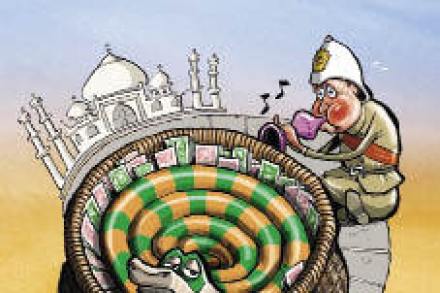
For too long, Britain has been complacent about the progress made by its former colony. Now we risk missing out on the important part India will play in the new economic world order. Jo Johnson on the Prime Minister’s attempt to woo New Delhi David Cameron is, by instinct, sceptical of the Heseltinian tradition of herding businessmen onto aeroplanes bound for faraway countries. Yet when he heads to India next week, he will be accompanied not only by perhaps the largest trade delegation the country has ever seen, but by his Chancellor, Foreign Secretary, Business Secretary and other assorted ministers. They will scatter themselves across the subcontinent before converging on New Delhi on Wednesday, in an unprecedented attempt to woo this rising world power.

French farce

From our UK edition

It is Hollywood's most predictable script. 'Dazzle foreign investors, force them to spend as much as possible and then drive them out once they're broke.' For the third time in a decade, the French are beating a humiliating retreat from Beverly Hills. This time the French national champion in question – Vivendi Universal, a once mighty conglomerate run into the ground by a megalomaniac called Jean-Marie Messier – has taken such a drubbing, it is doubtful that there will ever be a sequel. For the past 12 months, a company that was once the undisputed flagship of French capitalism has been on its knees begging its banks for mercy. France's largest private-sector employer has escaped bankruptcy thanks only to the embarrassed intervention of the French establishment.

The frog of peace

From our UK edition

Paris Game over yet? Don't count on it. As Prime Minister Raffarin retorted to President Bush, 'It's not a game. It's not over.' French President Jacques Chirac and Dominique Galouzeau de Villepin, his foreign minister, are having a great war. Just look at the polls: a Sofres survey to be released on Friday will claim that 86 per cent of French people approve his handling of the Iraq crisis. That's more than the 82 per cent Chirac scored in last year's elections against the far-Right leader Jean-Marie Le Pen. This expresses nicely what most French people think of George W. Bush, and most of it is unprintable. Eighty-one per cent, a figure to make Tony Blair weep with envy, believe France's role in the world has been strengthened by Chirac's 'principled resistance' to American hegemony.