Features

Surviving the euro

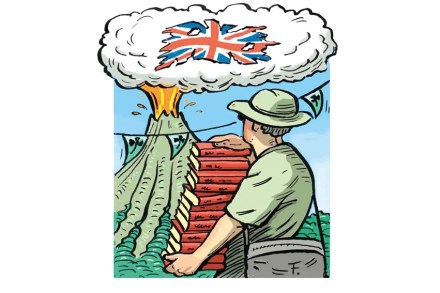
We need an orderly end to the EU’s disastrous economic experiment The eurozone crisis threatens the world’s economic stability, but not for the reasons people think. The crisis was predictable and predicted, but schadenfreude is neither appropriate nor affordable. The task now is to extricate ourselves from this mess, and to learn its lessons. This means identifying the factors behind the debt crisis, and deciding how best to bring the calamitous eurozone experiment to an end. The economic threat comes from a further weakening of an already enfeebled western banking system, as a result of unwise lending and borrowing on a massive scale. Why did the West borrow so much? It has become fashionable to blame China’s huge surplus.

Resetting the clock?

A Canadian doctor may have found a natural way to extend women’s fertility Dr Robert Casper, gynaecologist, reproductive endocrinologist and Toronto-based fertility guru, is telling me a bunch of stuff I really don’t want to hear. ‘The ageing female reproductive system is like a forgotten flashlight on the top shelf of a closet,’ he says in his flat, matter-of-fact Canadian bedside voice; a voice, incidentally, that reminds me of my father’s. ‘When you stumble across it a few years later and try to switch it on, it won’t work, not because there’s anything wrong with the flashlight but because the batteries inside it have died.

New York Notebook | 19 November 2011

When Keith Richards stepped up onto the stage at the Norman Mailer Gala at the Mandarin Oriental in New York last Tuesday, to collect the Autobiography Award from a bumptious Bill Clinton, he appeared to be almost speechless. Words eventually came, though, if a little tentatively: ‘I’m not usually fazed by stuff,’ said Keith, almost humbly, glancing at the ex-president, ‘but I’m fazed by this.’ It was difficult to tell who had the most star-power; the great and the good took out their mobiles to take snaps of Clinton, while Keef charmed everyone with his unintentional impression of Bill Deedes.

Kerala in Luxury 

I flew into Cochin one December morning, glad of the humidity, like a welcoming hot flannel after Britain’s bitter cold. I was staying a short walk from the shore in the heart of the old fort at Malabar House, one of a group of boutique hotels set up by Joerg Drechsel and his Catalan partner, Txuku. ‘We were told we were doomed to fail,’ says Joerg, a determined-looking German in his early sixties. ‘When we first opened Malabar Escapes in 1997, people were still travelling round India in groups of 20 or more, but it’s not about mass tourism or backpackers any more.

Goa’s two cultures

The best view of the Goan coast can be seen from the topmost turret of the ruined Portuguese fort above Chapora. From the dark upper slopes of the Pernem hills down to the level ground of the coastline stretches mile upon mile of banana and coconut groves, the deep green of the palms offset by the white sand of the shore and the foam of the breaking rollers. In the palm groves you can just see the toddy tappers throwing ripe king coconuts down from the treetops. Further up the beach, lean fishermen are beaching their catamaran-canoes on the sandbanks. From these dugouts,a crocodile of women carry panniers of freshly caught fish to their huts. Most people who come to Goa do so for the beaches and a bit of winter sun.

India: Land of faith

An everlasting chant wafts from the ancient walls of the temple of Kapaleeshwarar: ‘Om Namasivaya.’ The effect is hypnotic. I wander inside and the chant merges with Vedic folk music as a joyous crowd of worshippers sing in praise of Shiva. An elderly couple are having a birthday blessing and the Dravidian precincts are a riot of colour, jasmine garlands and spice. In a quieter corner, a girl kneels beside a stone cow and whispers her prayers into its ear. I have been in Tamil Nadu in the southernmost peninsula of India for one day and already I’m mesmerised. This is a land of temples and pilgrims, where you would have to have a heart of stone not to feel at least a little in touch with the divine.

Europe’s hit squad

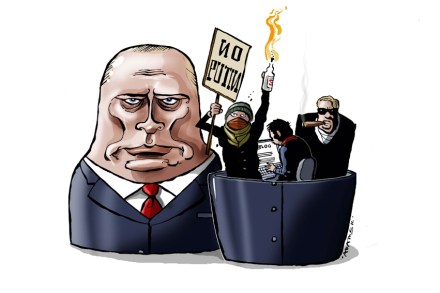
If you thought the EU couldn’t get any less democratic, meet the Frankfurt Group The Old Opera House in Frankfurt — once Germany’s most beautiful postwar ruin and now its most stunning recreation — has become a symbol of European rebirth. And it was here, last month, that Angela Merkel and Nicolas Sarkozy met the EU’s bureaucratic elite in what would, in another era, be described as a putsch. They had grown tired of eurozone summits, with leaders flying here and there but getting nowhere. A smaller group needed to be formed, who would wield power firmly but informally. That evening, as they gathered to hear Claudio Abbado conduct the Mozart Orchestra of Bologna, a new EU hit squad was born.

Keeping up with Liz Jones

Liz Jones, the roving fashion editor of the Daily Mail, is a hate figure on Twitter and beyond. Recently, in one of her periodic confessional pieces, she wrote that she had stolen her boyfriend’s used condom and tried to impregnate herself with it. It was owed to her, she wrote, because she had bought him so many ready meals from Marks & Spencer but, as with many of Jones’s romantic misadventures, it failed — there will be no Baby Jones. Twitter, which has no sense of humour (mobs never do), read, retched, and excitably screamed for justice. The hypocrisy is enchanting. Twitter users may despise the Daily Mail but give them a really juicy article and they obediently become its most avid, if self-loathing, readers.

The young pretender

Can Florence’s youthful mayor save Italy from herself? If ever a country’s politics needed a shot in the arm, it is Italy’s. As the economy wobbles on the brink of catastrophe, we Italians are desperate for a new face from outside the discredited political caste: an Italian Obama, if you like. But who could possibly step into the breach? Some eyes are turning towards Florence’s handsome young mayor Matteo Renzi, who at 36 makes David Cameron and even George Osborne look like grizzled veterans. To go from running the world’s most beautiful city to leading the world’s most ungovernable country would be a huge, and daunting, step. In Italy politicians are supposed to form an orderly queue and wait their turn for the top jobs.

Remembering well

Extraordinary how potent cheap drama is. The latest season of Downton Abbey, which ended on Sunday, pulled off a rare double in its interpretation of the first world war — making you laugh one second at the wooden acting and the clunky script; the next second, making you cry at the suffering and tragedy. But Downton tears are comforting, almost pleasurable: the tears you cry for Brief Encounter or Love Story. They’re not the agonising tears cried by mourners in Royal Wootton Bassett, their bodies contorted with acute physical grief. There are different degrees of sadness over death in battle.

The sunshine solution

The late unlamented premier of Queensland Sir Joh Bjelke-Petersen had an easy way with journalists, most of whom he perceived to be rabid pinkos. ‘Don’t you worry about that, my friend,’ he would say, when confronted with a hostile question. ‘You just leave it to me.’ In fact, he bequeathed Queenslanders quite a lot to worry about and nearly ended up in jail on charges of bribery and corruption. But his greatest legacy was a brilliant piece of gerrymandering which is still with us today, having been widely adopted by other states in Australia. I believe it could be of some use to whoever, by the time you read this, is ruling Italy and Greece — saving Europe and making us all a lot happier in our latter years.

Mr Blair goes to Kazakhstan

Ah, Tony Blair — you can’t keep a good hustler down. One minute he’s singing the praises of formaldehyde at the opening of a methanol power plant in Azerbaijan (£90,000 for a 20-minute talk), the next he’s accepting a gig ‘consulting’ in Kazakhstan. For his advice on ‘issues connected with policy and the economy’, he could reportedly make as much as £8 million a year. In May, Blair and a gang of his associates were spotted at a meeting of the Foreign Investors’ Council in Kazakhstan.

Crossed wires

Chris Huhne wants to know why we don’t shop around more for our utilities. I’ll give him one reason. The liberalisation of utility markets has created an impression of bewildering choice, but when things go wrong you realise that there is no choice at all, just the same old creaking infrastructure, owned and operated by the legacy company of an old nationalised monopoly. In fact, in one sense, liberalisation has made things worse: with a multiplicity of companies involved, you are never quite sure who is responsible for your pipes or your wires. You can find yourself caught between two companies, each blaming the other for your problem, via the inevitable call centres in Bangalore. I am writing this while squatting on other people’s computers.

Call me crazy

As a former mental patient, I find being asked to ‘embrace my diagnosis’ far more offensive than words like ‘bonkers’ Mentally ill people can be troublesome but at least the rest of the population does not have to think about them much. The system is effective in that respect. No one need know, for example, that 10 per cent of adults in Scotland are on antidepressants. The disturbed do not spread their disturbance. Whenever the subject of mental health surfaces in the media, progress is reported, unless there’s been a murder.

The generation game

‘Intergenerational fairness’ is simply the latest cover for envy Towards the end of last month, a gang of youthful policy wonks started beating up the elderly. This is something we will have to get used to. The proposal from the Intergenerational Foundation to ease over-60s out of their three- or four-bedroomed houses to make way for younger families was just the first of a series of pernicious policies the think-tank is preparing as it opens up a new front in the politics of envy. ‘Intergenerational fairness’ is a seductive piece of branding. Who would declare themselves against fairness? In theory, it should have a particular appeal for conservatives.

It’s so annoying

So why do people feel compelled to start every sentence with ‘so’? We live in the Age of So. Dot Wordsworth commented on it in these pages recently, though was lost for an explanation. The phenomenon was illustrated on Radio 5 Live’s Drive programme a while back, when Peter Allen interviewed Steve Robertson of BT OpenReach about the expansion of superfast broadband. Allen: ‘What will actually happen?’ Robertson: ‘So, what will happen is that we’re either going to be taking fibre to their home or to their business...’ Allen: ‘And how expensive is all this?’ Robertson: ‘So, we’ve already committed two and a half billion pounds...

Morocco: Sugar and Spice

Is it still possible to love Moroccan cookery if you can’t stand fruit in savoury dishes? Yes, discovers Camilla Stoddart I love Morocco. Everything about it is exotic and visually pleasing — the landscape, the interiors, the souks, the carpets, the slippers — but there is a major hurdle lying between me and full Moroccophile status. This hurdle is fruit. Or more specifically fruit combined with meat. I don’t have many personal food rules but not mixing fruit with meat is one of them. And Moroccans don’t just flout this rule, they beat it to a pulp with a tenderising hammer and then scatter prunes, dates, apricots and pomegranate seeds on top of it.