Features

Putin power

Sunday will be Russia’s Coronation Day. The emperor is back from his constitutionally imposed four-year break, Dmitri Medvedev, the fill-in, finds his coach turning back into a prime ministerial pumpkin, and Vladimir Putin will be president for another term: only this time it’s been extended to six years. President of Russia till 2018, and he’ll still only be 65. But for the first time it’s possible to ask ourselves whether the long-running Putin project will carry on working as smoothly as it has so far. There’s no doubt about Sunday: Putin will walk it in the first round.
An astronaut at 80

In a couple of weeks, Alan Bean will turn 80. He’s not planning any special celebration. If he does go out, it will probably be to a local restaurant in Houston, Texas. ‘I’ve eaten barbecue at this restaurant once a week, have done for 15 years,’ he tells me. ‘Nobody there has any idea that I’m anyone other than this old guy who likes barbecue.’ Few people even recognise his name. This is probably because Alan Bean was the fourth man to do something. His late colleague Pete Conrad was the third man to do the same thing — and no one used to recognise him either. The first two were Neil Armstrong and Buzz Aldrin. Apollo 12, sandwiched between the epic first of Apollo 11 and the famous disaster of Apollo 13, has been largely forgotten.

Coventry blues

He who would see England’s future should be separated for a while from the better parts of London and sent (literally, not metaphorically) to Coventry. There, amid the hideous and dilapidating buildings of a failed modernism, he will see precincts with half the shops boarded up, where youths in hoodies skateboard all day along the walkways, the prematurely aged, fat and crippled unemployed occupy themselves in the search for cheap imported junk in such shops as remain open, and the lurkers, muggers and dealers wait for nightfall. I stayed four nights in Coventry, in a hotel whose nearest architectural equivalent was the hotel in which I had once stayed in Makhachkala, in ex-Soviet Dagestan.

‘A little bit extra’

A very chic lady turned to me at a dinner party recently and in tremulous tones confided that she was being investigated for benefit fraud. ‘Infernal cheek,’ I said. ‘How typical that our chaotic benefits system should make such a stupid mistake. Instead of going after the layabouts, some idiot pen-pusher has put two and two together and made nine.’ ‘No,’ she said, her cut-glass voice lowering until it was almost inaudible. ‘I have been fiddling benefits.’ I stared and stared at this elegant woman, dressed from head to foot in Armani. With her salon blow-dried hair and impeccable taste, she was to me the antithesis of what a benefit claimant looked like, never mind a fraudulent one.

Private property

Celebrities have a right to profit from the exploitation of personal information – and so do you Something has been bugging me about the Leveson inquiry, and it’s not a private investigator hired by News International. It’s the pervasive line of defence that you hear when it comes to the invasion of privacy, and with the Sunday Sun rising in the east, it’s worth addressing. There’s no chance the new Sunday red-top will revive the black arts of its predecessor and indulge in what the Met’s Sue Akers has called the Sun’s ‘culture of illegal payments’. But there is every chance that it will carry one basic assumption over intact.

Irreconcilable differences

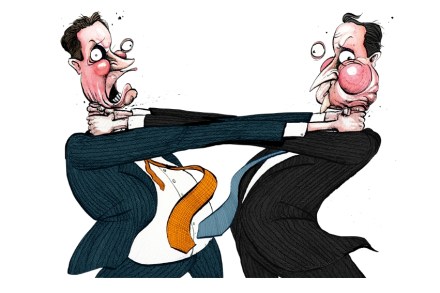
It has become clear over the last few weeks that we are witnessing the beginning of the end of the coalition. Once, the rows between Tories and Lib Dems used to be about peripheral issues, but they are now about the central planks of government policy. In happier times, disputes used to lead to better policy-making; now they result in crude horse-trading. The coalition used to be underpinned by trust between the central players in each party. That trust is now breaking down and there is a growing feeling that the coalition cannot go the distance until 2015. One Downing Street adviser told me this week, with a fatalistic air, that a ‘2014 election wouldn’t be too bad really. David would have done his best, Nick would have done his best.

An Israeli spring?

The revolutions sweeping through the Arab lands present Israel with a historic opportunity: to become part of the region in which it is located and to join with pro-democracy forces in forging a new Middle East. So far, however, the Arab Spring has not resonated well at any level of Israeli society. Israel’s leaders have ignored the opportunities and greatly inflated the risks and dangers arising out of the Arab Spring. Consequently, the dreams of the young pro-democracy protesters have turned into the stuff of nightmares for Israeli strategic planners. A reappraisal is urgently needed to stop the Arab Spring from becoming Israel’s winter. Israel has always prided itself on being an island of democracy in a sea of authoritarianism.

Murdoch’s coup

The launch of the Sun on Sunday is a perfectly timed riposte to Leveson Beleaguered staff at News International say they have rarely seen Rupert Murdoch so full of energy. Sleeves up, literally and figuratively, the almost 81-year-old newspaperman is back in his element, tearing around the offices at Wapping, doing what he always loves doing best — creating a new newspaper, and confounding his critics. The Sun on Sunday will be launched this weekend. While other newspaper proprietors are in retreat all over the world, and while Murdoch himself faces the greatest ever threat to his empire as a result of the phone hacking scandal, he charges the barricades, confounding his enemies, launching Britain’s first new Sunday paper in a decade.

Three men and a vote

The contest for the Republican nomination is stuck in the rogues’ gallery stage Fredericksburg, Virginia An election year in America is just that — a year. The 2012 race has just kicked off and still has eight months to go, but it is already having a critical effect on me: keeping up with the contest for the Republican nomination makes me want to run away and join the ladies’ auxiliary of the French Foreign Legion. Choosing the nominee for the out-of-power party is a process of elimination. We start with an omnium gatherum, reduce it to a rogues’ gallery, and end up with a candidate. As I write this we have bogged down in the rogues’ gallery stage. Up until recently, we seemed to have narrowed it down to Mitt Romney and Newt Gingrich.

Travel – Scottish Highlands: Dream land

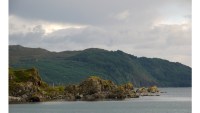
The doubt that comes to mind in the Highlands when faced with such wonders as Glenfinnan — is this for real? — always arises when recalling the enchanted coastal village Glenelg. ‘Does Glenelg exist?’ seems an almost reasonable thought when away from the place. ‘Did I ever see those colours, that light, the Sound of Sleat and the distant islands? Was that golden eagle a dream?’ Part of the reason is that Glenelg is removed, beyond, even otherworldly in location.

Travel – Norway: Northern light

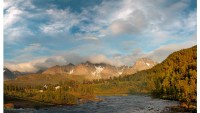
In the constant light of summer, Tromsø is an extraordinarily civilised place from which to visit the wilderness, discovers Harry Mount  ‘Why do the British look so ill?’ I was asked by a 23-year-old woman at a dinner party in the Arctic Norwegian city of Tromsø. ‘Is it because they have chips for breakfast?’ She seemed to have steered clear of the chips herself; her skin looked like it had been put on fresh that morning. ‘Why do Norwegians look so good,’ I asked back, ‘when they drink even more than we do?’ The answer lay on the plates in front of us: reindeer sashimi followed by grilled whale, then seal, moose, cod and herring — all straight from the fjords and the frozen tundra.

Travel – Sweden: Ice pick

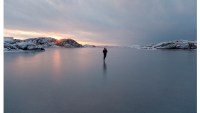
Now is the time to skate Stockholm’s archipelago, says Fraser Nelson There are two times to visit Sweden: the height of summer or the depths of winter. If you have to choose, go now. Diving into the waters of Stockholm’s archipelago is a joy you can more or less imagine: skating across them, and having a snow barbecue afterwards, is something that has to be done to be believed. Every year, British lovers of winter sports do head off to the slopes in Italy, France, Austria or Switzerland — it doesn’t really matter what country, because the set-up is the same. But Sweden is unique. The Stockholm archipelago boasts something like 30,000 different islands and at this time of year you can skate between a lot of them.

Sarkozy’s last stand

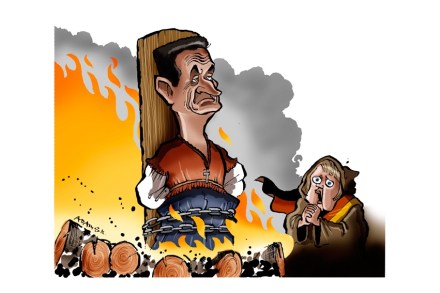
The man who promised to reform France looks set to become a martyr to the euro – and his own abrasive personality Paris Nicolas Sarkozy chose an unpropitious week to tell the French public he wanted to be their president for another five years. As Sarko was granting a semi-official interview to Le Figaro, addressing the nation on television and planning his campaign’s first rally for the weekend in Marseille, the bad news kept rolling in. Qantas found cracks in the wings of an Airbus 380 superjumbo jet, and European aviation officials ordered them to be recalled for tests, dampening the spirits of French jet engineers. Corbusier’s Cité Radieuse, a landmark of French modern architecture (albeit one that no one would wish to live in), caught fire in Marseilles.

The people’s primate

Lord Carey of Clifton isn’t the retiring sort. He stood down as Archbishop of Canterbury ten years ago, but he wasn’t ready to end his days in quiet contemplation. At 76, he is still a public figure — more so, perhaps, than ever. He used to be dismissed as a plodding liberal; a typically ineffectual Anglican primate. Today, he is recognised as perhaps the leading British voice of Christian conservatism. He speaks out against mass immigration, multiculturalism, gay marriage and militant secularists. He makes headlines. He’s recently fulminated against a High Court ban on prayers at council meetings, and attacked his fellow bishops in the House of Lords for their opposition to the government’s benefits cap.

Me for DG

A manifesto for the BBC’s top job Messrs Egon Zehnder, ­headhunters, are helping the BBC find its next director general. The involvement of these swanky international executive search agents is depressing. Their ­American-‘flavored’ website brags about helping companies seek ‘competitive advantage’ and identify ‘talented business leaders’. If the BBC is to have a future, it must raise its vision above such mercenary concepts. But at least Egon Zehnder may ensure that favourites for this influential position are drawn not simply from the upper, left-­facing slopes of BBC management. That danger was evident when the Guardian (whose editor may also be a contender) ran an early list of possible runners.

Big charity

The aid business has grown fat. It’s time there was proper scrutiny Such a simple question: should Oxfam spend a couple of hundred pounds a month opening up the swimming pool at its guesthouse in one of the nicer parts of Nairobi? It was posed by Duncan Green, the group’s head of research, on his blog, and provoked a revealing bout of navel-gazing in the aid industry. The pool was shut, Mr Green disclosed, on the orders of the charity’s head office, which feared a scandal after an advert for a pool attendant appeared on its website. The post went viral, sparking a far bigger response than Mr Green’s usual musings on poverty. Some comments were satirical, such as the suggestion Oxfam open a golf course for staff in Kenya.

Kiss off

Do you xxxx? Sorry to be impertinent. Perhaps you simply xx or x? I’m not a natural x’er, but it’s hard to resist when everyone else is x’ing all over the place. Besides, if someone x’s you, it would be rude not to x back, right? Truly, in this age of emotional incontinence, the etiquette of text and email signoffs is becoming a minefield. In the ever-intensifying arms race to display more and more emotion, even if it is entirely bogus, we are sending little figurative snogs to perfect strangers. We are ending the most businesslike emails with a valedictory expression of love and longing when a ‘Kind regards’ would do.